
Introduction
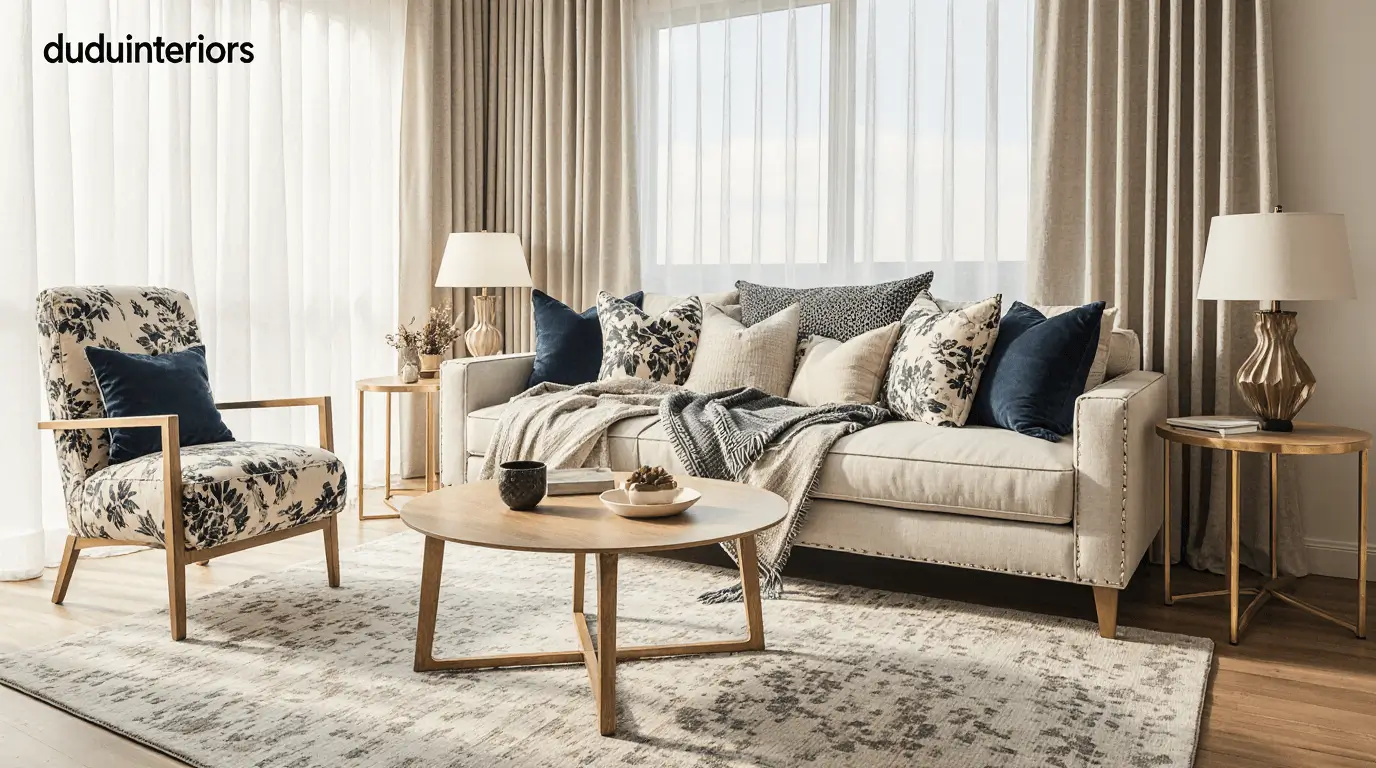
Mixing patterns interior design is one of the most transformative skills a designer can master. When done well, it brings depth, personality, and visual rhythm into a space. When done poorly, it can feel chaotic and overwhelming. The difference lies in understanding scale, color relationships, balance, and how patterns communicate with each other.
In my experience working with layered interiors—from relaxed coastal homes to tailored urban apartments—pattern mixing is less about rules and more about orchestration. You’re creating a visual conversation between florals, geometrics, stripes, textures, and solids. The goal isn’t perfection. It’s harmony with intention.
Below are expert-level pattern mixing clusters to help you design with confidence and clarity.
Mixing Patterns Interior Design with Scale Variation
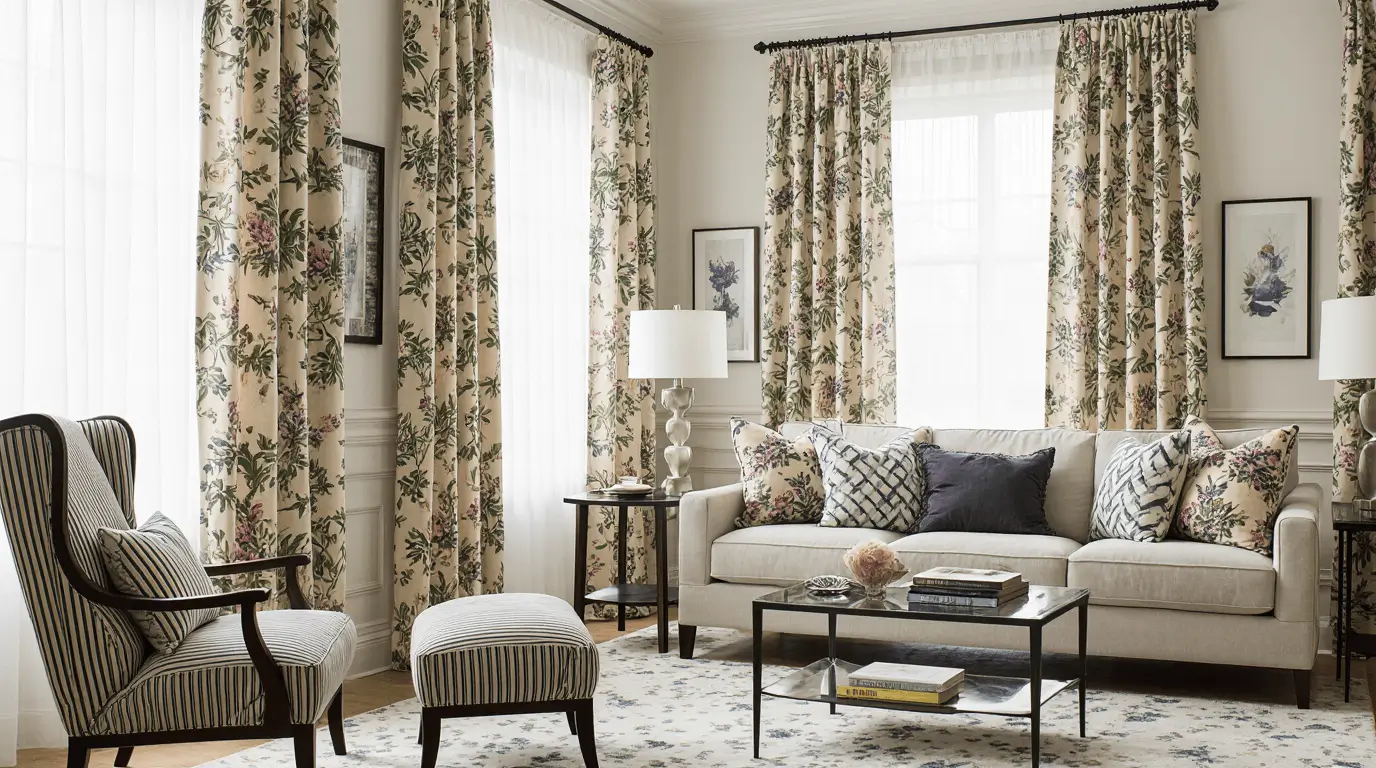
Large-scale prints anchor a room, medium patterns add rhythm, and small-scale motifs create subtle texture. Combining different scales prevents visual competition and keeps the eye moving comfortably.
A bold oversized floral on drapery pairs beautifully with medium geometric pillows and a fine ticking stripe on an accent chair.
Mixing Patterns Interior Design Using a Unified Color Palette
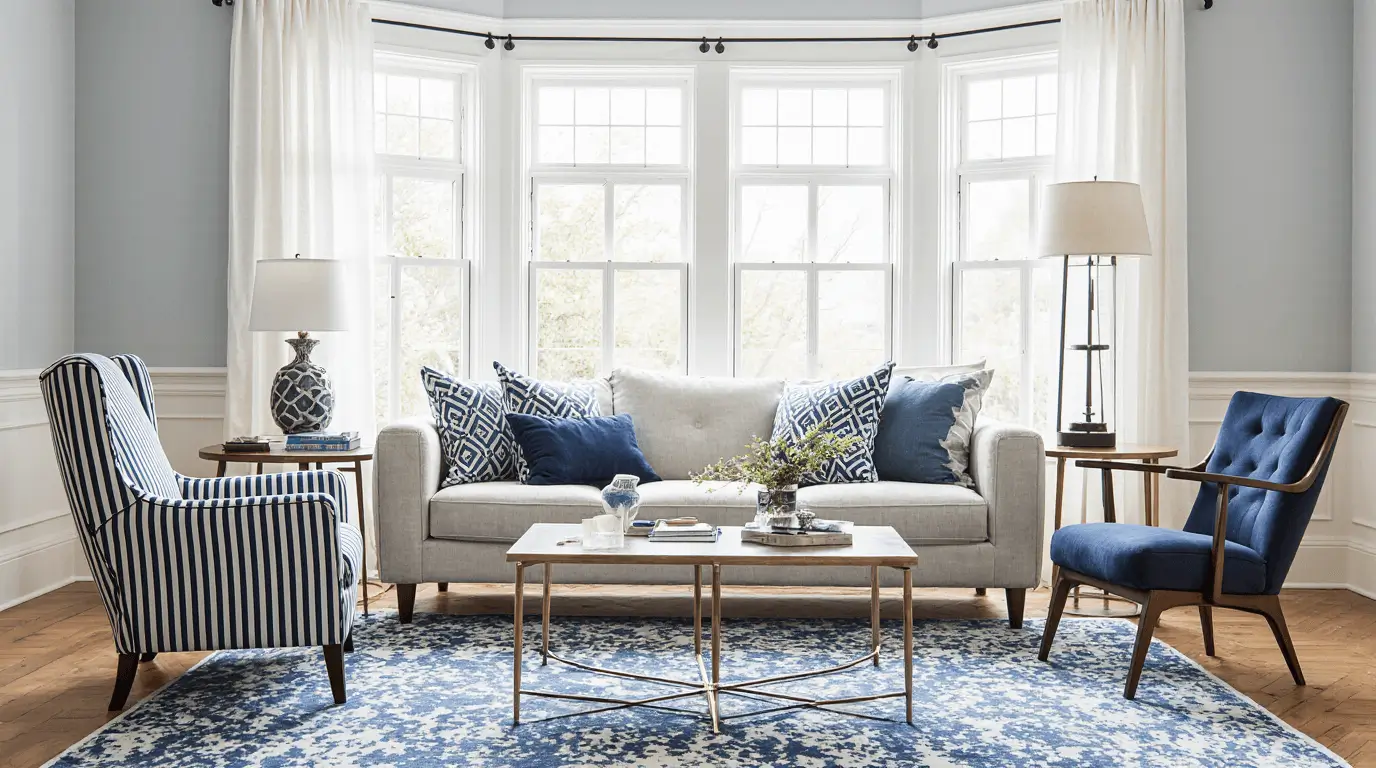
Color is the glue that makes mixed patterns feel intentional. Even diverse motifs feel cohesive when they share undertones or repeat key hues.
Choose 2–4 core colors and let them repeat across fabrics, rugs, and accessories.
Coordinating Patterns in a Living Room
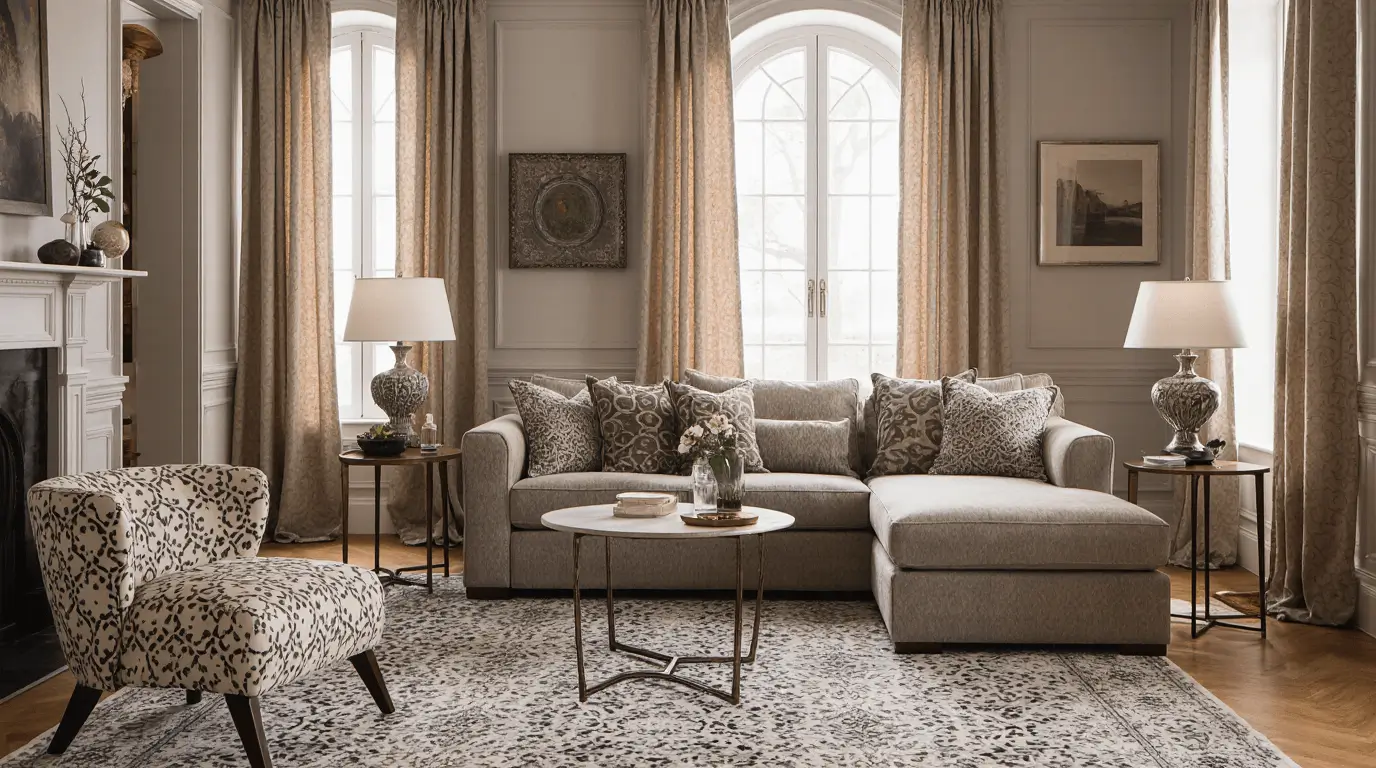
Living rooms benefit from layered textiles—sofa upholstery, pillows, rugs, and curtains. Keep one dominant pattern and allow the others to support it.
This approach prevents pattern overload while still achieving depth.
Mixing Floral Patterns with Structure
Florals bring softness. Pairing them with structured geometrics or stripes adds balance and prevents the space from feeling overly romantic.
This contrast creates tension in the best possible way.
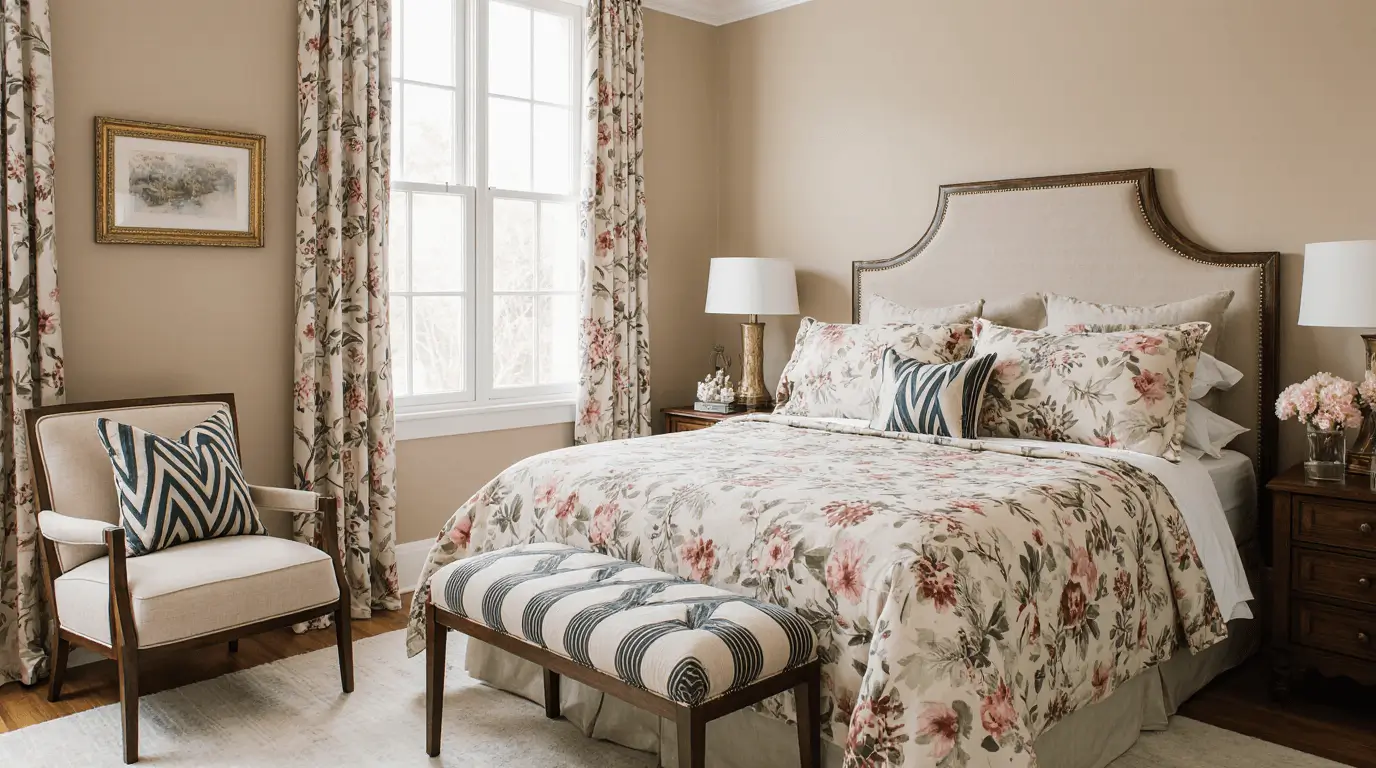
Mixing Patterns in a Bedroom for Comfort
Bedrooms require restraint. Start with patterned bedding, then layer coordinating pillows and perhaps a subtle rug.
Keep the walls calmer if textiles are expressive.
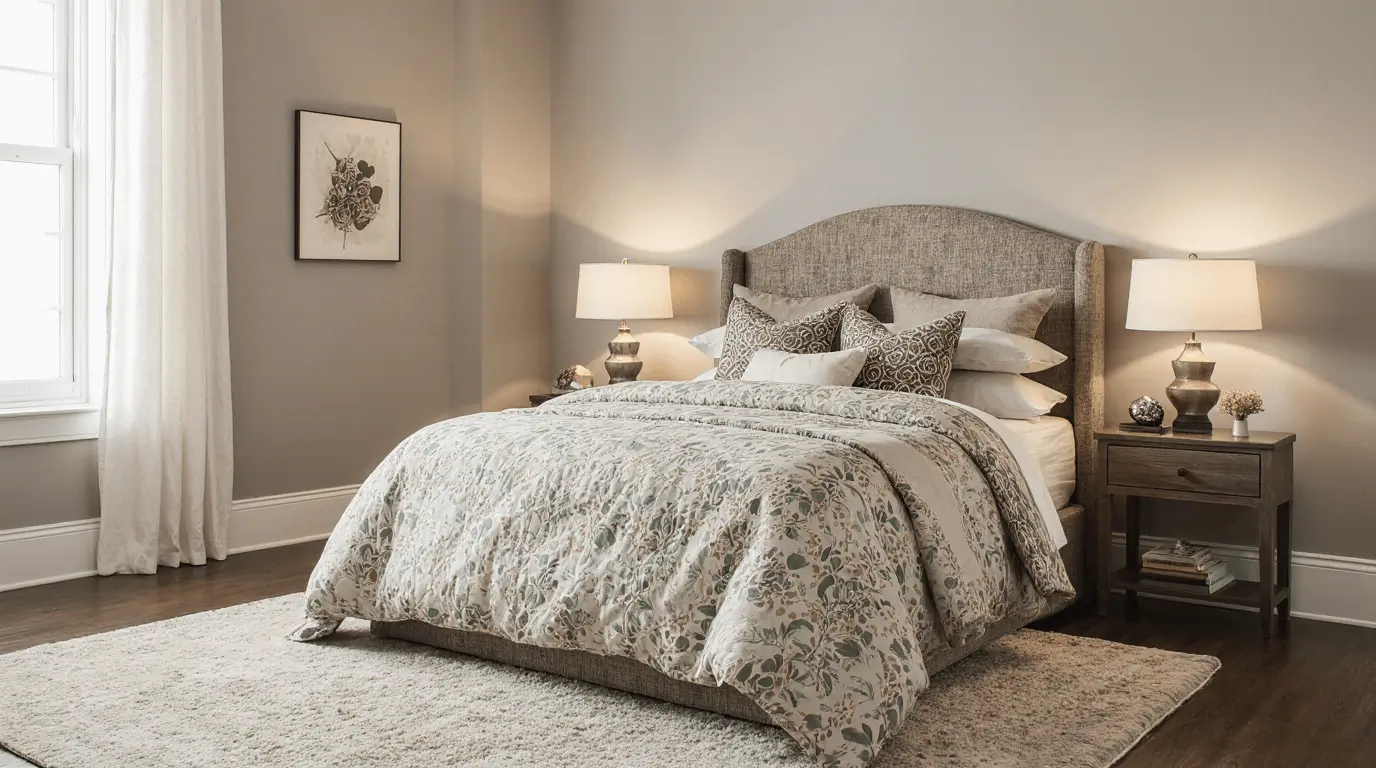
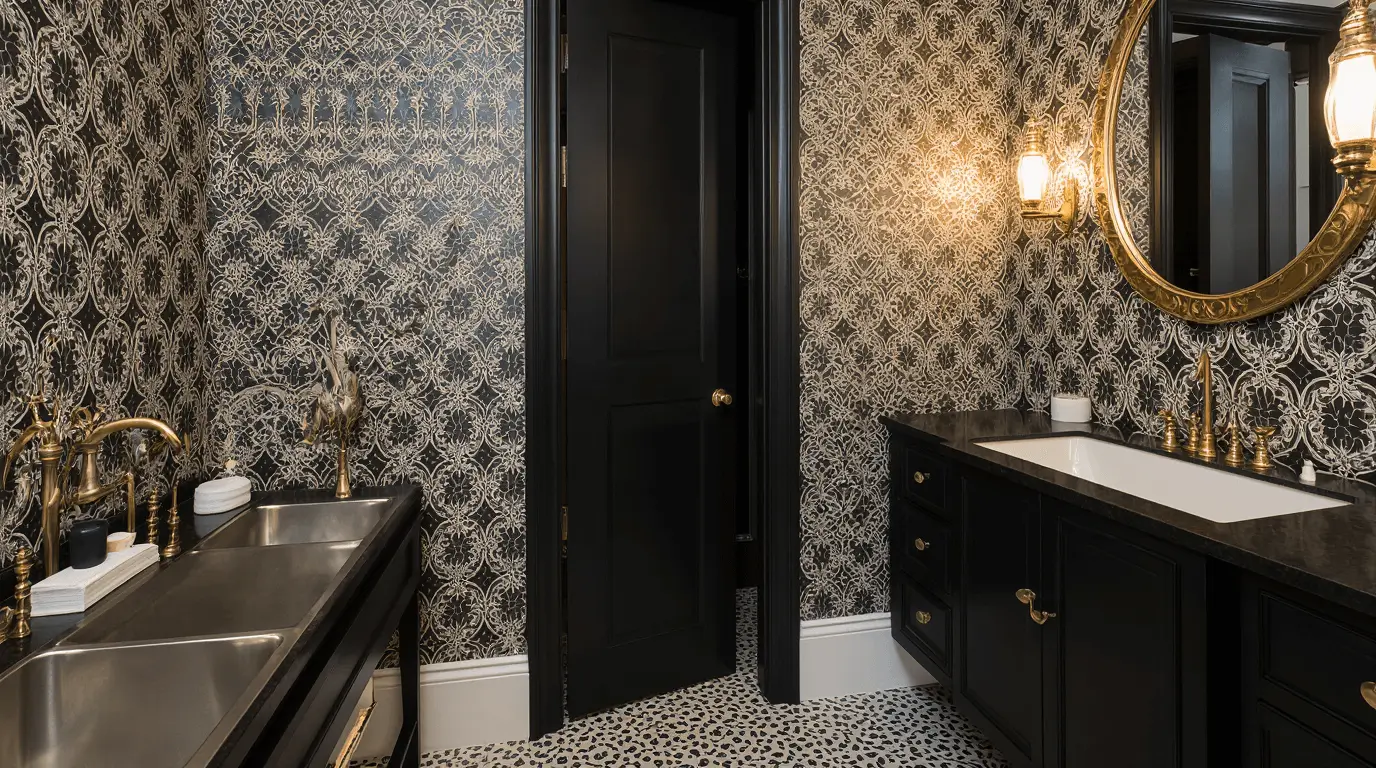
Pattern on Pattern Interior Design in Small Spaces
Small spaces can handle bold pattern mixing—if you control scale and repetition. Repeating a color across patterns keeps even dramatic rooms cohesive.
Powder rooms are ideal for adventurous combinations.
Mixing Solid and Patterned Curtains
If furniture is heavily patterned, solid curtains offer relief. If seating is neutral, patterned drapery can add movement.
Think of solids as breathing space.
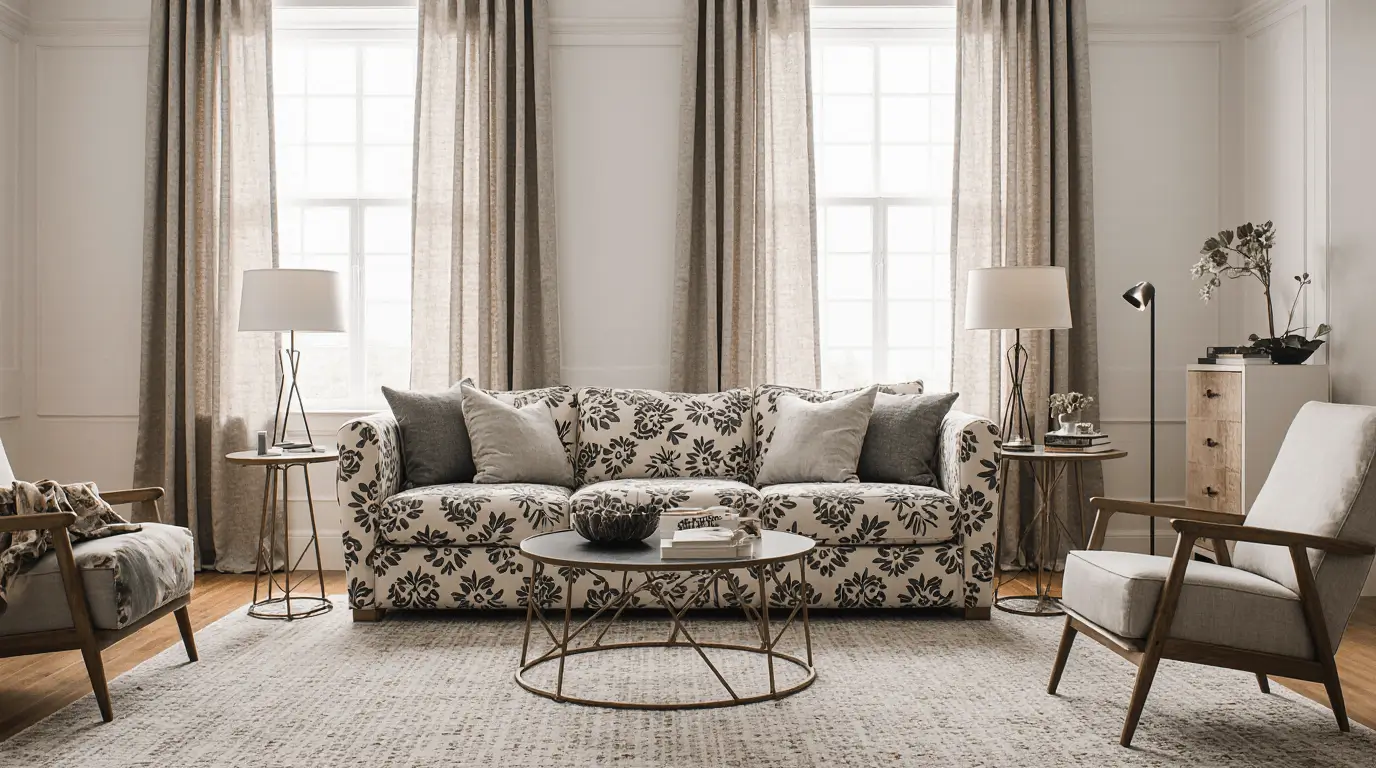
Mixing Velvet and Linen Furniture Textures
Pattern mixing isn’t only visual—it’s tactile. Velvet’s richness pairs beautifully with relaxed linen, especially when subtle patterns are involved.
Texture variation elevates layered interiors.
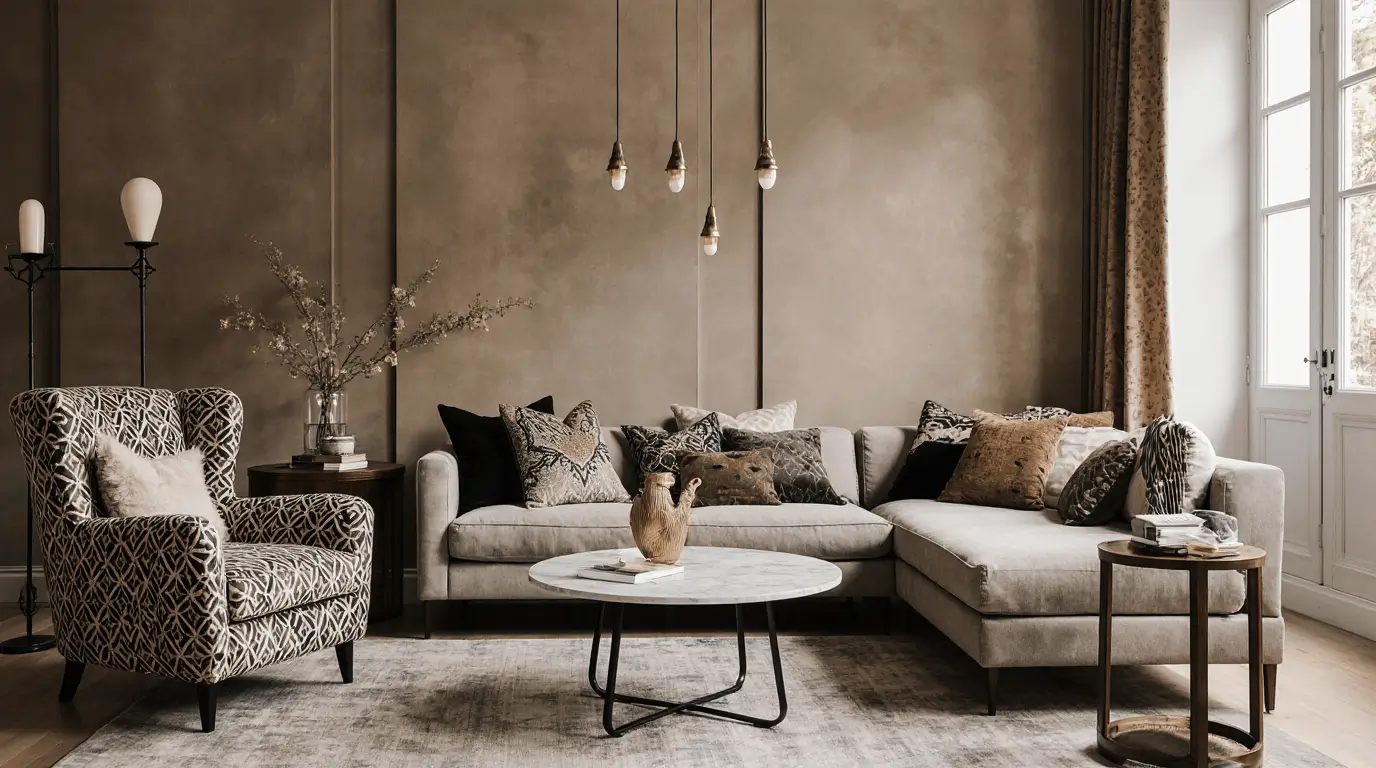
How to Mix Patterns in a Room with a Hero Print
Choose one “hero” pattern—often the rug or wallpaper—and build supporting patterns around it.
Pull secondary colors from the hero print for cushions and upholstery.
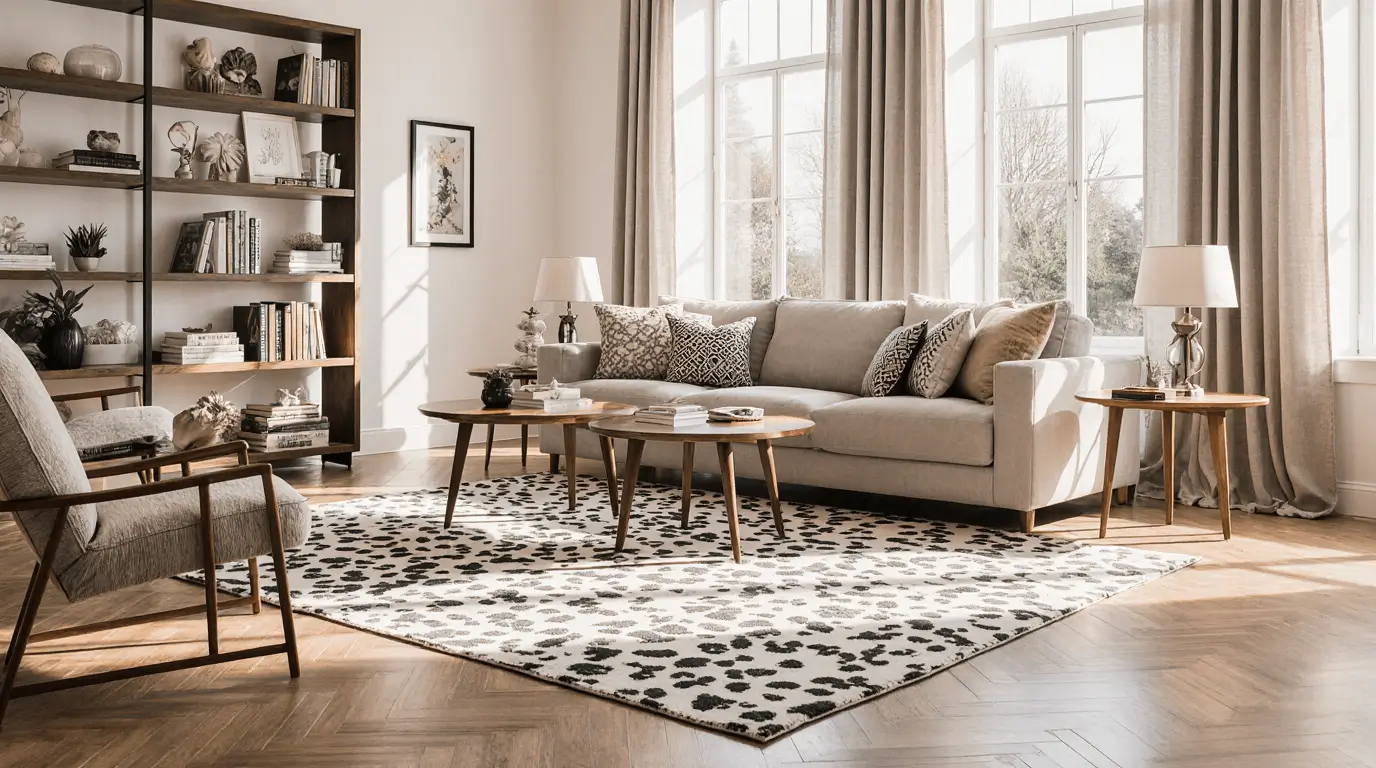
Mixing Patterns in a Dining Space
Dining rooms can carry more drama. Upholstered chairs in subtle prints paired with bold wallpaper create depth without overwhelming the space.
Balance busy walls with streamlined furniture silhouettes.
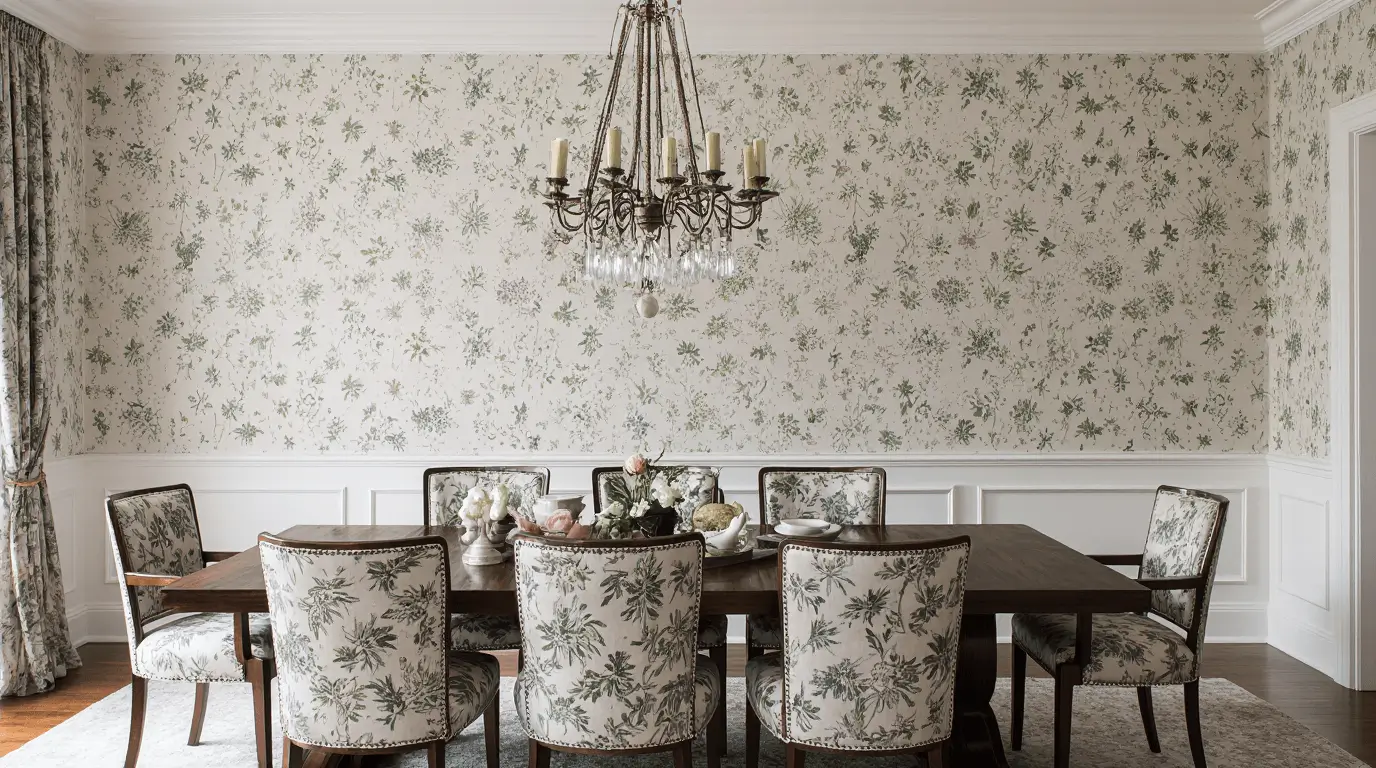
Interior Patterns Through Layered Rugs
Layering rugs is a sophisticated way to mix patterns. Place a smaller patterned rug over a larger natural fiber base.
This technique grounds the room and adds dimension.
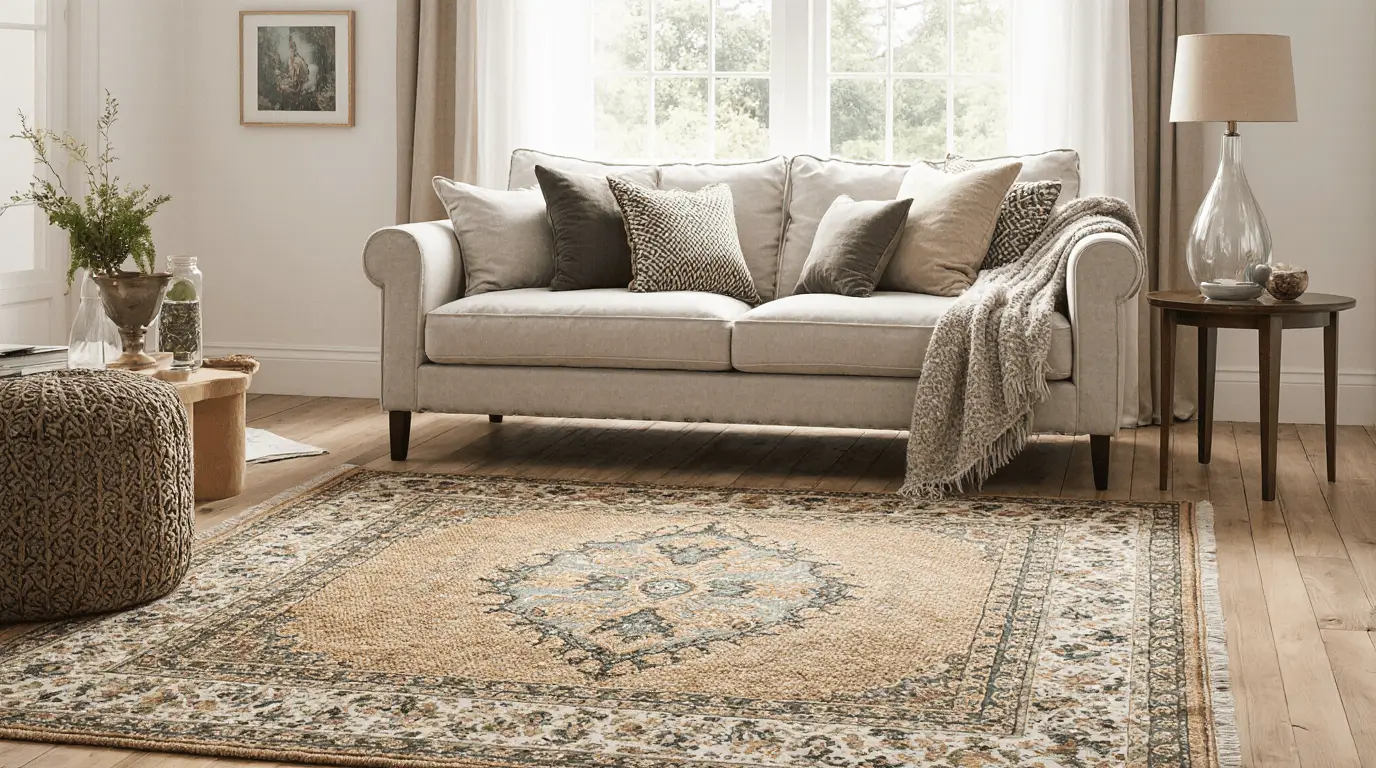
Patterns That Go Together: Organic + Geometric
Organic prints (florals, botanicals) pair beautifully with geometrics because they contrast in rhythm and structure.
This opposition creates visual harmony through balance.
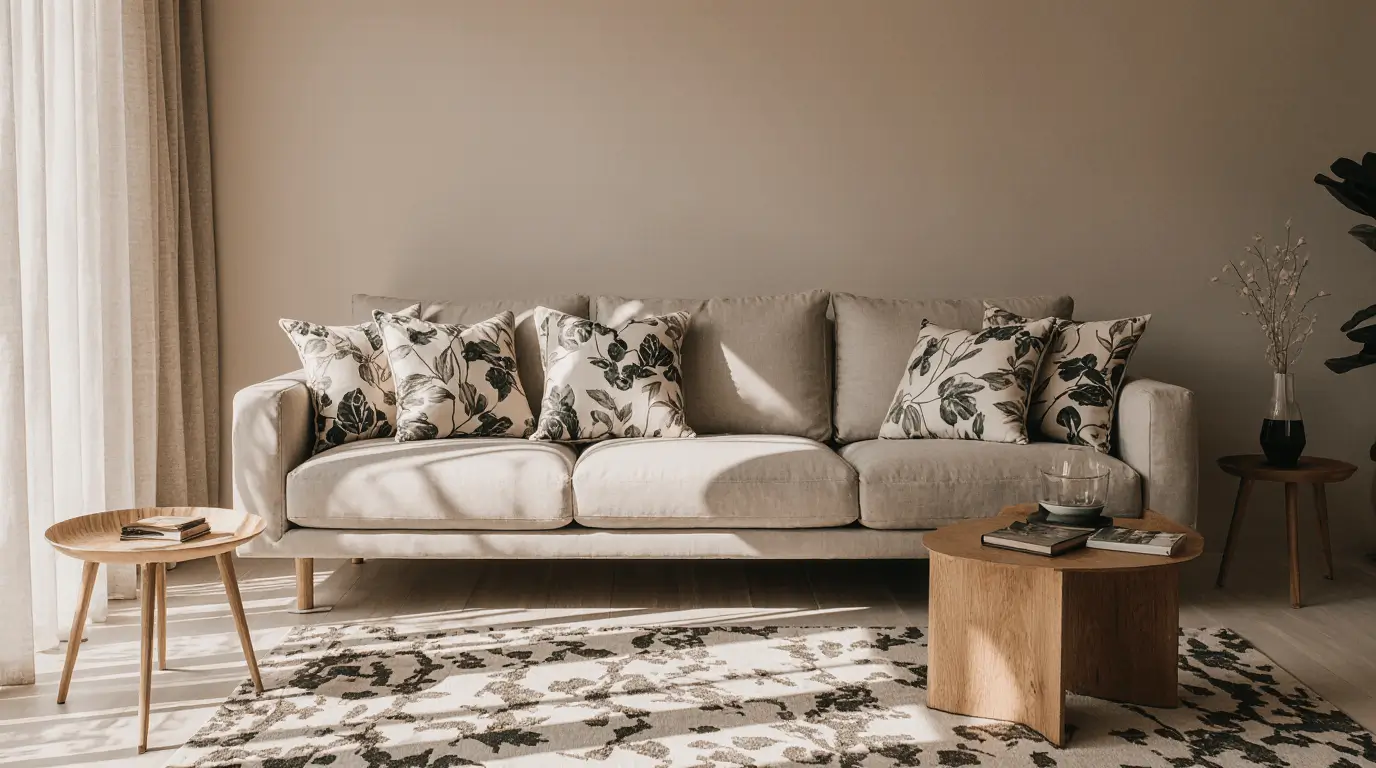
Mixing Patterns in a Minimalist Interior
Even minimalist spaces benefit from subtle pattern layering—think tone-on-tone stripes, quiet checks, or textured weaves.
Understated pattern keeps minimal interiors from feeling flat.
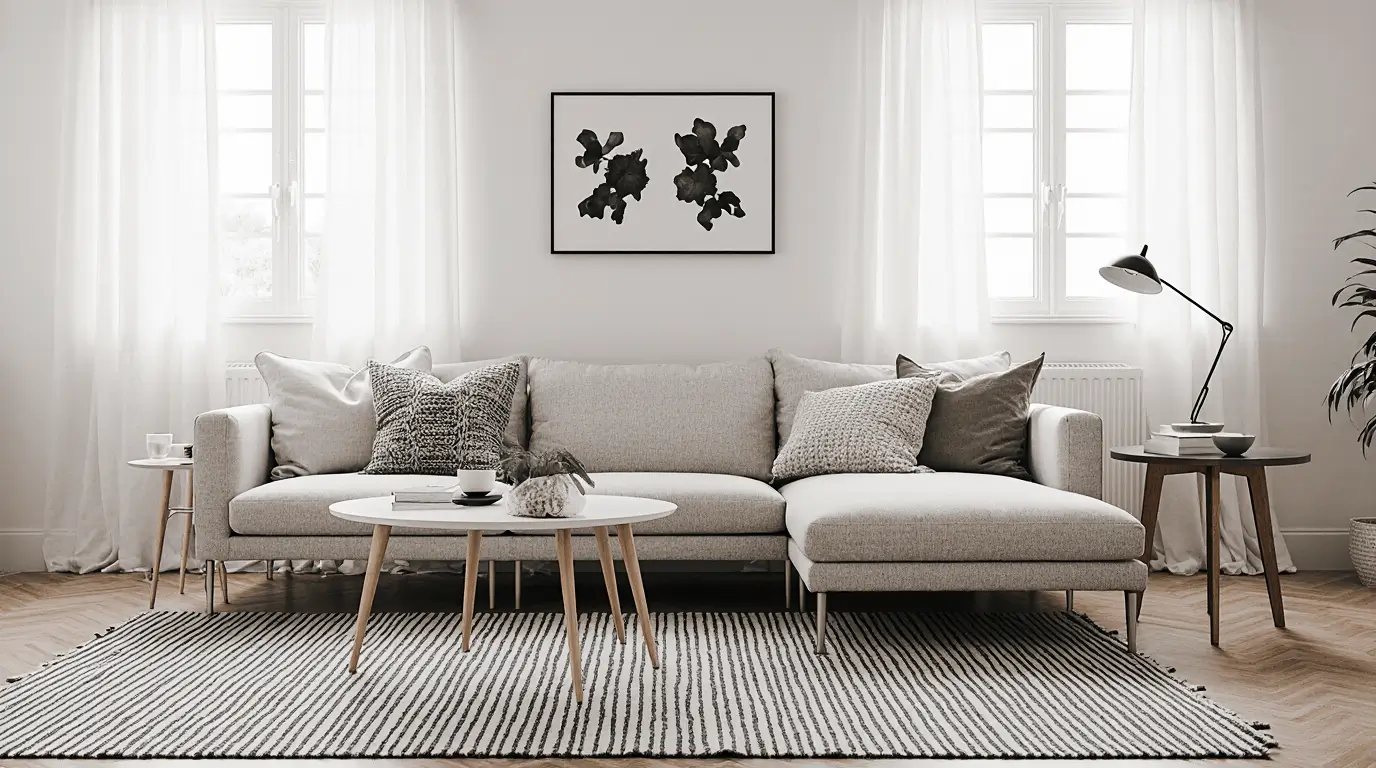
Mixing Prints in Home Decor Accessories
If you’re hesitant, start small. Layer patterned pillows, throws, or artwork before committing to larger pieces.
Accessories allow flexibility and seasonal updates.
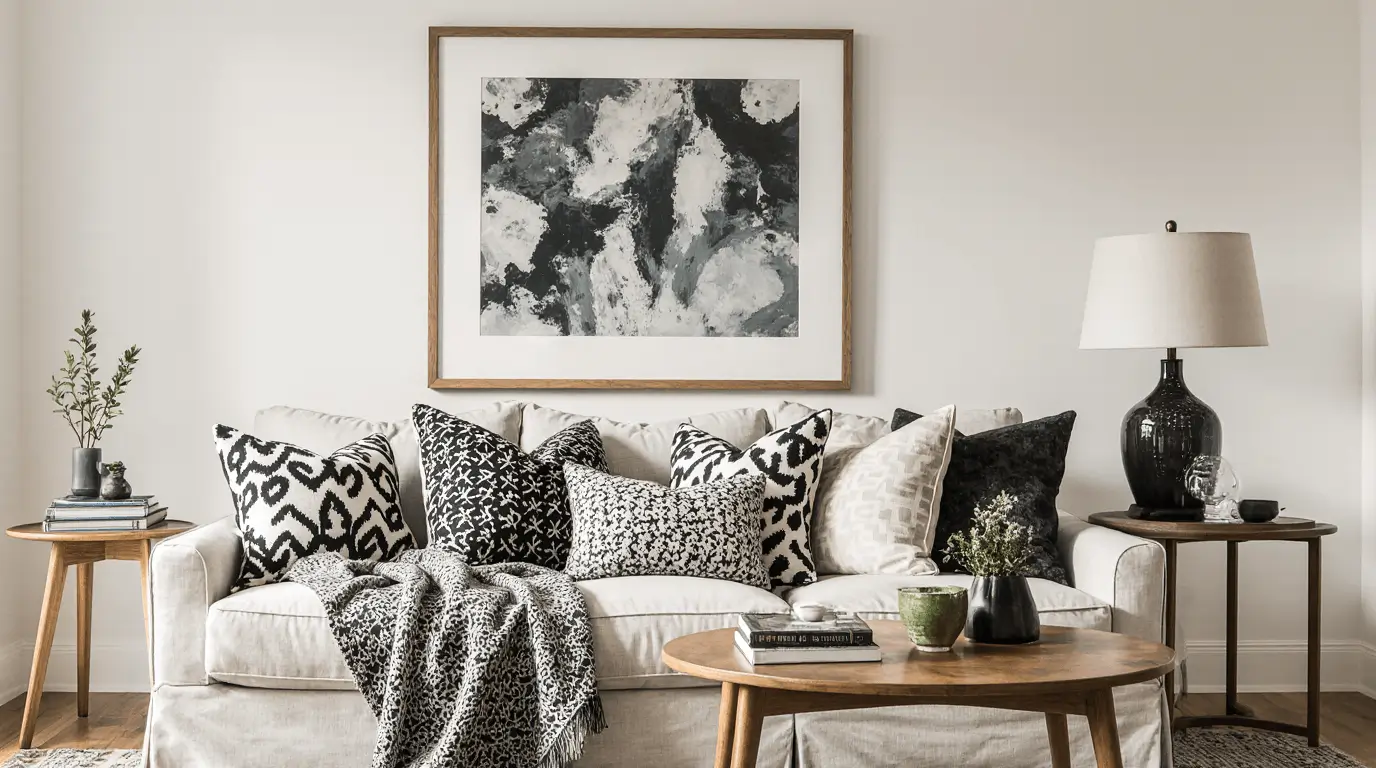
Mixing Fabrics in Living Room Furniture
Upholstery doesn’t have to match. Mixing patterned armchairs with solid sofas or combining two subtle prints can elevate the room.
Consistency in color undertones is key.
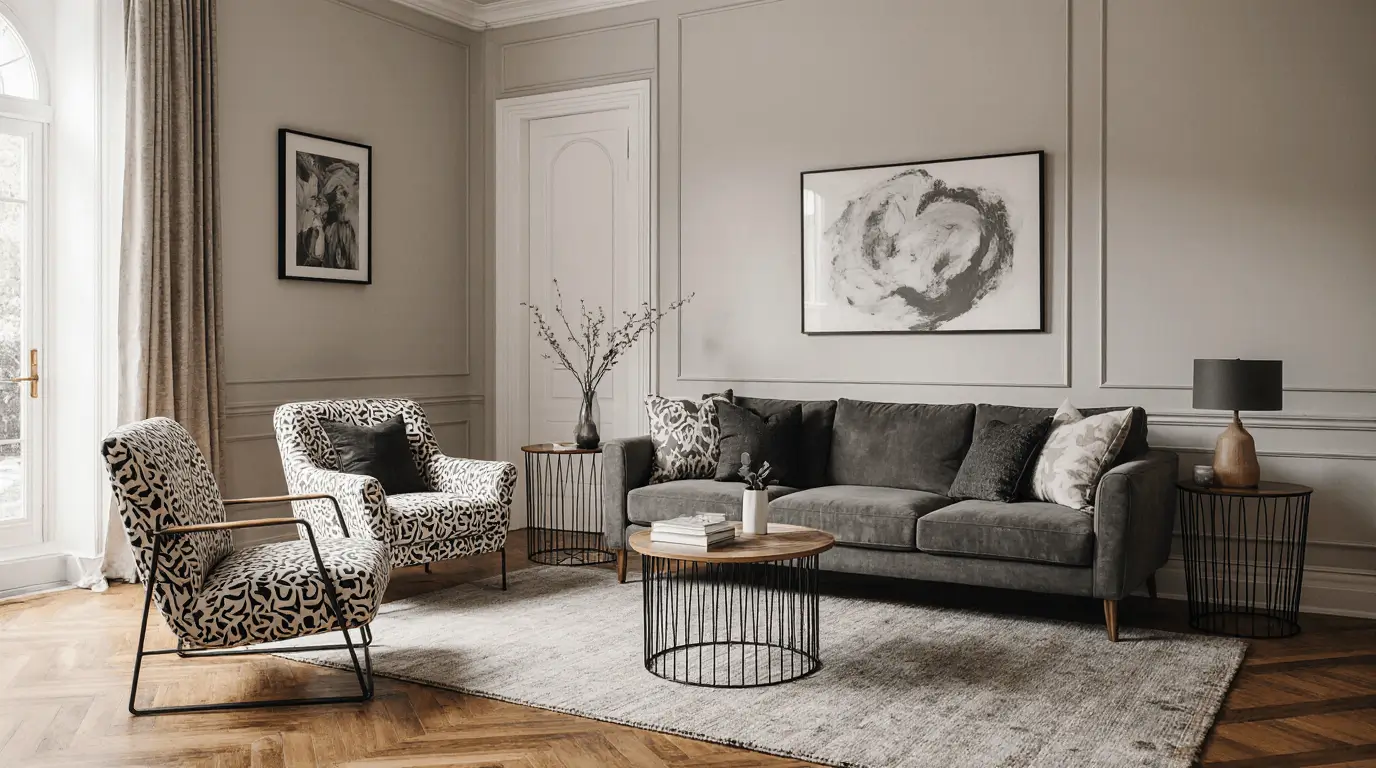
Rules for Mixing Patterns in Decorating
While creativity leads, a few guiding principles help:
- Vary scale
- Repeat colors
- Mix organic and structured motifs
- Balance solids and patterns
These foundational practices make mixing patterns interior design feel curated rather than accidental.
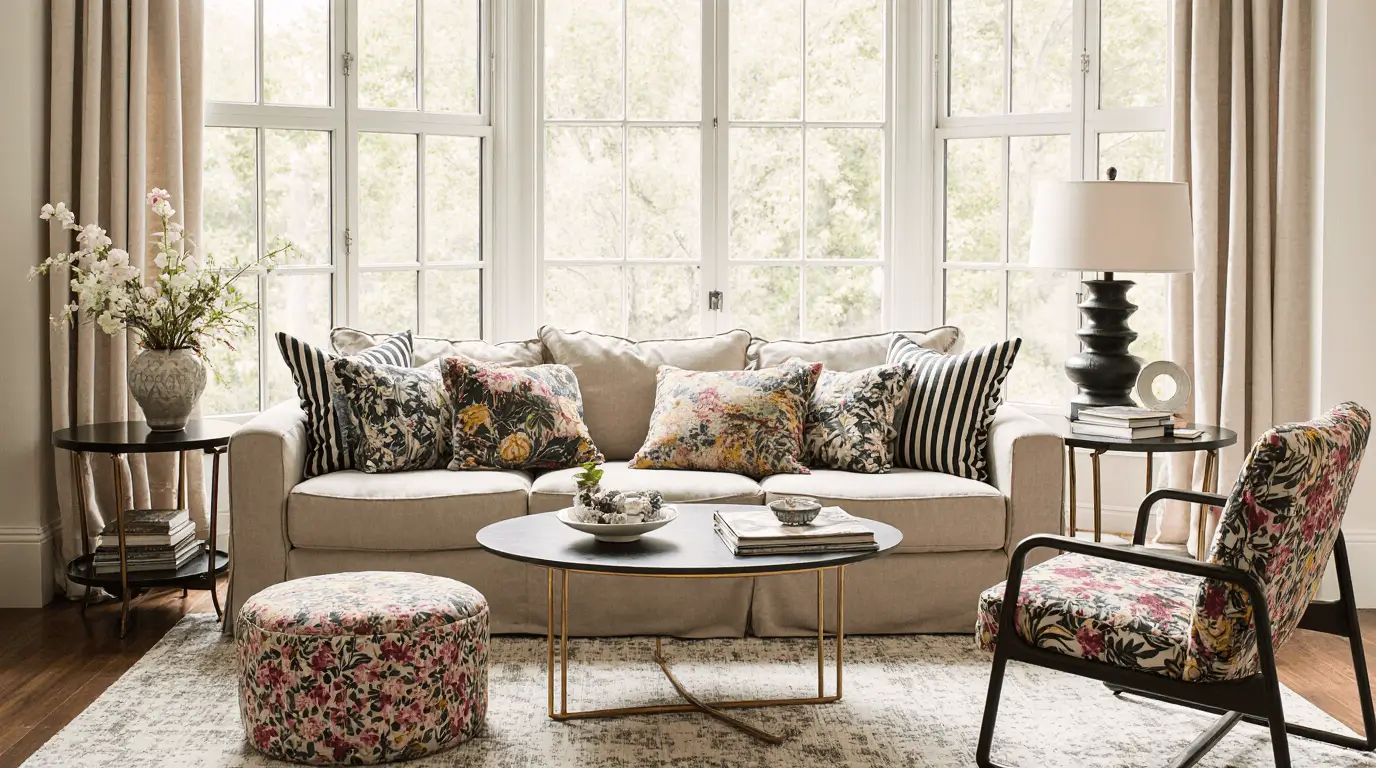
Conclusion: Designing with Confidence Through Pattern
At its core, mixing patterns interior design is about creating visual harmony through thoughtful contrast. It’s not randomness—it’s rhythm. When scale is varied, colors are unified, and textures are layered with intention, patterns begin to support one another rather than compete. The result is a space that feels dynamic yet grounded, expressive yet balanced.
Over the years, I’ve found that the most successful interiors aren’t overly coordinated—they’re curated. They reflect personality. They tell a story through florals paired with stripes, geometrics softened by organic prints, or structured motifs balanced by tactile fabrics like linen and velvet. Pattern mixing works because it mirrors how we naturally experience the world: layered, textured, and full of subtle complexity.
This approach benefits anyone who wants a home that feels designed rather than decorated. Whether you’re refreshing a single room or building a space from the ground up, start with a clear palette, introduce variation in scale, and allow one element to lead. When you make decisions intentionally—and edit when necessary—you move forward with clarity and confidence.
Ultimately, mixing patterns interior design isn’t about following rigid rules. It’s about understanding visual balance and trusting your eye. With a few guiding principles and a willingness to layer thoughtfully, you can create interiors that feel personal, elevated, and timeless.
Learn more : 10+ Powerful Dental Interior Design Secrets
Frequently Asked Questions
- How many patterns can I realistically mix in one room?
Most rooms comfortably support three to five patterns. A strong formula is one dominant print, one secondary pattern, and one or two subtle supporting motifs. Beyond that, cohesion depends heavily on color control and scale variation. If everything shares a common palette, you can push the mix further without visual chaos.
- What’s the biggest mistake people make when combining patterns?
Using patterns of the same scale is the most common issue. When everything is medium-sized, nothing stands out and the room feels busy. Introducing contrast—large, medium, and small—creates hierarchy and allows the eye to rest.
- Can I mix patterns if my furniture is already bold?
Yes—but shift the supporting elements. If your sofa or rug has a strong print, let other patterns be quieter or smaller in scale. You’re aiming for balance, not competition. Strategic restraint often makes bold pieces feel intentional rather than overwhelming.
- Do patterns have to match exactly in color?
Not exactly—but they should relate. Shared undertones or repeated accent colors create cohesion. Even if one fabric is floral and another geometric, repeating a navy or warm beige throughout the room ties everything together seamlessly.
- How do I test pattern combinations before committing?
Lay fabrics side by side in natural light and step back. Take photos in black and white to evaluate contrast and scale without the distraction of color. Sampling pillow covers or smaller accessories first is also a low-risk way to experiment.
- Is pattern mixing suitable for minimalist interiors?
Absolutely. In minimalist spaces, patterns tend to be more subtle—tone-on-tone stripes, quiet checks, or textured weaves. Even restrained layering adds depth and prevents a room from feeling flat or overly sterile.
- What if I prefer a calm, neutral home?
Pattern doesn’t have to mean bold color. Neutral palettes with varied textures—like woven rugs, soft stripes, or understated botanicals—can feel layered and serene. Mixing patterns interior design is as much about texture and scale as it is about color.




One Response