
Introduction
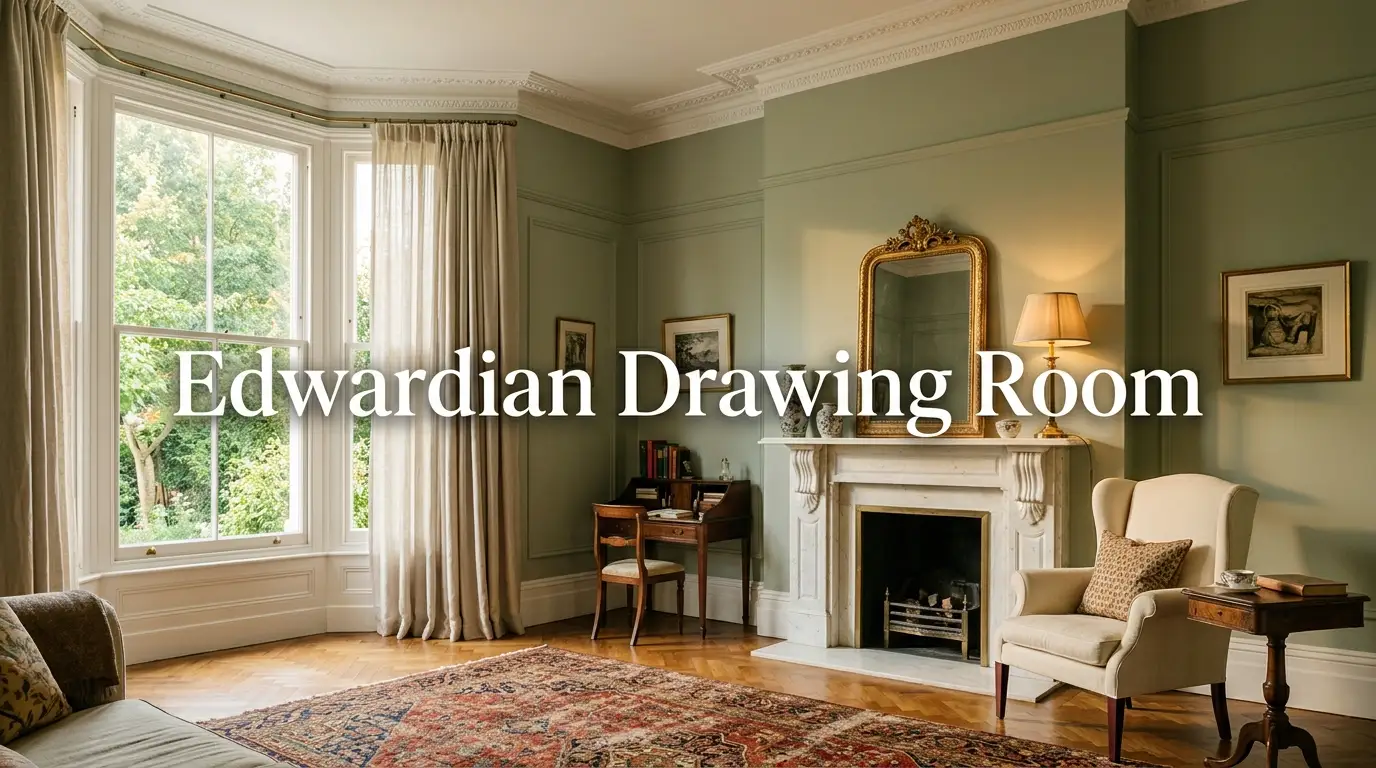
An edwardian drawing room is the formal, light-filled reception space found in homes built during the Edwardian period, roughly 1901 to 1910. It evolved directly from the heavier, darker Victorian parlour, trading dense ornamentation for brighter walls, taller windows, and a more relaxed sense of proportion. Where the Victorians filled every surface, Edwardian designers began to value breathing room — a shift that still feels remarkably livable today.
Having worked through countless period renovations and restoration projects, what stands out about this style is its balance. It respects classical detail — cornicing, panelled doors, marble fireplaces — while leaving enough negative space for the room to feel calm rather than cluttered. That balance is exactly why the look has aged so well and why so many homeowners now want to recreate it, whether they own an original Edwardian house or simply admire the aesthetic.
This guide breaks the style down into its essential components: the history that shaped it, the materials and colours that define it, and the practical decisions — furniture, lighting, flooring, window treatments — that determine whether a modern version of the room actually feels authentic. Each section below focuses on one piece of that puzzle, with a visual reference to help you picture it.
What Is an Edwardian Drawing Room?
The term describes the principal sitting room of a house built during King Edward VII’s reign, used for entertaining guests and family gatherings. It typically sits at the front or rear of the ground floor, often with a bay window, and was designed to showcase the household’s taste through restrained but quality furnishings rather than excess.
Understanding Edwardian House Styles
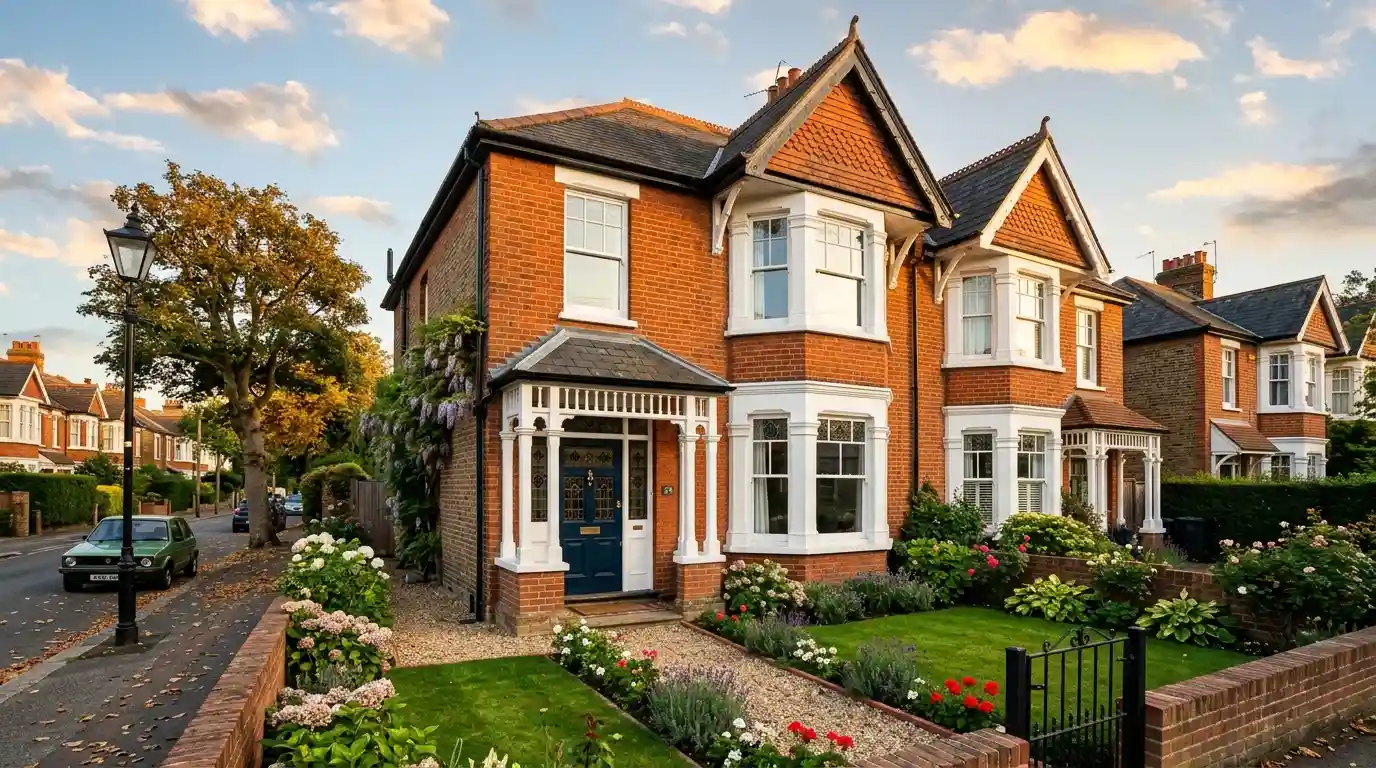
Edwardian houses are recognised by their wider frontages, larger windows, and simpler brickwork compared to Victorian terraces. The style favours red brick or roughcast render, tile-hung gables, and porches with classical columns, reflecting a broader move toward light and air in domestic design.
The Edwardian Home Style at a Glance
Edwardian home style sits between Victorian formality and Art Nouveau lightness. It uses pale colour schemes, simplified plasterwork, and an emphasis on symmetry, creating interiors that feel ordered without being austere. Furniture from this era tends to be slimmer and less heavily carved than its Victorian predecessors.
Core Elements of Edwardian Home Interiors
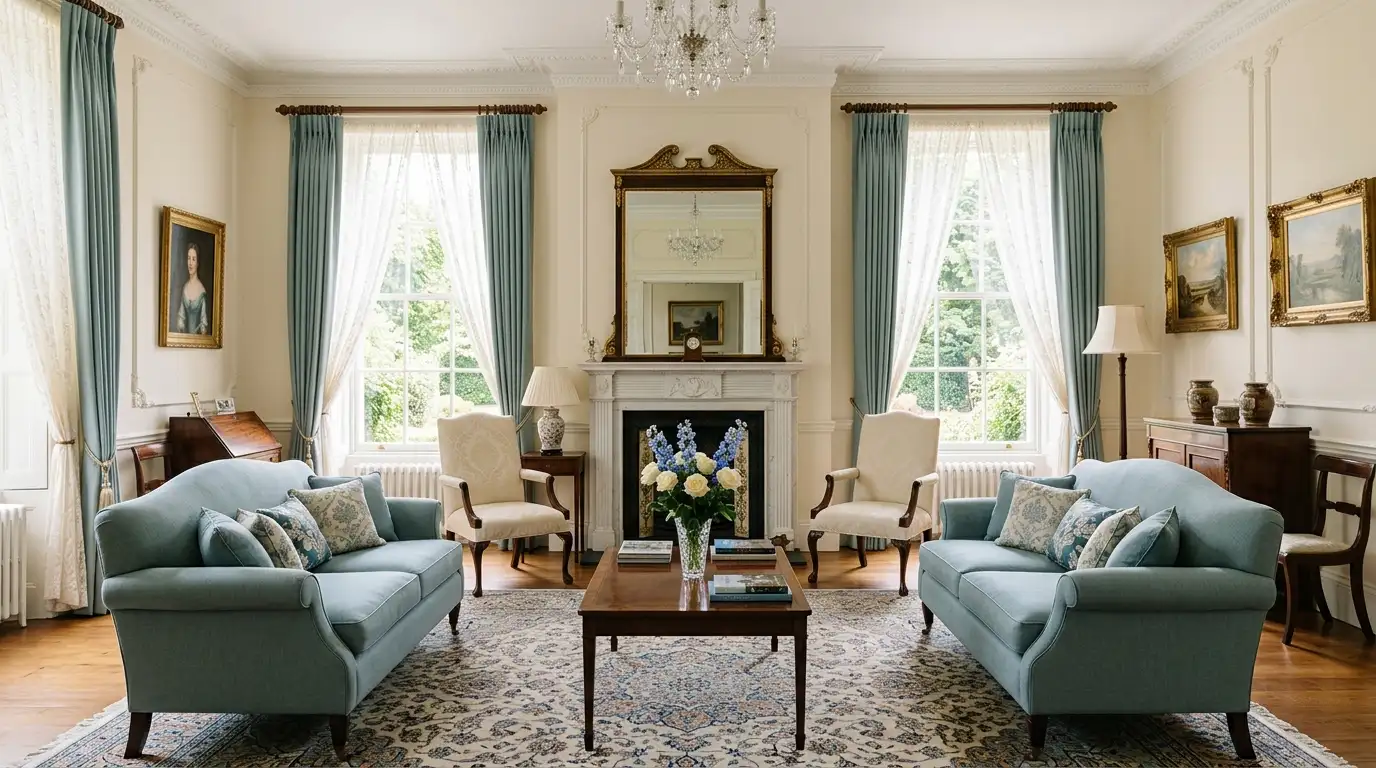
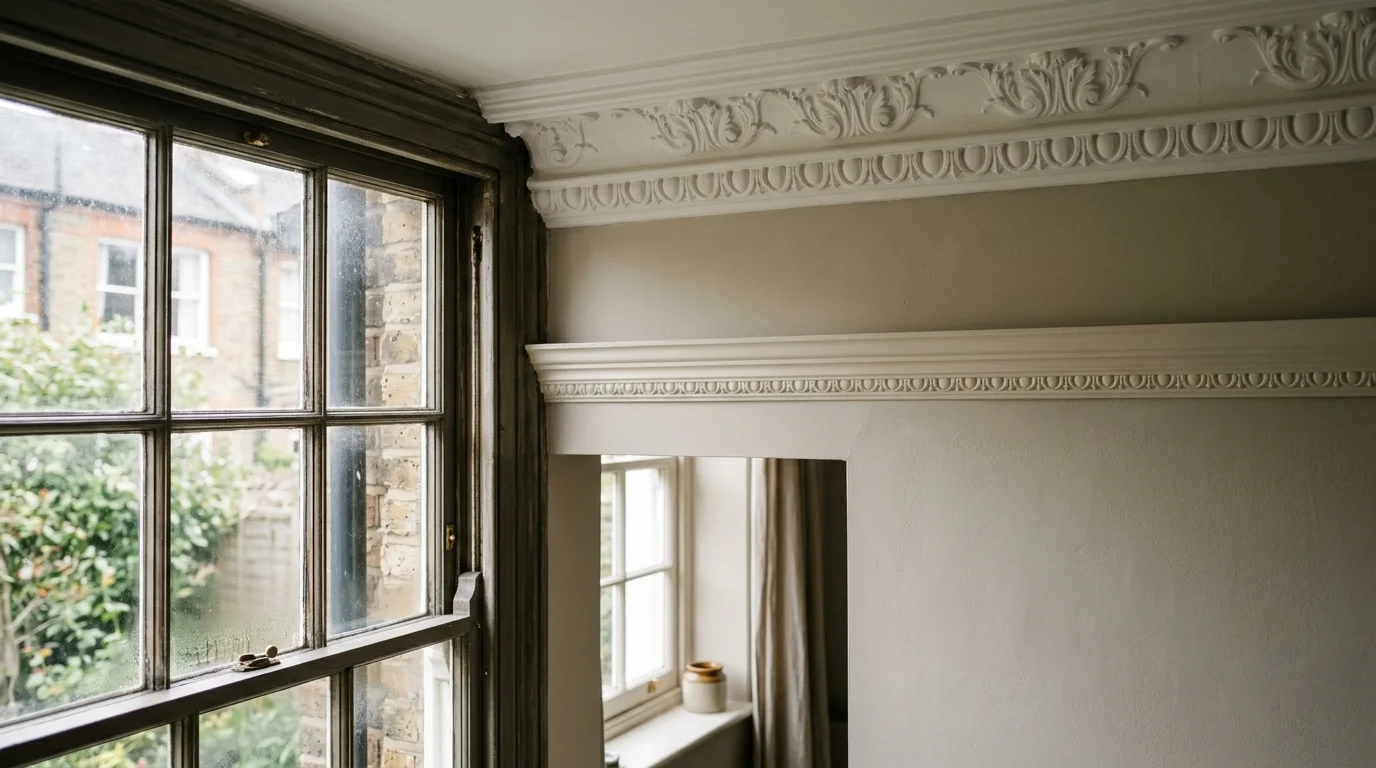
Edwardian home interiors are defined by high ceilings, deep skirting boards, picture rails, and generously proportioned sash windows. These architectural features give a room its bones, and preserving or replicating them is usually the first step in getting the look right.
Principles of Edwardian Interior Decor
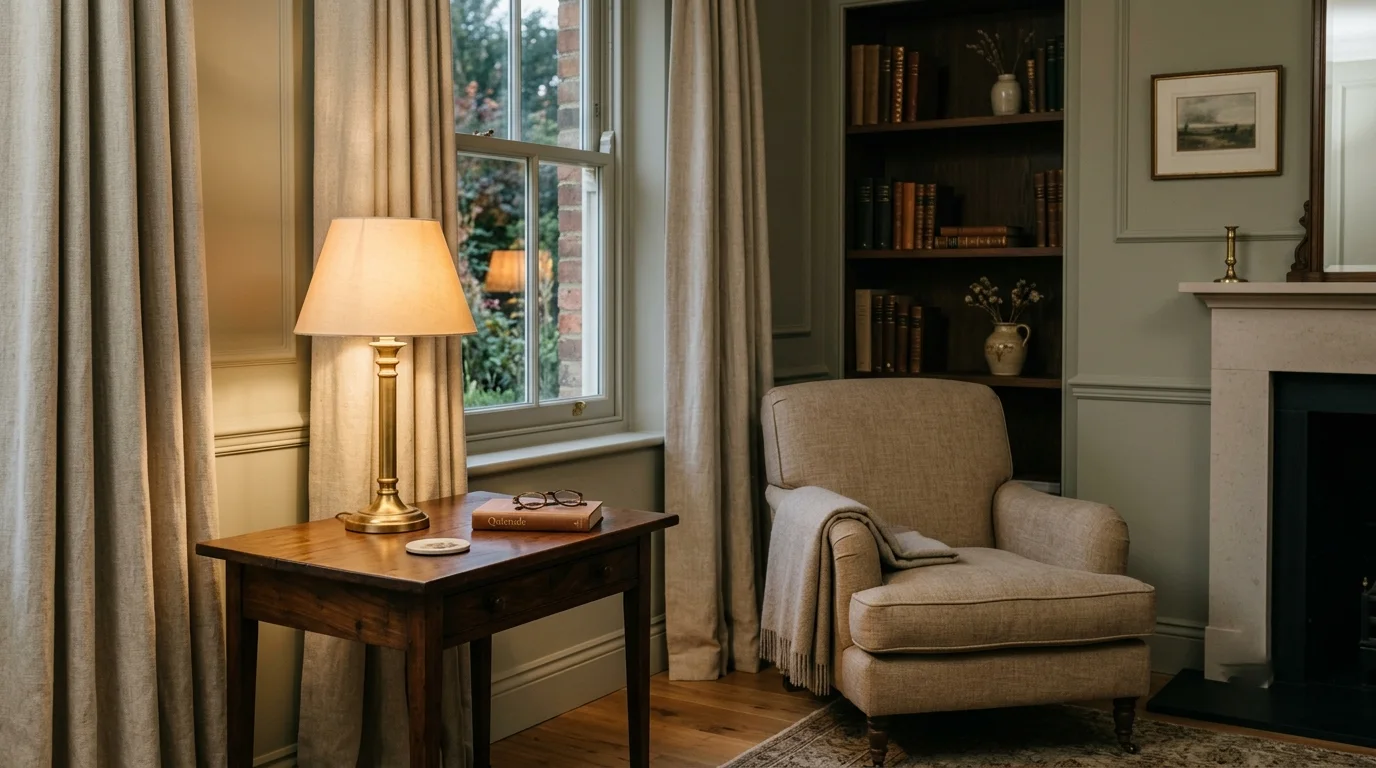
Good edwardian interior decor relies on restraint: one or two statement pieces, a calm wall colour, and natural materials like wood, brass, and linen. The goal is a considered look rather than a themed one, letting architectural details do most of the visual work.
Edwardian Living Room Colours
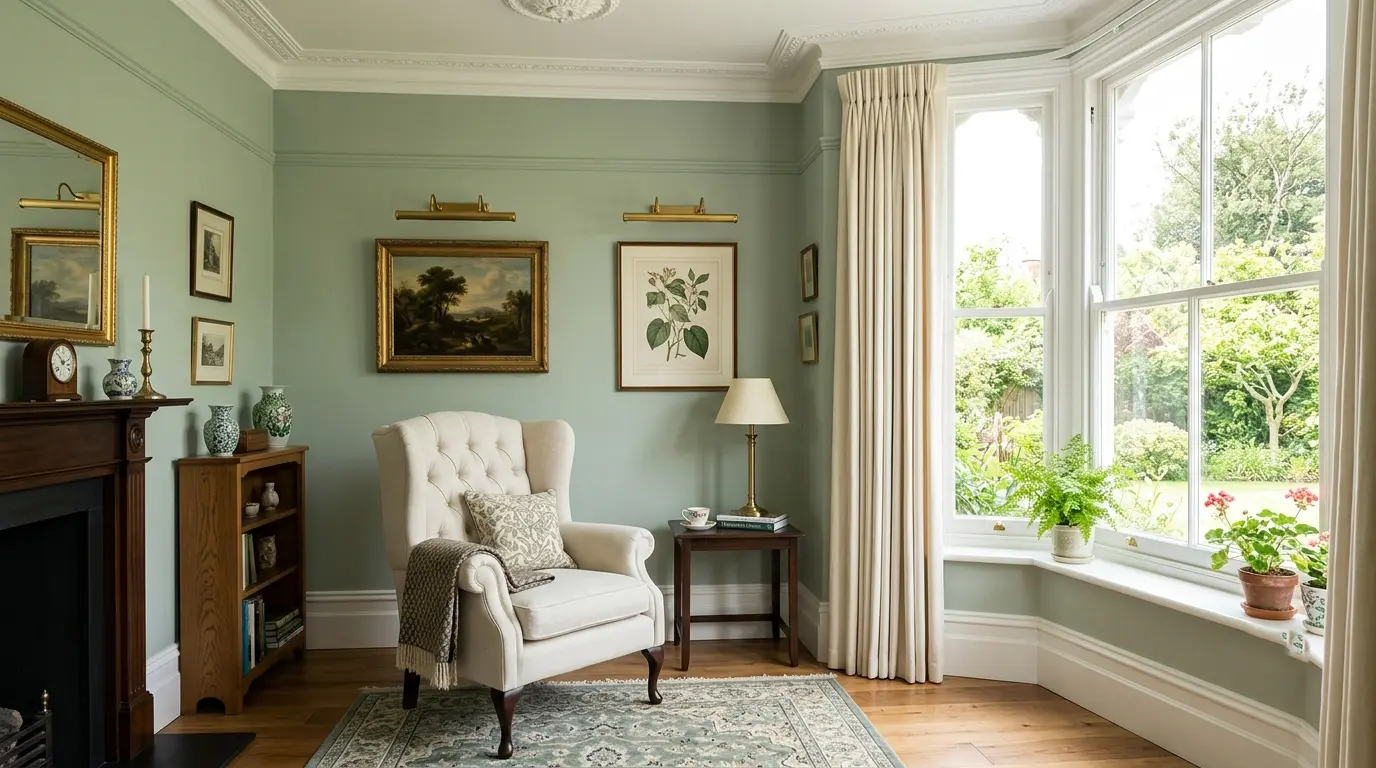
Typical edwardian living room colours include sage green, soft grey, dusty pink, ivory, and pale gold, often paired with white woodwork. These tones reflect more daylight than Victorian-era darker palettes and suit the larger windows the period introduced.
Edwardian Drawing Room Furniture
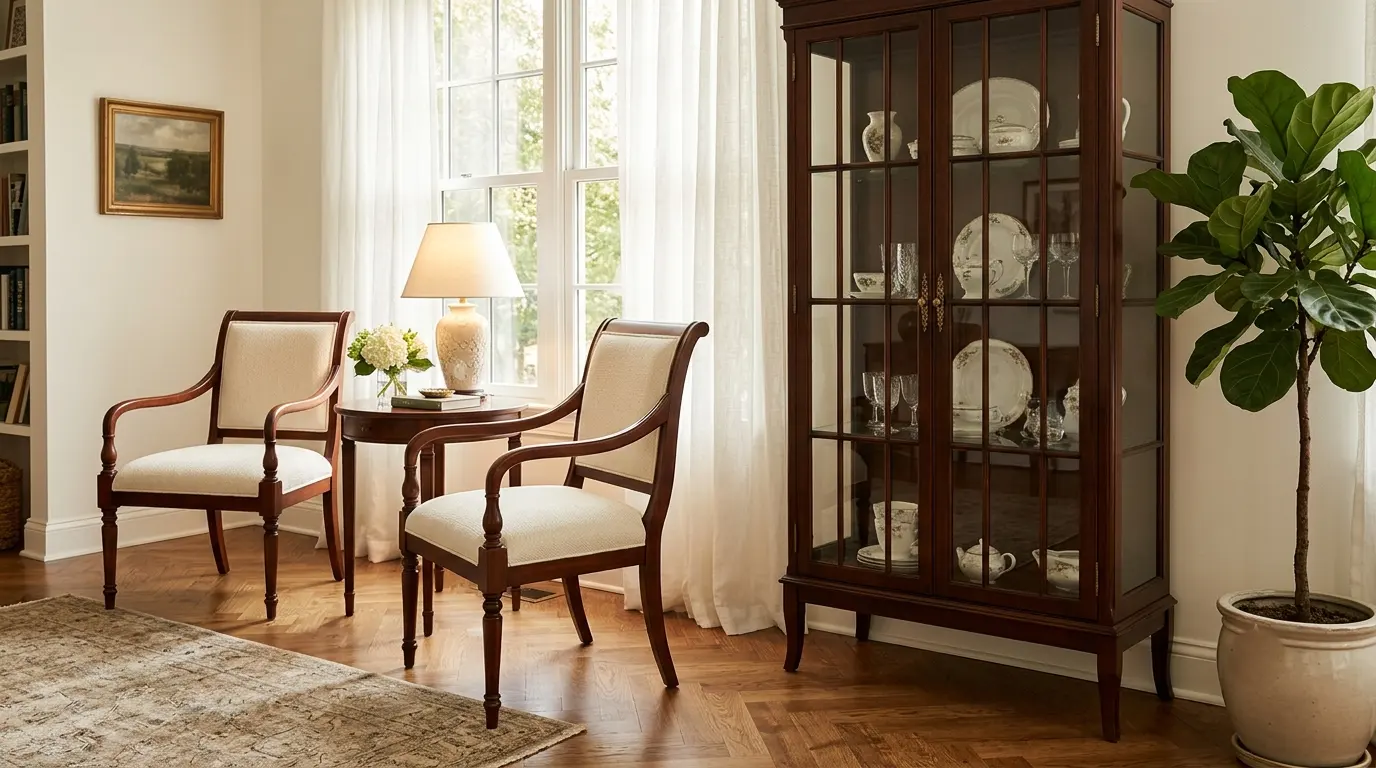
Edwardian drawing room furniture favours satinwood, mahogany, and walnut pieces with slender, often tapered legs, inspired by earlier Sheraton and Hepplewhite designs. Upholstered chairs, chaise longues, and glass-fronted cabinets were common, chosen for elegance rather than bulk.
Edwardian House Interior Design Ideas
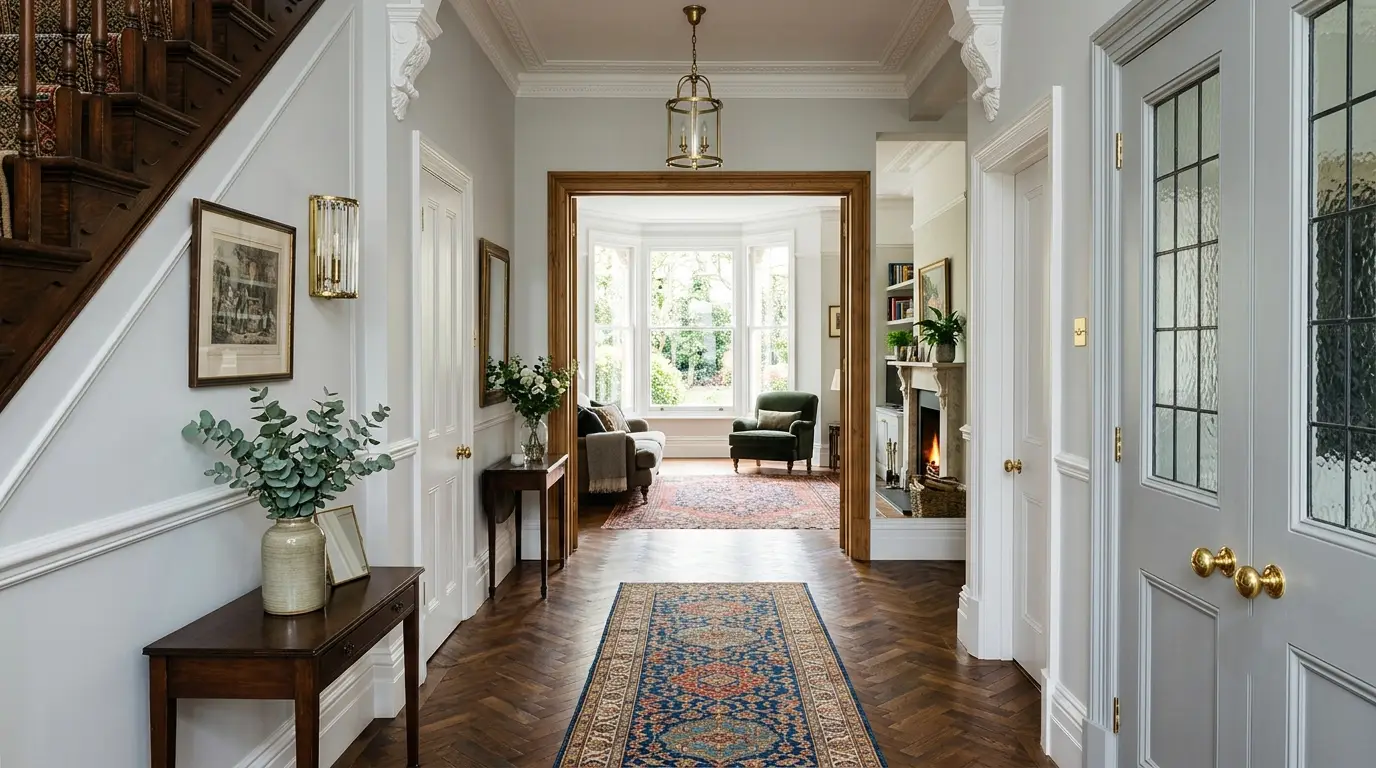
Practical edwardian house interior design ideas include keeping wall colours light, using period-appropriate hardware on doors and windows, and choosing rugs over wall-to-wall carpet to let original flooring show. Small, consistent choices like these reinforce authenticity without a full restoration.
Bringing Modern Edwardian Interiors to Life
Modern edwardian interiors keep the original architecture intact while introducing contemporary comfort: deeper sofas, layered lighting, and updated fabrics in period-appropriate colours. This approach respects the house’s history without turning it into a museum piece.
Capturing the Edwardian Era Drawing Room Mood
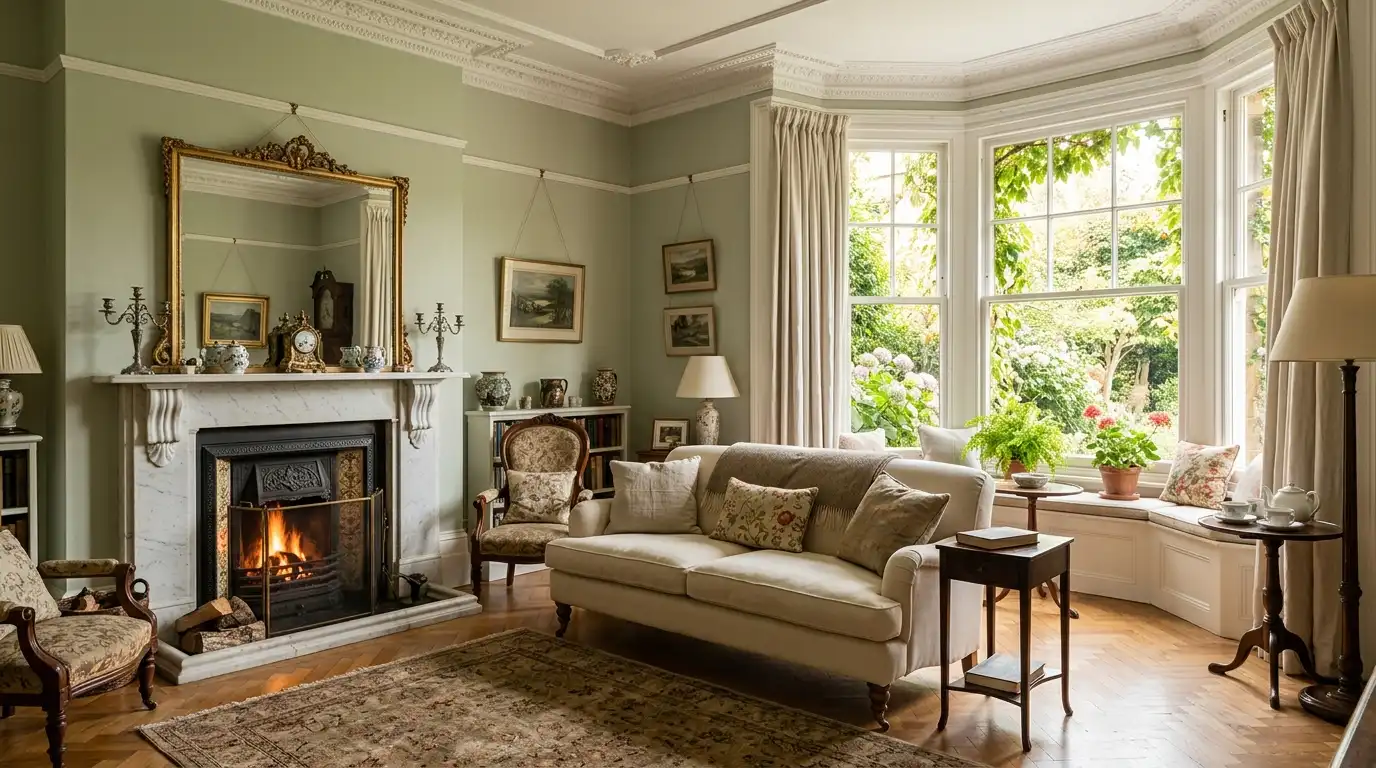
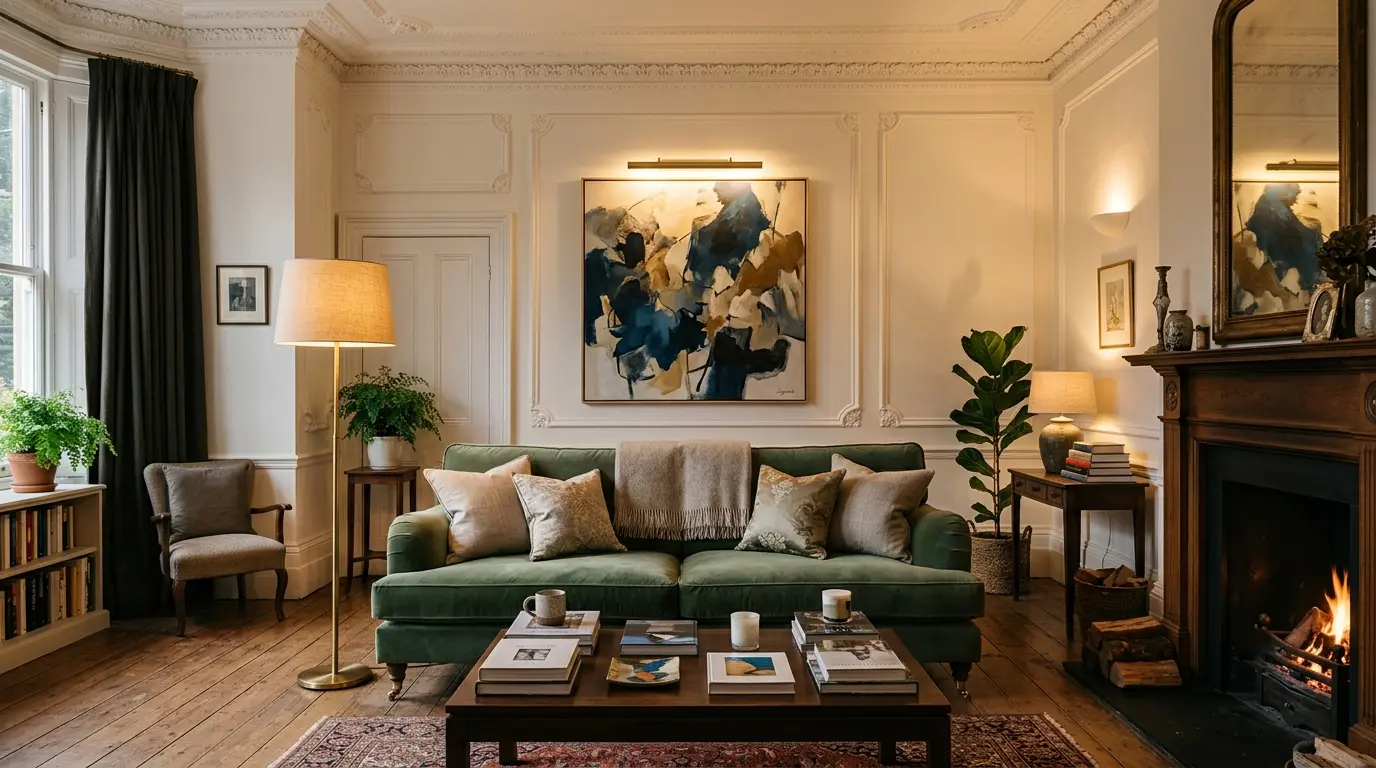
An authentic edwardian era drawing room feels formal but not stiff, with symmetrical seating arranged around a fireplace, soft natural light, and a measured use of pattern. The atmosphere should suggest quiet conversation rather than display for its own sake.
Lighting an Edwardian Drawing Room
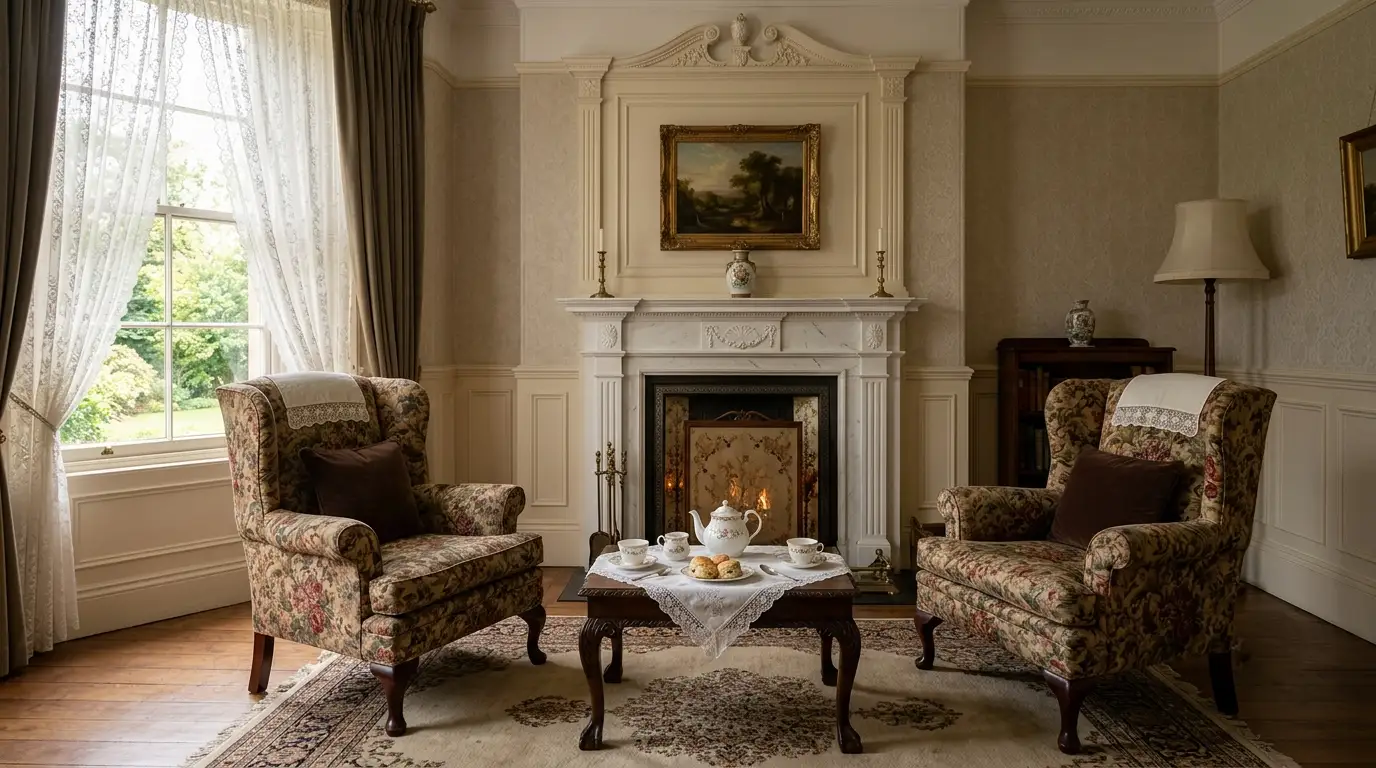
Lighting in this period relied on a mix of large windows, table lamps, and later, early electric wall sconces, replacing the dimmer gas lighting of the Victorian age. Layering soft ambient light with a few decorative fixtures still works best in these high-ceilinged rooms today.
Walls, Mouldings & Panelling
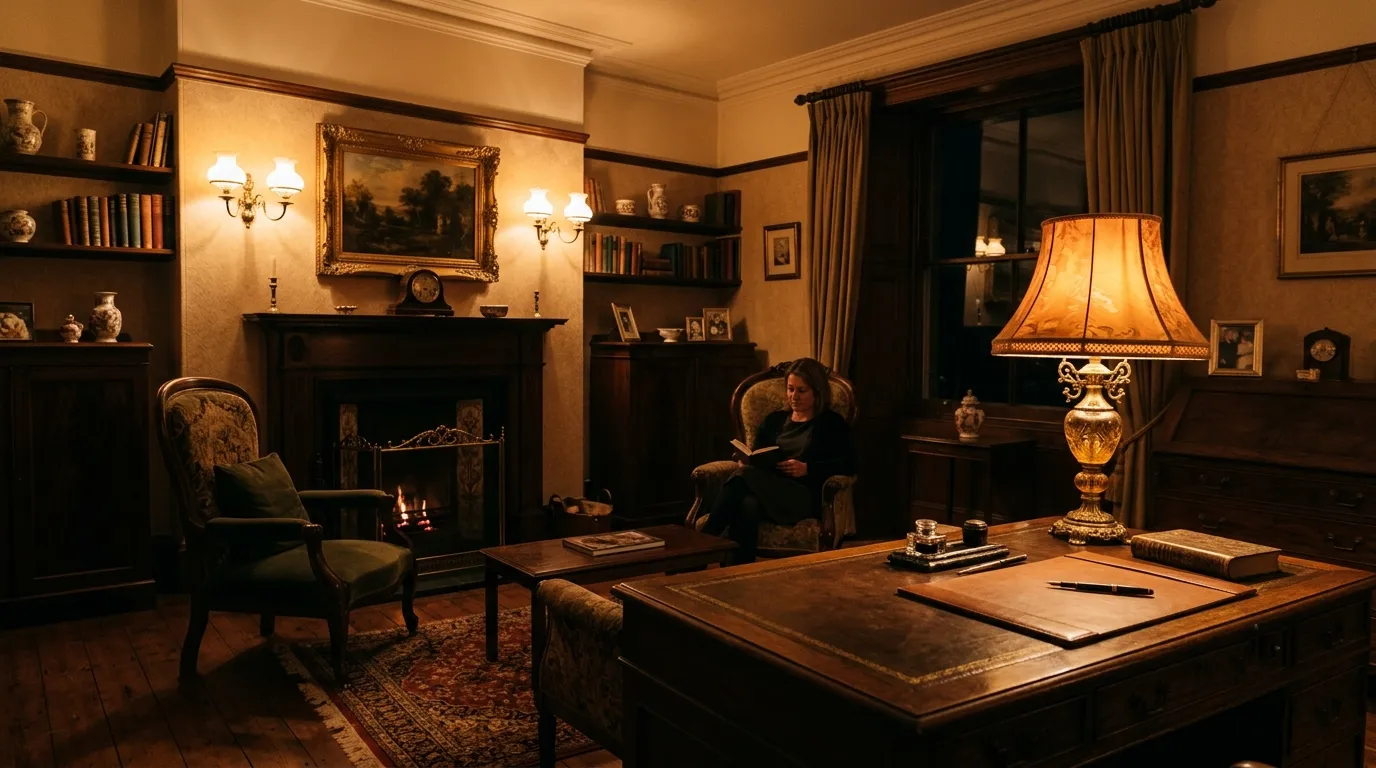
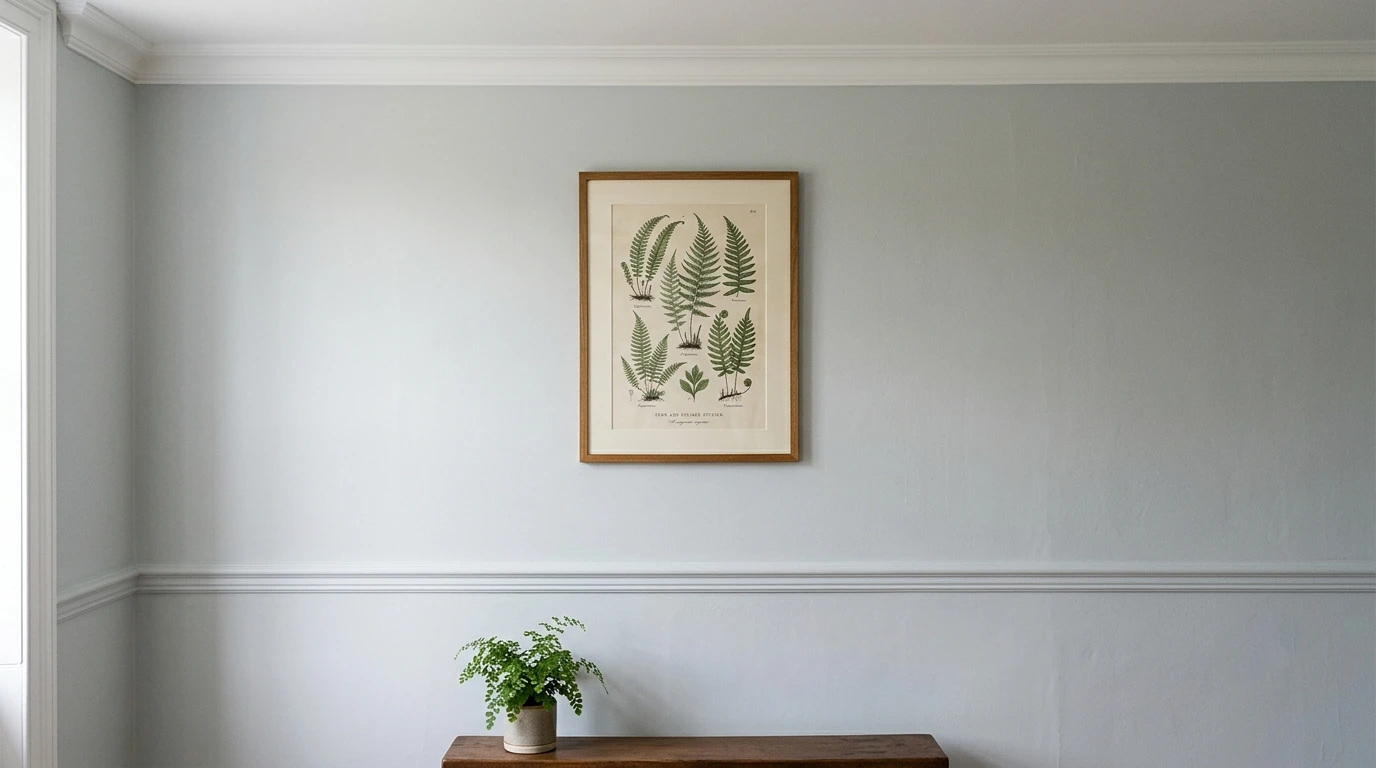
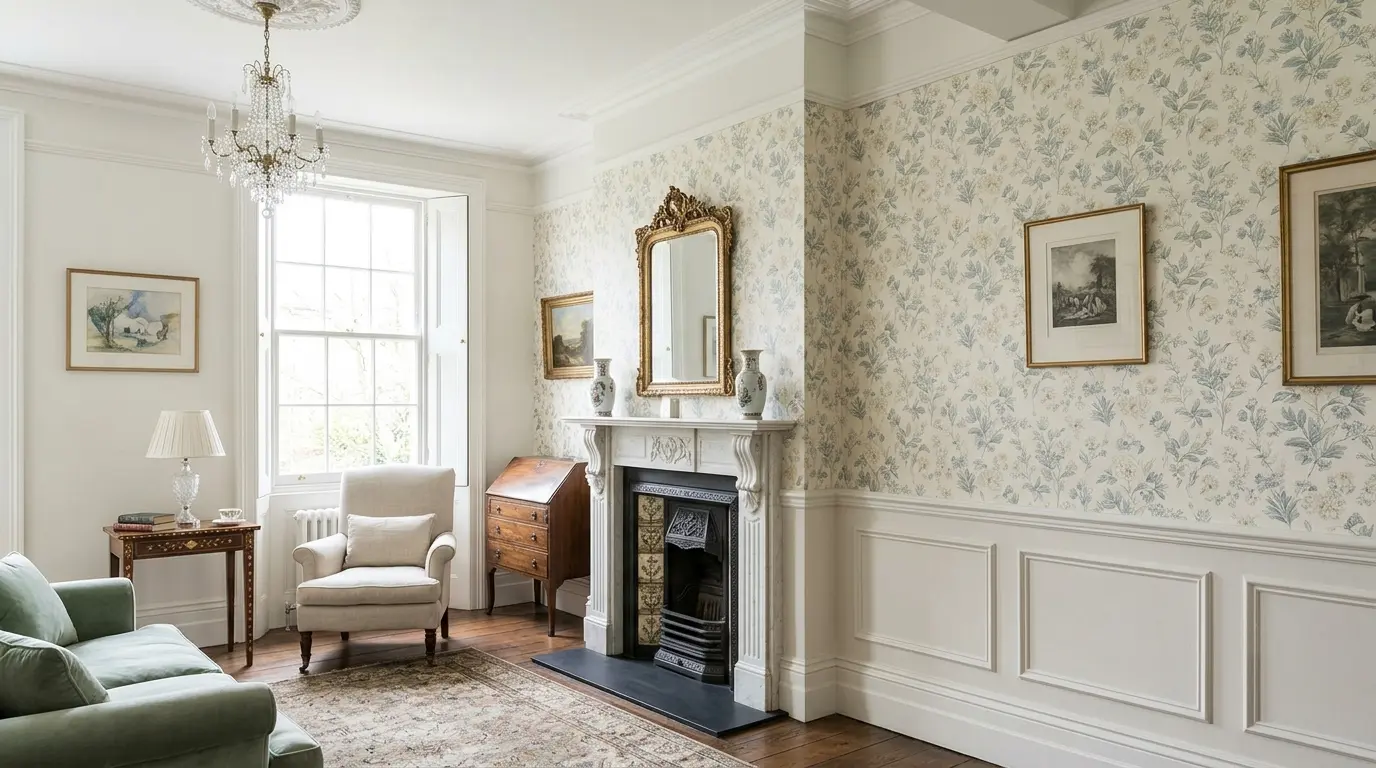
Picture rails, dado rails, and simple plaster cornicing are signature wall treatments of the period, used to divide the wall visually without the heavier dado panelling common in Victorian rooms. Painting these details in a single soft tone keeps the architecture visible rather than busy.
The Fireplace as the Heart of the Room
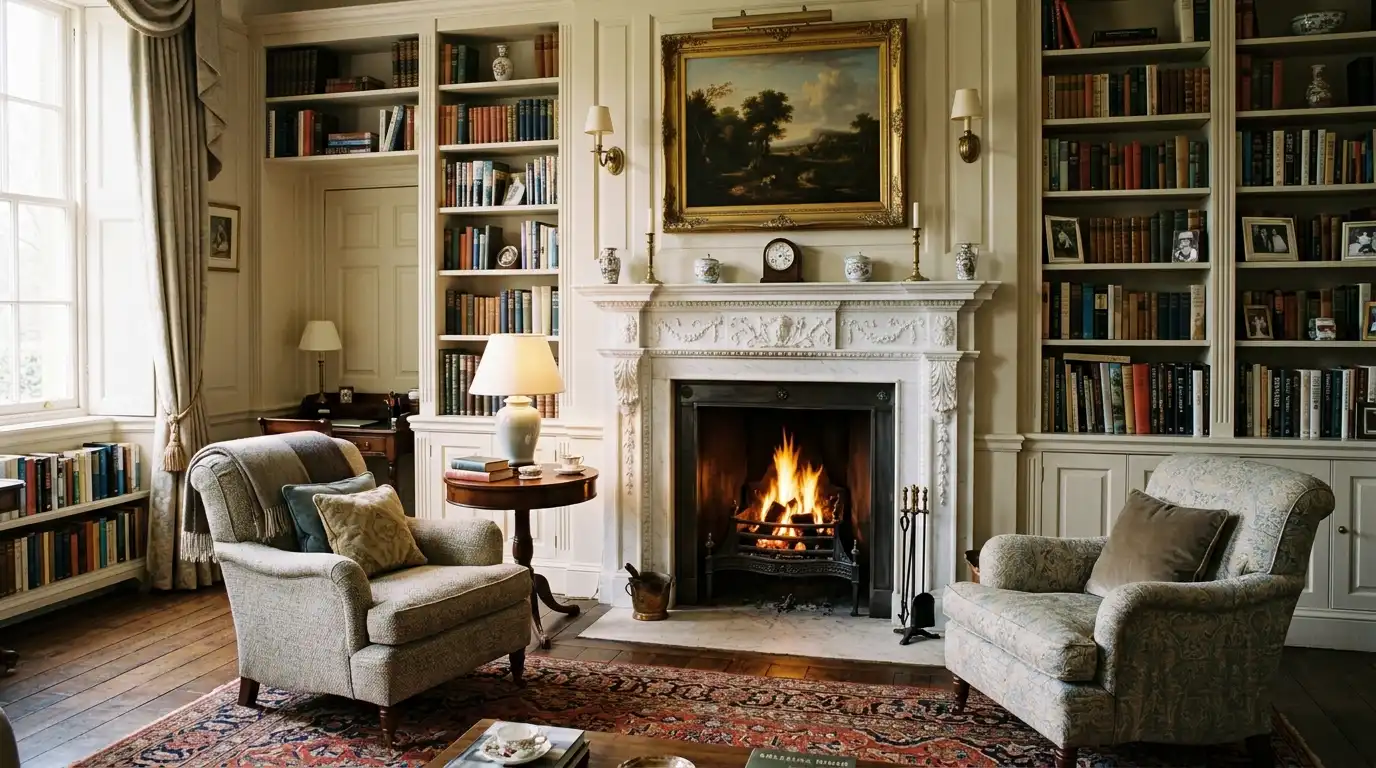
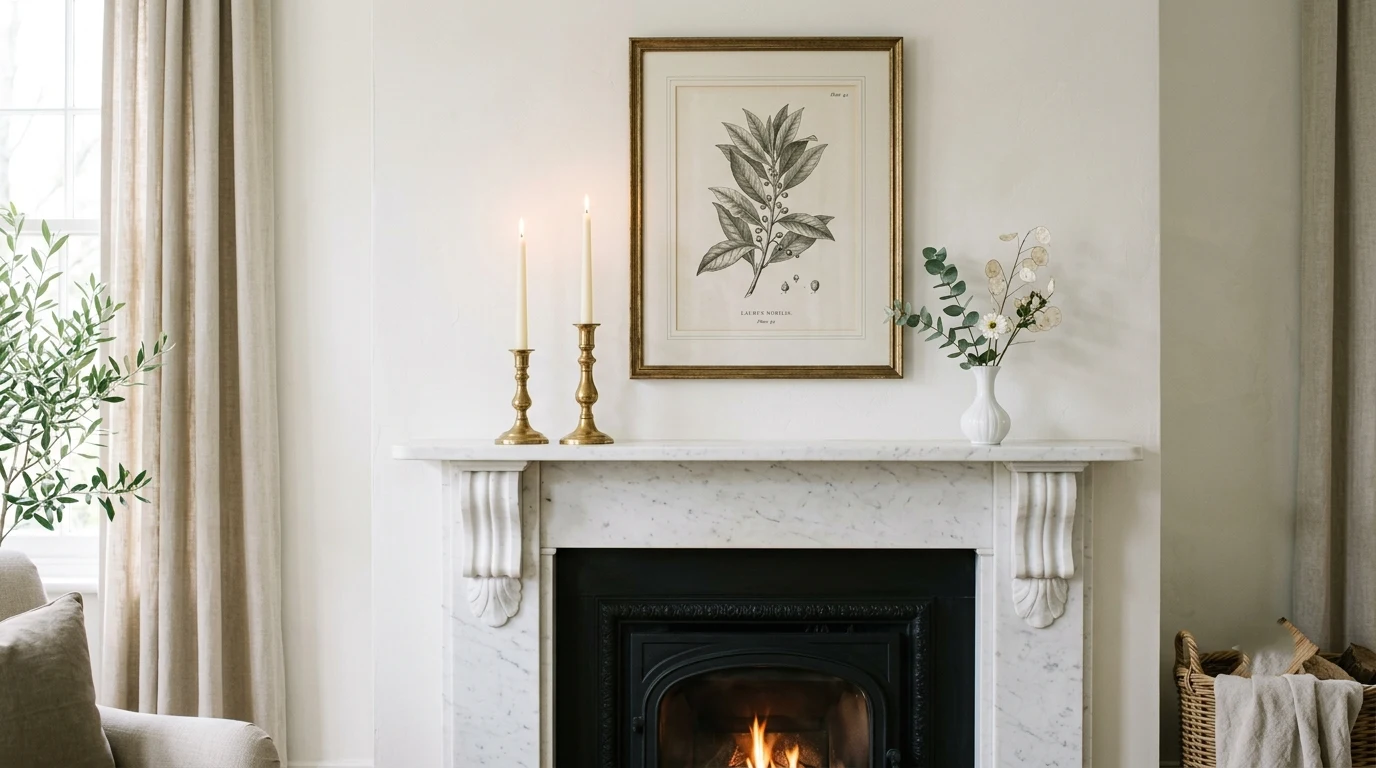
A marble, cast-iron, or wood-surround fireplace typically anchors the drawing room, often flanked by built-in alcove shelving. It remains the natural focal point for furniture arrangement, much as it was when the room was first designed for gathering around the hearth.
Flooring for an Edwardian Drawing Room
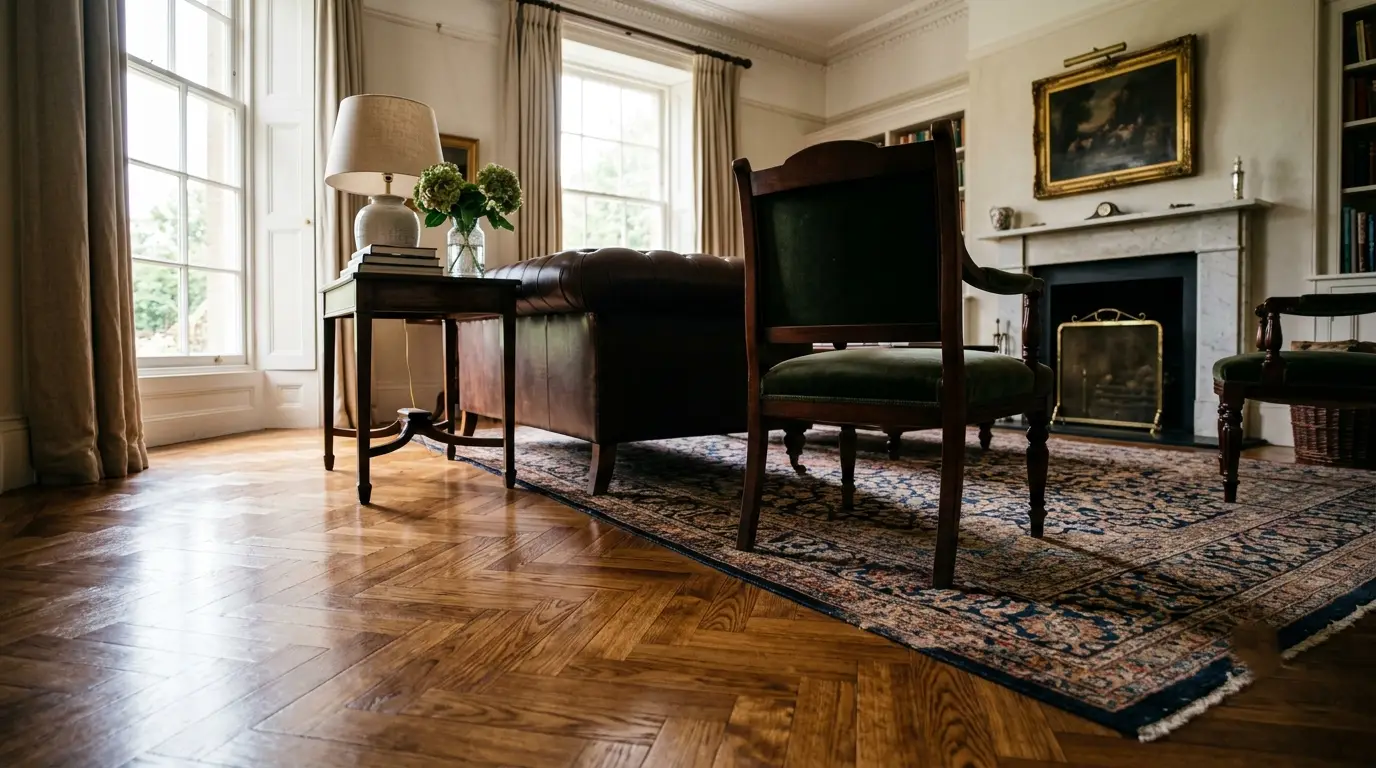
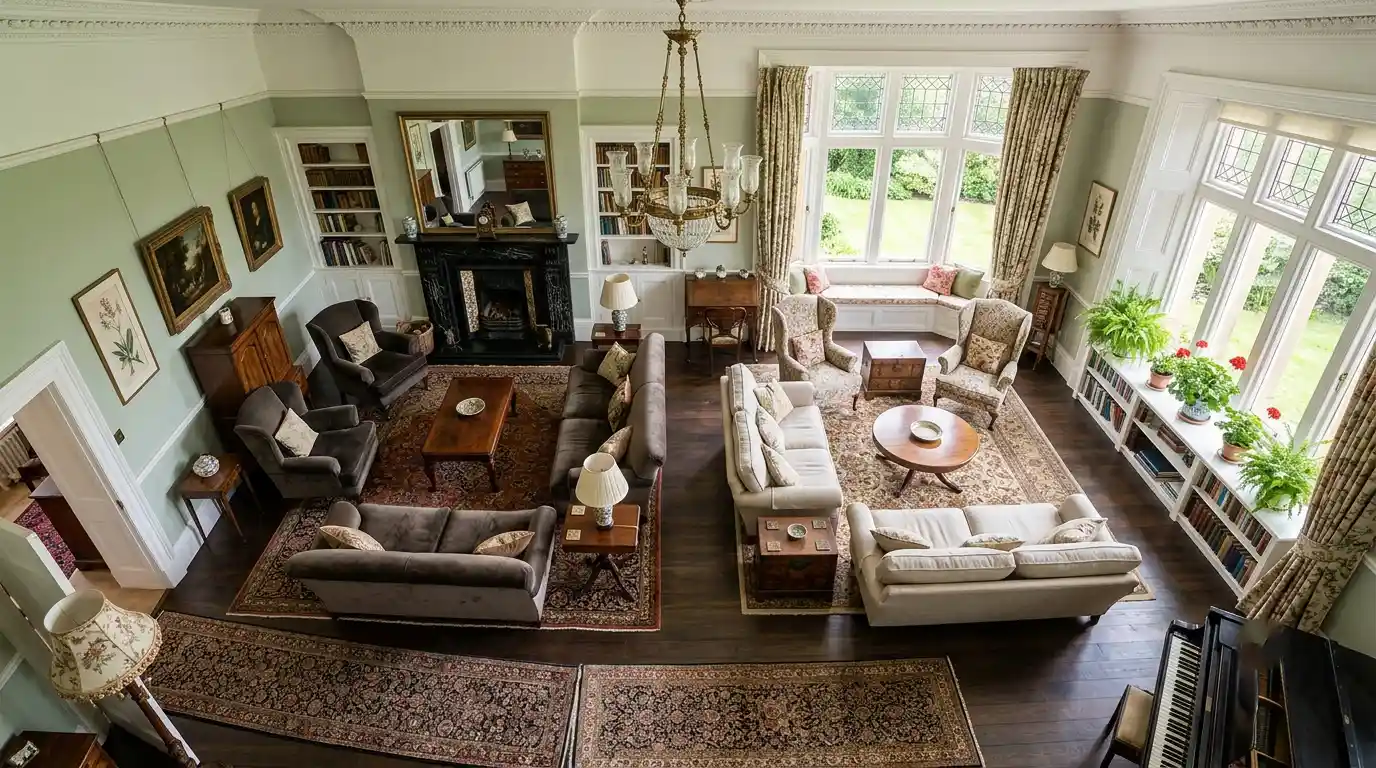
Original Edwardian floors were often parquet, polished pine boards, or encaustic tile near entrances, later softened with Persian or Turkish-pattern rugs. Restoring or replicating these floors, rather than covering them entirely, keeps the room grounded in its period.
Curtains, Drapery & Window Dressing
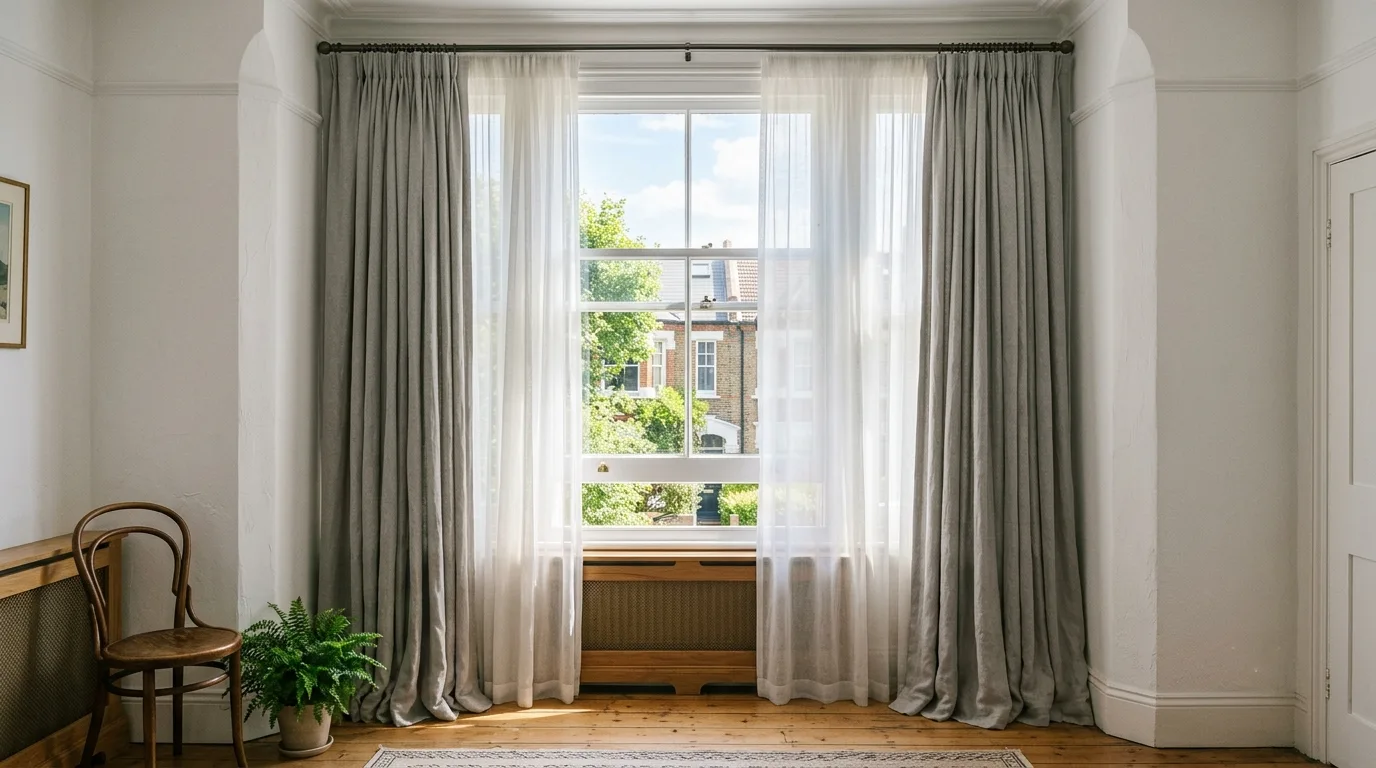
Tall sash windows were typically dressed with floor-length curtains in linen, silk, or damask, sometimes layered with sheer under-curtains for daytime privacy. Simple, well-proportioned drapery in muted tones suits the era far better than heavy fringing or elaborate swags.
Wallpaper & Pattern in Edwardian Rooms
Where wallpaper appears, it tends toward soft floral trails, stripes, or Art Nouveau-influenced motifs in muted colourways rather than the dense, dark patterns of earlier decades. Used sparingly, often above a dado rail or on a single feature wall, it adds texture without overwhelming the space.
Accessories & Decorative Objects
Fine china, framed botanical prints, brass candlesticks, and a small collection of books or curios complete the look without tipping into clutter. The Edwardian eye favoured a handful of well-chosen objects displayed with space around them, rather than dense Victorian-style shelving.
Layout & Proportions of an Edwardian Drawing Room
These rooms were typically square or near-square, with furniture arranged to create two or three conversation zones rather than facing everything toward a single television-era focal wall. Keeping furniture pulled slightly away from the walls, in the period manner, makes a room feel larger and more sociable.
Bringing It All Together
What makes an edwardian drawing room so enduringly satisfying isn’t any single feature — it’s the way restraint, proportion, and natural light work in concert. Every element covered here, from the colour on the walls to the angle of a chair beside the fireplace, exists to support the same underlying idea: a room built for genuine conversation rather than display. That’s a quietly radical idea even now, in an age of statement walls and maximalist trends, and it’s exactly why the style keeps returning to fashion rather than fading with it.
In practice, this approach rewards anyone who values calm, considered spaces over fast-changing trends. Homeowners restoring an original Edwardian property benefit most directly, since the architecture is already doing half the work — but the same principles translate just as well into a new build or a period-adjacent flat, simply by leaning on proportion, light, and a handful of well-chosen pieces rather than a long shopping list. The lesson that carries furthest is this: get the bones of the room right first — the colour, the light, the layout — and the decorative details will almost always fall into place on their own.
If you take one thing forward from this guide, let it be patience with the process. A convincing Edwardian drawing room is rarely finished in a single weekend; it’s built gradually, piece by piece, the same way the originals were furnished over years rather than assembled overnight. Trust that slower pace, and the room will reward you with a kind of warmth that’s hard to fake.
Learn more : Rustic Cottage Decor: Cozy Style That Feels Timeless
Frequently Asked Questions
- Is an edwardian drawing room the same as a living room? Functionally, yes — it serves the same purpose as a modern living room. The distinction is largely historical: “drawing room” was the term used for the main reception space in Edwardian and earlier homes, reserved for receiving guests, while “living room” became the more common, less formal label as twentieth-century homes shifted toward everyday family use.
- Can I create this look in a house that isn’t actually Edwardian? Absolutely. While original architecture gives you a head start, the core principles — pale, considered colour, slender furniture, layered lighting, and uncluttered surfaces — work in almost any room with reasonable ceiling height. You’re borrowing a sensibility, not requiring a specific building date.
- What’s the easiest way to start if I’m on a budget? Begin with colour and light rather than furniture. Repainting walls and woodwork in a soft, period-appropriate tone, and swapping a single overhead light for a table lamp or two, changes the feel of a room far more than buying new pieces, and costs a fraction as much.
- How do I avoid the room feeling like a museum rather than a home? Mix in one or two contemporary pieces — a modern sofa, an abstract print, a current fabric on an otherwise period-style chair. The goal is a room that nods to its history without being staged as a recreation; lived-in always reads better than perfectly arranged.
- Do I need an open fireplace for the style to work? No. A fireplace surround with an electric or decorative insert achieves the same visual anchor and conversation-led layout without the upkeep of a working chimney. What matters is the focal point it creates, not whether it’s functional.
- What’s the most common mistake people make with this style? Going too dark. Many people associate period interiors with deep, moody colours, but that’s a Victorian instinct, not an Edwardian one. This era is defined by lightness and air, so the safest rule of thumb is to choose a shade lighter than your instinct suggests.
- Will this style still feel relevant in a few years, or is it a passing trend? Because it’s rooted in proportion and restraint rather than a specific colour palette or decorative fad, it tends to age more gracefully than trend-driven looks. The details you choose today — a paint colour, a lamp — can shift over time without disrupting the underlying structure that makes the room work.



One Response