
Introduction
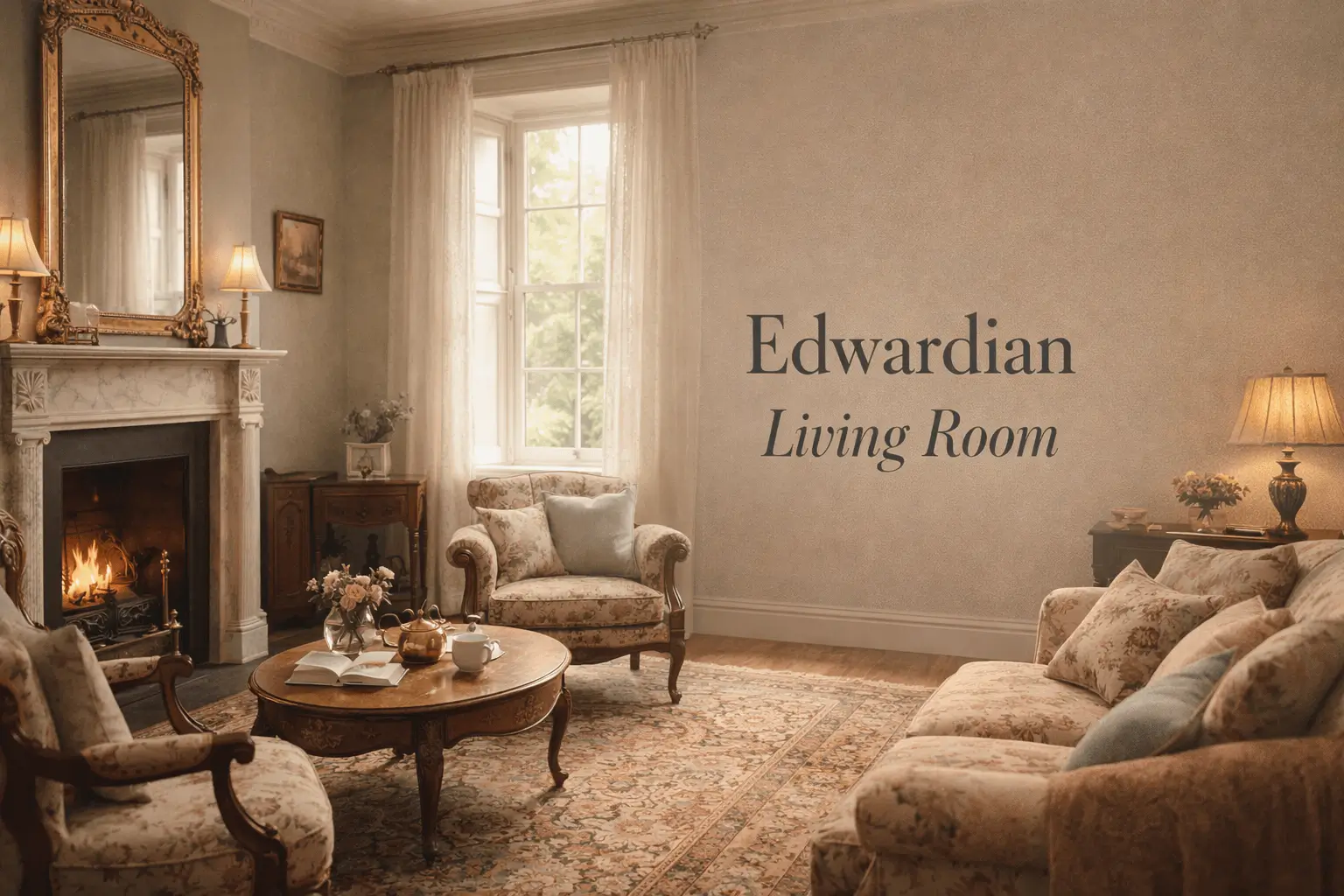
An edwardian living room reflects a graceful transition in interior design history. Emerging in the early 1900s, Edwardian interiors moved away from the darker, heavier style of Victorian homes and introduced lighter colours, more natural light, and elegant yet practical furnishings. The result is a living space that feels refined, welcoming, and beautifully balanced.
Unlike overly ornate interiors, an edwardian living room blends decorative craftsmanship with simplicity. Large windows, pale wall colours, delicate plasterwork, and carefully chosen furniture create a room that feels airy while still maintaining historical character. These interiors often celebrate craftsmanship through woodwork, patterned textiles, and tasteful antiques.
From modern adaptations to authentic period recreations, the Edwardian style remains one of the most admired approaches to classic home design. Whether you are restoring a historic home or simply introducing period charm, understanding the core elements of Edwardian interiors helps create a living room that feels timeless and elegant.
Edwardian Living Room Colour Schemes
Edwardian interiors are known for their light and uplifting palettes. Cream, soft sage green, dusty rose, pale blue, and warm neutrals replaced the deep, heavy colours used in earlier periods. These tones help create a brighter, more spacious atmosphere.
Subtle contrast is often added through white mouldings, decorative trim, and natural wood furniture that anchors the room without overpowering the delicate colour palette.
Edwardian Living Room Interior Design Elements
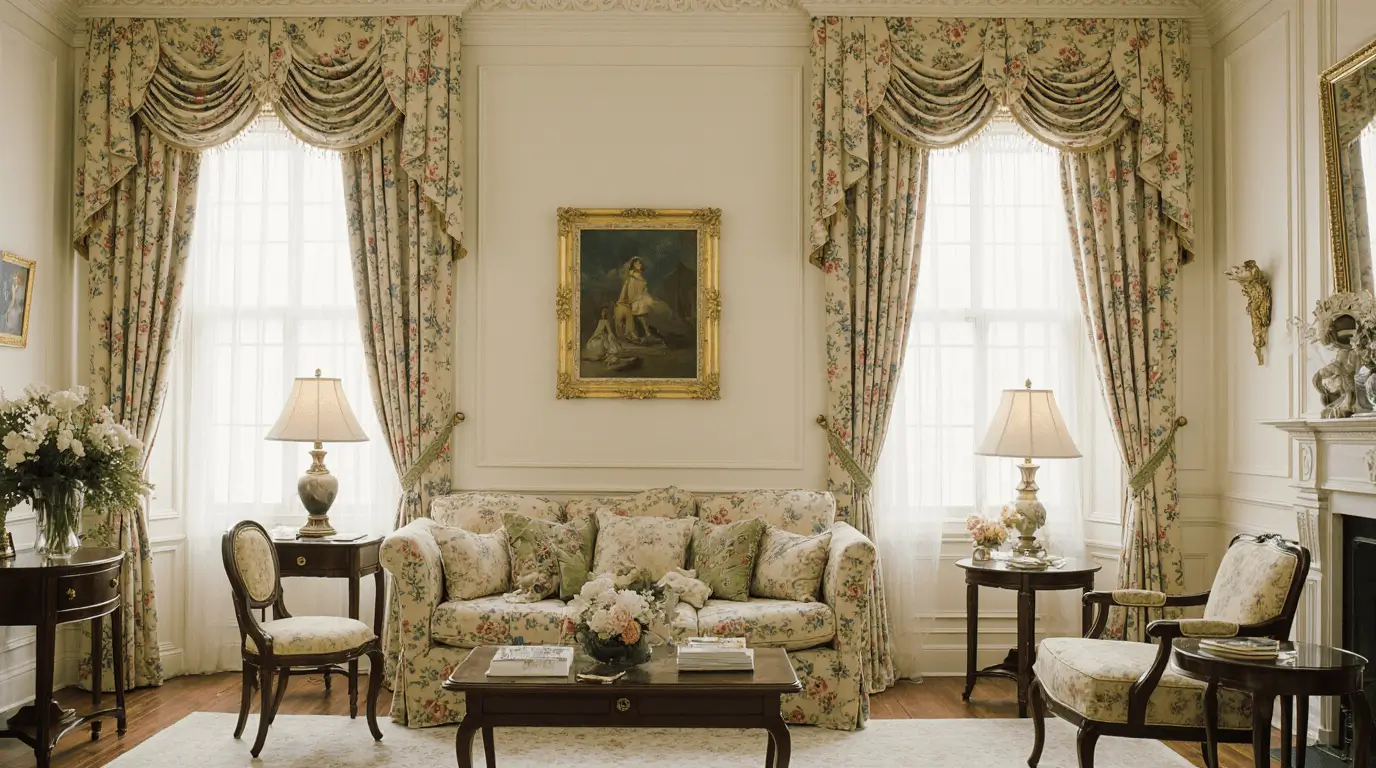
A defining characteristic of an Edwardian living room is its balance between ornament and openness. Decorative plaster ceilings, carved wood mantels, and panelled walls create architectural interest while maintaining a light, uncluttered feel.
The layout often encourages conversation, with sofas and armchairs arranged around a fireplace or central table.
Edwardian Living Room Walls and Architectural Details
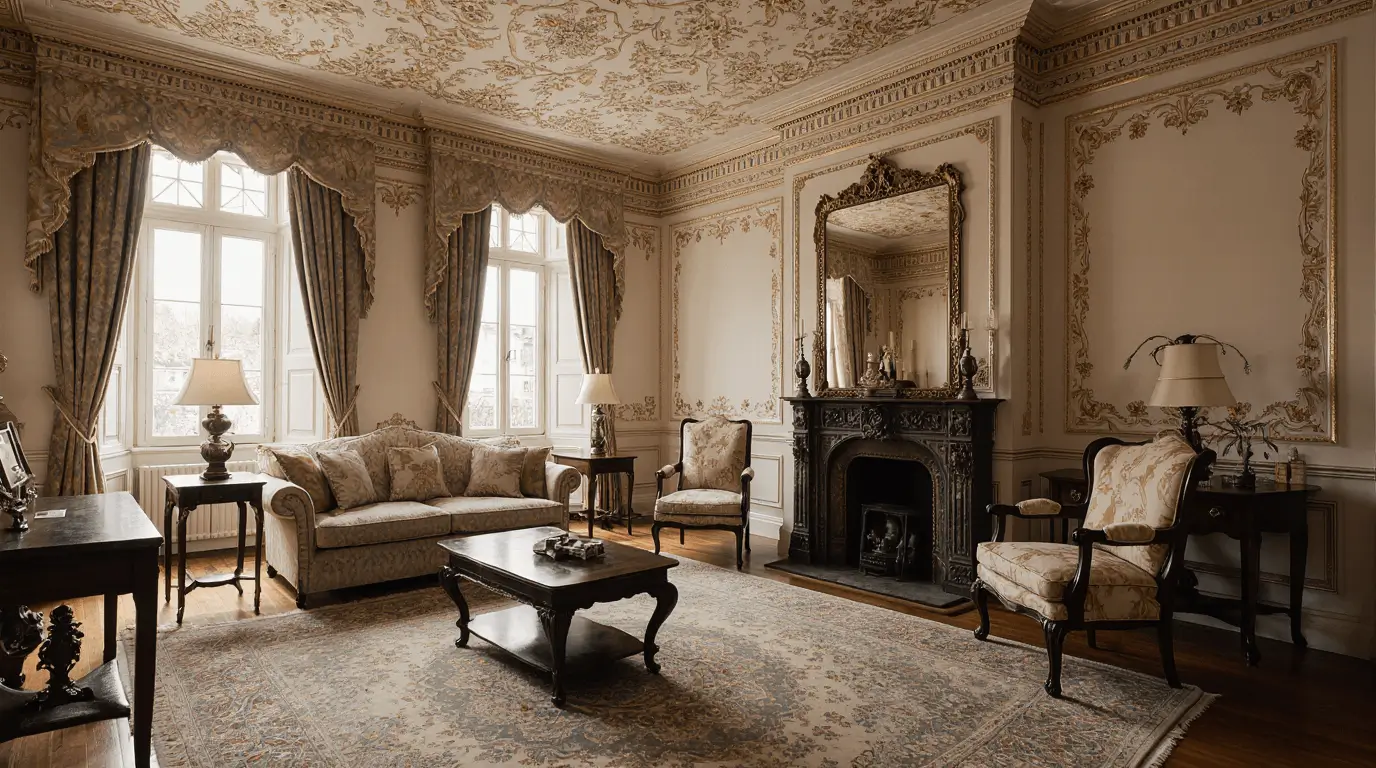
Edwardian living room walls frequently feature decorative panelling, elegant wallpaper, or subtle paint finishes. Floral prints, damask patterns, and delicate botanical motifs were commonly used.
Wall mouldings, dado rails, and ceiling roses add depth and sophistication while maintaining the clean elegance typical of Edwardian homes.
Modern Edwardian Living Room Style
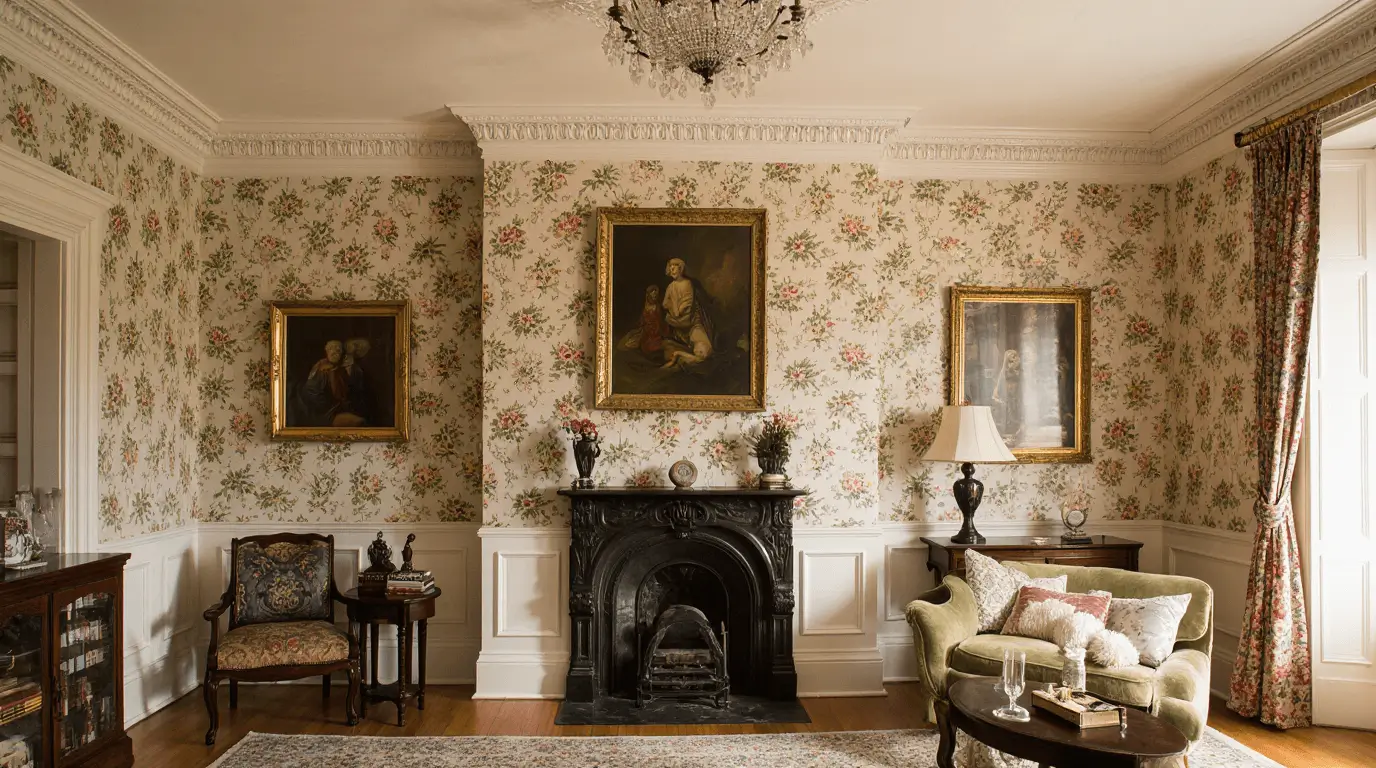
A modern Edwardian living room blends period architecture with contemporary comfort. Designers often keep original features such as fireplaces and mouldings while introducing modern sofas, neutral textiles, and minimalist lighting.
This approach preserves the historical charm while making the room practical for contemporary living.
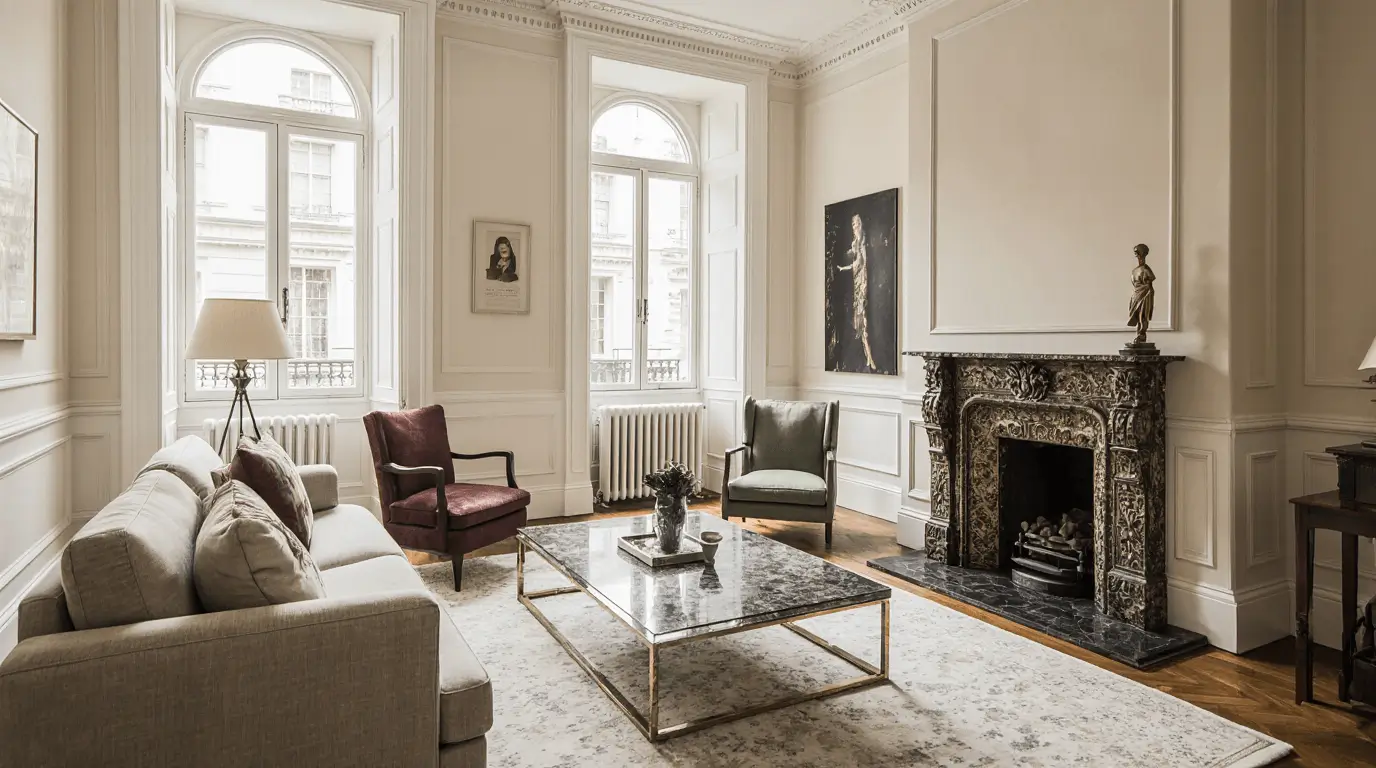
Edwardian Living Room Furniture Choices
Furniture in Edwardian interiors tends to be elegant rather than overly heavy. Pieces often include curved legs, polished wood surfaces, and refined upholstery in floral or striped fabrics.
Mahogany, walnut, and oak were commonly used, creating warmth that contrasts beautifully with light wall colours.
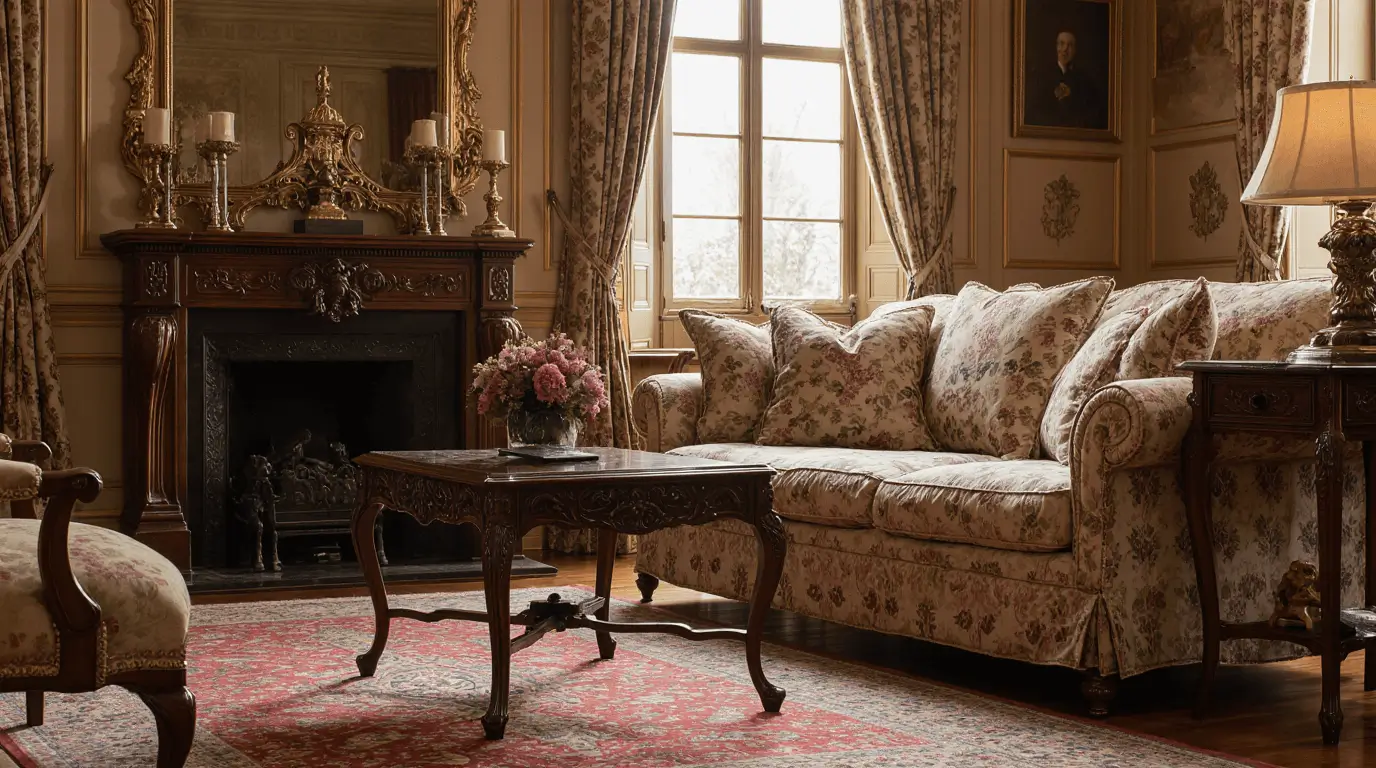
Edwardian Sitting Room Layout Ideas
The Edwardian sitting room typically centers around social interaction. Seating is arranged to encourage conversation, often surrounding a fireplace or decorative table.
Armchairs, chaise lounges, and small occasional tables create comfortable, intimate seating areas within the larger room.
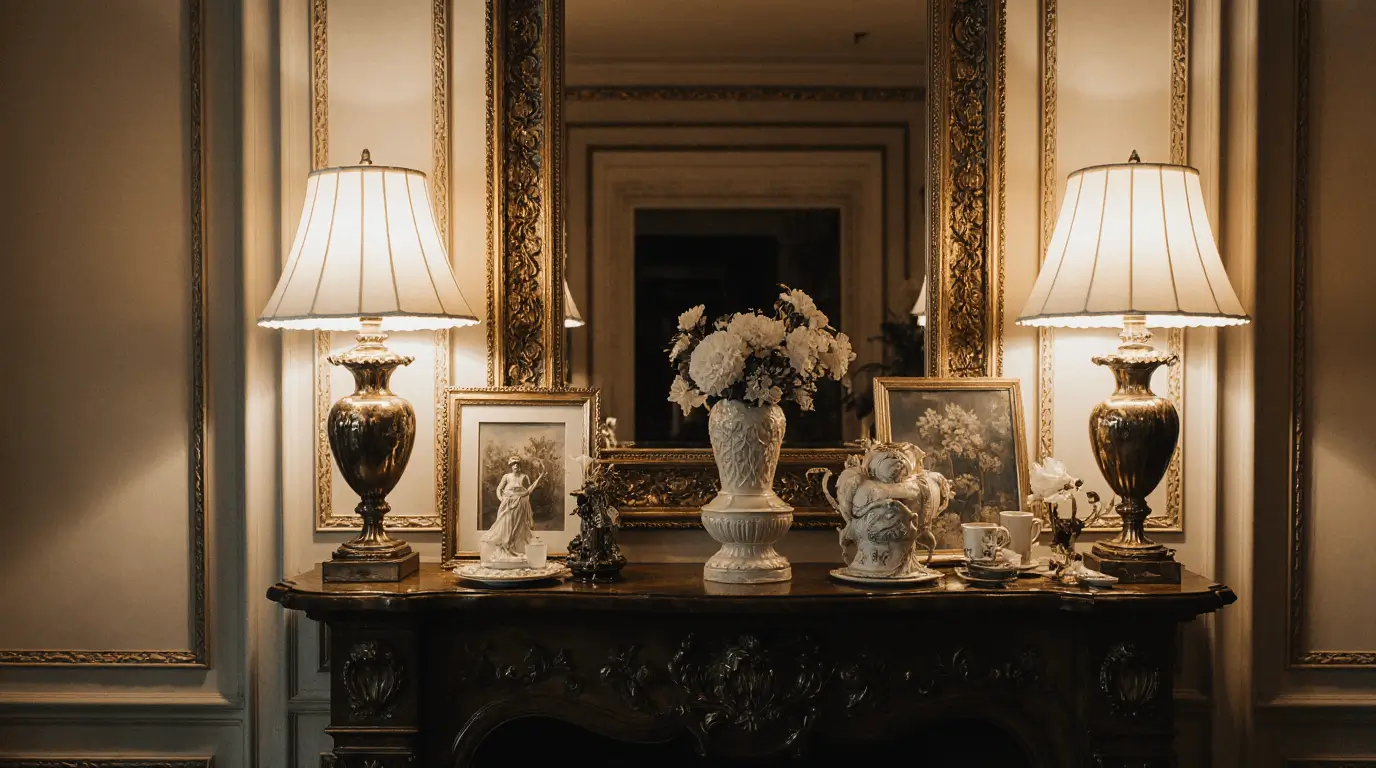
Edwardian Interior Decor and Accessories
Accessories play an important role in finishing an Edwardian living room. Decorative mirrors, porcelain ornaments, framed art prints, and brass lighting fixtures help add personality and charm.
These items should feel curated rather than excessive, preserving the elegant simplicity of the style.
Edwardian House Interior Atmosphere
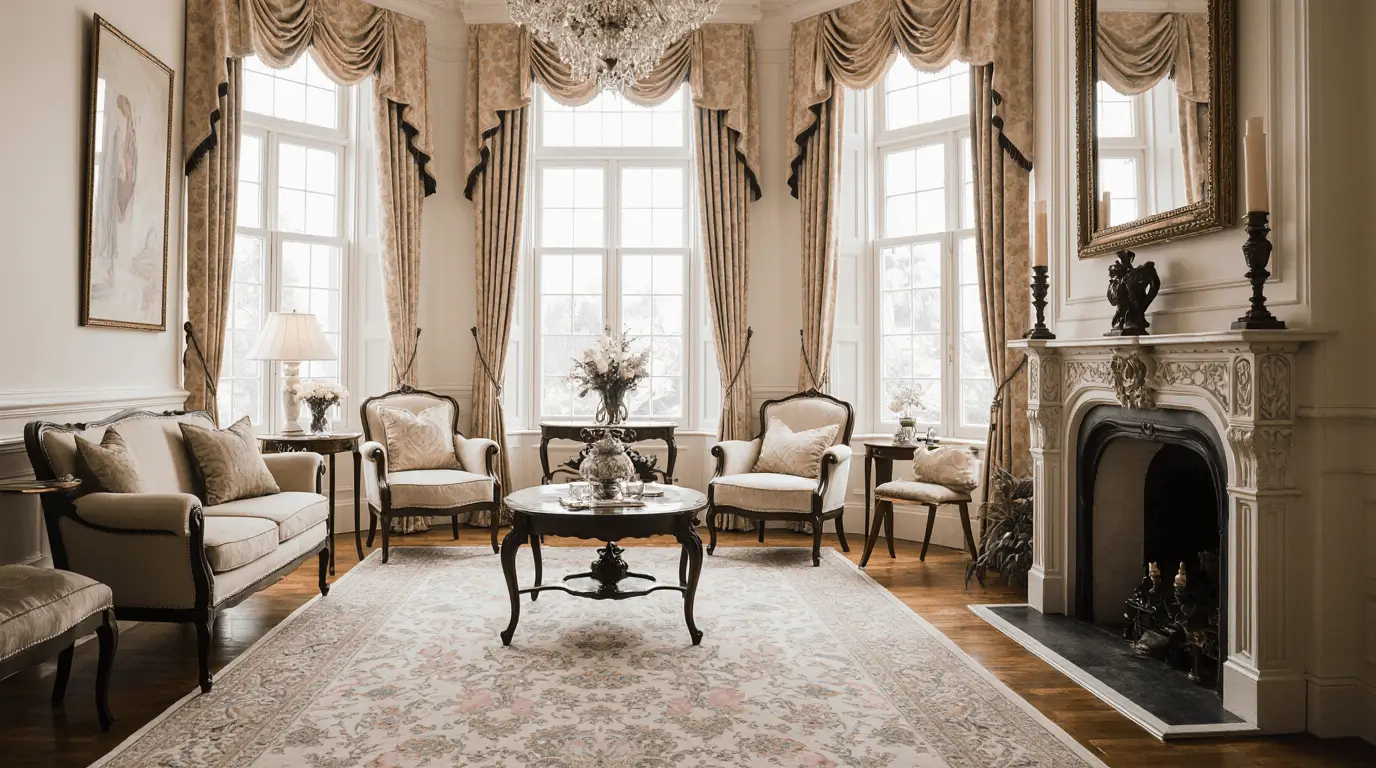
Edwardian homes emphasize openness and brightness. Compared with earlier periods, rooms were designed with larger windows and lighter fabrics that allow natural light to fill the space.
The overall atmosphere feels refined, calm, and welcoming rather than overly formal.
Edwardian Living Room Fireplace Design
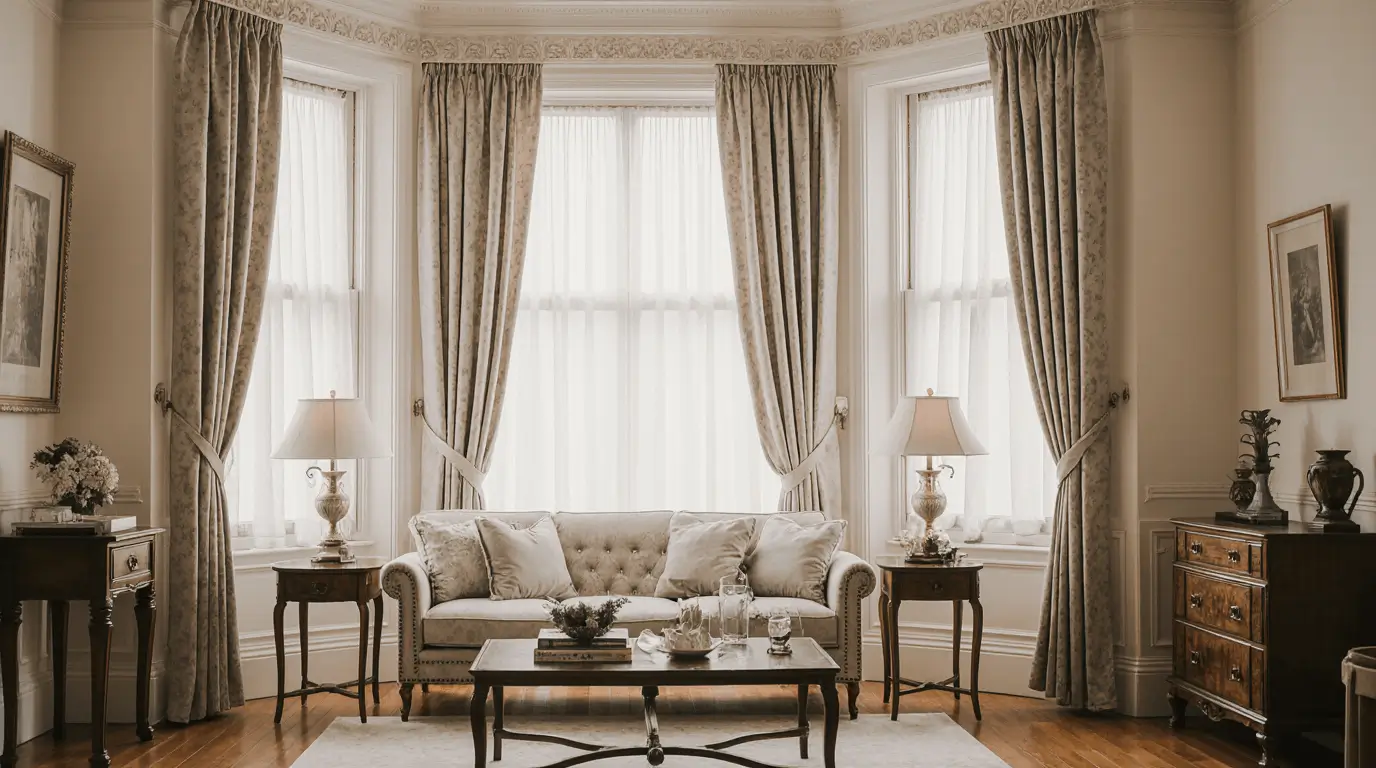
Fireplaces are often the focal point of an Edwardian living room. Marble surrounds, decorative tile inserts, and carved wooden mantels were popular design features.
The fireplace not only provides warmth but also anchors the seating arrangement and overall aesthetic.
Edwardian Living Room Lighting
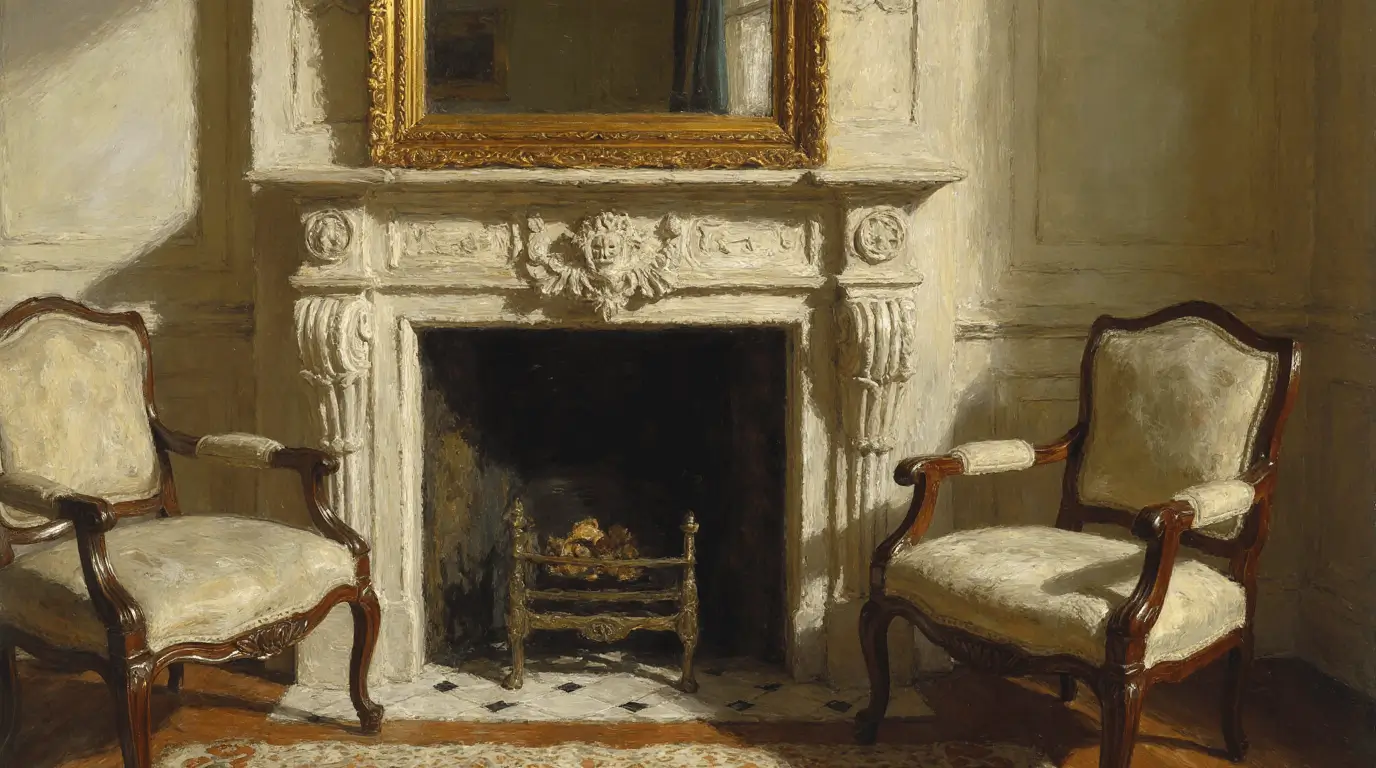
Lighting in Edwardian interiors is soft and layered. Chandeliers, wall sconces, and table lamps create warm illumination that highlights architectural details.
Natural light is also essential, often enhanced with sheer curtains that allow sunlight to diffuse gently through the room.
Edwardian Living Room Textiles and Fabrics
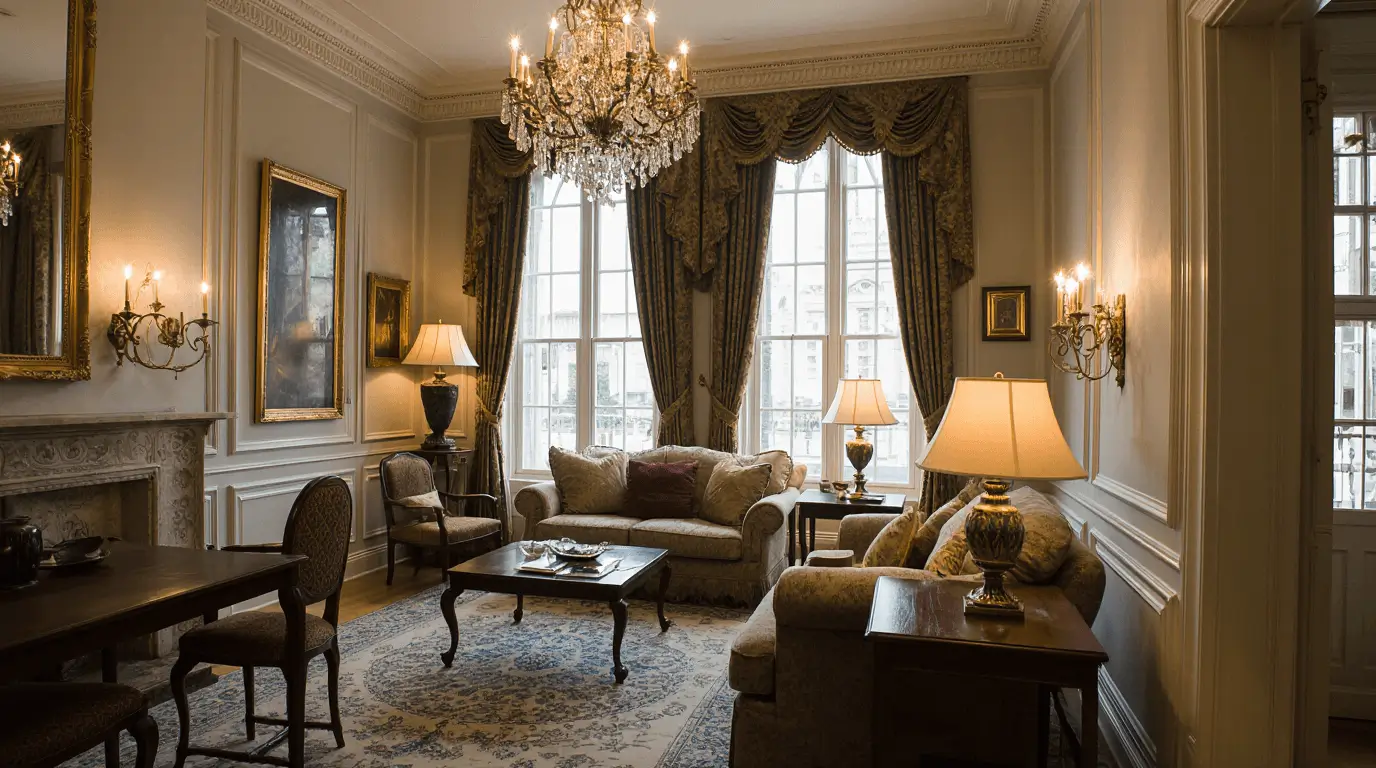
Textiles help soften the structured architecture of an Edwardian living room. Upholstery often features floral patterns, stripes, or subtle brocade fabrics.
Rugs, cushions, and drapery provide colour accents while maintaining the room’s refined and cohesive appearance.
Edwardian Living Room Decorating Ideas
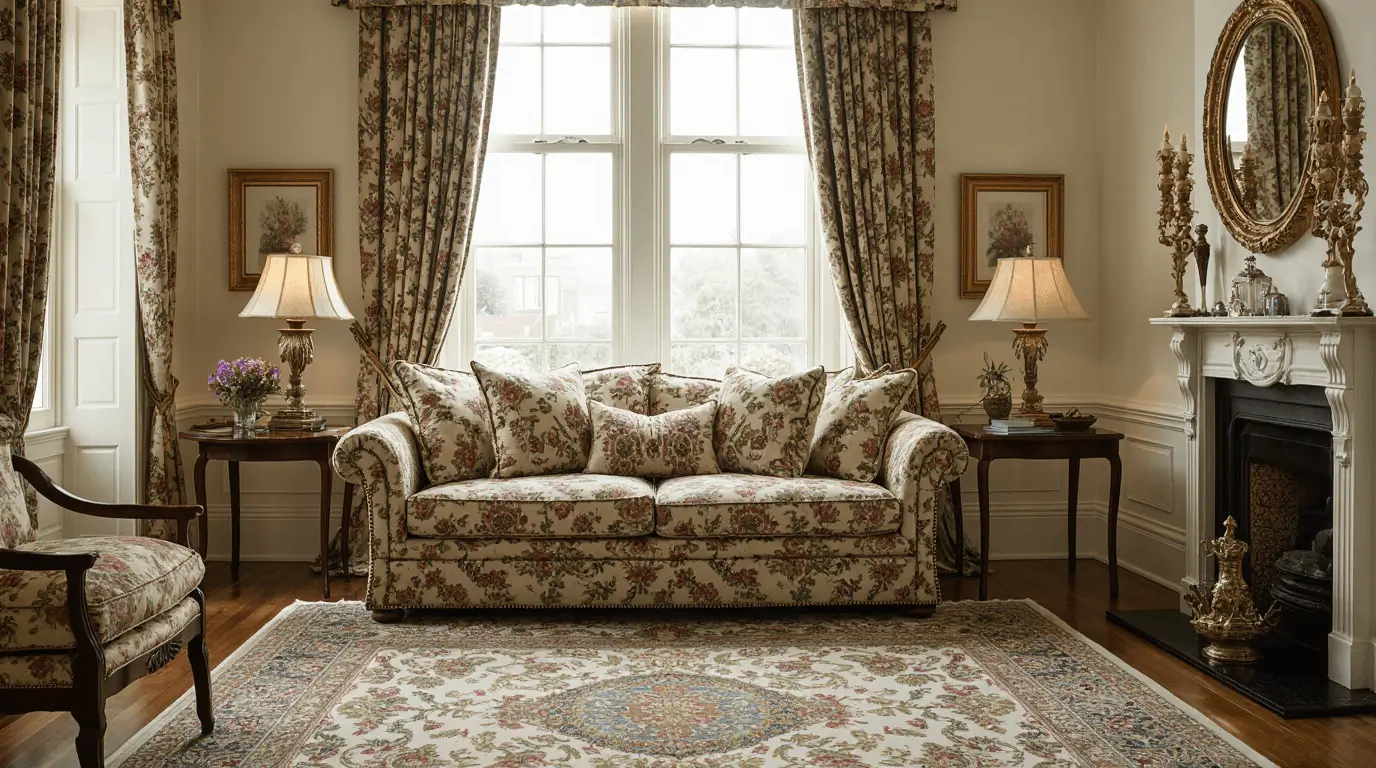
Decorating an Edwardian living room requires careful balance. Too many ornaments can overwhelm the delicate elegance, while too few may make the room feel incomplete.
Combining antiques with thoughtfully chosen décor pieces creates a layered yet harmonious design.
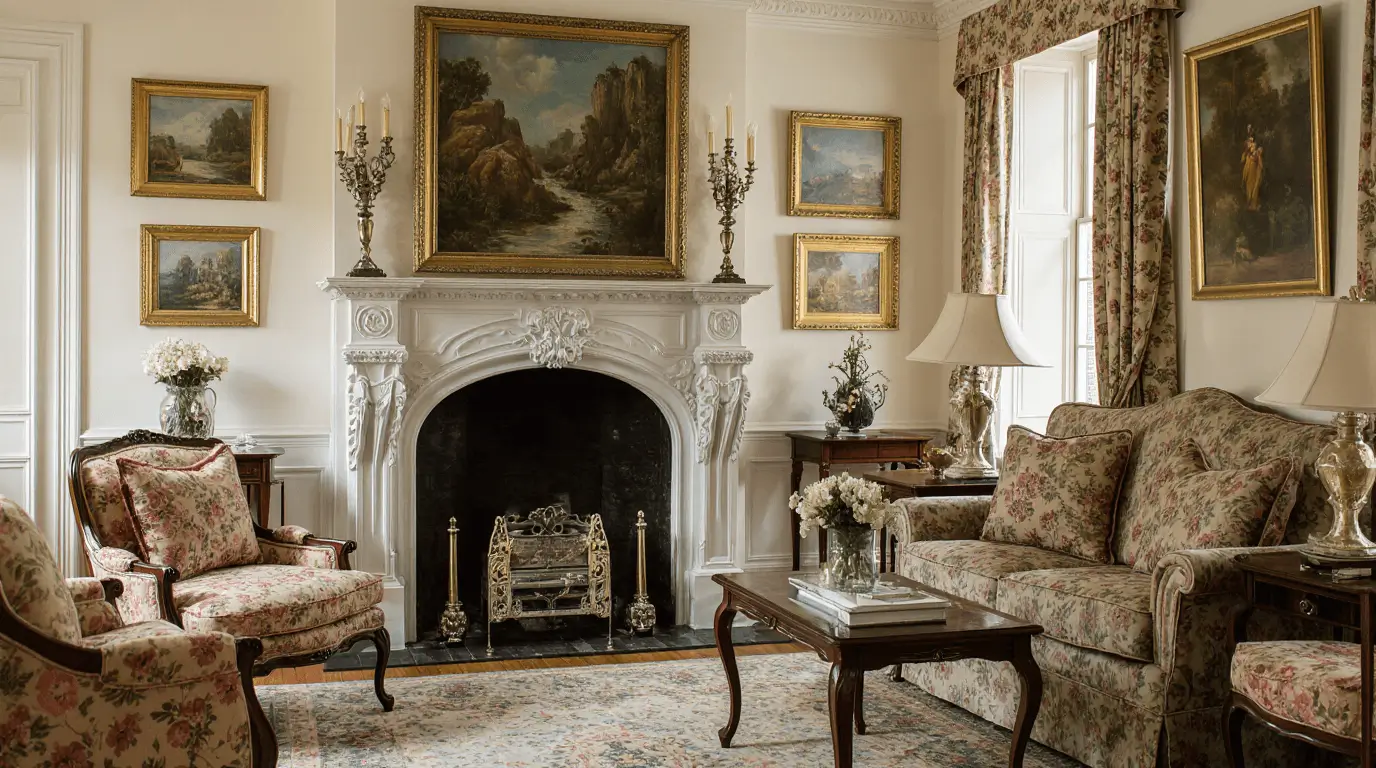
Edwardian Era Interior Design Principles
Edwardian era interior design focuses on proportion, light, and craftsmanship. Rooms were designed to feel comfortable and inviting while showcasing decorative artistry.
This design philosophy still influences modern classic interiors today.
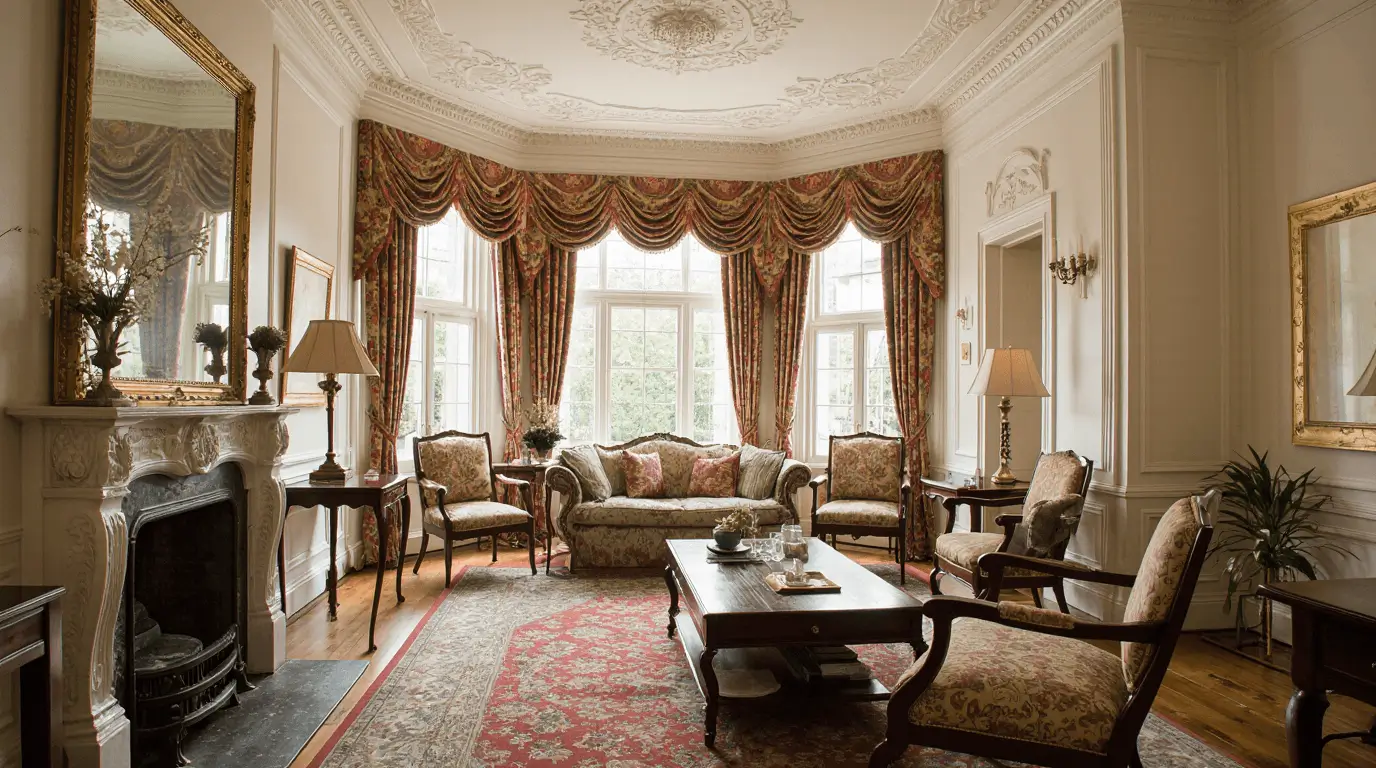
Edwardian Living Room Wall Paint Ideas
Paint colours for Edwardian living rooms typically include soft neutrals, pale greens, light blues, and creamy whites. These tones highlight architectural mouldings and help reflect natural light.
Choosing matte or eggshell finishes enhances the traditional feel of the walls.
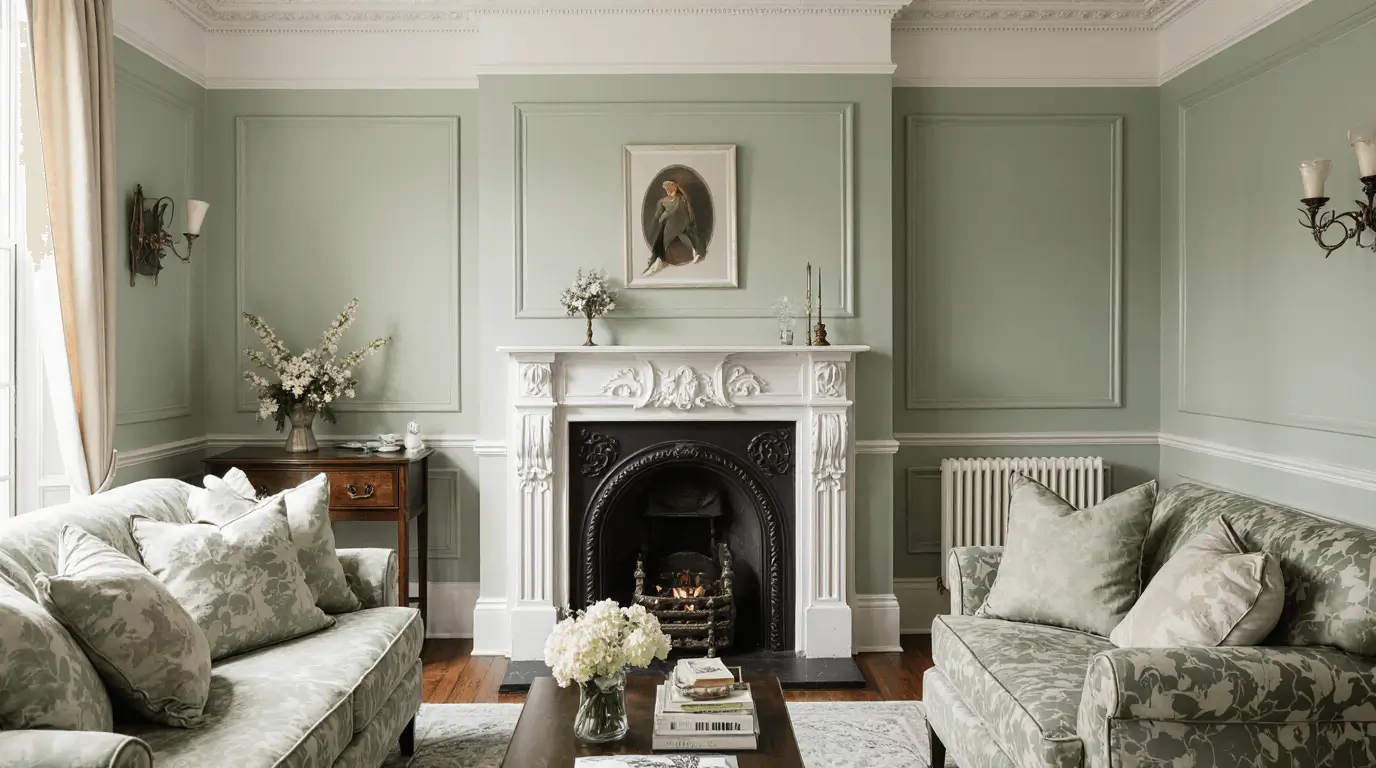
Edwardian Style Interior Philosophy
The beauty of an Edwardian living room lies in its refined restraint. Rather than overwhelming decoration, the design celebrates light, proportion, and elegant details.
This philosophy allows the room to feel both historic and surprisingly modern, which is why Edwardian interiors continue to inspire designers today.
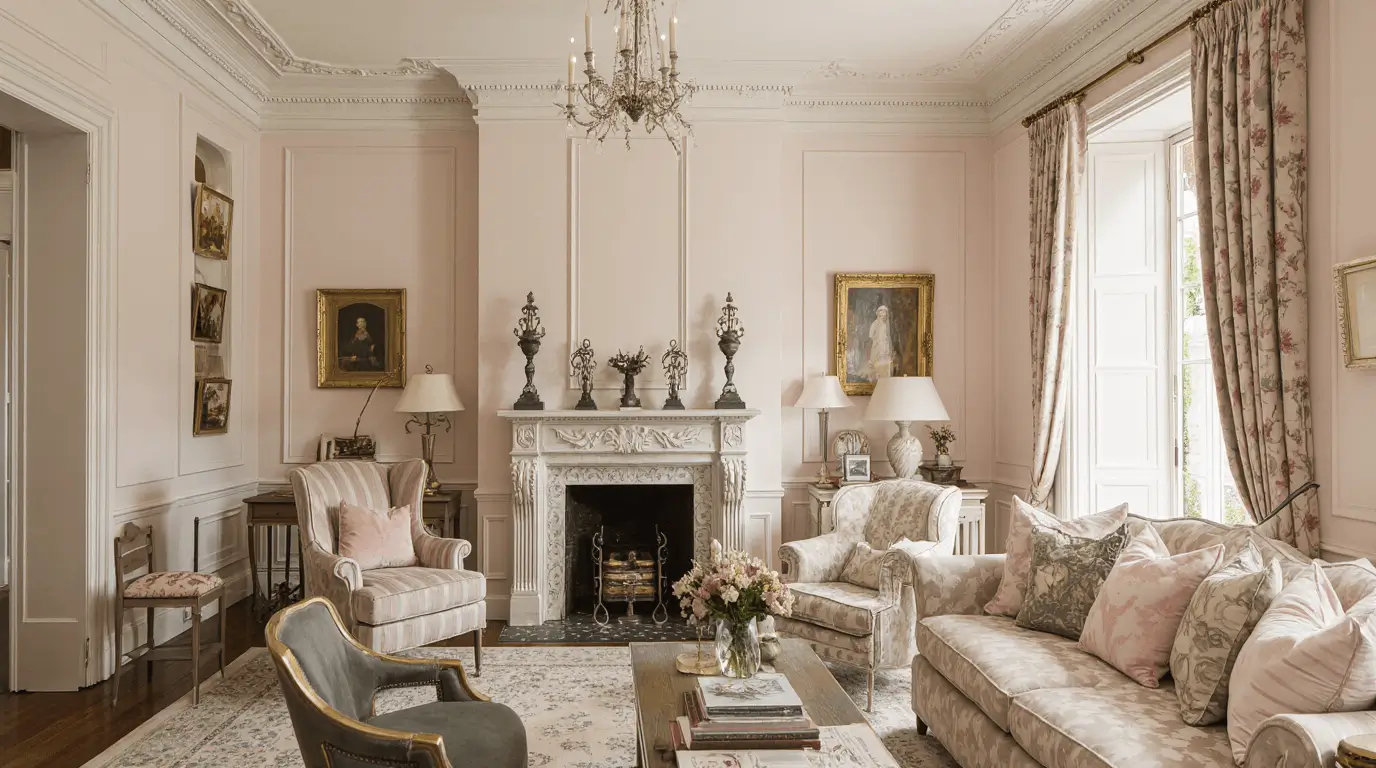
Conclusion: Creating a Living Space with Lasting Character
An edwardian living room represents a rare balance in interior design—one that combines historical elegance with everyday livability. The style’s defining qualities—light-filled spaces, graceful architectural details, soft colour palettes, and refined furnishings—work together to create rooms that feel calm, welcoming, and thoughtfully composed. Rather than relying on heavy ornamentation, Edwardian interiors allow proportion, craftsmanship, and natural light to shape the atmosphere.
What makes this approach especially appealing today is its flexibility. Whether you live in a historic Edwardian house or a modern home, many of the same principles can be applied: choose lighter wall colours, highlight architectural features, introduce quality wood furniture, and layer the space with tasteful textiles and décor. These elements create a room that feels timeless without appearing outdated.
Designers often appreciate Edwardian interiors because they offer a strong foundation for both classic and contemporary interpretations. Original fireplaces, decorative mouldings, and large windows provide natural focal points, while carefully chosen furniture and accessories add personality without overwhelming the room. When approached thoughtfully, the result is a living room that feels elegant yet relaxed—formal enough to impress guests but comfortable enough for everyday life.
For homeowners, the key takeaway is simplicity guided by intention. Focus on light, proportion, and quality materials rather than excess decoration. By embracing the principles behind an edwardian living room, you can create a space that feels refined, balanced, and enduring—an interior that continues to feel beautiful and relevant for years to come.
Learn more : Kitchen Makeovers on a Budget UK: 15 Stylish Ideas
Frequently Asked Questions
- What defines an Edwardian living room style?
An Edwardian living room is typically characterized by light colour schemes, spacious layouts, decorative plasterwork, and elegant yet relatively simple furniture. Compared to earlier Victorian interiors, Edwardian rooms feel brighter and less crowded, emphasizing natural light and refined architectural details.
- How is Edwardian interior design different from Victorian living rooms?
While Victorian interiors often feature darker colours, heavier furniture, and more elaborate decoration, Edwardian design moves toward lighter palettes and a more open atmosphere. Edwardian living rooms usually feel airier, with softer colours, larger windows, and a slightly more relaxed approach to ornamentation.
- What colours work best in an Edwardian living room?
Soft, muted tones work particularly well. Cream, pale green, dusty rose, soft blue, and warm neutrals are commonly used to reflect natural light and highlight architectural mouldings. These colours help create the fresh and uplifting atmosphere associated with Edwardian interiors.
- Can an Edwardian living room work in a modern home?
Yes, many design principles from Edwardian interiors translate beautifully into modern homes. Even without original period architecture, you can recreate the look through light wall colours, classic furniture silhouettes, decorative mouldings, and carefully layered textiles.
- What type of furniture suits an Edwardian living room?
Furniture with elegant lines and fine craftsmanship works best. Pieces made from mahogany, walnut, or oak with curved legs and refined upholstery reflect the period’s style. Upholstery fabrics often feature floral patterns, stripes, or subtle traditional motifs.
- Is wallpaper common in Edwardian living rooms?
Yes, wallpaper was widely used during the Edwardian period. Patterns often included florals, botanical motifs, or delicate damask designs. When used thoughtfully, wallpaper can add depth and historical character without overwhelming the room.
- What is the easiest way to introduce Edwardian style into an existing living room?
Start with foundational elements such as a soft colour palette, traditional rugs, and elegant lighting. Adding classic furniture pieces, framed artwork, and decorative mouldings can gradually introduce Edwardian character while keeping the room functional and comfortable.

One Response