
Introduction
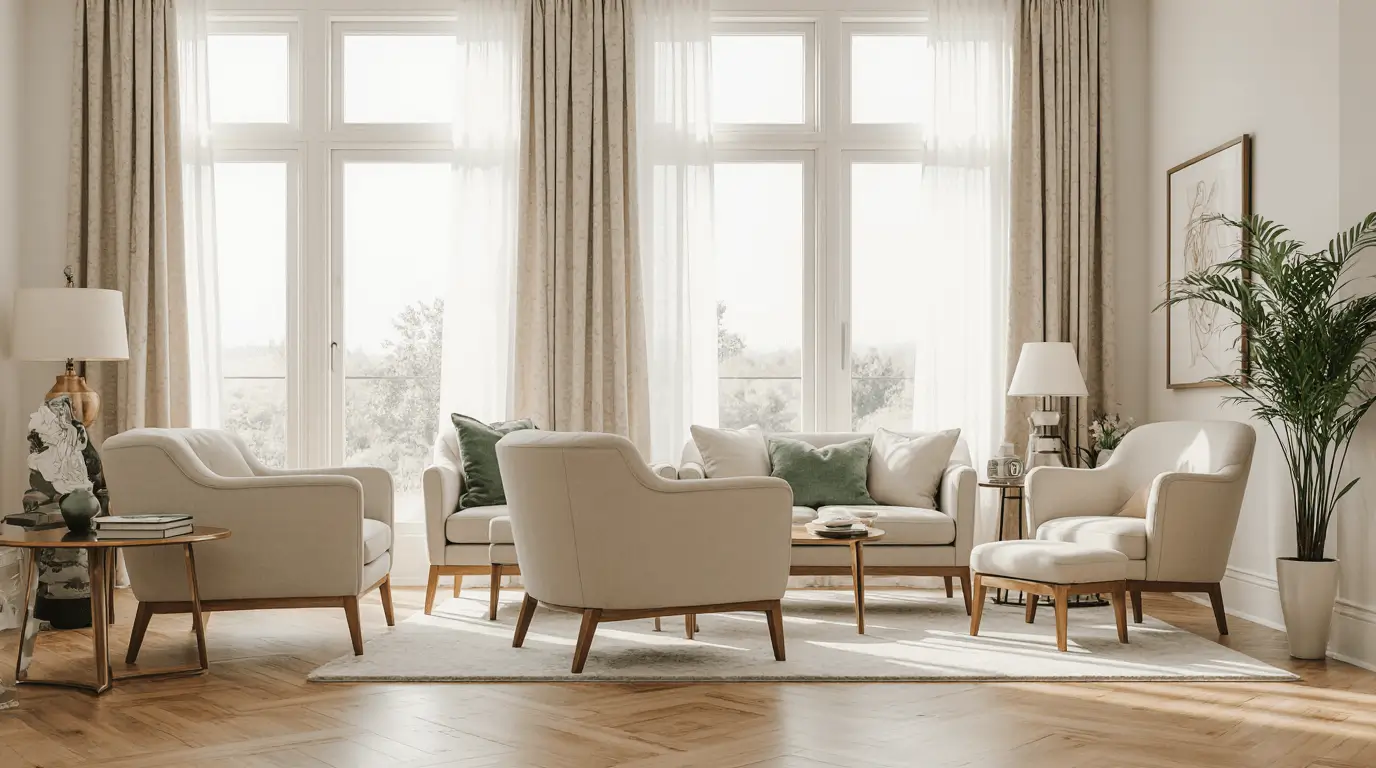
Memory care interior design is more than aesthetics—it is a deeply intentional approach to shaping environments for individuals living with Alzheimer’s disease and other forms of dementia. These spaces must reduce anxiety, support orientation, enhance safety, and preserve dignity, all while feeling warm and familiar rather than clinical.
Through years of observing senior living environments, one truth remains consistent: design directly impacts behavior, mood, and independence. When thoughtfully planned, memory care environments can lower agitation, prevent falls, encourage social connection, and improve overall quality of life. Every color choice, lighting decision, and furniture placement matters.
Below are carefully structured clusters that break down the essential components of effective memory care interior design.
Memory Care Interior Design for Alzheimer’s Support
Designing for Alzheimer’s requires simplified layouts and clear sightlines. Visual confusion increases anxiety, so spaces should be intuitive and easy to navigate.
Contrasting colors between floors, walls, and furniture help residents distinguish surfaces safely.
Memory Care Facility Design with Clear Wayfinding
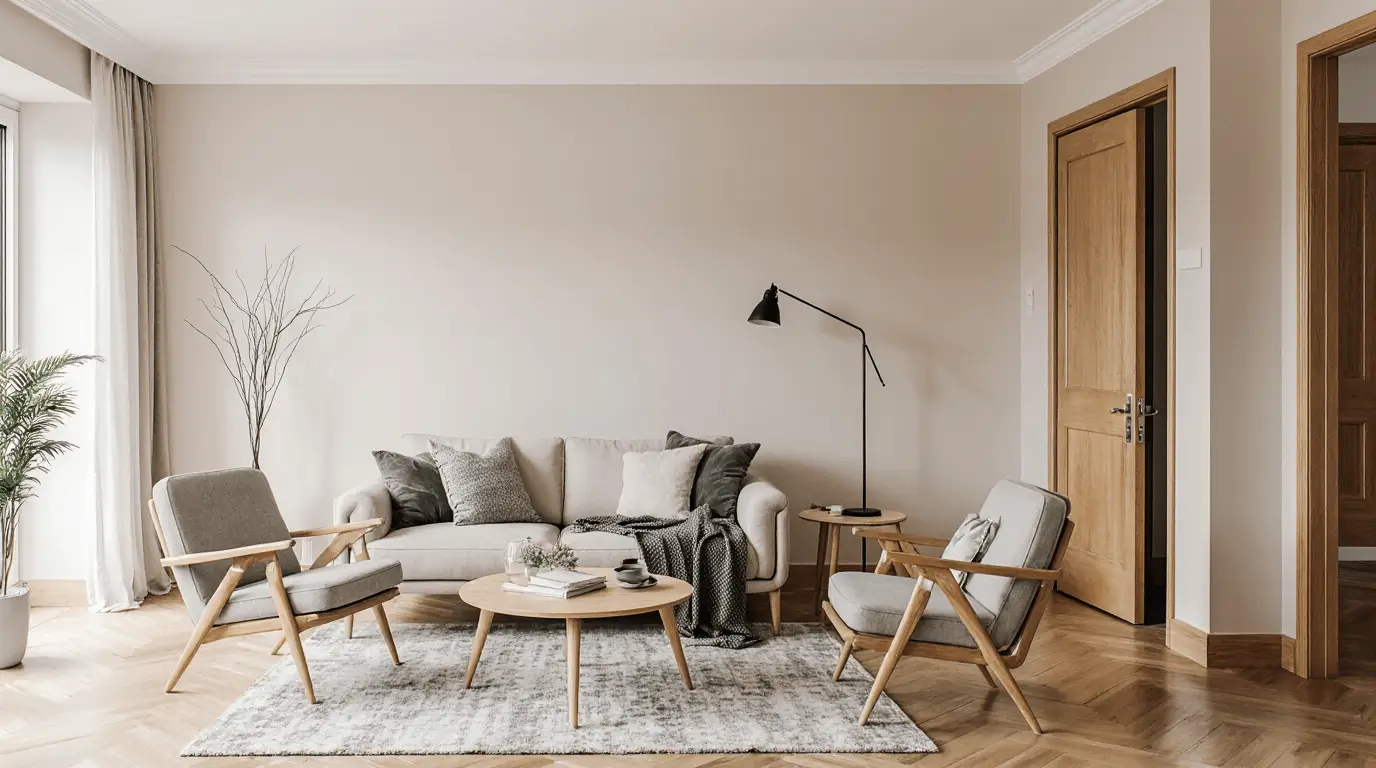
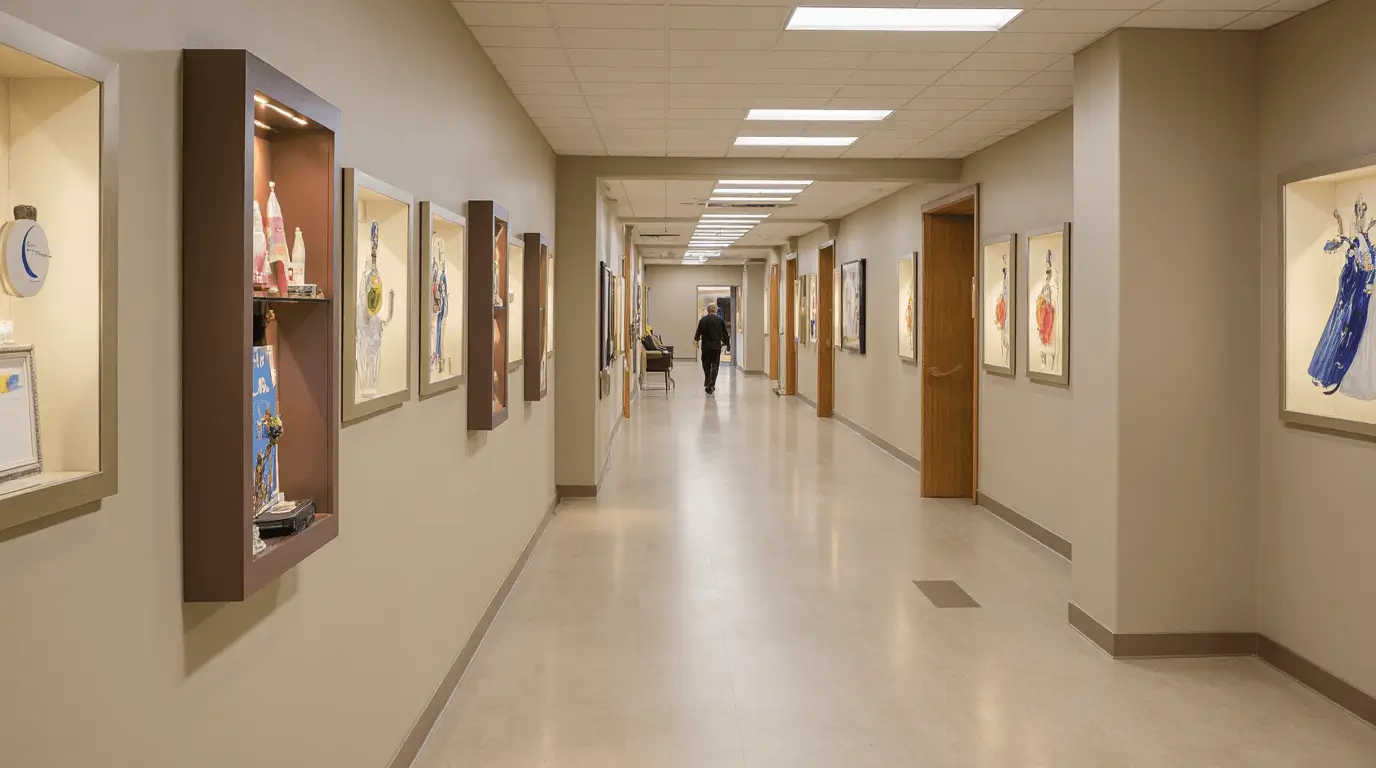
In memory care facility design, wayfinding reduces disorientation. Landmarks, memory boxes outside rooms, and subtle color zoning help residents identify spaces independently.
Avoid busy patterns that may be perceived as movement or depth.
Dementia-Friendly Memory Care Interior Design
Dementia-friendly decorating prioritizes familiarity. Incorporating recognizable furniture styles and traditional décor elements enhances comfort.
Visual simplicity and minimal clutter reduce overstimulation.
Memory Care Room Design for Personalization
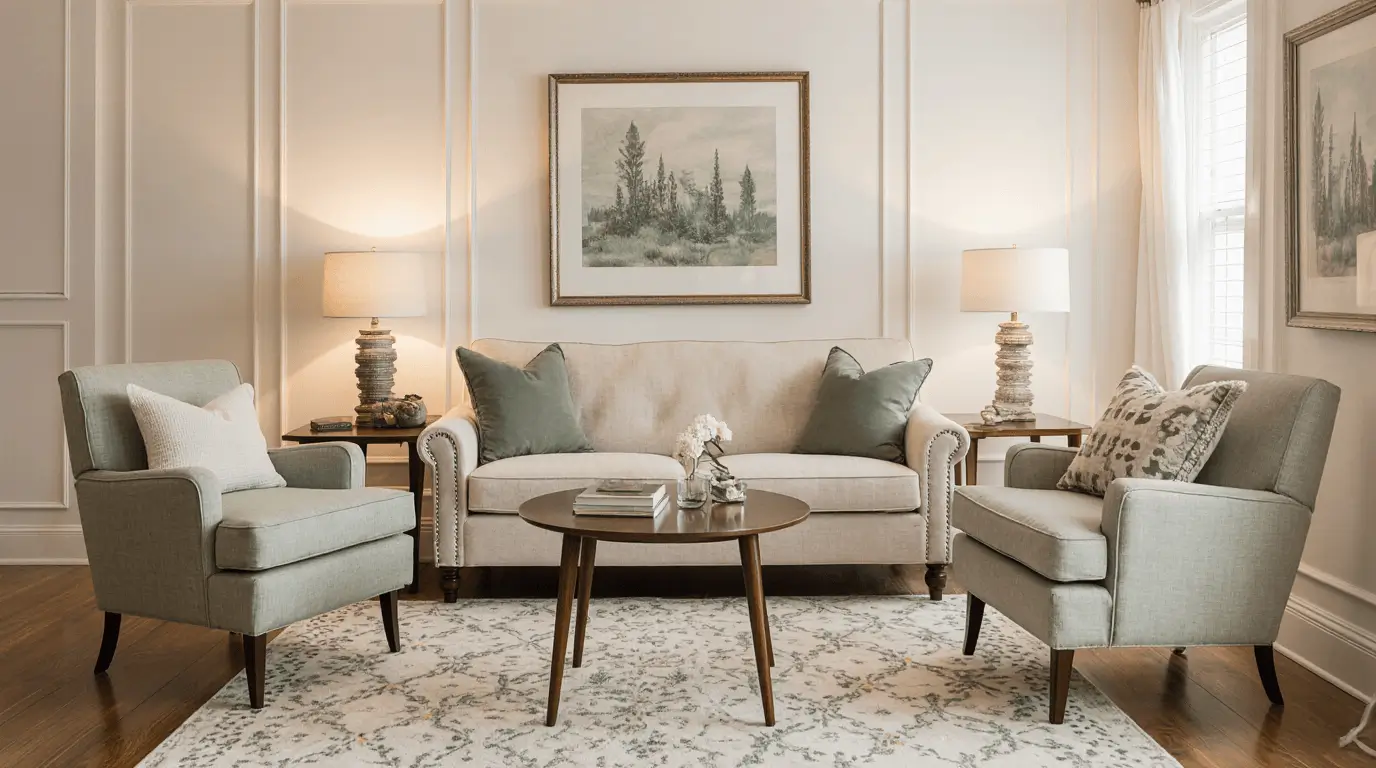
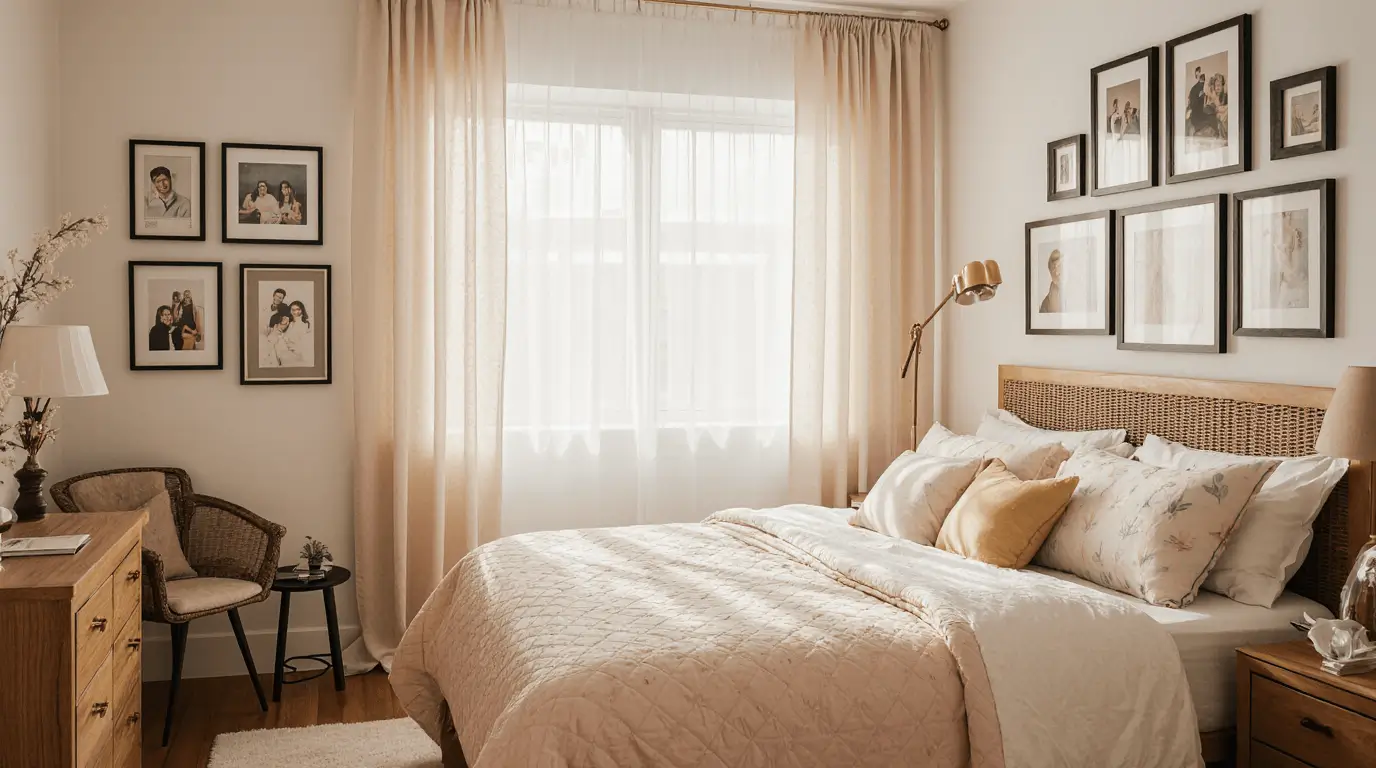
A memory care room should feel like an extension of home. Personal photographs, cherished furniture pieces, and familiar textiles provide emotional reassurance.
Consistency in layout helps residents build spatial memory.
Assisted Living with Memory Care Integration
In assisted living with memory care, transitional spaces should feel seamless. Residents benefit from graduated independence within safe boundaries.
Shared spaces must balance supervision with dignity.
Memory Care Lighting Design Principles
Lighting in memory care interior design must reduce shadows and glare. Indirect, even illumination supports circadian rhythms and improves sleep patterns.
Natural daylight should be maximized whenever possible.
Safe Flooring in Memory Care Facilities
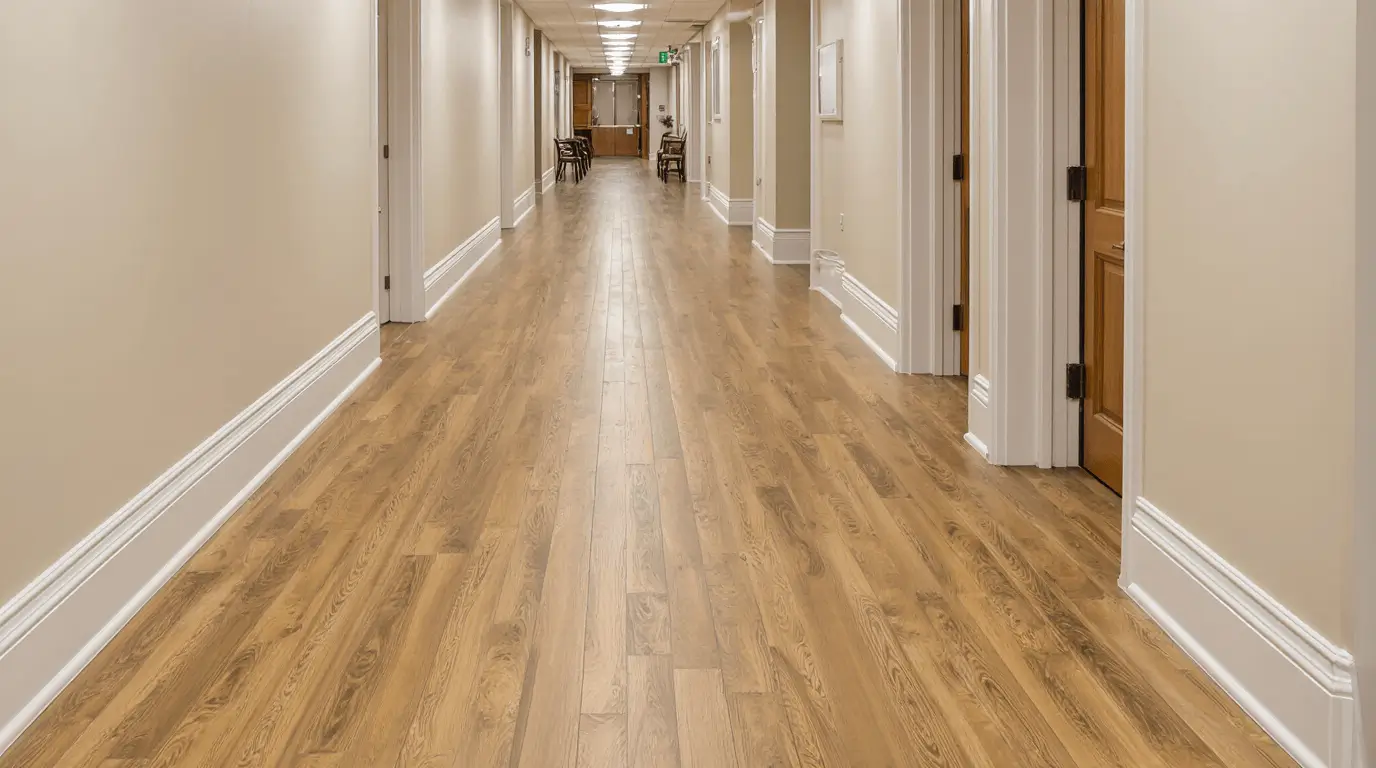
Flooring must be matte, slip-resistant, and free of abrupt transitions. High contrast between floor and wall edges helps with depth perception.
Avoid dark rugs that may appear as holes.
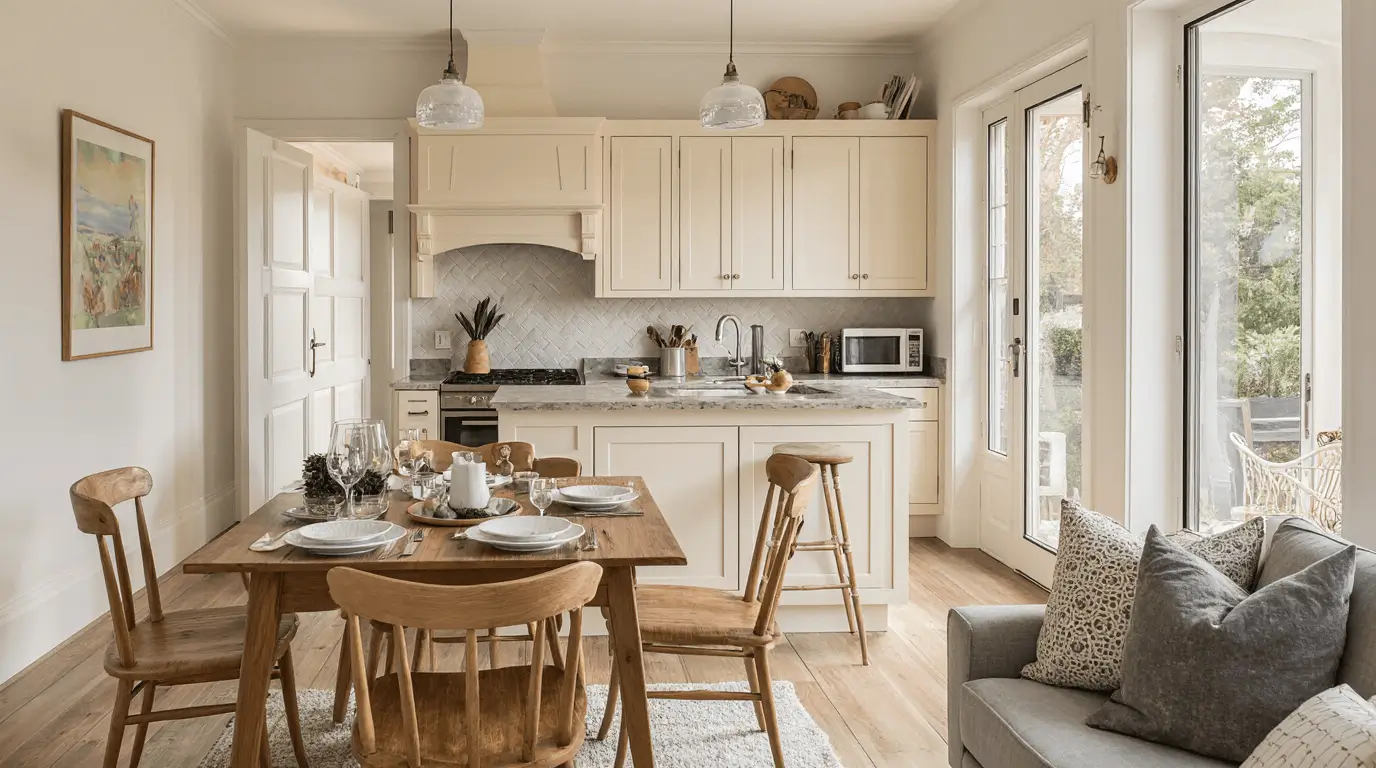
Memory Care Home Design for Comfort
Home memory care environments benefit from smaller-scale spaces. Intimate layouts reduce overwhelm and encourage familiarity.
Residential kitchens and living areas should resemble traditional homes.
Dementia Unit Décor with Purposeful Simplicity
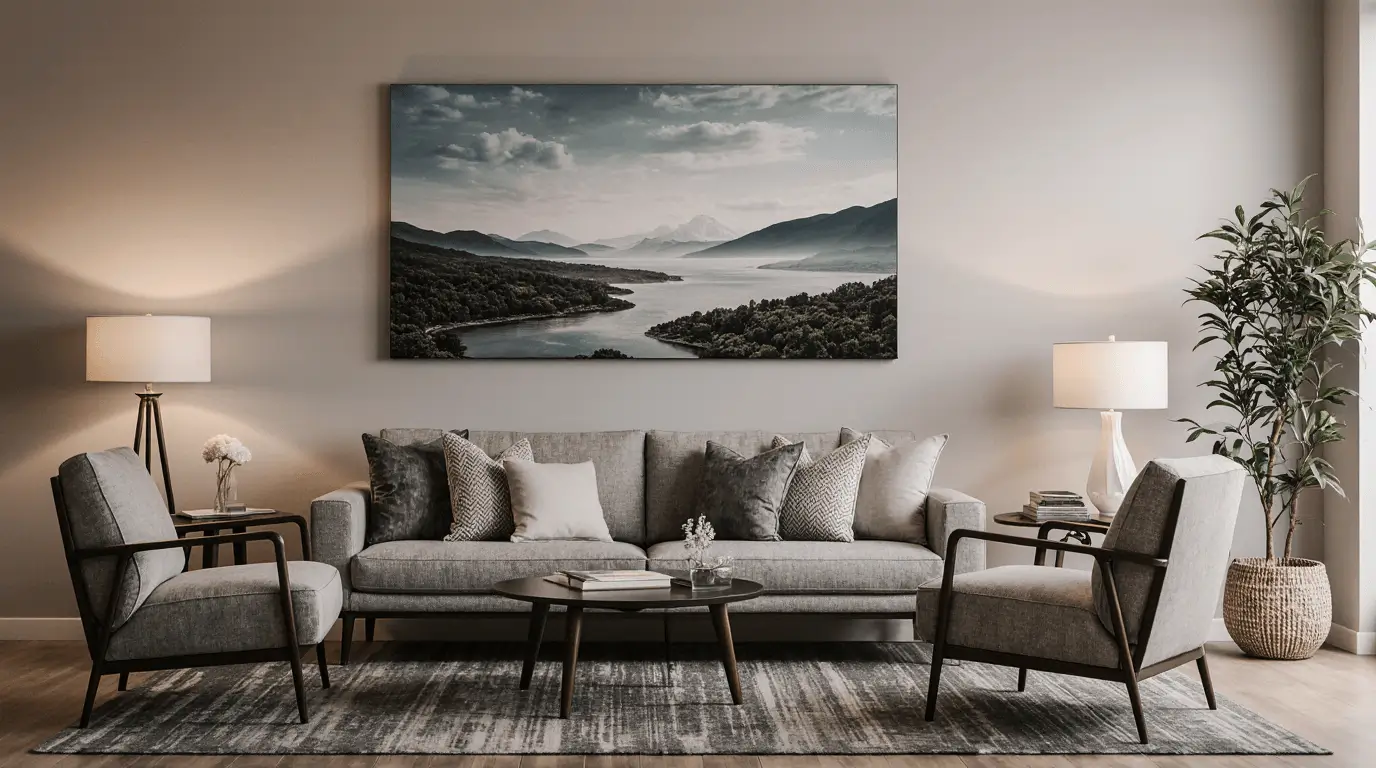
Dementia unit design should eliminate unnecessary visual noise. Strategic décor placement prevents confusion while maintaining warmth.
Artwork should be calming and realistic rather than abstract.
Outdoor Spaces in Memory Care Interior Design
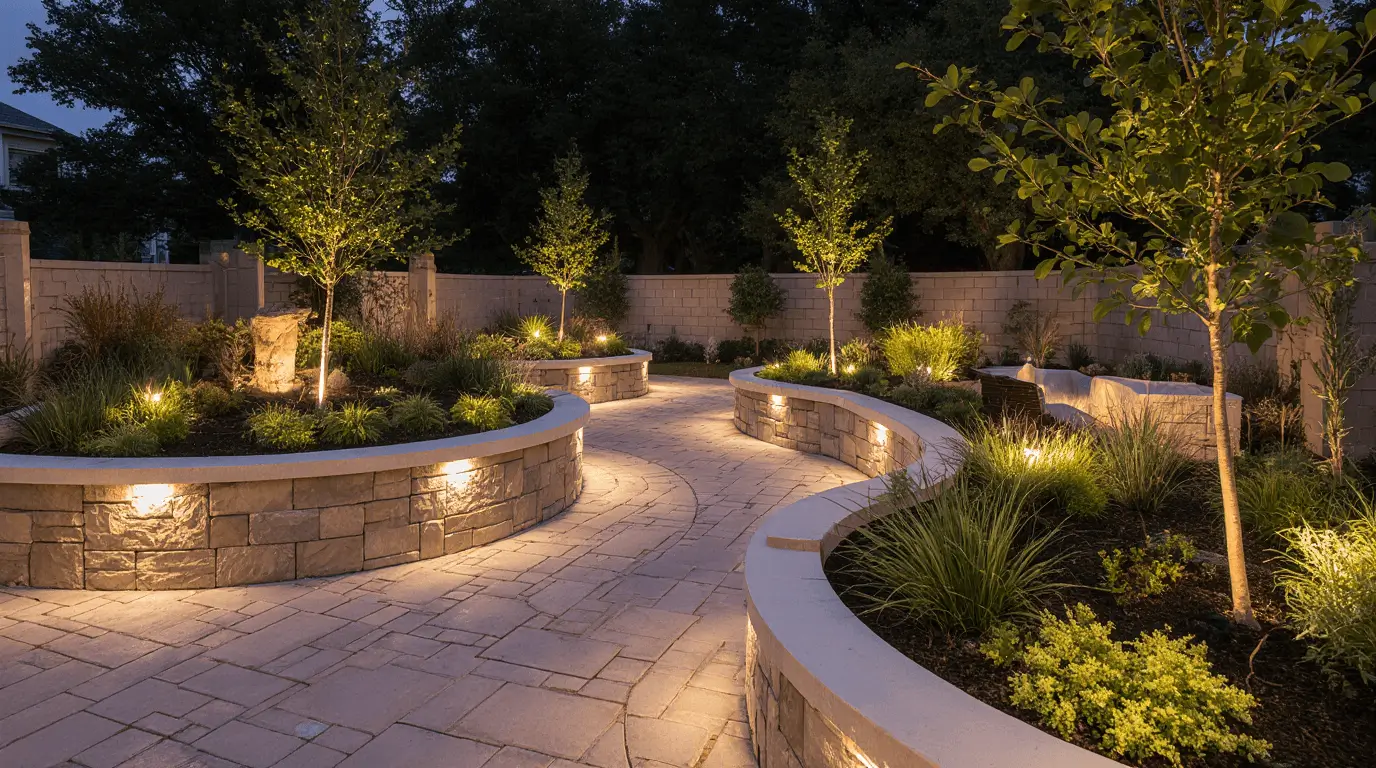
Secure outdoor courtyards improve mood and reduce agitation. Walking paths should loop continuously to avoid dead ends.
Raised garden beds encourage sensory engagement.
Long-Term Memory Care Facilities Design Strategy
Long-term memory care facilities require durability without institutional appearance. Materials should be easy to clean yet residential in texture.
Acoustic control is essential to minimize overstimulation.
Memory Care Decorating Ideas That Reduce Anxiety
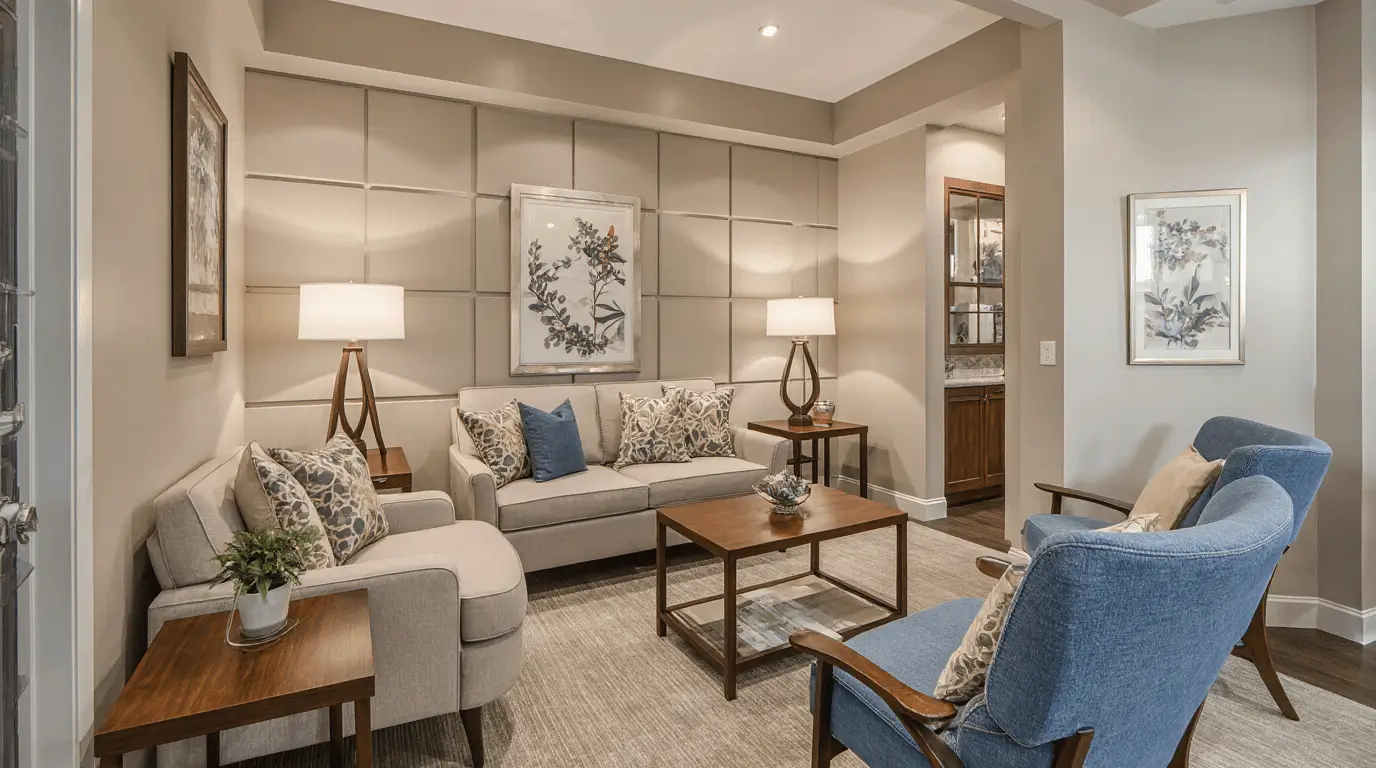
Soft color palettes—sage, warm beige, muted blue—promote calmness. Avoid high-contrast busy wallpaper or sharp geometric patterns.
Rounded furniture edges enhance both safety and visual softness.
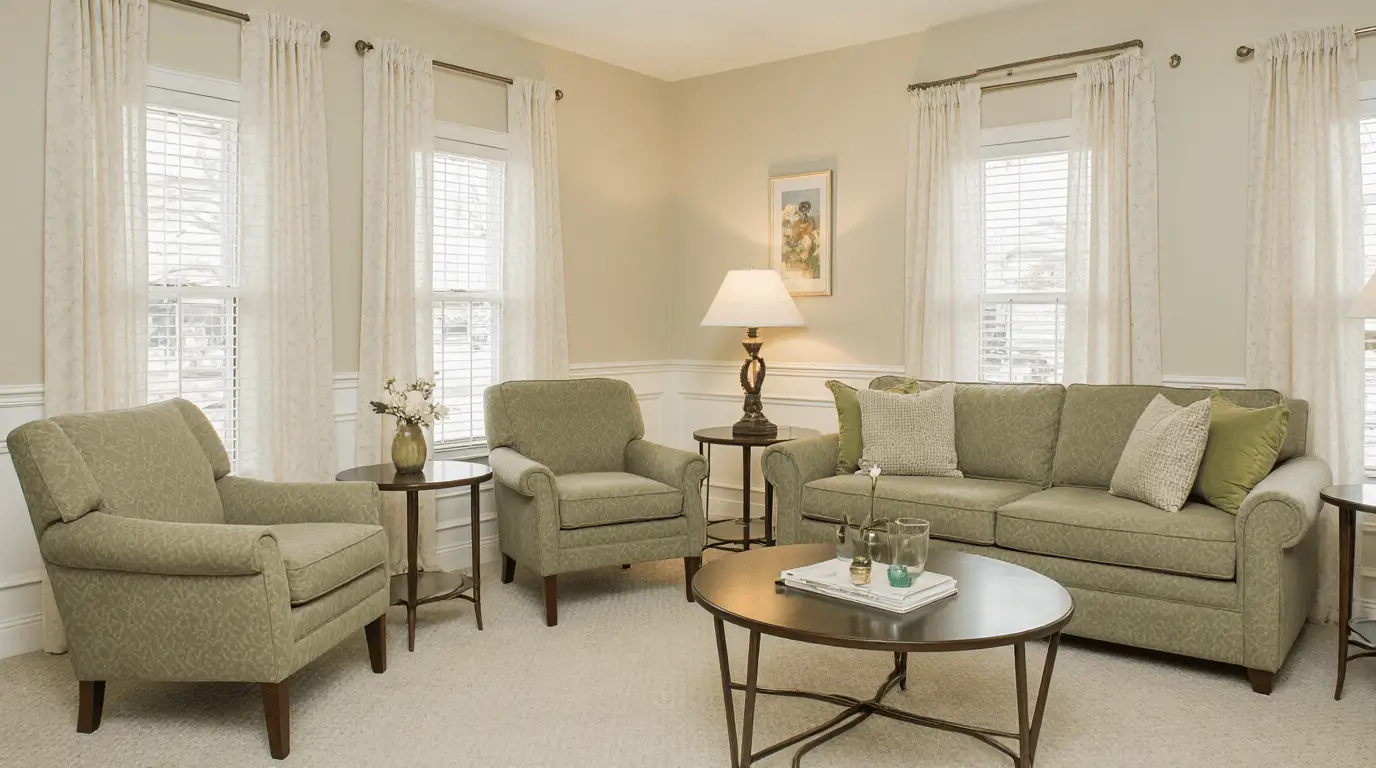
Nursing Home with Memory Care Design Upgrades
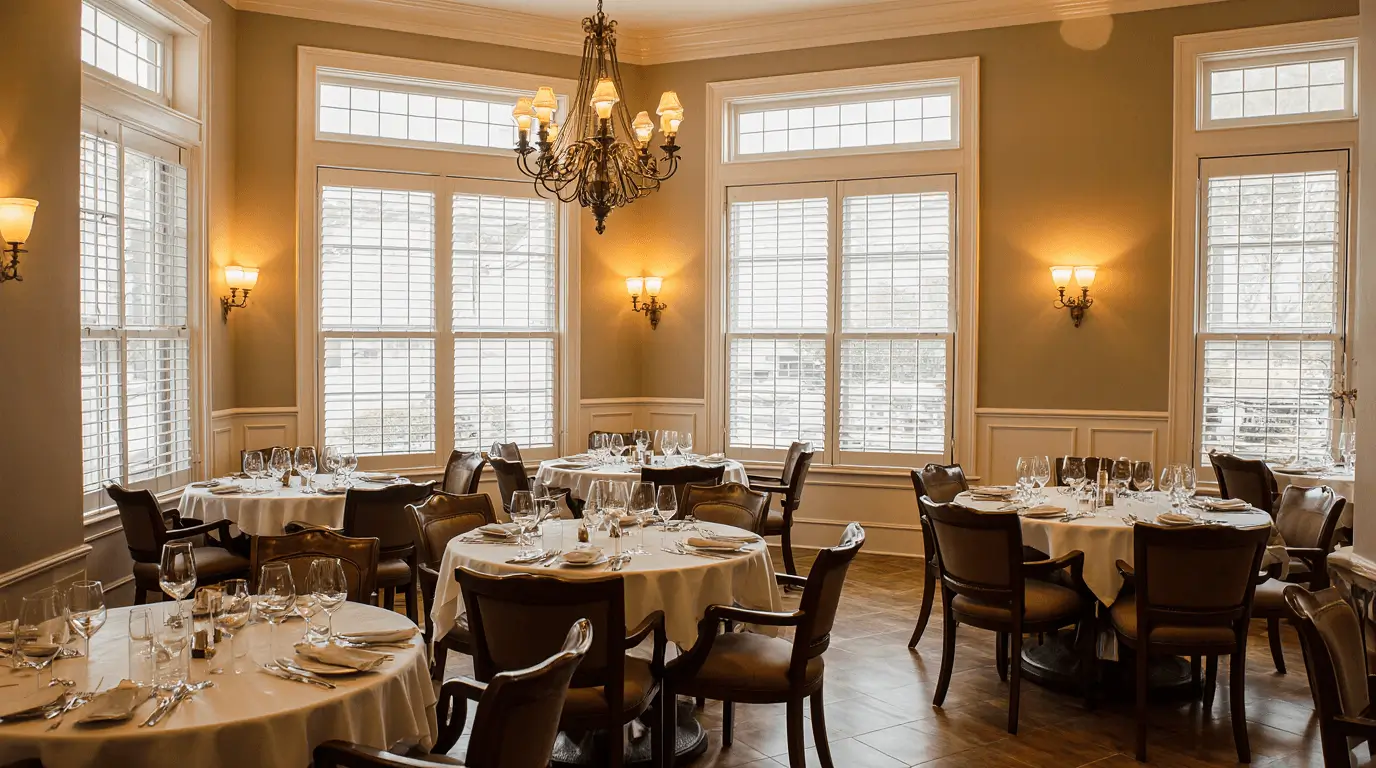
In nursing homes with memory care wings, visual separation helps create a quieter environment. Smaller dining clusters feel less overwhelming than large halls.
Noise-absorbing materials significantly improve resident comfort.
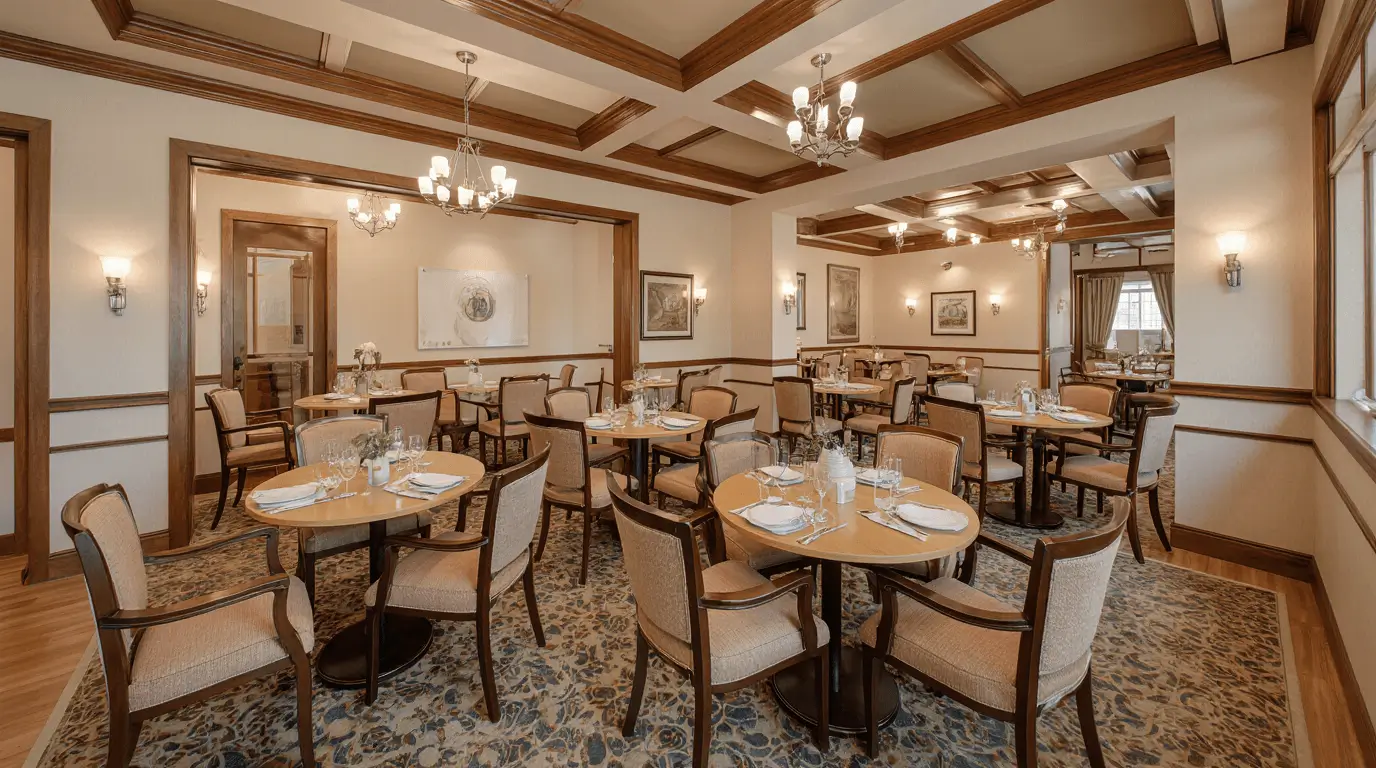
Sensory Design in Memory Care Interior Environments
Engaging multiple senses thoughtfully can reduce agitation. Soft tactile fabrics, subtle aromatherapy, and calming music contribute to emotional regulation.
Avoid overstimulation—balance is critical.
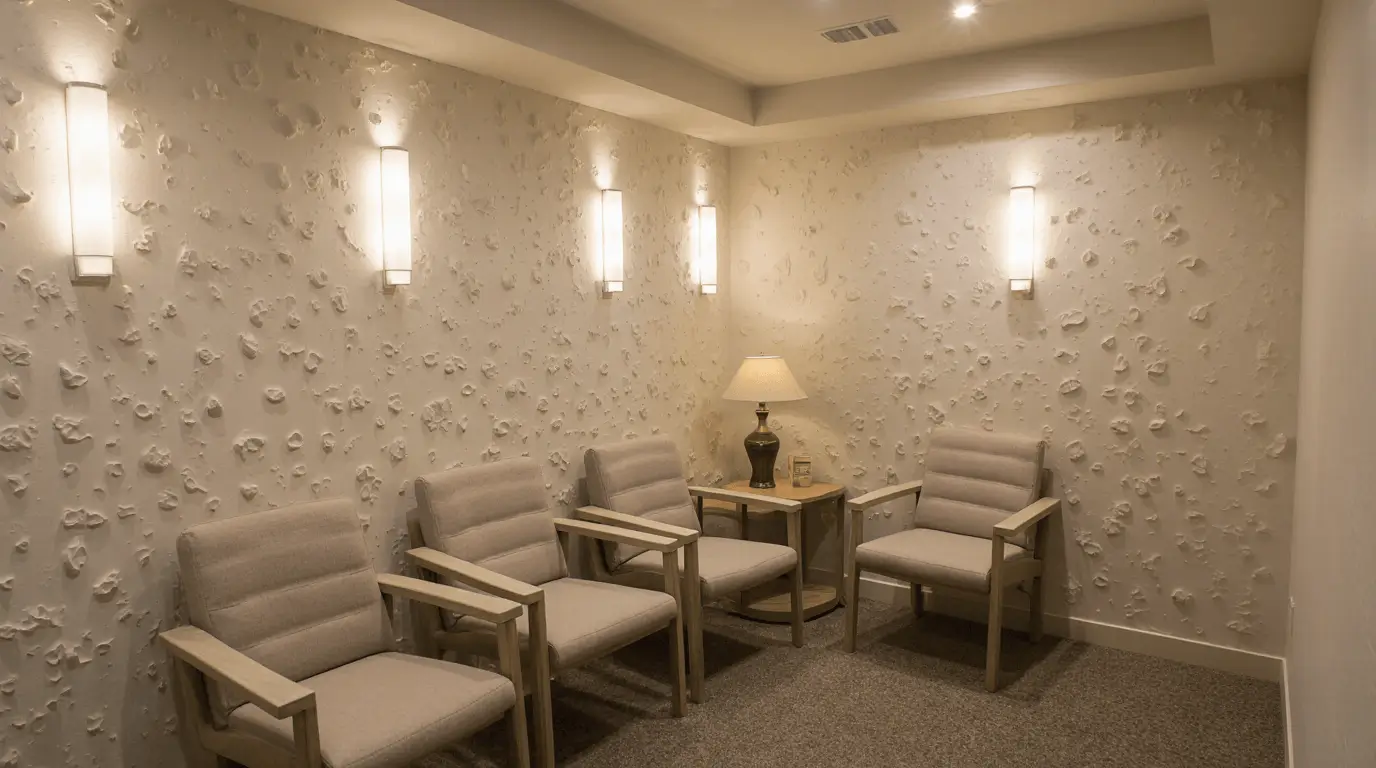
Memory Care Community Social Spaces
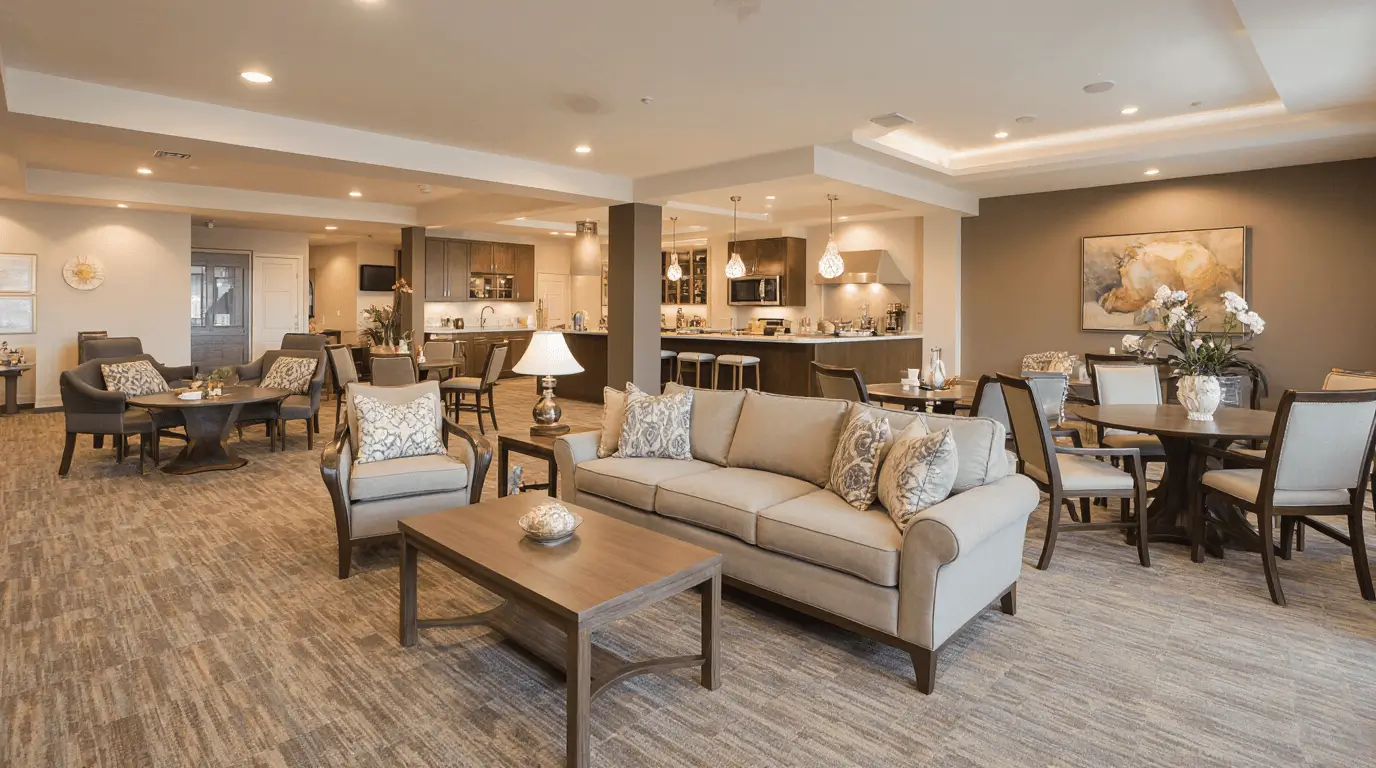
Community lounges encourage interaction while preserving personal space. Seating arrangements should allow choice—group conversation or quiet reflection.
Clear visual boundaries reduce confusion.
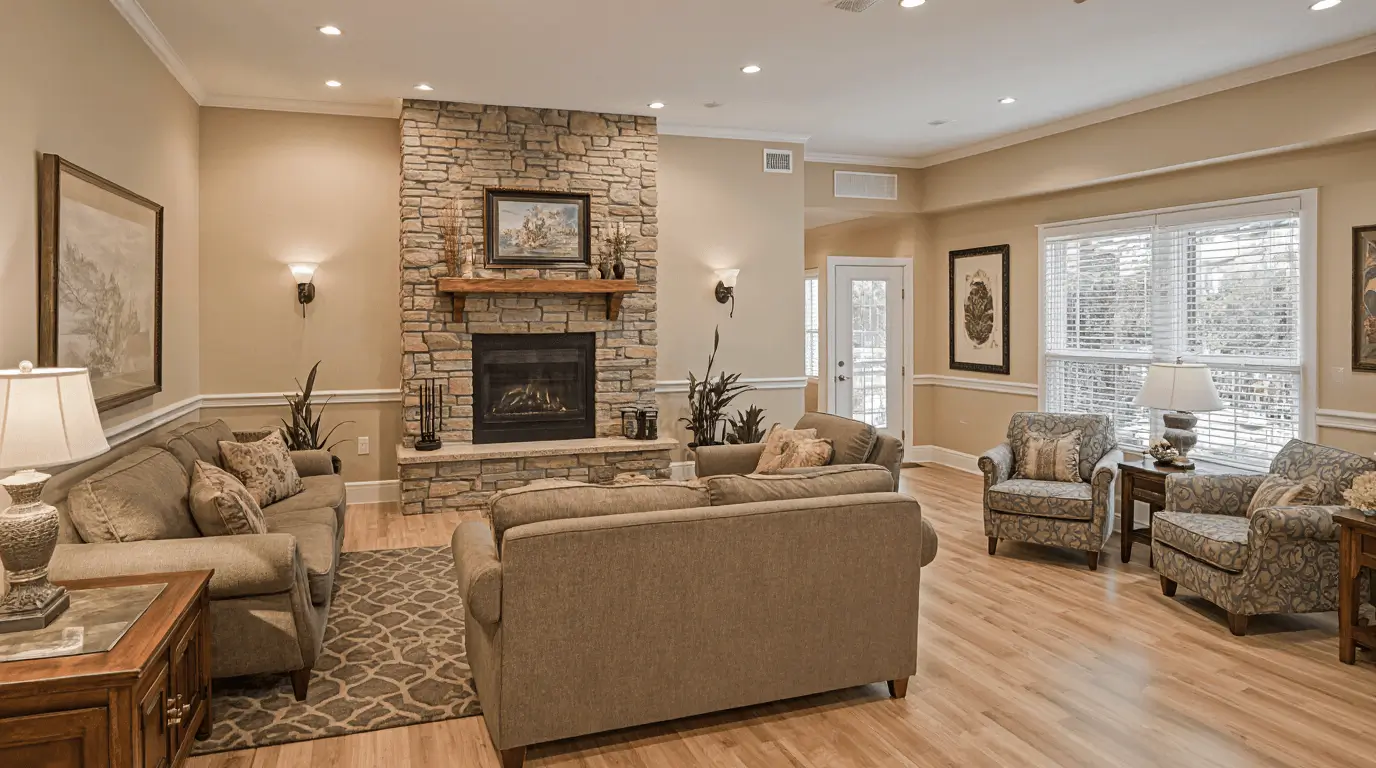
Designing Safe Bathrooms in Memory Care Facilities
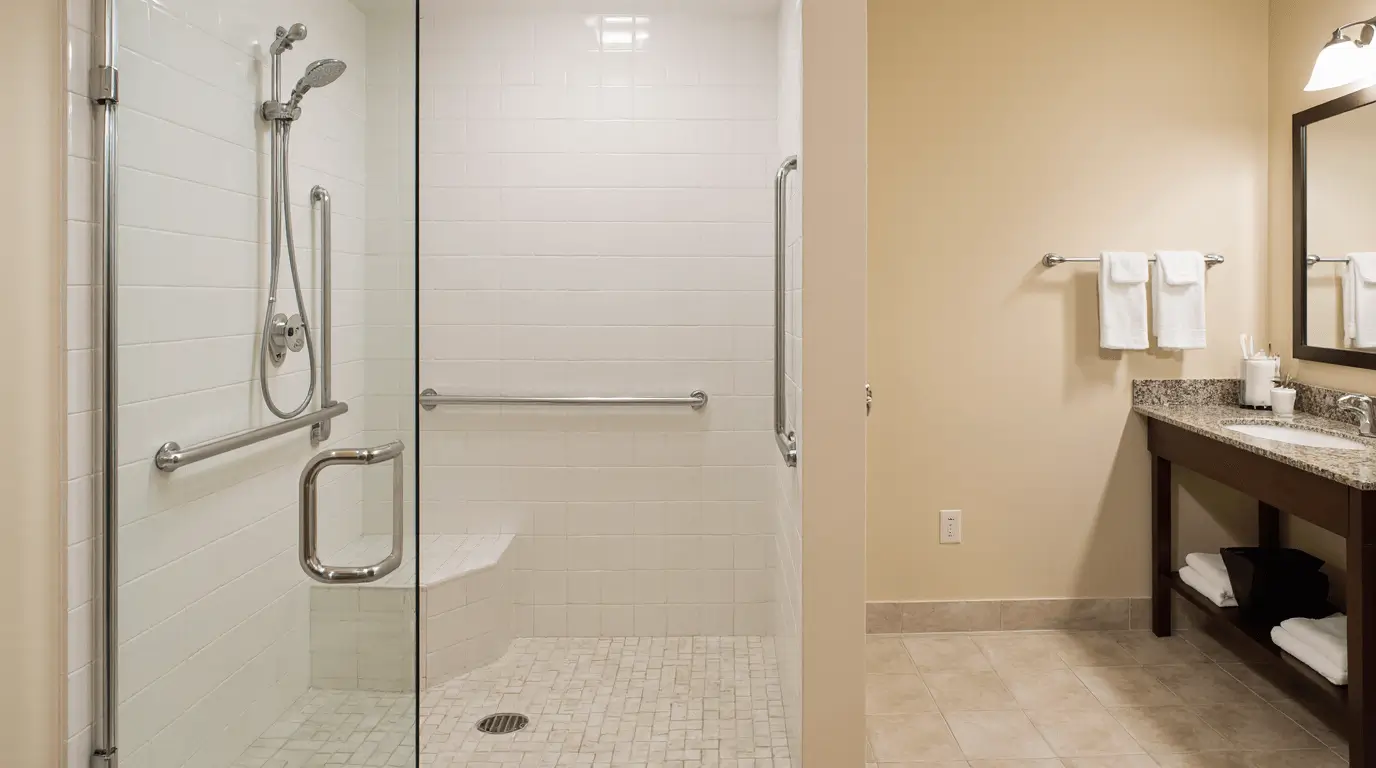
Bathrooms are high-risk areas. Install grab bars in contrasting colors, non-slip flooring, and walk-in showers with bench seating.
Clear signage supports independence.
Conclusion: Designing With Dignity, Safety, and Humanity in Mind
At its core, memory care interior design is about shaping environments that quietly support the mind when memory begins to fade. The most successful spaces are not flashy or overly stylized—they are calm, legible, and deeply human. They reduce confusion without feeling restrictive. They protect without appearing institutional. And most importantly, they honor the individuality of the person living within them.
In real-world settings, thoughtful design decisions translate directly into better outcomes. Clear wayfinding lowers anxiety. Balanced lighting improves sleep and mood. Familiar furnishings spark recognition and comfort. Safe flooring and intuitive layouts reduce falls. These are not decorative upgrades—they are life-enhancing interventions embedded into the built environment.
This approach benefits families seeking reassurance, caregivers striving for smoother daily routines, and operators committed to higher standards of care. It also empowers designers and decision-makers to move beyond aesthetics and toward environments rooted in empathy and evidence.
Moving forward, the goal is clarity: choose simplicity over visual noise, warmth over sterility, and familiarity over trend. When design is guided by dignity and cognitive understanding, the result is more than a well-designed facility—it is a place where people feel secure, respected, and truly at home.
Learn more : 11+ Stunning Bungalow Interior Design Secrets
Frequently Asked Questions
- What makes memory care interior design different from standard senior living design?
While all senior environments prioritize accessibility, memory care spaces are specifically designed for individuals experiencing cognitive decline. Layouts are simplified, visual cues are intentional, and overstimulation is minimized. The focus is not only physical safety, but also emotional regulation, orientation, and independence.
- Which colors work best in memory care environments?
Soft, warm neutrals paired with gentle contrasts tend to work best. Muted greens, warm beiges, and soft blues promote calmness. Strong contrast is useful for safety—such as differentiating walls from floors or toilet seats from surrounding surfaces—but overly bold patterns or high-gloss finishes should be avoided.
- How can families personalize a memory care room safely?
Incorporate meaningful photographs, a favorite chair, familiar bedding, or recognizable décor pieces from home. Keep the layout consistent and avoid clutter. Personalization should enhance recognition without introducing trip hazards or visual confusion.
- Why is lighting so important in memory care spaces?
Individuals with dementia often experience changes in depth perception and circadian rhythm. Even, glare-free lighting reduces shadows that may cause fear or misinterpretation. Exposure to natural daylight during the day and softer lighting in the evening helps regulate sleep cycles and overall mood.
- Are open floor plans recommended for memory care facilities?
Open layouts can work well when carefully structured. Clear sightlines help residents see destinations such as dining areas or lounges, reducing anxiety. However, large undefined spaces should be broken into smaller, comfortable seating clusters to avoid overstimulation.
- How do outdoor spaces support individuals with dementia?
Secure gardens and looping walking paths allow safe movement without frustration. Access to fresh air, greenery, and sunlight has been shown to reduce agitation and improve emotional well-being. The key is creating safe boundaries that feel natural rather than restrictive.
- What is the most common design mistake in memory care settings?
Overdesigning. Busy patterns, excessive décor, poor lighting, and abrupt material changes can create confusion and stress. Simplicity, consistency, and thoughtful contrast are far more effective than trend-driven design choices.



One Response