
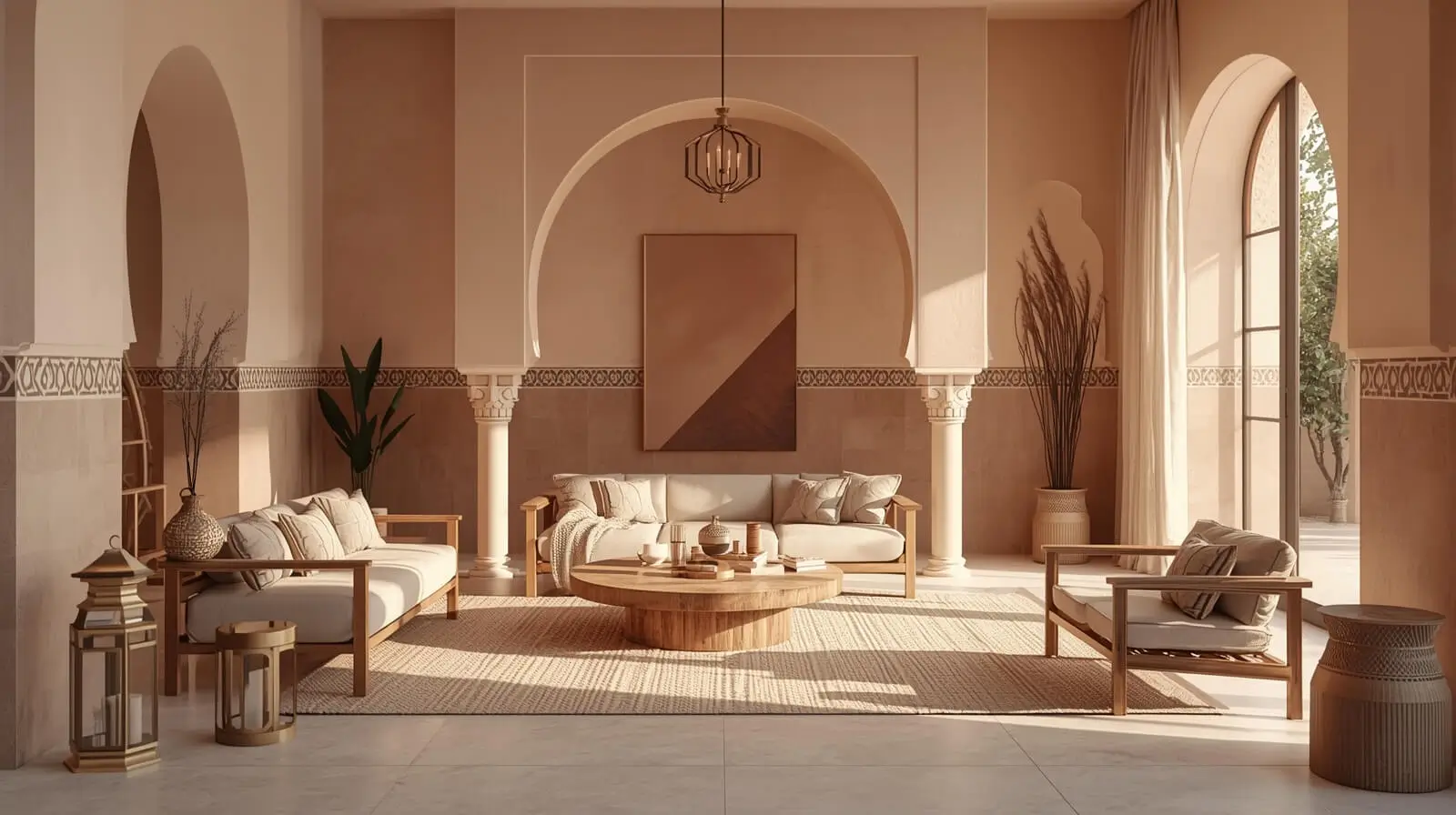
Introduction
Moroccan interior design is a rich, sensory-driven style rooted in centuries of craftsmanship, regional artistry, and architectural tradition. It blends intricate handwork, layered textures, and soulful colors to create interiors that feel both expressive and deeply grounded.
What sets Moroccan interior design apart is its ability to balance opulence with warmth. From carved plaster walls and zellige tilework to low seating and ambient lantern lighting, every element serves both beauty and comfort. Having worked with Moroccan-inspired spaces across modern apartments and heritage homes, one thing remains consistent: the design always tells a story.
Whether interpreted traditionally or reimagined through a modern lens, Moroccan interior design adapts effortlessly to contemporary lifestyles while preserving its cultural soul.
Moroccan Interior Design Style Essentials
Moroccan interior design style is defined by arches, geometric patterns, artisanal finishes, and a strong connection to natural materials. It draws inspiration from Andalusian, Berber, and Islamic design traditions.
This style works because it layers visual interest without overwhelming the space, creating depth through detail rather than excess.
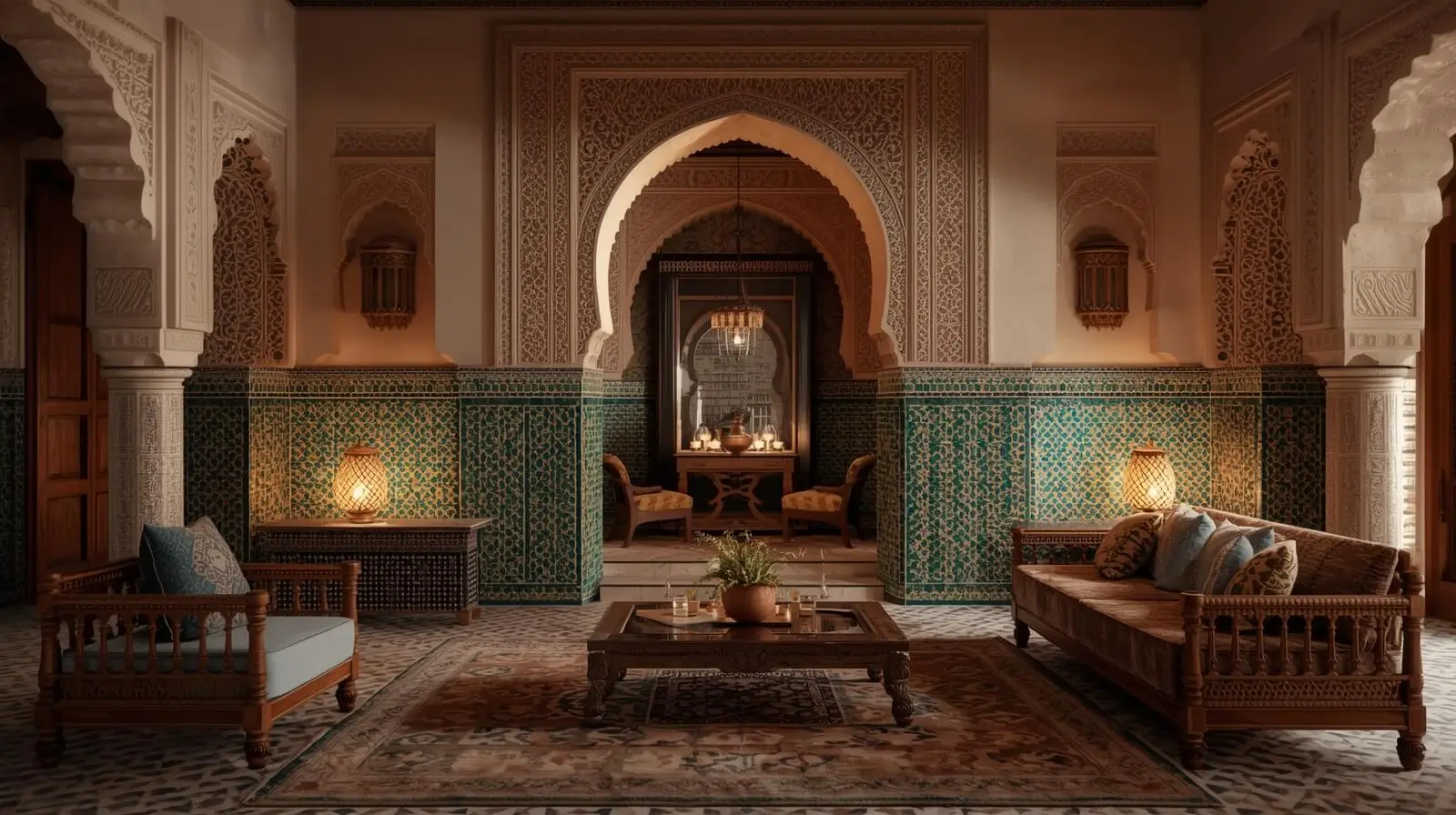
Modern Moroccan Interior Design
Modern Moroccan interior design refines traditional elements into cleaner, more restrained spaces. Ornate details are edited, allowing texture and form to take the lead.
This approach suits urban homes by preserving authenticity while embracing simplicity and modern comfort.
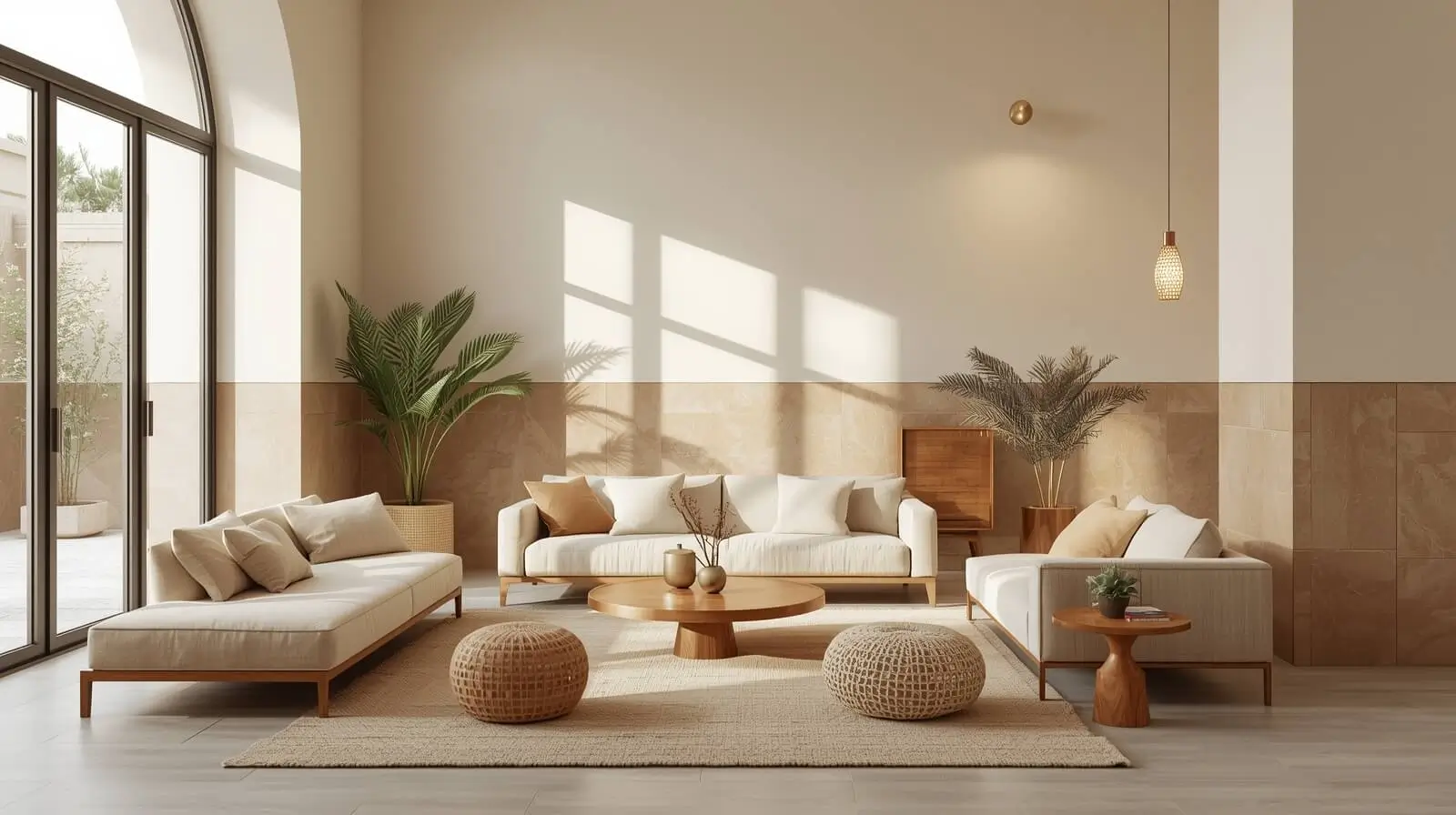
Contemporary Moroccan Design Concepts
Contemporary Moroccan design blends bold heritage features with modern materials and open layouts. Traditional patterns appear in controlled doses through tiles, textiles, or feature walls.
The result is a space that feels current without losing cultural depth.
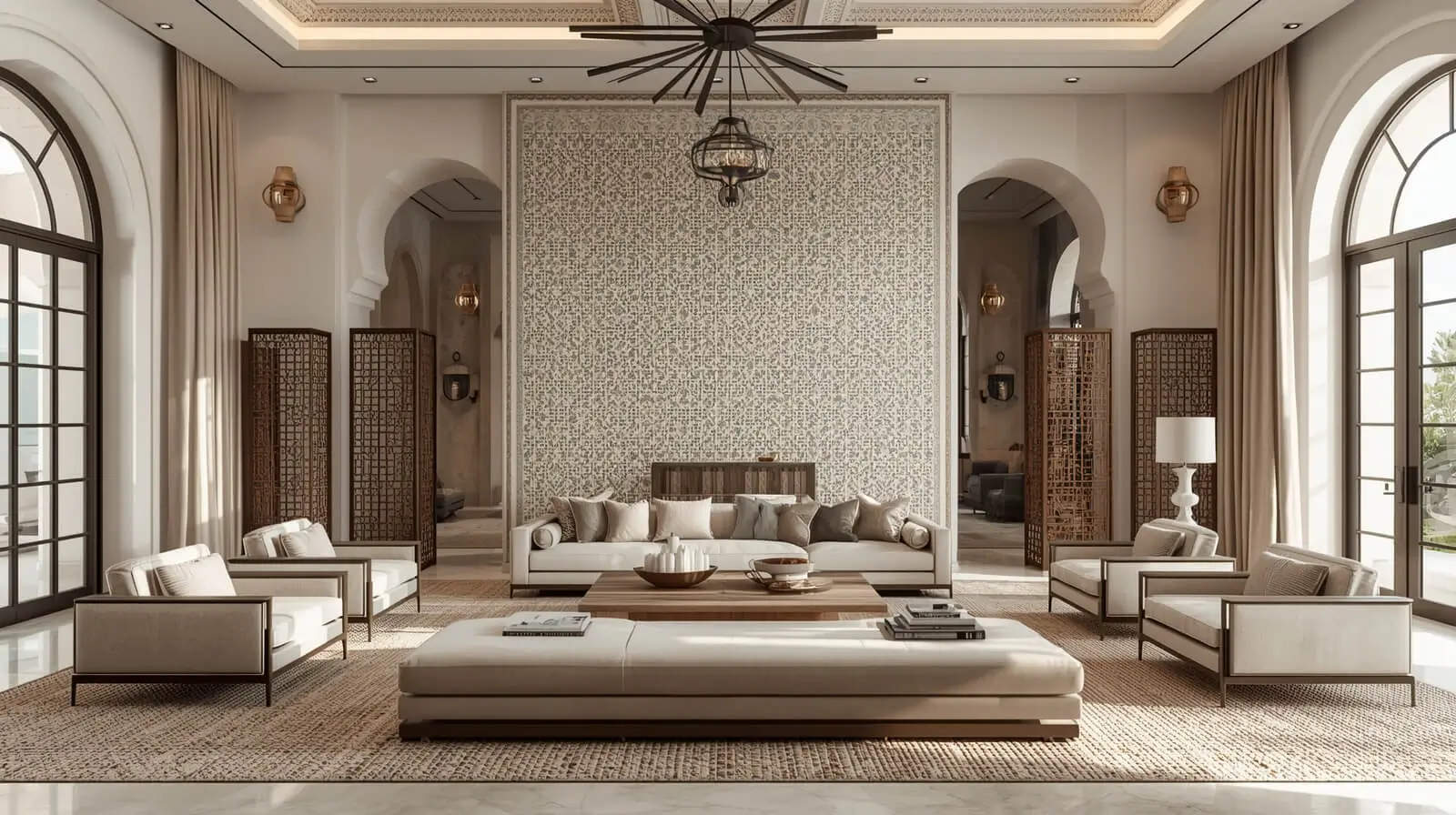
Moroccan Interior Design for Living Rooms
A Moroccan interior design living room is designed for gathering and relaxation. Low seating, layered rugs, and plush cushions encourage comfort and connection.
Lighting plays a major role, creating warmth and intimacy rather than brightness.
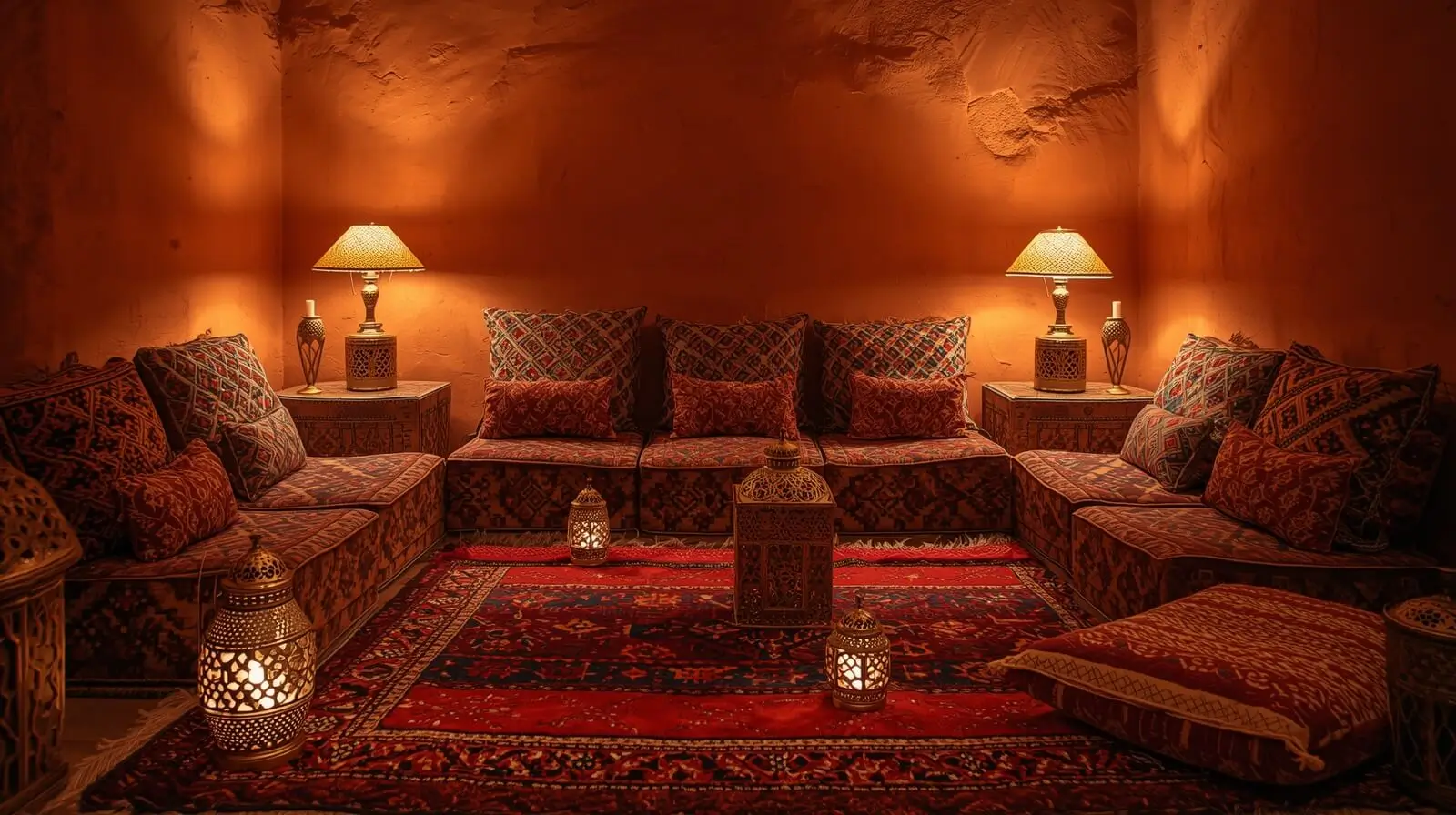
Moroccan Decor for Living Room Spaces
Moroccan decor for living rooms focuses on accessories that add character without clutter. Trays, poufs, lanterns, and patterned textiles act as functional art pieces.
This decorative layering brings life and movement to the space.
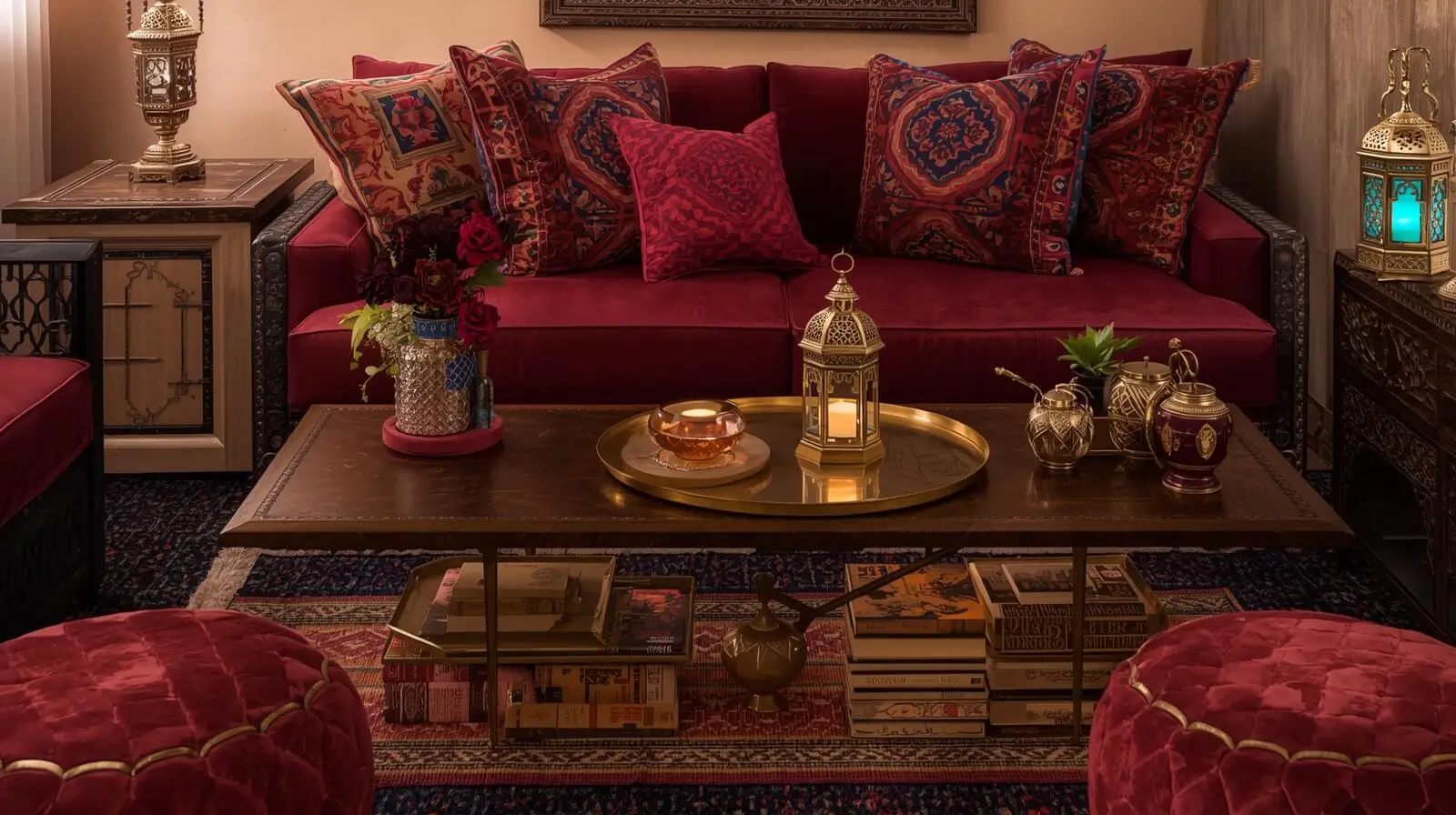
Moroccan Bedroom Interior Design Ideas
Moroccan bedroom ideas emphasize serenity with a hint of romance. Soft fabrics, arched headboards, and muted colors create a restful environment.
The key is comfort paired with subtle decorative richness.
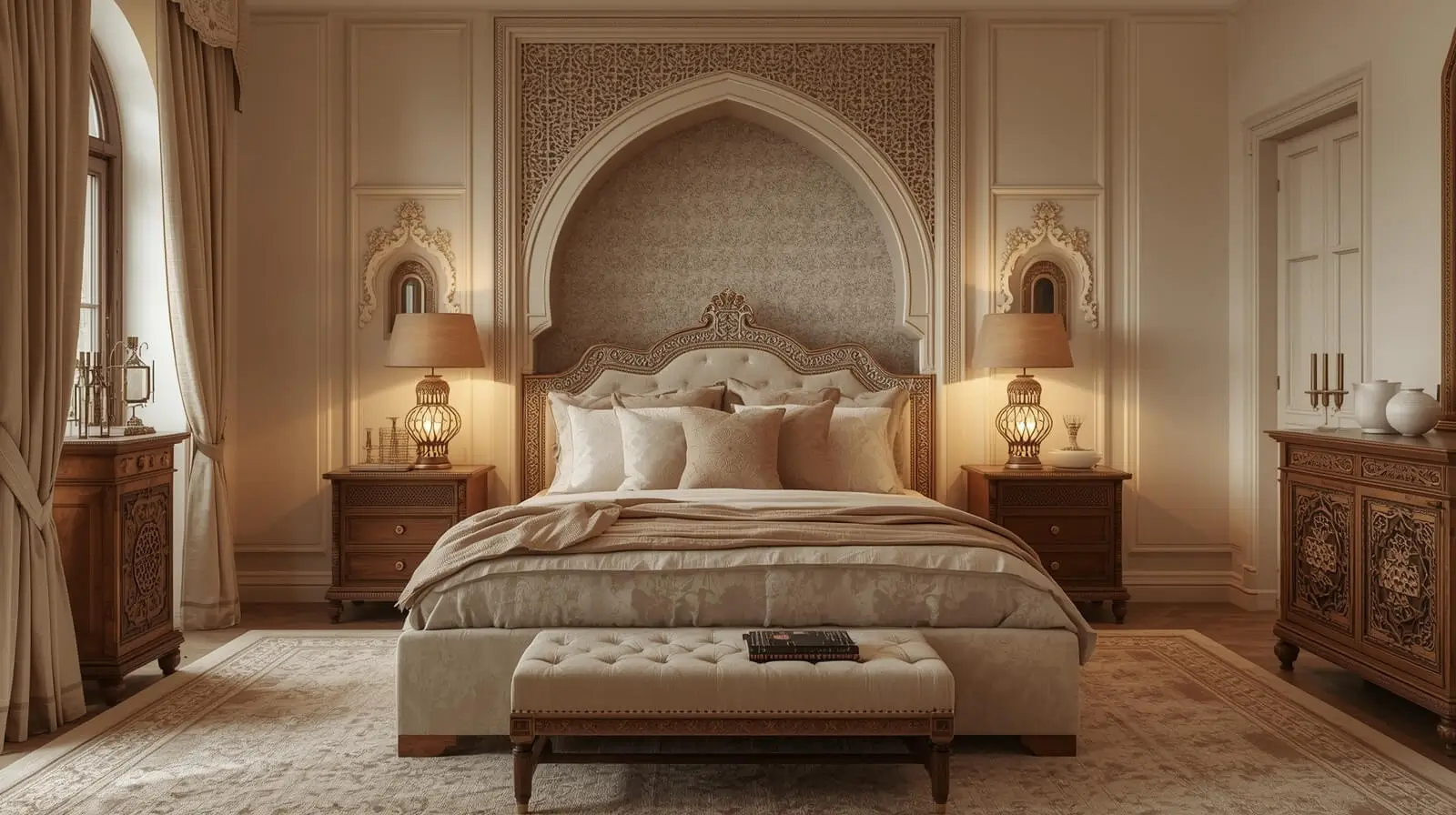
Blue Moroccan Bedroom Design
A blue Moroccan bedroom uses indigo, cobalt, and soft sky tones to evoke calm and depth. These shades pair beautifully with white plaster walls and natural wood.
Blue works especially well in bedrooms because it balances richness with tranquility.
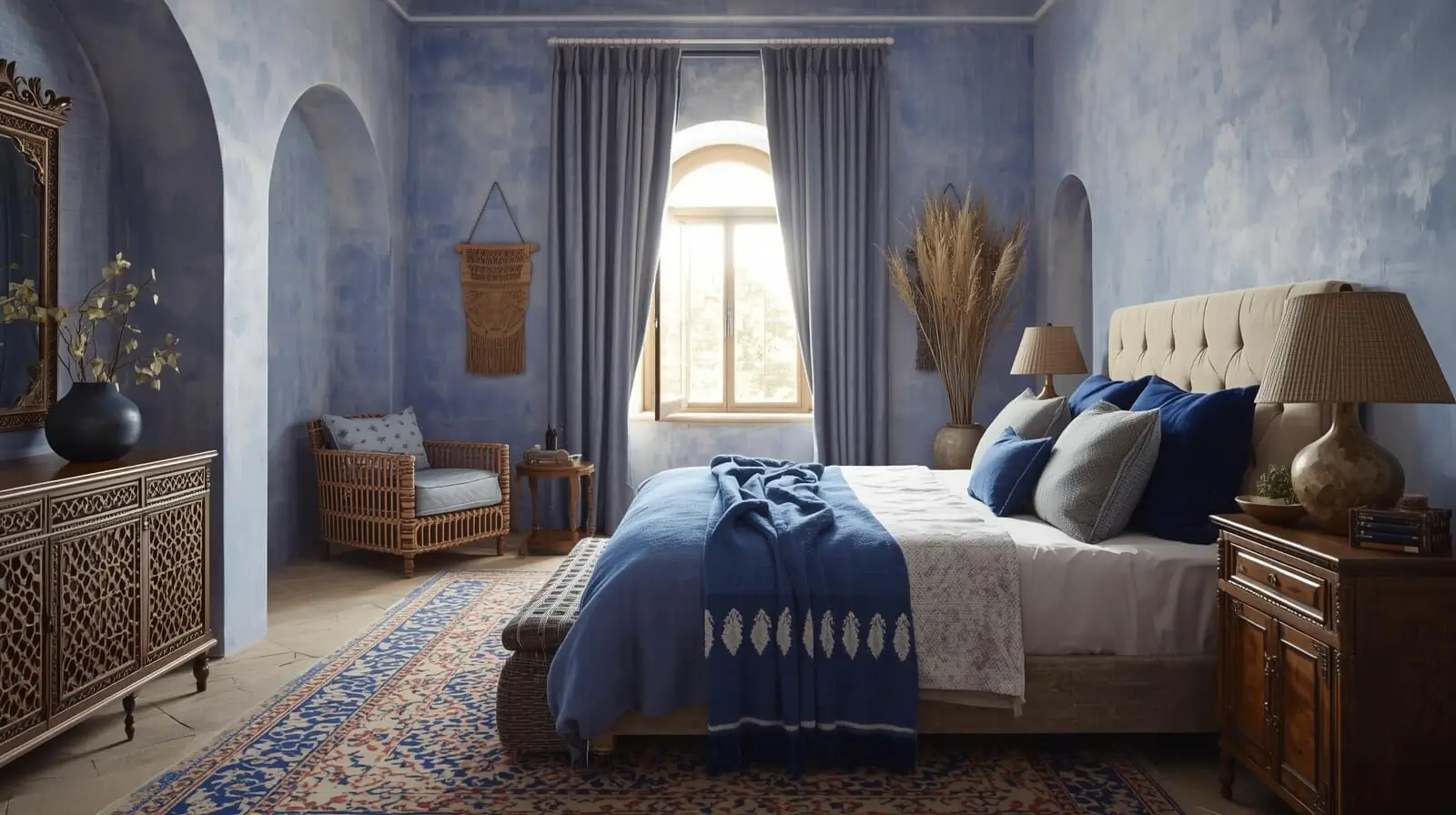
Moroccan Bedroom Themes and Styling
Moroccan bedroom themes range from earthy and minimal to richly layered and ornate. Each theme relies on handcrafted details and tactile materials.
This flexibility makes Moroccan interior design suitable for both subtle and dramatic expressions.
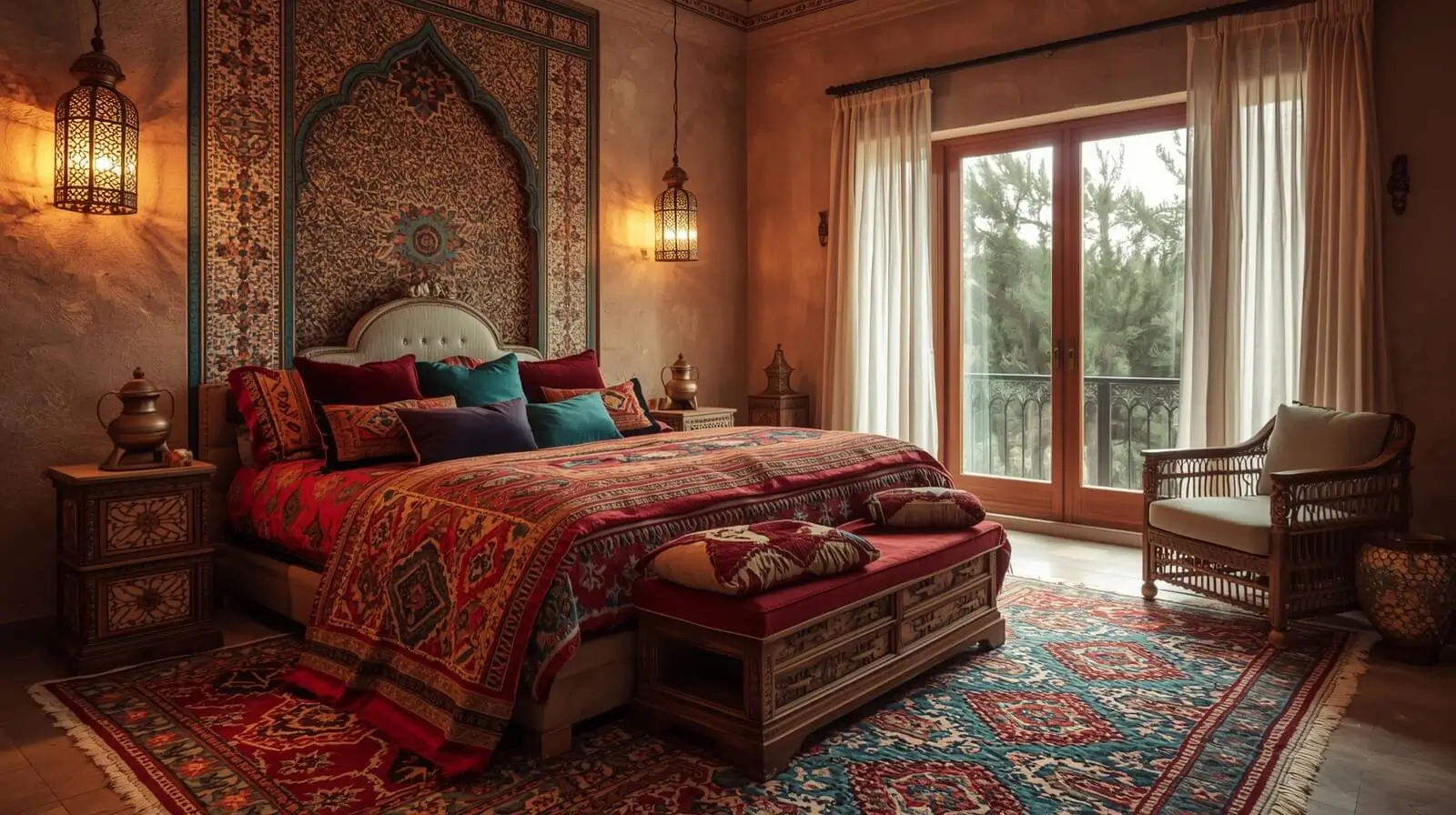
Moroccan House Interior Design
Moroccan house interior design often centers around flow and privacy. Spaces are arranged to feel inward-focused, calm, and protective from the outside world.
Courtyards, arches, and textured surfaces create rhythm throughout the home.
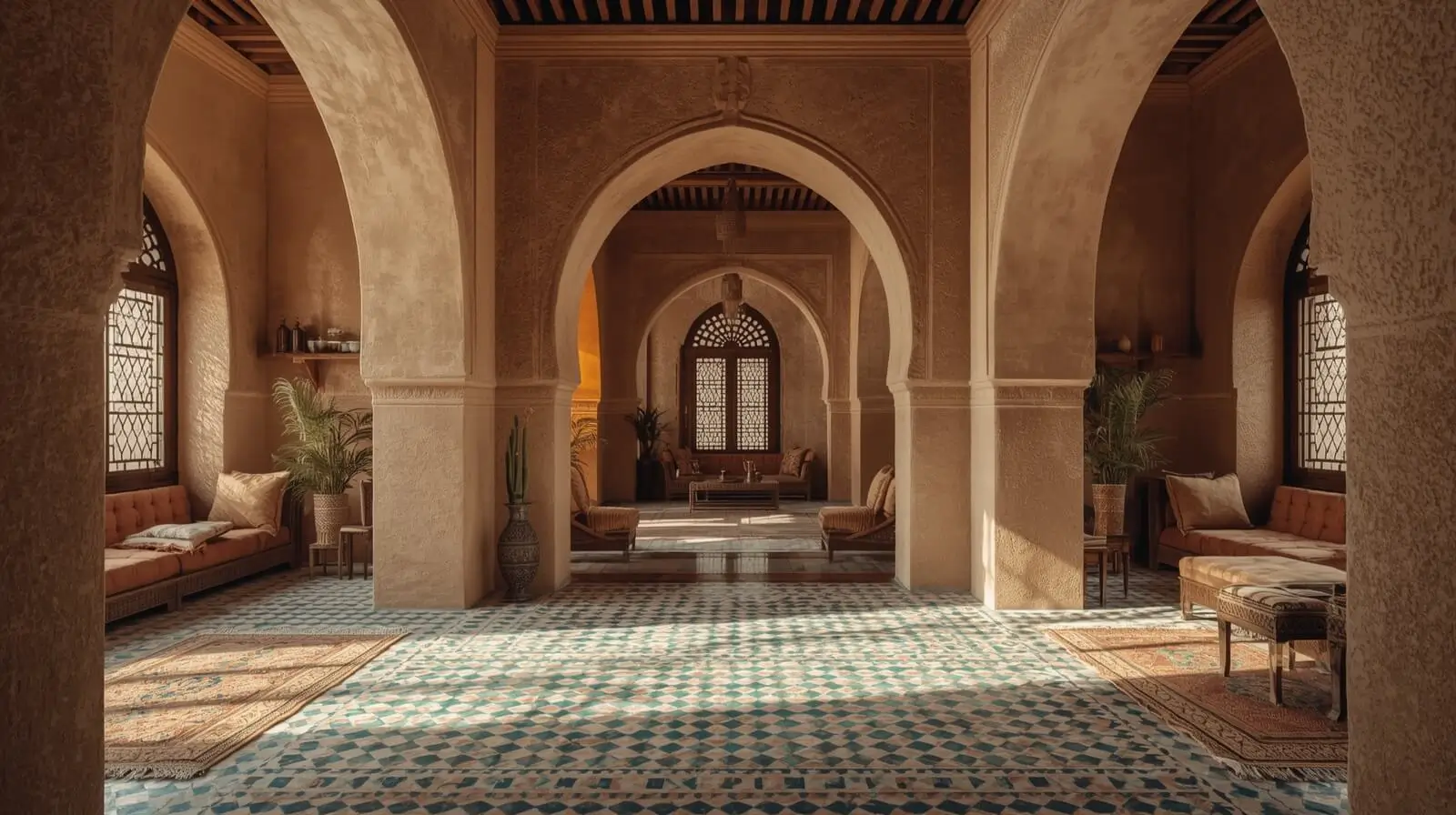
Moroccan House Design Philosophy
Moroccan house design values craftsmanship, symmetry, and human-scale comfort. Homes are designed to age beautifully, embracing patina and handmade imperfections.
This philosophy makes Moroccan interior design timeless rather than trend-driven.
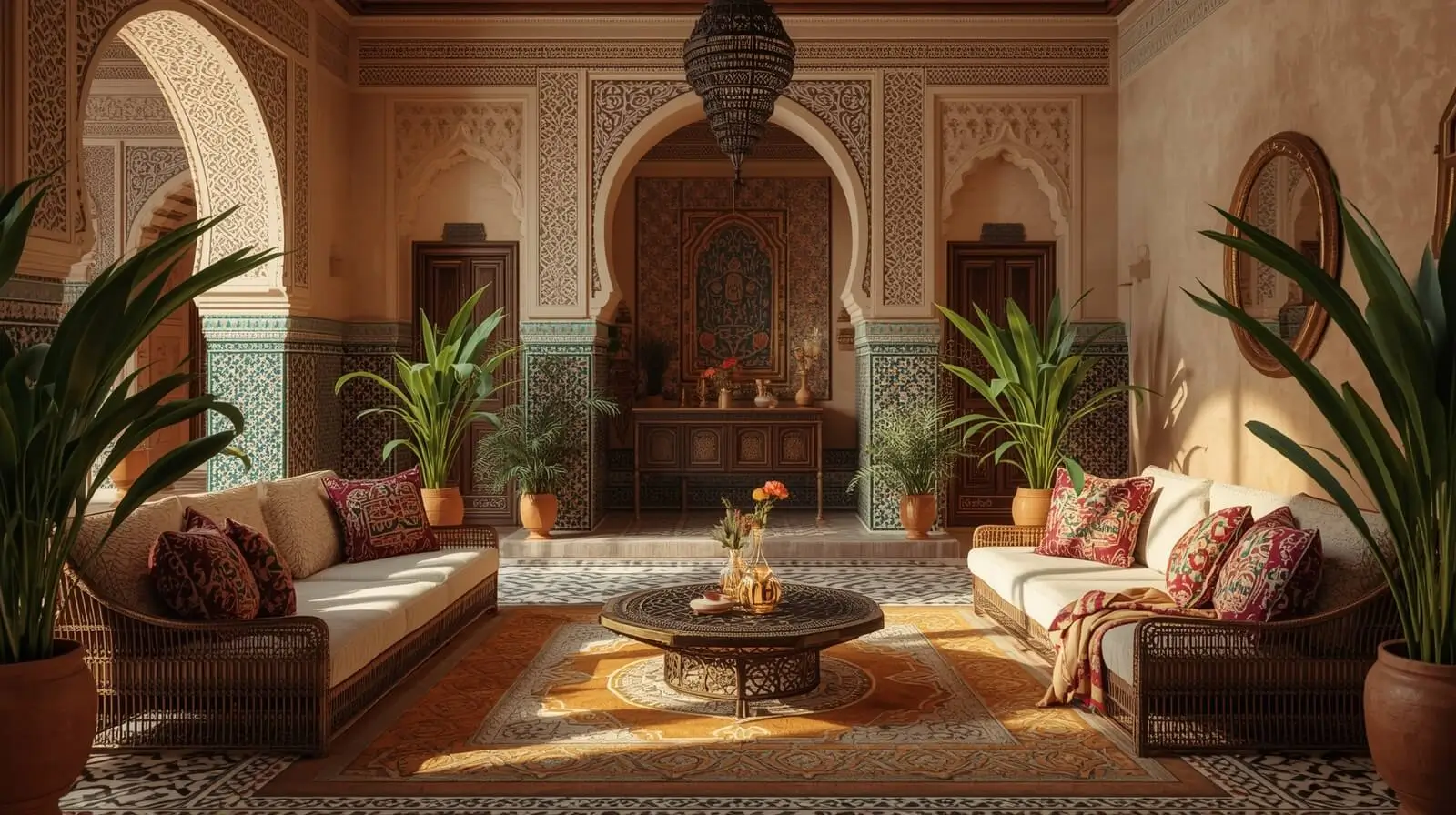
Moroccan Design Ideas for Modern Homes
Moroccan design ideas can be integrated into modern homes through selective elements like tiles, lighting, or furniture. Even one statement feature can transform a space.
The beauty lies in restraint and intentional placement.
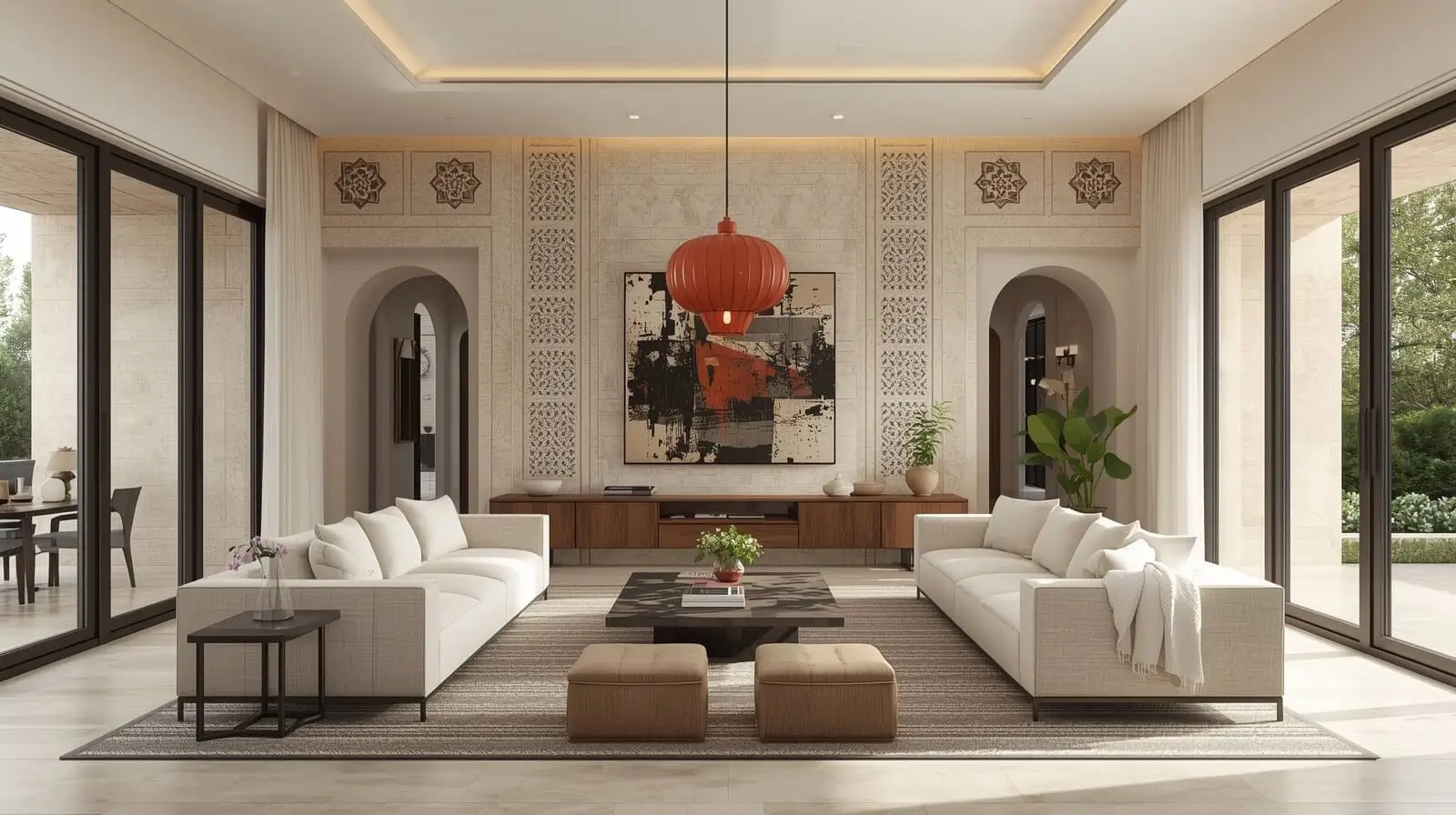
Moroccan Designs Interior Elements
Key Moroccan interior elements include zellige tiles, tadelakt walls, carved wood, and metalwork. These materials provide texture and visual rhythm.
They work because they are both decorative and durable.
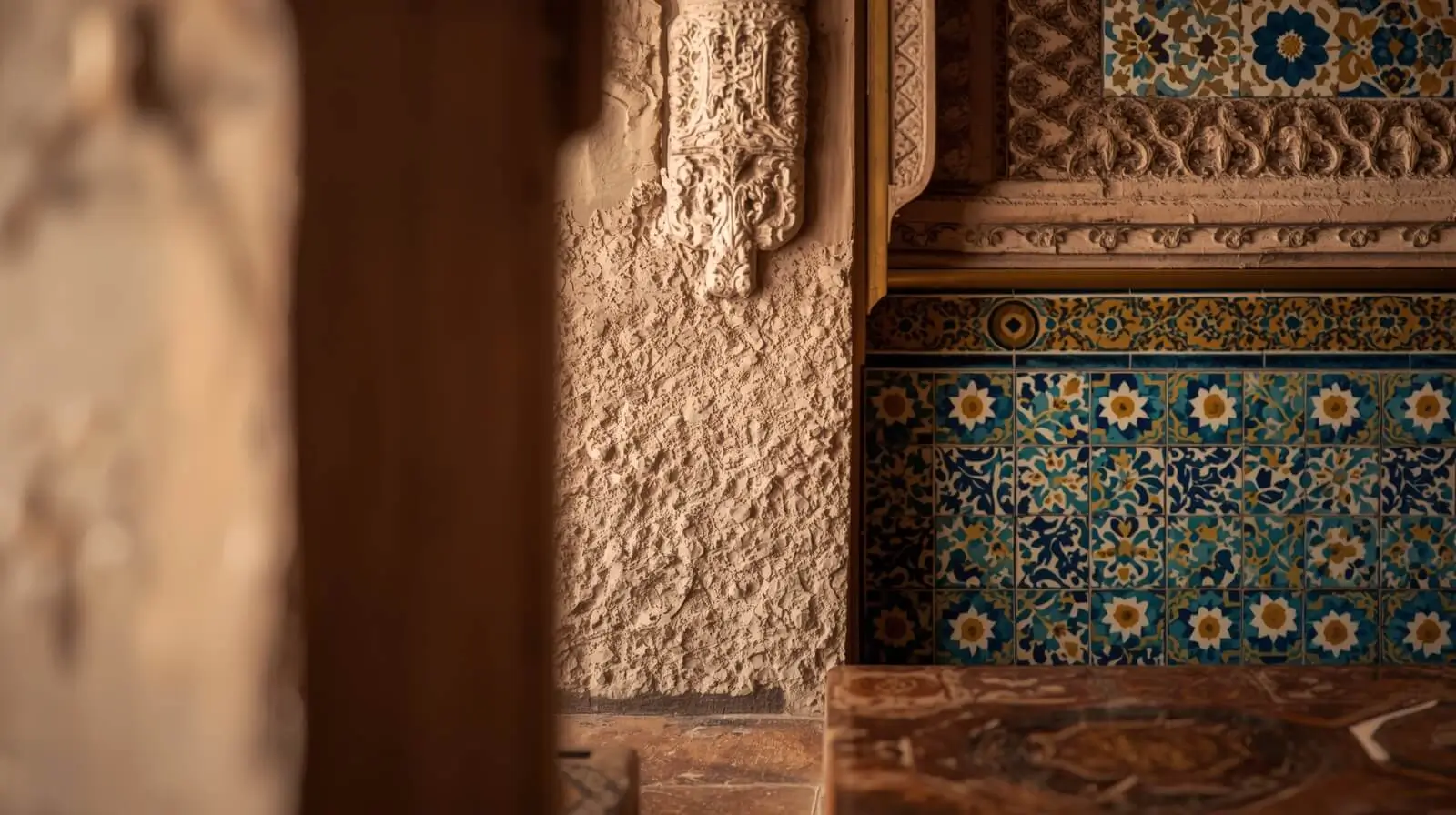
Decorating Moroccan Style Homes
Decorating Moroccan style homes requires layering rather than matching. Patterns, textures, and colors coexist harmoniously when balanced with neutral backdrops.
This approach creates depth without chaos.
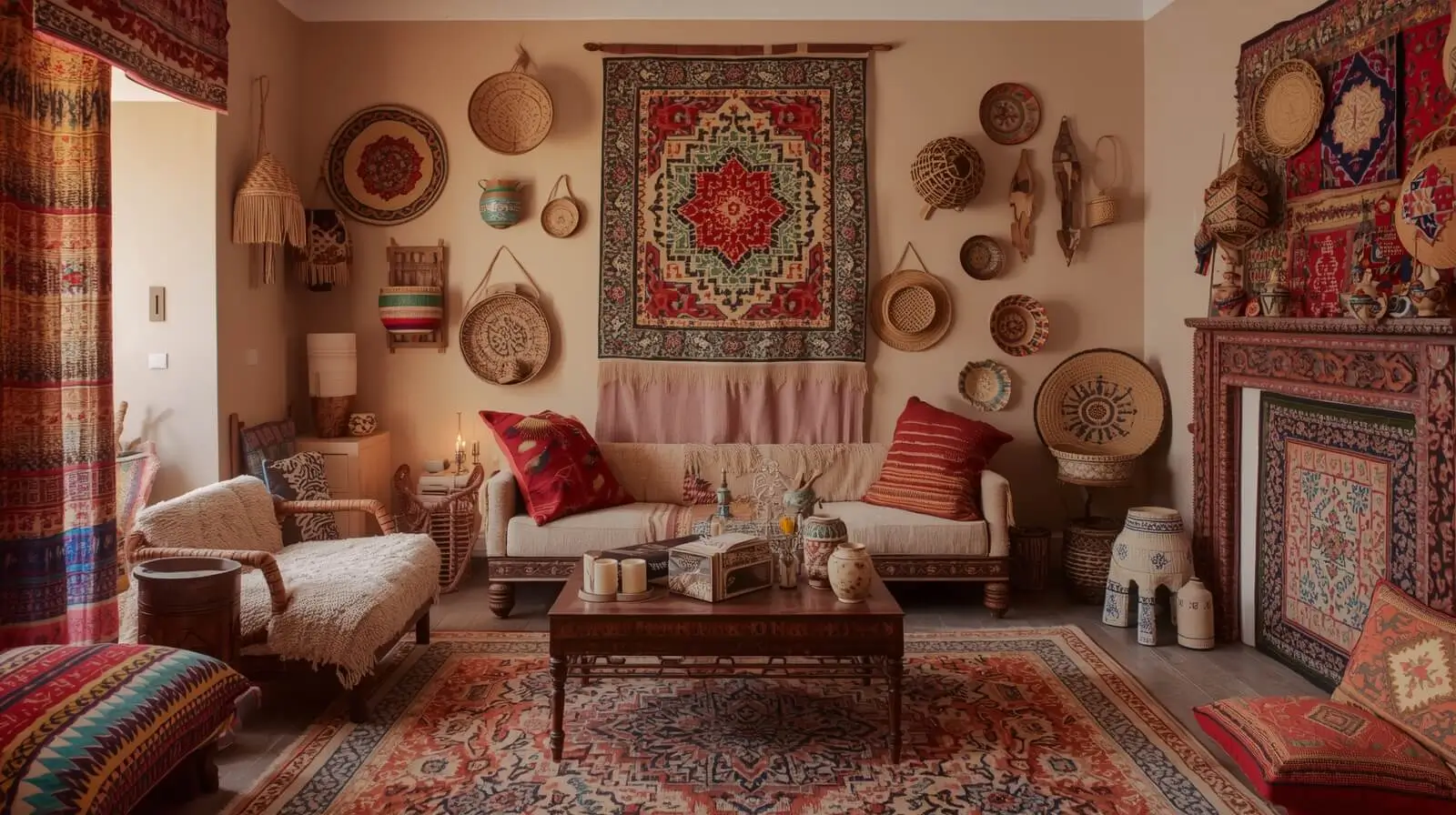
How to Decorate Moroccan Style Interiors
To decorate Moroccan style interiors, start with a calm base and add character through details. Focus on lighting, textiles, and artisanal objects rather than large furniture changes.
Small adjustments can dramatically shift the mood.
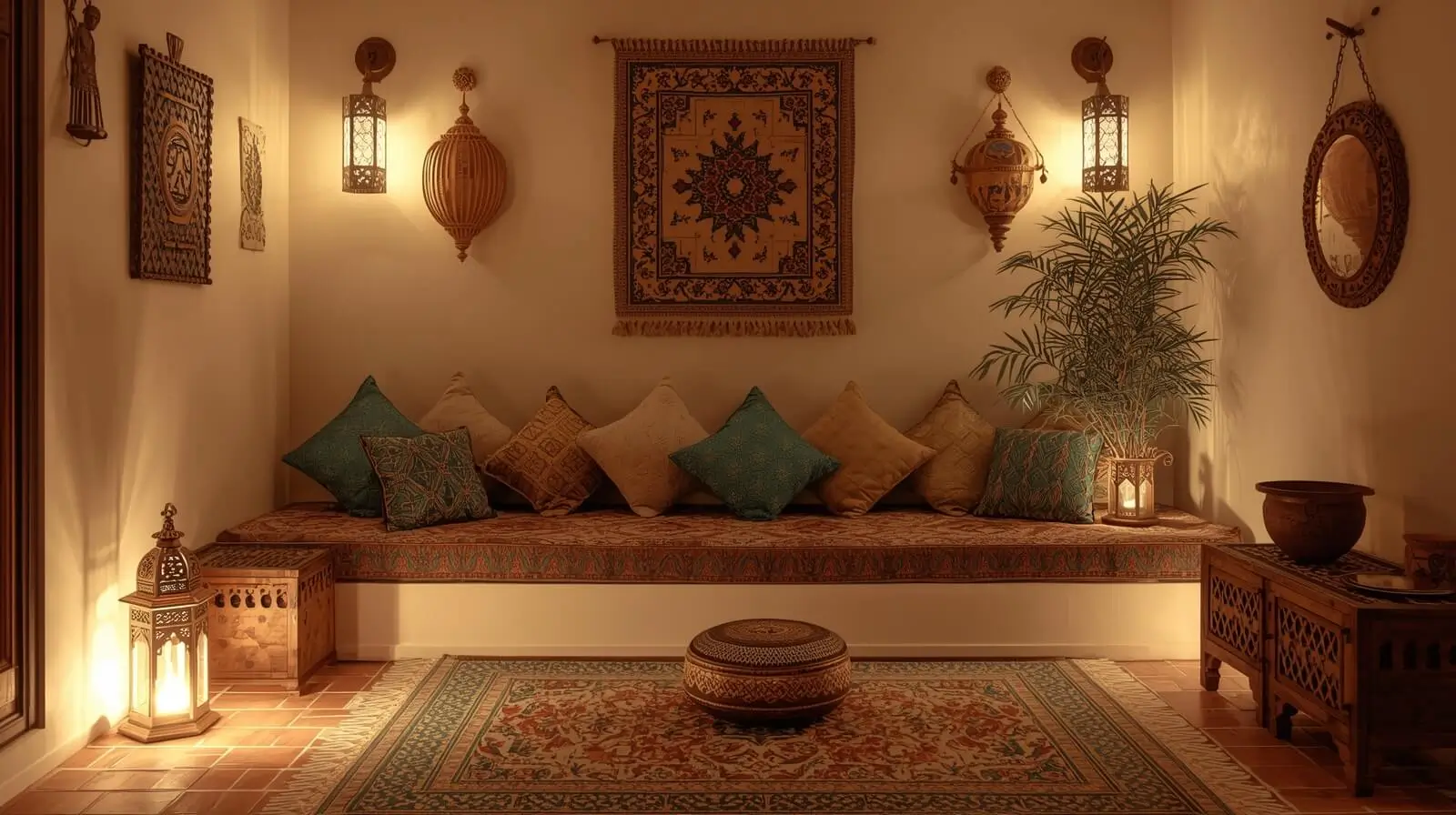
Minimalist Modern Moroccan Interior Design
Minimalist modern Moroccan interior design strips back ornamentation while keeping texture and warmth. Clean lines meet handcrafted materials for a refined result.
This style works especially well in contemporary apartments.
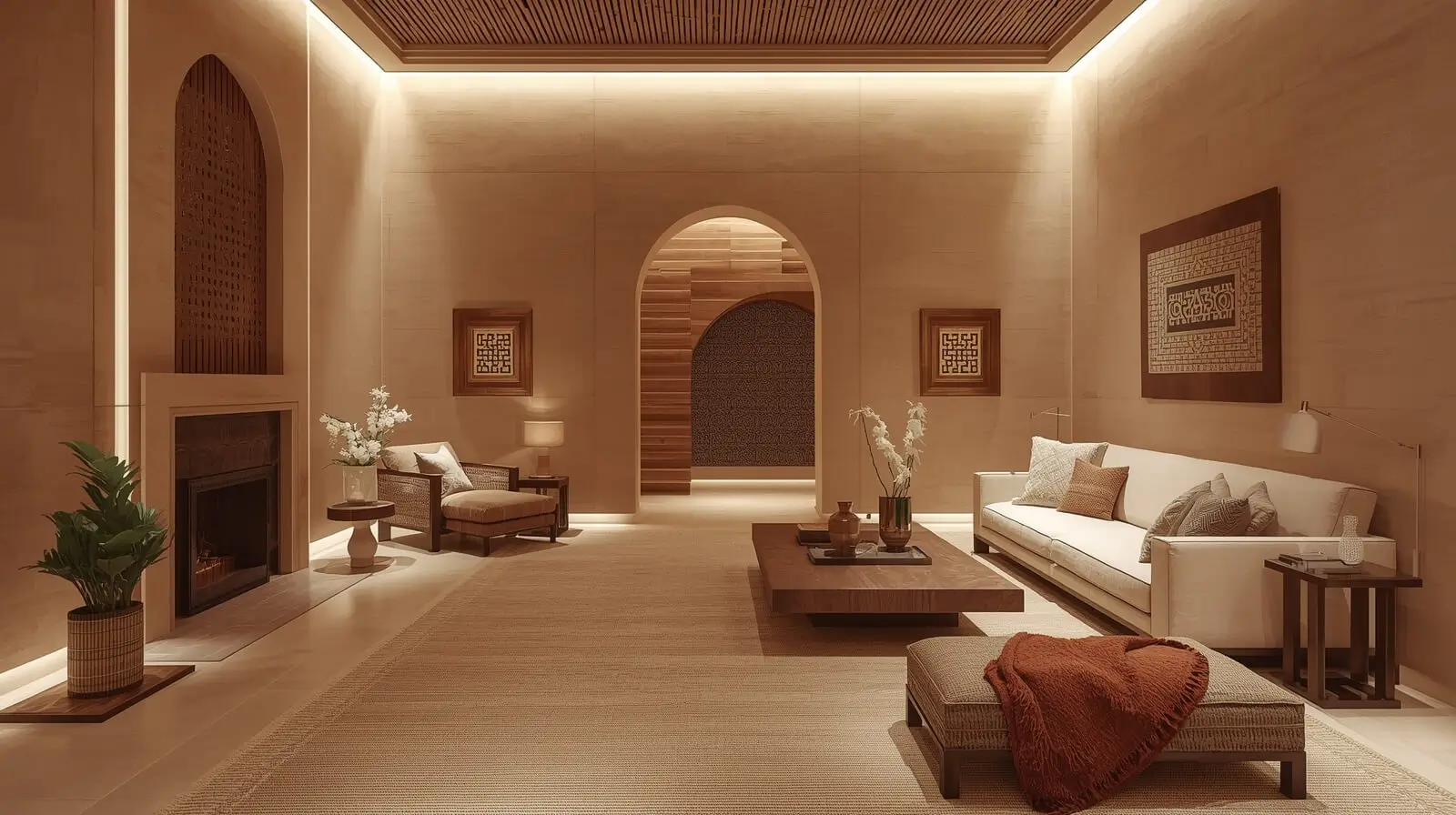
Moroccan Interior Design Materials and Textures
Materials are the soul of Moroccan interior design. Plaster, clay, wood, leather, and metal create a tactile experience that feels grounded and authentic.
Texture replaces excess color, adding quiet richness to the space.
Moroccan Interior Design Color Palette
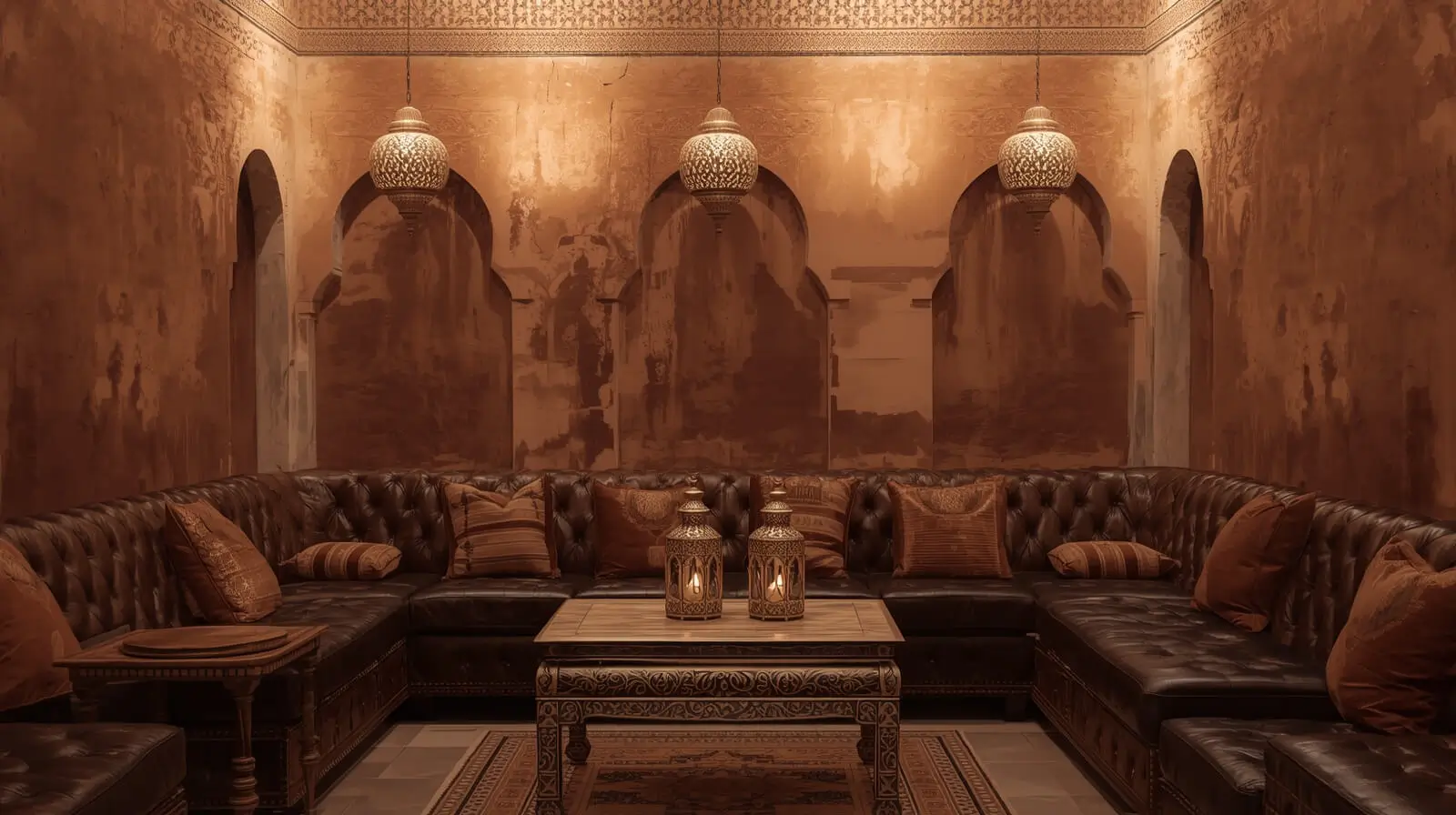
Moroccan color palettes range from earthy neutrals to deep jewel tones. These colors are inspired by landscapes, spices, and traditional dyes.
Used thoughtfully, they bring emotion and warmth without overpowering the room.
Conclusion: Bringing Moroccan Interior Design Into Real Life
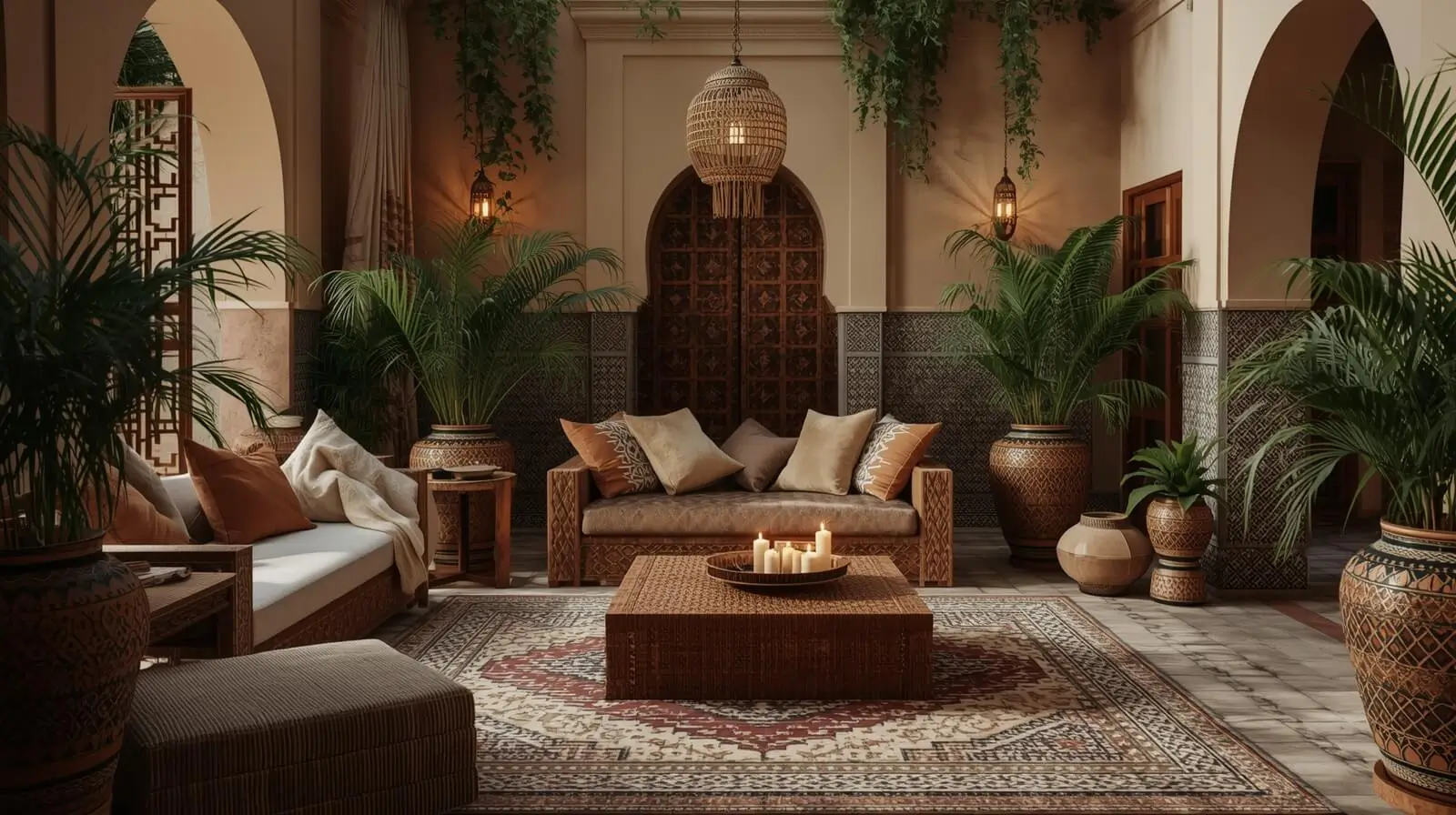
Moroccan interior design works because it’s built on principles that never go out of style: craftsmanship, balance, and human comfort. Rather than relying on trends, it creates atmosphere through texture, light, and thoughtful layering. These spaces feel inviting not because they are perfectly styled, but because they are designed to be lived in.
In practice, this approach suits anyone who values warmth over minimal sterility and character over uniformity. Moroccan interior design allows you to slow a space down, soften its edges, and introduce depth without sacrificing functionality. Whether through a single tiled surface, a softly lit corner, or a carefully chosen textile, the style adapts to real homes and modern routines with ease.
The most successful Moroccan-inspired interiors are intentional rather than excessive. They focus on materials that age well, lighting that creates mood, and layouts that encourage comfort and connection. When approached with restraint and respect for craftsmanship, Moroccan interior design becomes less about decoration and more about how a space feels over time. That’s what makes it enduring—and why it continues to resonate across cultures and lifestyles.
Learn more : 12+ Inspiring Modern Spanish Interior Design Ideas
Frequently Asked Questions
- Is Moroccan interior design suitable for modern homes and apartments?
Yes. Moroccan interior design integrates seamlessly into modern spaces when applied selectively. Clean layouts paired with textured walls, subtle tile accents, or warm lighting can introduce character without overwhelming contemporary architecture.
- How can I add Moroccan influence without fully committing to the style?
Start small. Introduce one or two elements such as a patterned rug, a carved wood piece, or ambient lantern lighting. Moroccan interior design is modular by nature, so even a single detail can shift the mood of a room.
- Does Moroccan interior design always require bold colors?
Not at all. While rich colors are common, many Moroccan interiors rely on neutrals, earthy tones, and texture for depth. Color becomes an accent rather than the foundation, especially in modern interpretations.
- What materials define authentic Moroccan interiors?
Hand-applied plaster, clay tiles, natural wood, leather, and metalwork are core materials. These surfaces add tactile richness and visual warmth, which is central to the appeal of Moroccan interior design.
- Can Moroccan interior design feel calm rather than dramatic?
Absolutely. When patterns are restrained and lighting is soft, Moroccan interior design feels serene and grounding. The calm comes from balance—layering detail thoughtfully rather than all at once.
- Is Moroccan interior design practical for everyday living?
Yes. Many traditional elements, such as low seating, durable materials, and layered textiles, were developed for daily use. When adapted thoughtfully, the style supports comfort, durability, and ease of living.
- What’s the best way to maintain cohesion in a Moroccan-inspired space?
Limit your palette, repeat materials, and let one or two elements take visual priority. Moroccan interior design feels cohesive when details are curated with intention rather than added impulsively.

One Response