
Introduction
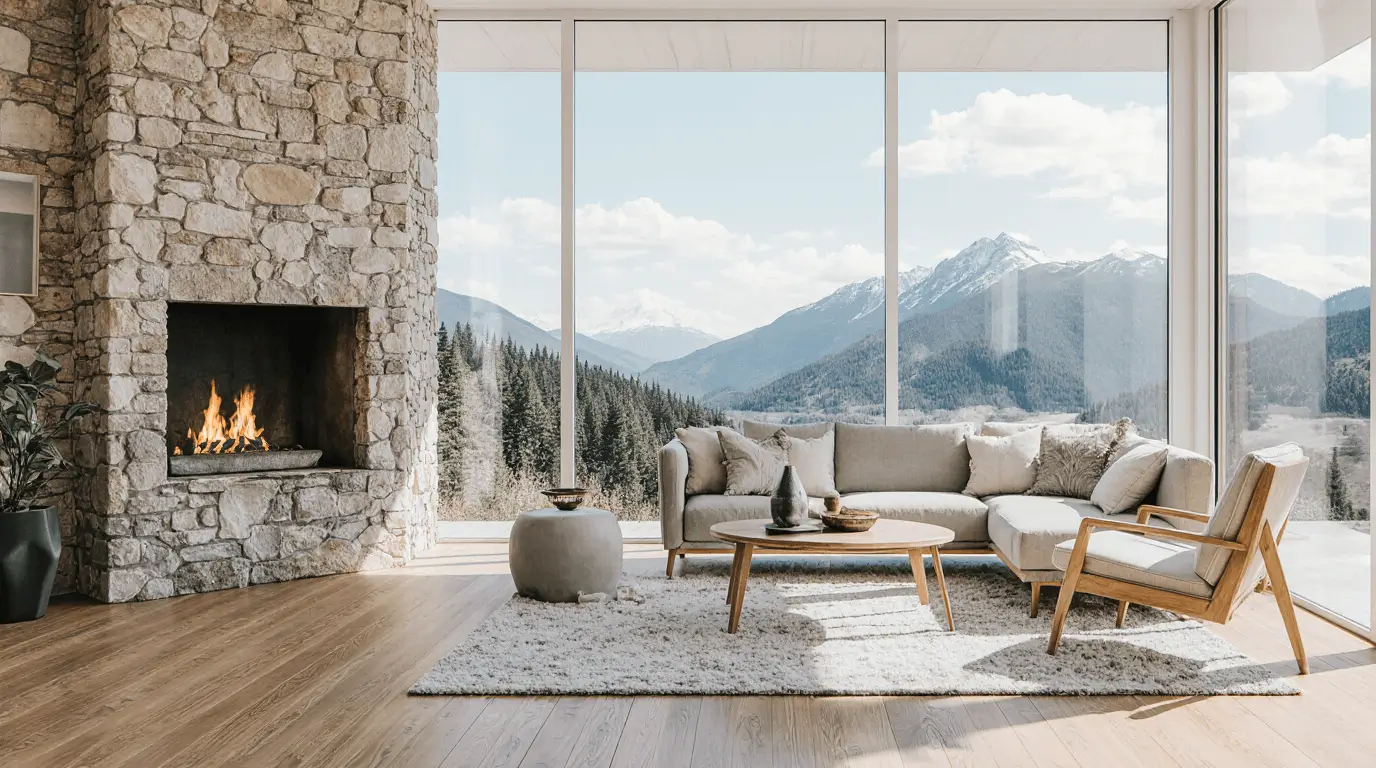
Mountain modern interior design is a sophisticated fusion of rugged natural beauty and clean contemporary architecture. Rooted in alpine environments yet refined for modern lifestyles, this style honors the landscape through material authenticity, expansive views, and grounded palettes while embracing simplicity, comfort, and architectural clarity.
In my experience designing and analyzing mountain homes, the most successful interiors are those that feel inseparable from their surroundings. Rather than overpowering the scenery, mountain modern spaces frame it. Stone, wood, steel, and glass work together in thoughtful proportion. The result is not rustic nostalgia nor urban minimalism — it’s a confident balance of warmth and restraint.
Below are essential design clusters that define mountain modern interior design at a professional level.
Mountain Modern Interior Design Foundations
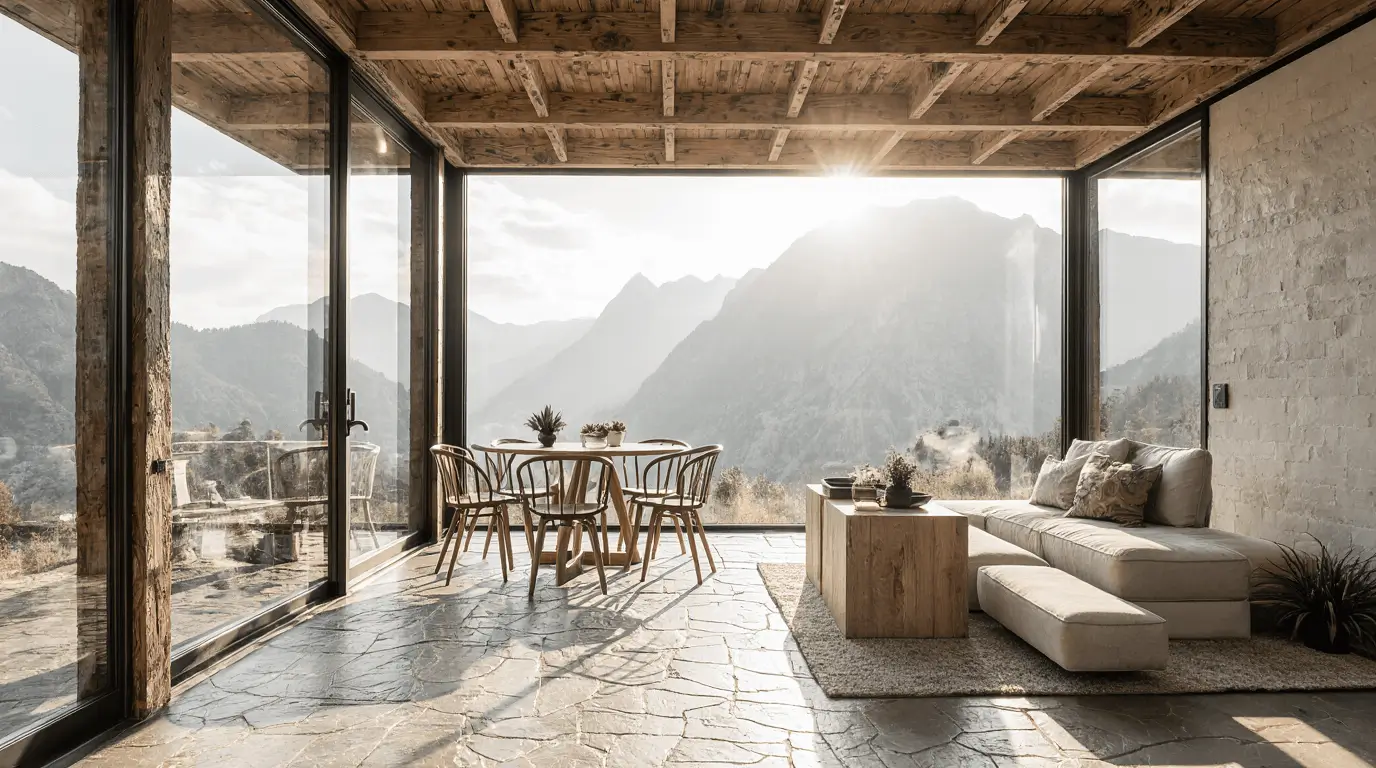
Mountain modern interior design begins with architectural honesty. Structural beams, raw stone walls, and wide-plank wood floors are celebrated rather than concealed.
The foundation is simple: natural materials, clean lines, and a seamless indoor-outdoor connection.
Modern Mountain Home Interior Layout Strategy
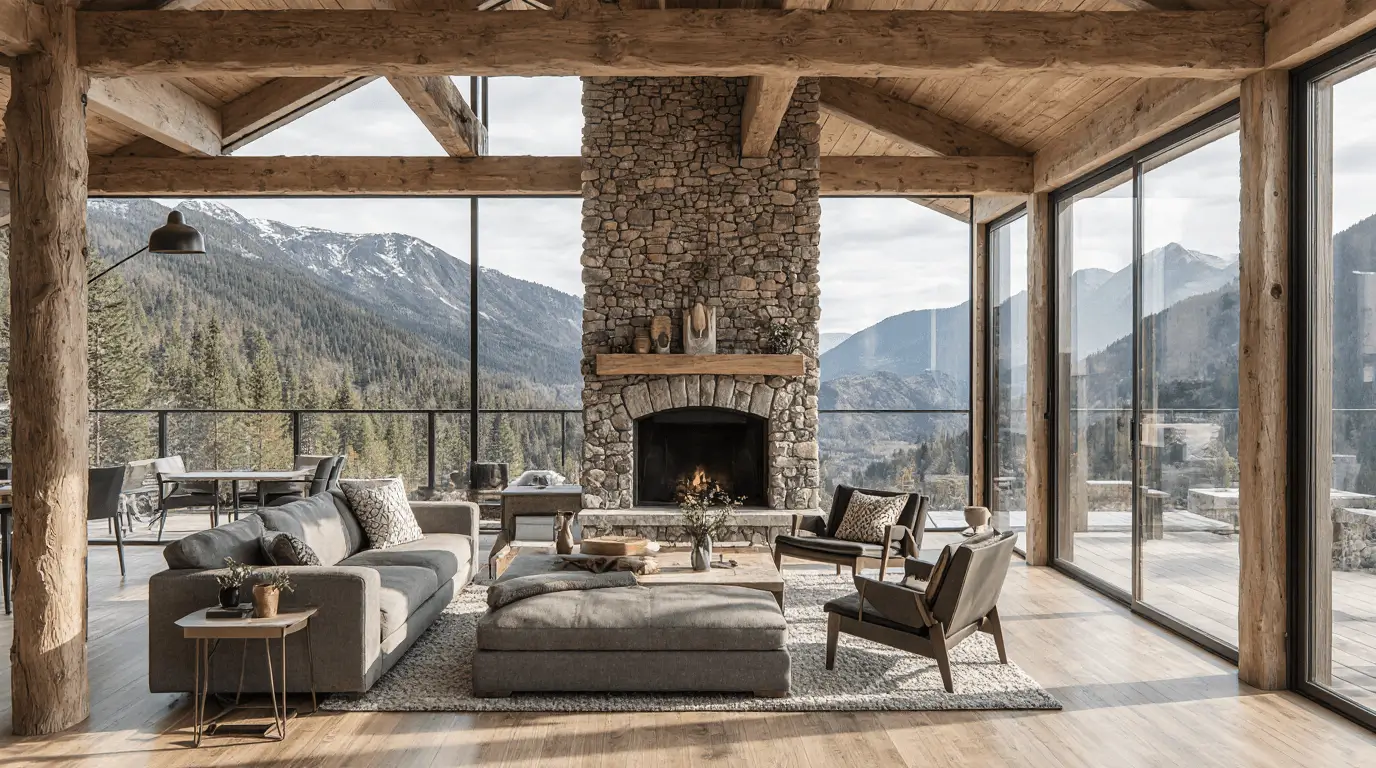
Open-concept layouts define the flow of a modern mountain home interior. Spaces are arranged to maximize light and panoramic views while maintaining intimacy through zoning.
Furniture placement anchors conversation areas without obstructing architectural sightlines.
Mountain House Interior Material Palette
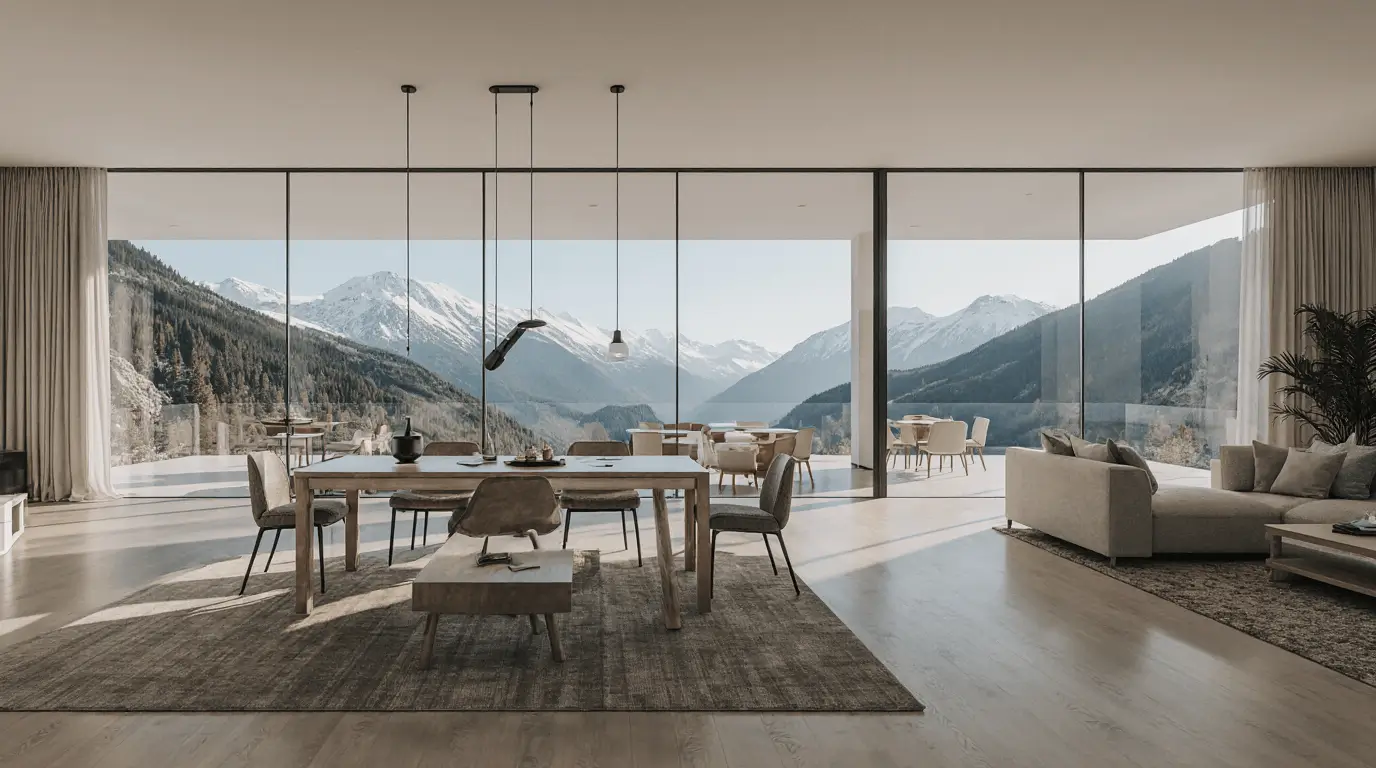
Material selection is critical. Think reclaimed wood, honed granite, blackened steel, and linen upholstery.
These materials age beautifully and reinforce the grounded sophistication central to mountain house interior design.
Modern Mountain Living Room Design
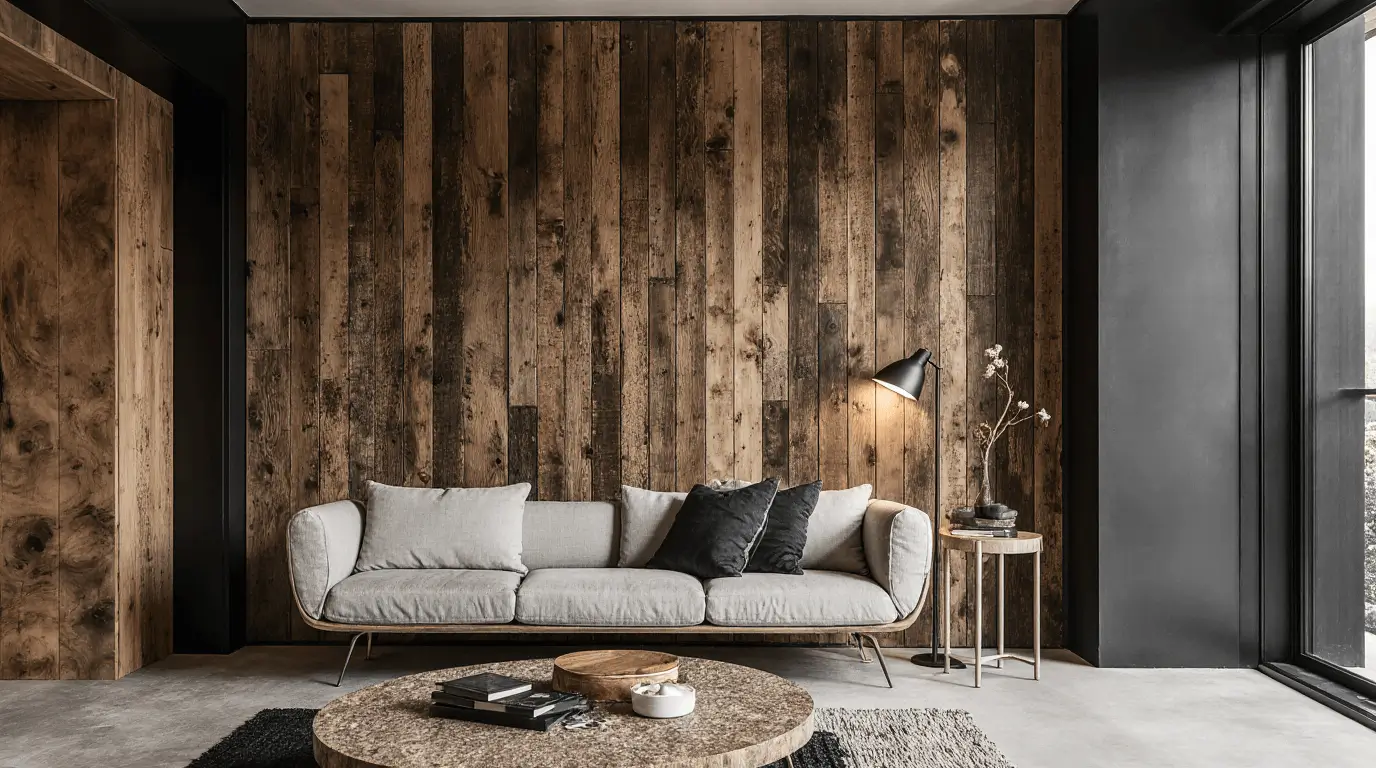
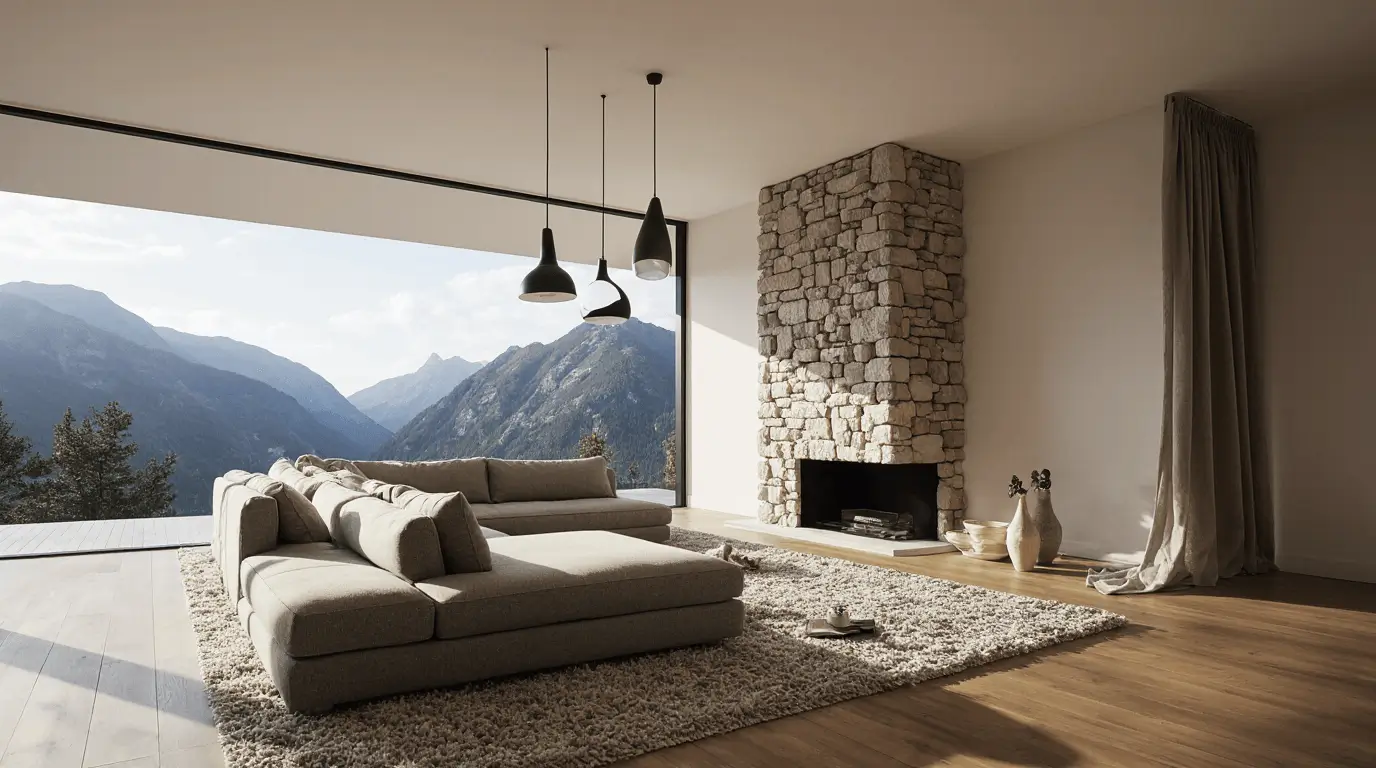
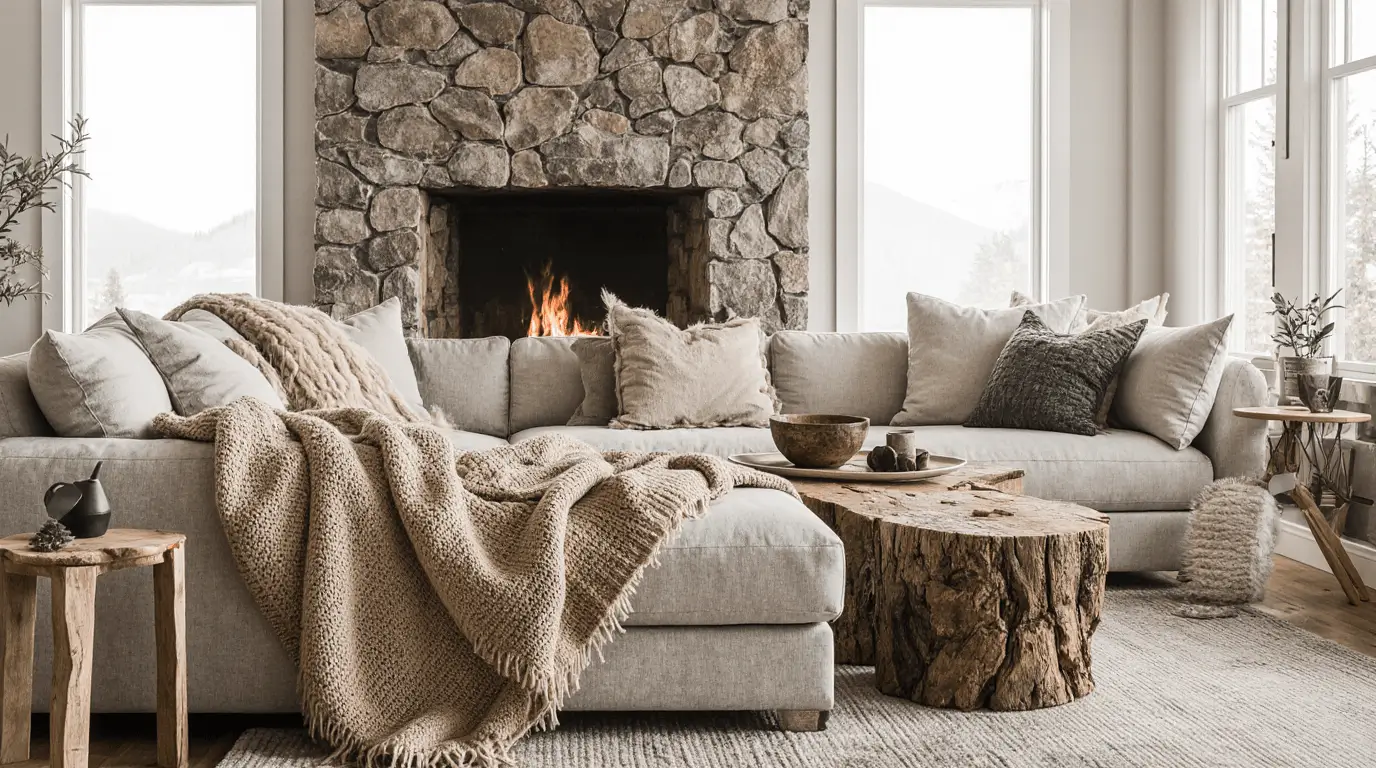
The modern mountain living room revolves around a central hearth — often a linear stone fireplace with clean detailing.
Low-profile seating, wool rugs, and sculptural lighting create warmth without clutter.
Mountain Home Interior Design Ideas for Kitchens
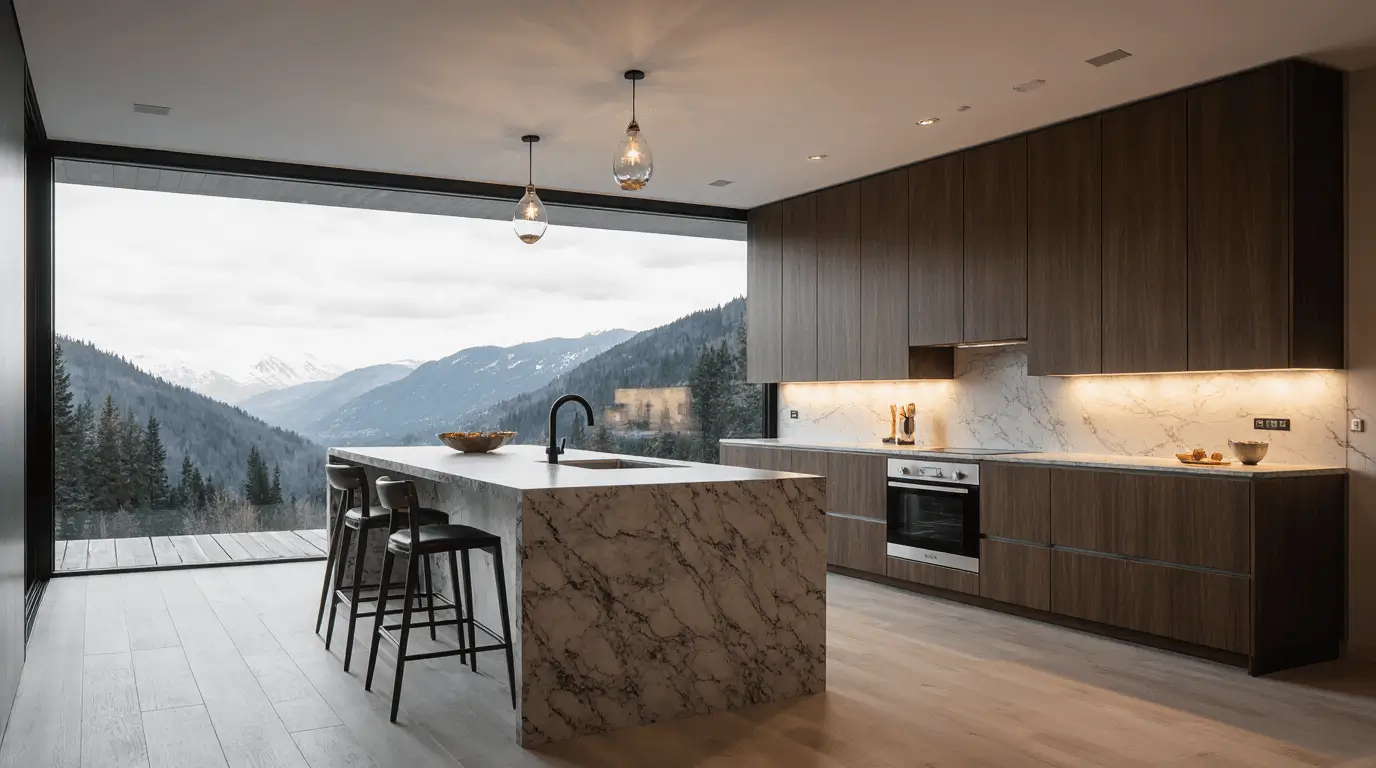
In mountain modern interior design, kitchens combine craftsmanship with functionality. Flat-panel cabinetry in walnut or oak pairs with stone countertops and integrated appliances.
Lighting remains subtle yet architectural.
Modern Mountain Home Interior Bedrooms
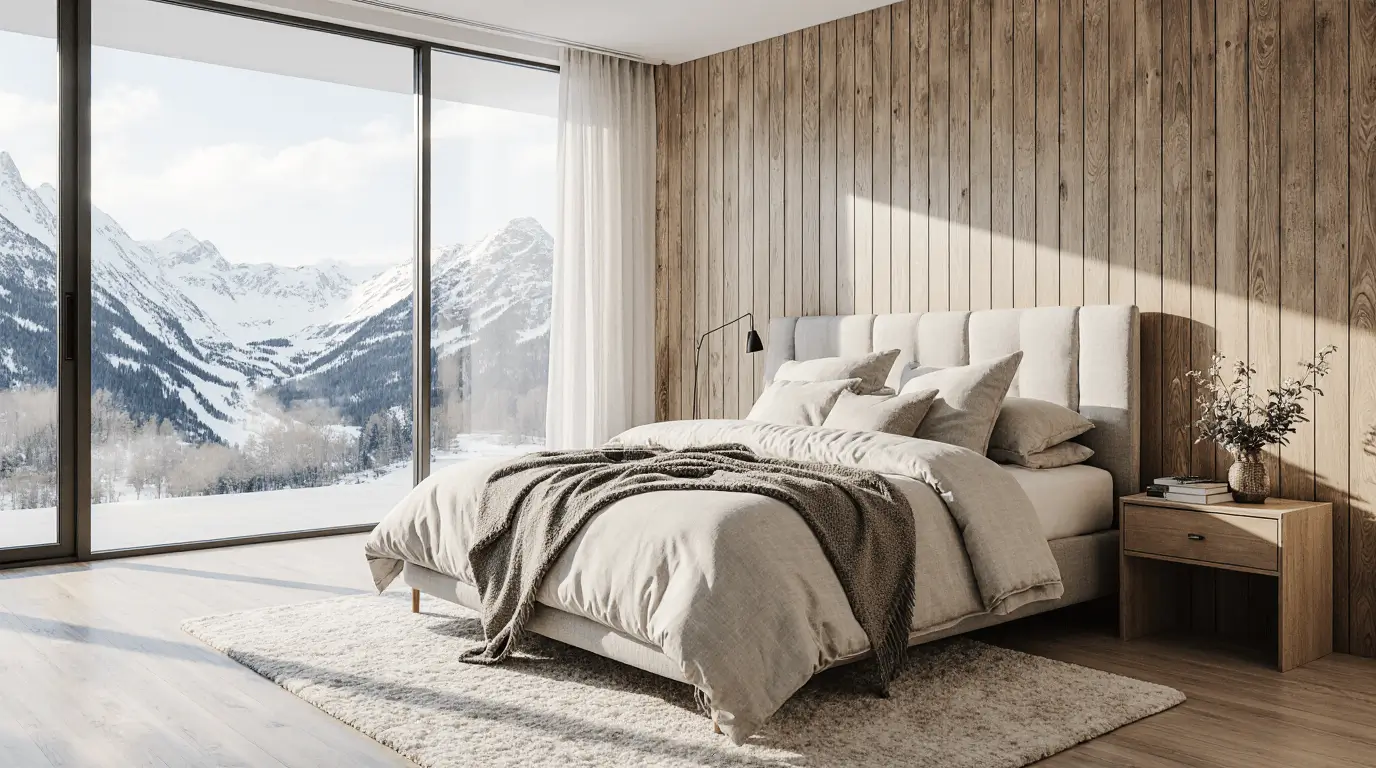
Bedrooms focus on serenity. Upholstered headboards, layered bedding, and muted palettes create restorative spaces.
Texture replaces ornamentation.
Contemporary Mountain Furniture Selection
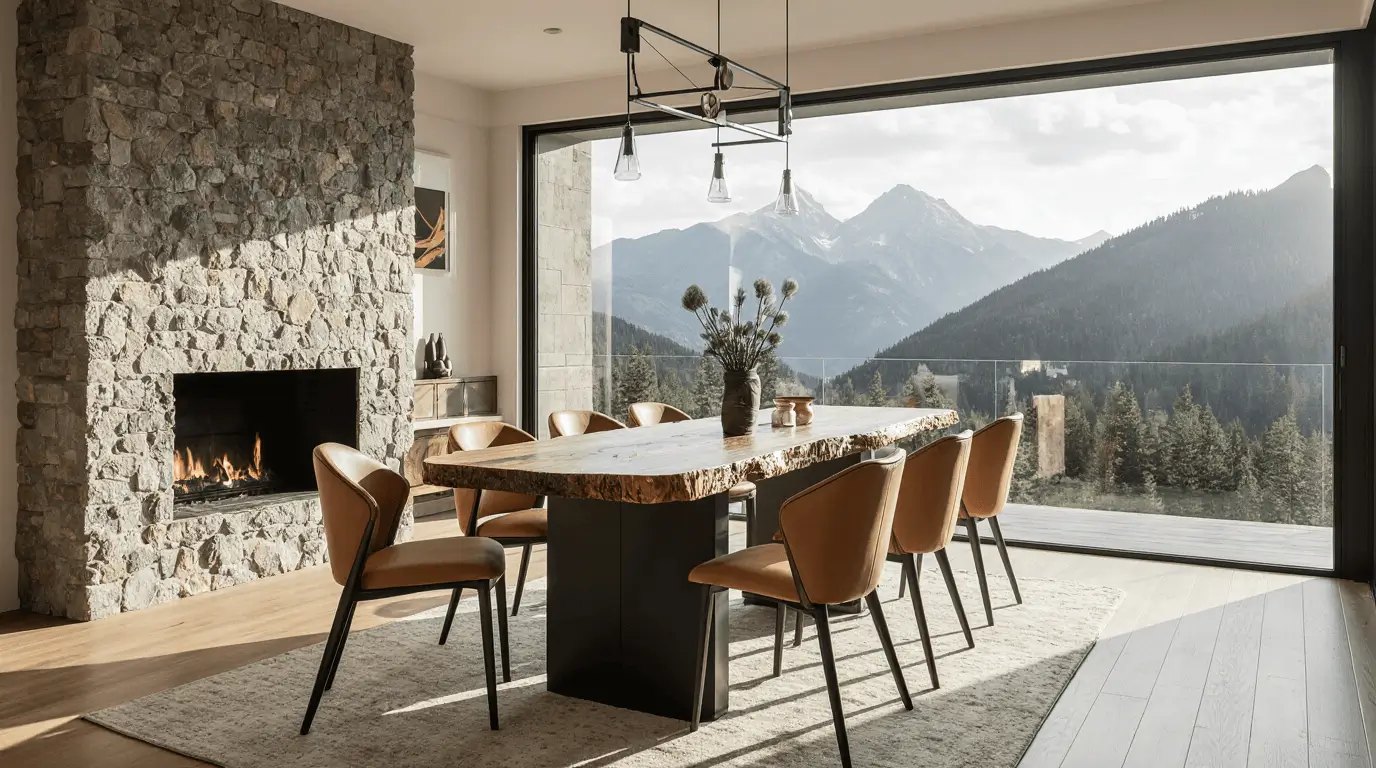
Contemporary mountain furniture favors substantial yet streamlined pieces. Think solid wood dining tables with refined edges and leather accent chairs.
The scale should feel grounded but not bulky.
Mountain Contemporary Interior Lighting
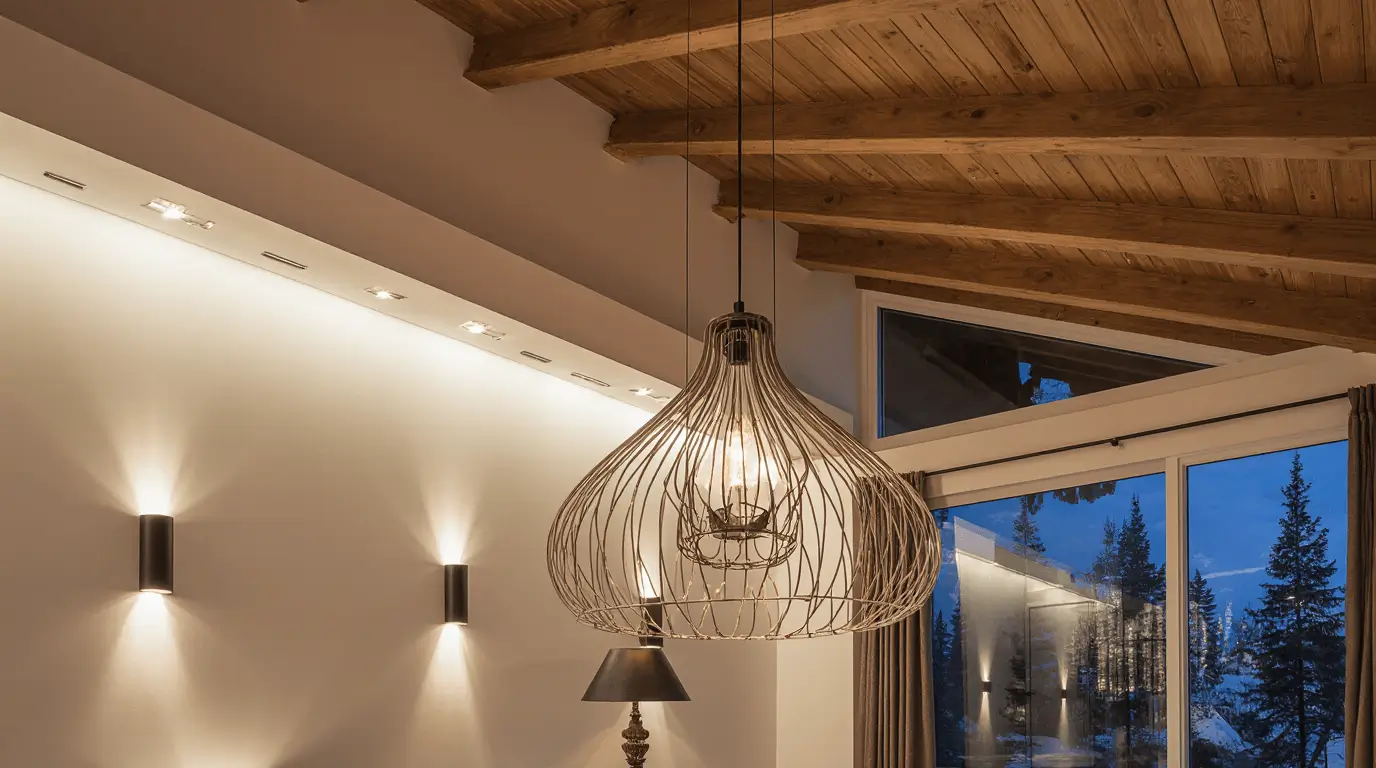
Lighting in mountain contemporary interior design layers natural daylight with warm artificial illumination.
Oversized pendants, recessed lighting, and discreet sconces enhance architecture rather than dominate it.
Modern Mountain House Interior Color Palette
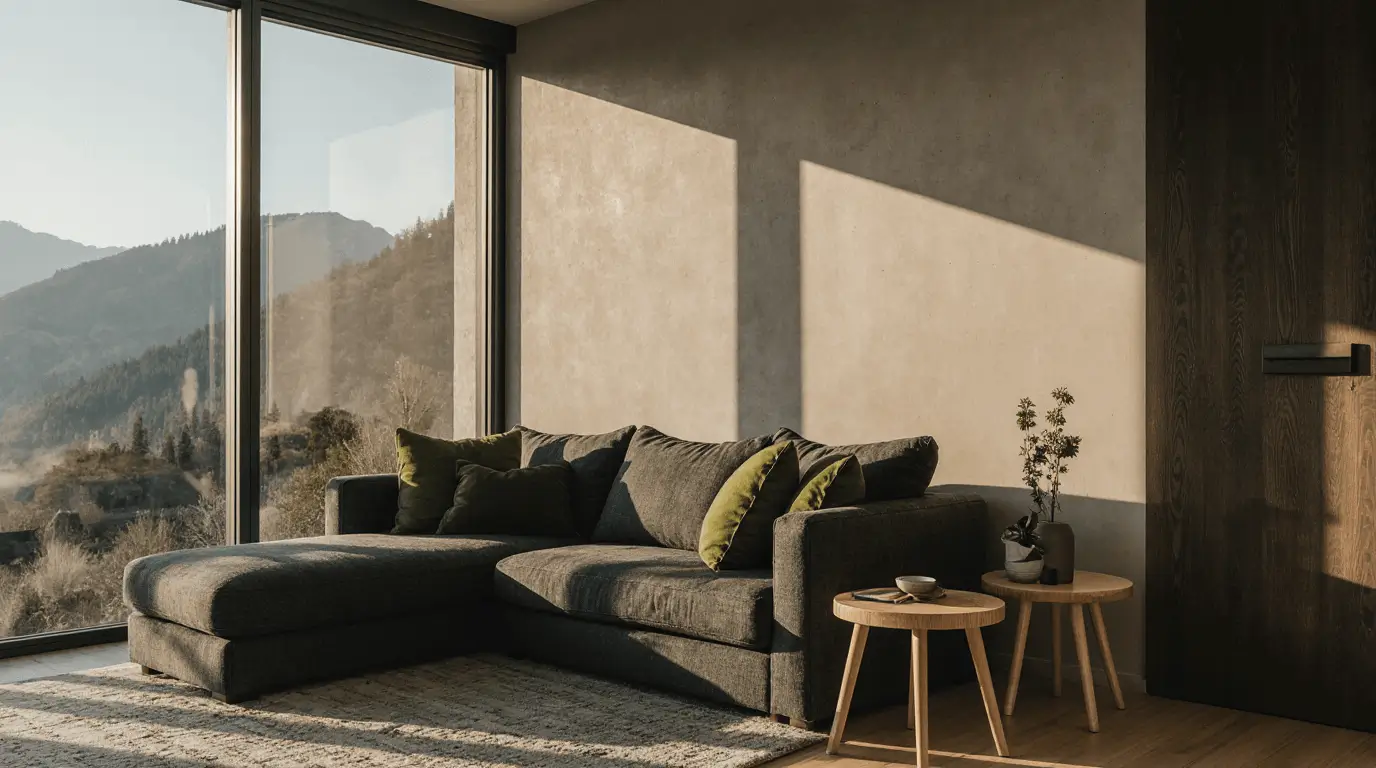
The palette draws from nature: slate gray, charcoal, warm taupe, moss green, and creamy whites.
Color is restrained and layered to evoke calm sophistication.
Mountain Home Furniture Styling Principles
Furniture for mountain homes should balance comfort with architectural presence.
Oversized sectionals, thick wood coffee tables, and tactile textiles create visual weight appropriate for expansive spaces.
Modern Mountain Architecture and Interiors
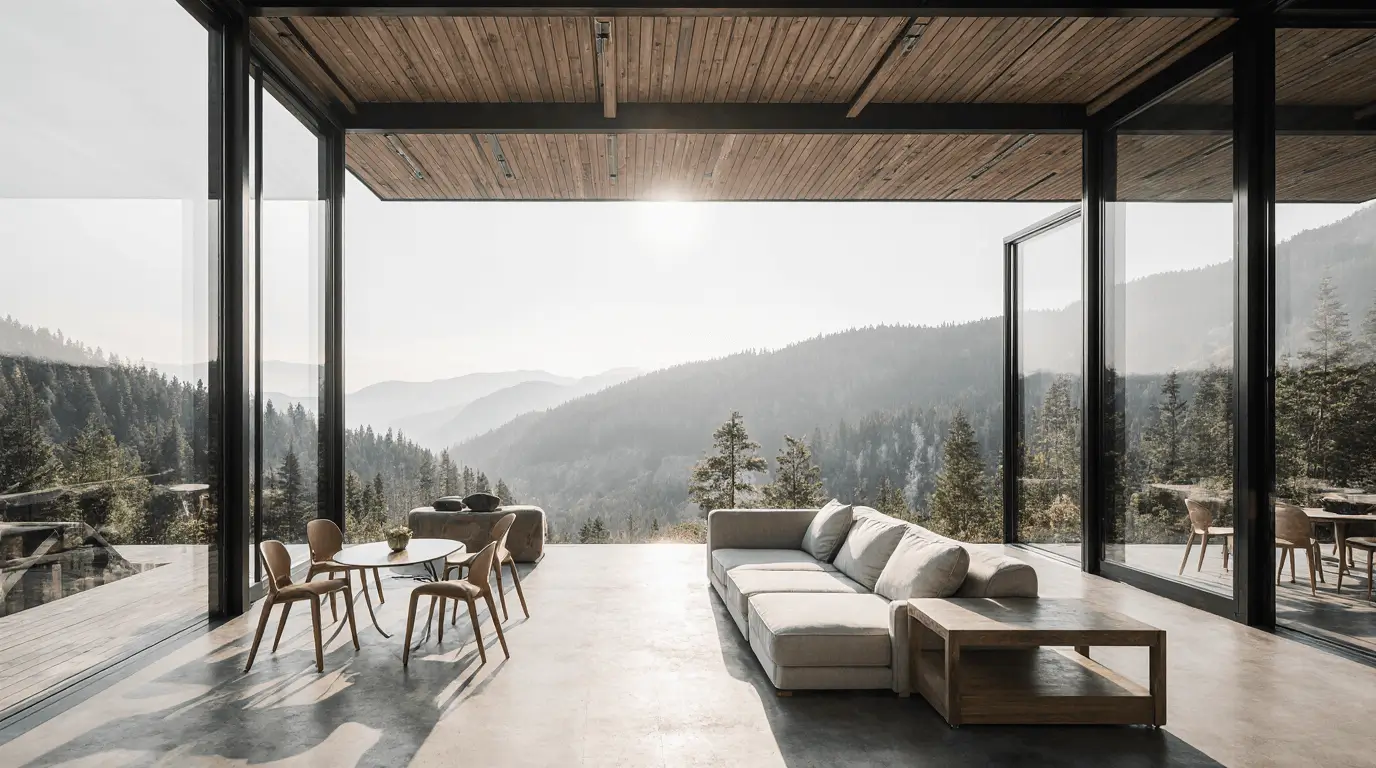
Modern architecture mountain homes emphasize strong horizontal lines, flat or low-pitched roofs, and expansive glazing.
Interior design mirrors this clarity with uncluttered compositions and intentional focal points.
Mountain Home Interior Design Ideas for Bathrooms
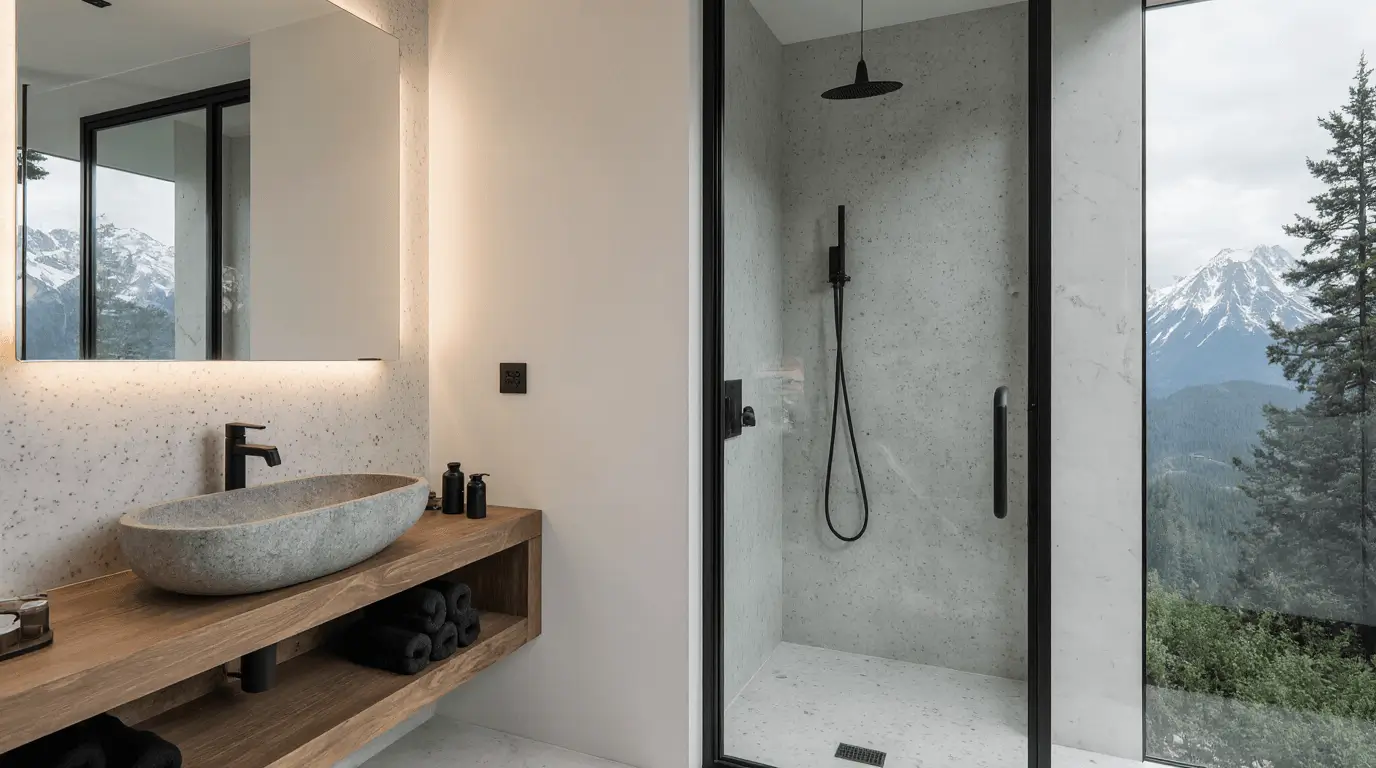
Bathrooms embrace spa-like minimalism. Floating vanities, stone basins, and frameless glass showers reinforce simplicity.
Natural textures soften hard surfaces.
Mountain House Interior Textural Layering
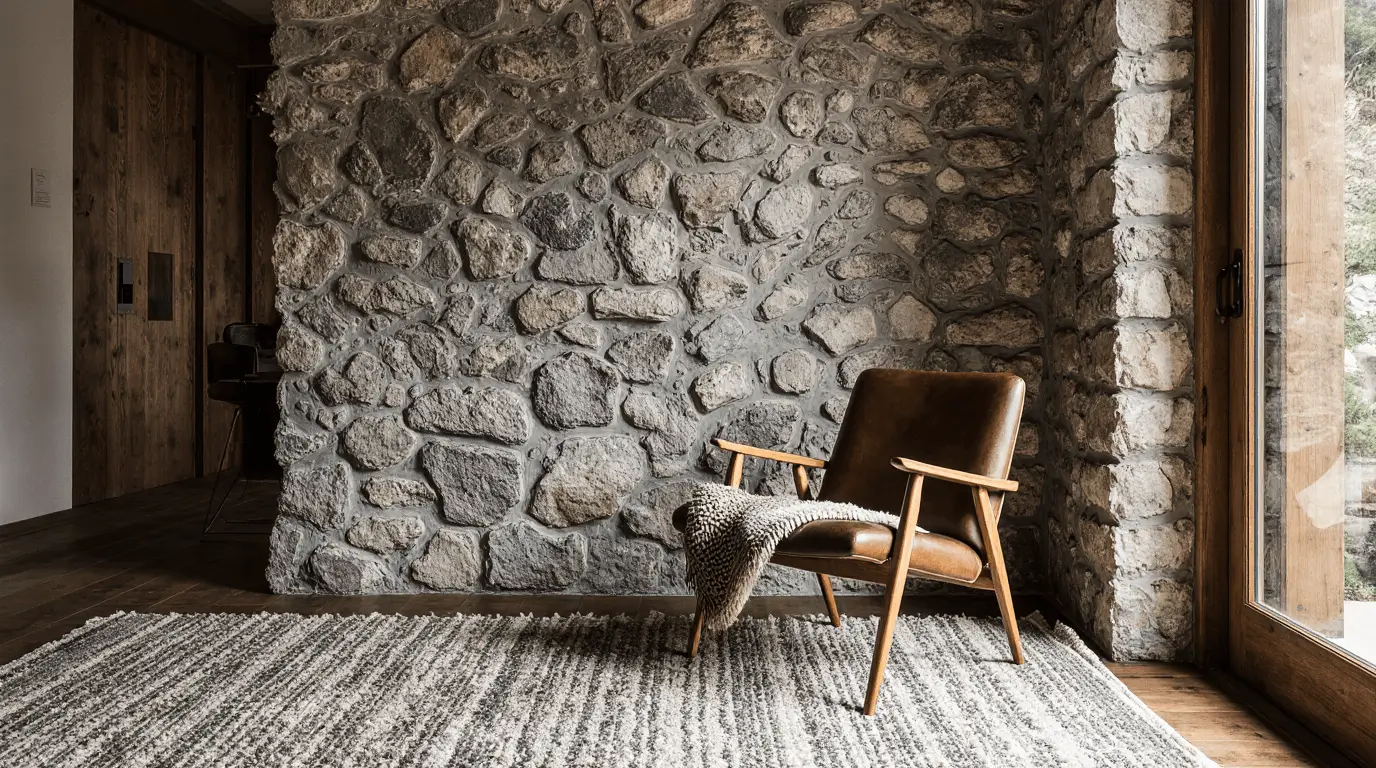
Texture defines warmth in mountain modern interior design. Wool, leather, shearling, and brushed metal create dimension without ornament.
Layering prevents minimalism from feeling cold.
Modern Mountain Home Interiors and Indoor-Outdoor Flow
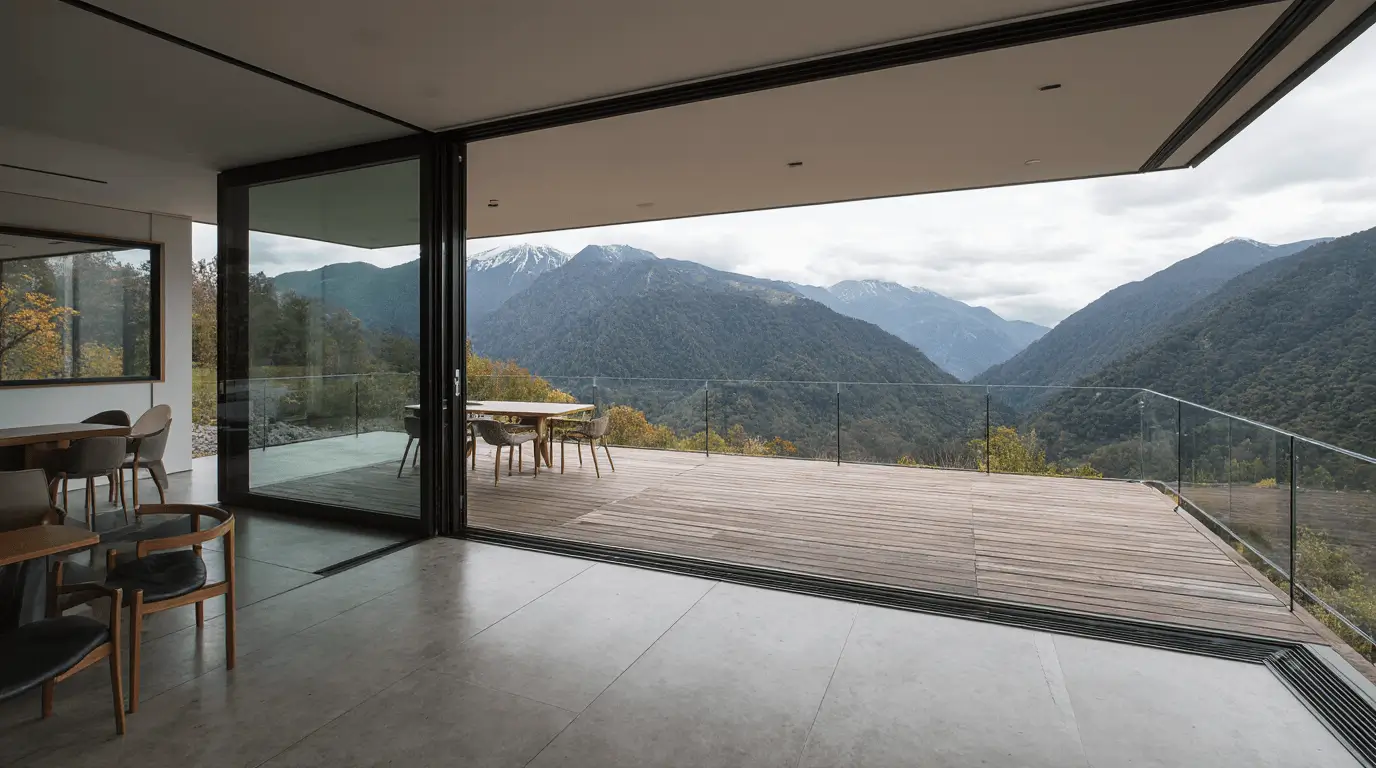
Large sliding doors, covered patios, and continuous flooring materials blur boundaries between inside and outside.
This integration enhances the immersive mountain experience.
Mountain Homes Modern Décor Styling
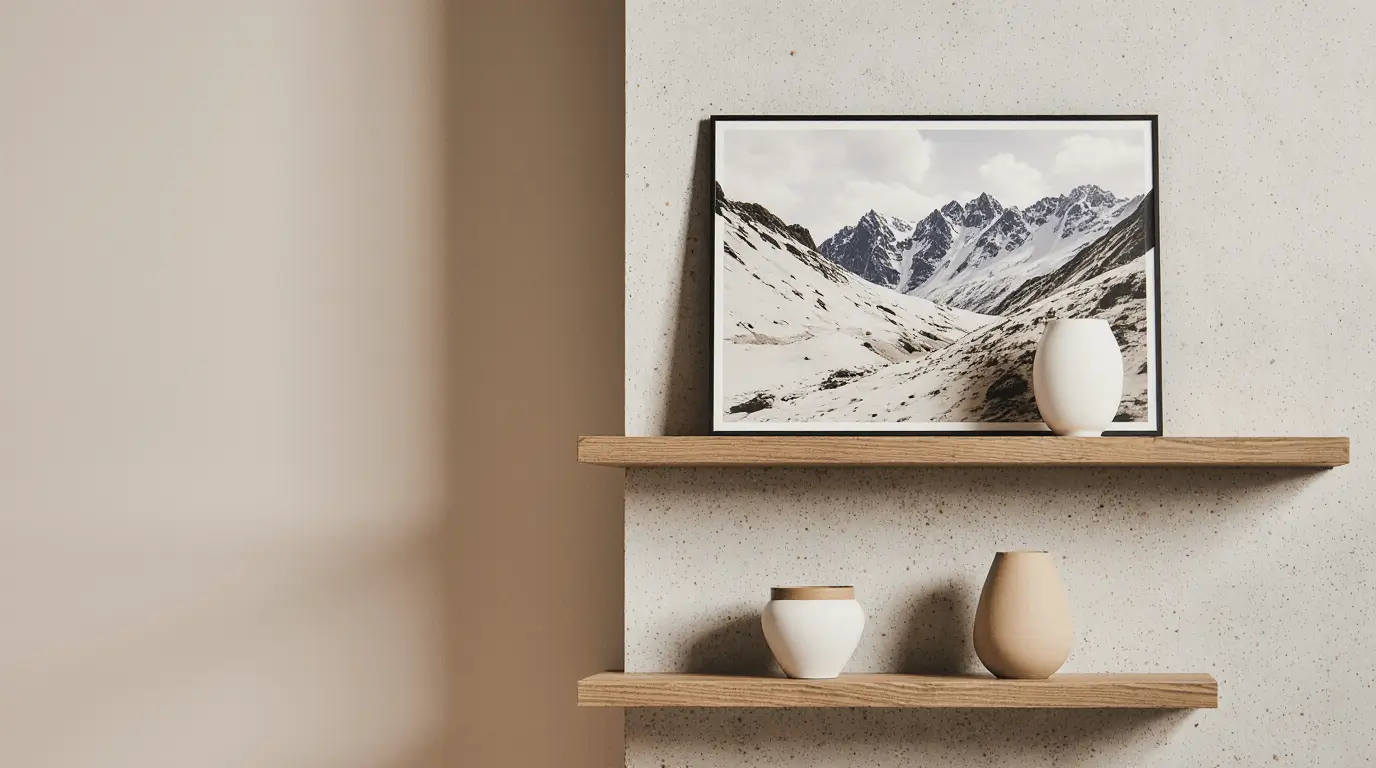
Décor remains curated and meaningful. Abstract art, handcrafted ceramics, and organic forms complement the environment.
Avoid excessive accessories; let scale and materiality lead.
Sustainable Mountain Modern Interior Design
Sustainability strengthens mountain modern design. Locally sourced materials, energy-efficient glazing, and durable finishes ensure longevity.
Designing responsibly protects the very landscape that inspires the aesthetic.
Conclusion: Designing with Clarity, Grounded in Place
Mountain modern interior design succeeds because it responds to something real — the land, the light, the climate, and the rhythm of life in elevated environments. At its best, it is not about copying a look. It is about creating interiors that feel anchored, intentional, and deeply connected to their surroundings while still supporting contemporary comfort.
From my experience working with mountain properties and analyzing high-performing alpine homes, the difference between an average space and an exceptional one lies in restraint and material honesty. When natural stone, timber, steel, and glass are used with purpose — and balanced with thoughtful lighting and scaled furnishings — the home feels calm, enduring, and architecturally cohesive. Nothing feels excessive. Nothing feels temporary.
This approach benefits homeowners who value longevity over trend cycles, who want their interiors to mature gracefully, and who see design as a way to enhance daily living rather than impress at first glance. Mountain modern interior design supports real life: large gatherings around a fireplace, quiet mornings overlooking snow-covered peaks, durable finishes that withstand seasons of wear.
If you’re moving forward with a project, begin with the architecture and the landscape. Study the natural light. Choose fewer, better materials. Invest in furniture that holds visual weight and tactile warmth. Let simplicity guide you. When each decision reinforces connection — to nature, to comfort, to clarity — the result is a home that feels powerful yet peaceful, modern yet timeless.
Learn more : 12+ Stunning Medieval Interior Design Secrets
Frequently Asked Questions
- How is mountain modern interior design different from rustic mountain style?
Rustic mountain style leans heavily on traditional lodge elements, distressed finishes, and decorative detailing. Mountain modern interior design refines that foundation by simplifying forms, reducing ornamentation, and integrating contemporary lines and materials. The result feels cleaner, lighter, and more architecturally intentional while still honoring natural textures.
- What colors work best in a mountain modern home?
The most successful palettes draw directly from the surrounding landscape — warm grays, charcoal, taupe, soft whites, muted greens, and deep earth tones. Rather than relying on bold contrast, mountain modern interiors layer tonal variations. This creates depth without visual chaos and allows natural materials to take center stage.
- Can mountain modern interior design work in a non-mountain location?
Yes, but context matters. While panoramic alpine views enhance the aesthetic, the core principles — material authenticity, clean lines, and a strong indoor-outdoor connection — can be adapted anywhere. In urban or suburban settings, the style often feels like a calming retreat from busy environments.
- What materials are essential for achieving an authentic look?
Natural stone, wide-plank wood flooring, exposed timber, blackened or brushed steel, wool textiles, and leather accents form the backbone of mountain modern spaces. The key is using real, tactile materials rather than imitations. Authentic finishes age beautifully and contribute to the grounded atmosphere the style is known for.
- How do you keep a mountain modern interior from feeling cold?
Warmth comes from texture and proportion. Layered rugs, upholstered seating, warm lighting temperatures, and natural wood tones counterbalance stone and steel. Proper scale also matters — substantial furniture prevents large rooms from feeling empty or sterile.
- Is mountain modern interior design suitable for smaller homes?
Absolutely. In smaller spaces, the simplicity of the style can actually enhance openness. Prioritize multifunctional furniture, maintain a restrained palette, and avoid overcrowding. When materials and lighting are carefully selected, even compact mountain homes can feel expansive and serene.
- Where should someone start when planning a mountain modern interior?
Start with the architectural envelope — windows, ceiling heights, structural elements, and views. From there, define your primary material palette and lighting strategy. Furniture and décor should follow the architecture, not compete with it. When the foundation is clear, every additional layer feels purposeful rather than decorative.

One Response