
Introduction
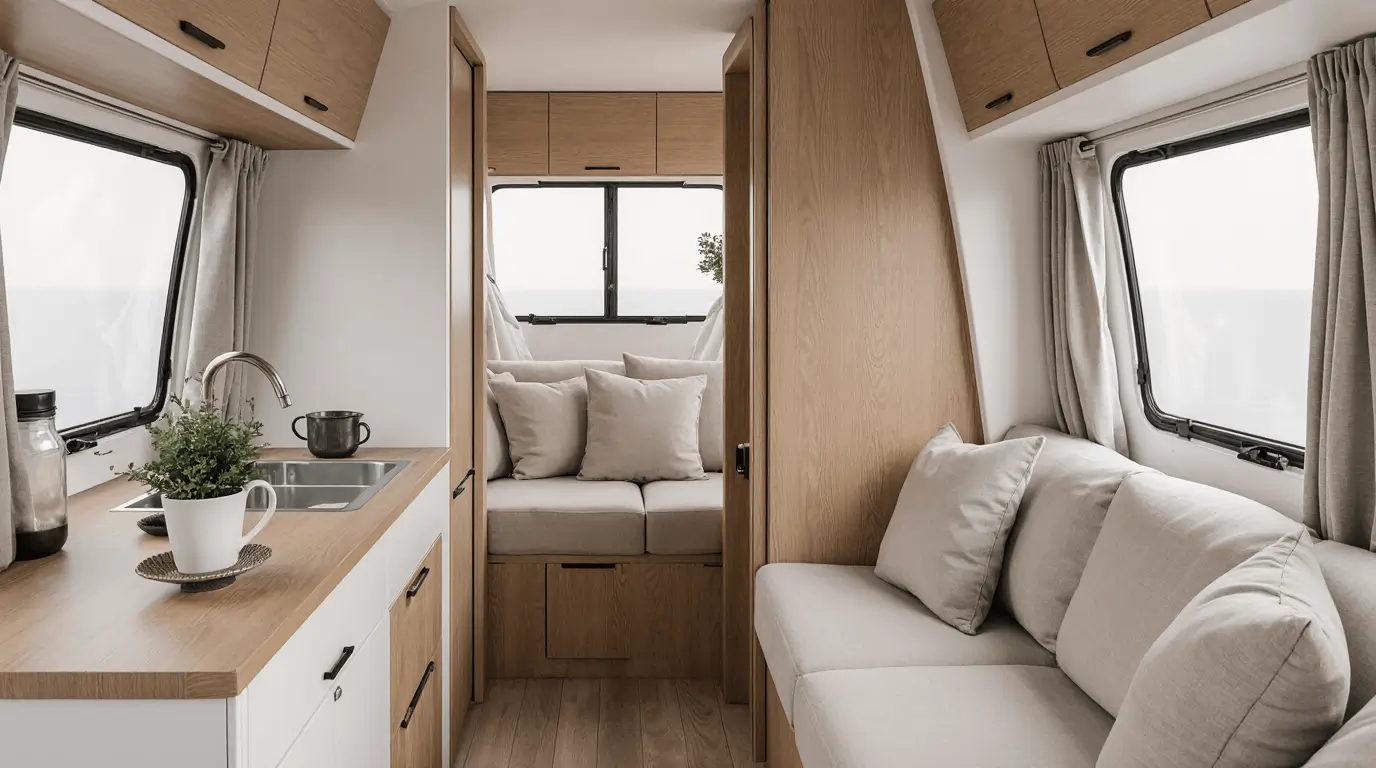
Van interior design is where architecture, minimalism, and mobility intersect. Whether you’re converting a cargo van into a full-time home or designing a weekend travel van, the goal is the same: create a functional, beautiful, and deeply personal space within a compact footprint.
Having worked on compact living concepts and mobile layouts, one thing becomes clear quickly — successful van interior design isn’t about squeezing furniture into a vehicle. It’s about intentional zoning, multi-functional design, material intelligence, and understanding how movement changes spatial experience. Every inch must serve a purpose while still feeling calm, cohesive, and livable.
Below are the essential design clusters that define high-quality van interior design today.
Small-Space Van Interior Design Principles
Smart van interior design begins with spatial hierarchy. Prioritize movement paths, vertical storage, and convertible features before aesthetic decisions.
Design works best when circulation remains unobstructed and storage blends into walls rather than dominating the cabin.
Camper Van Interior Design Layout Planning
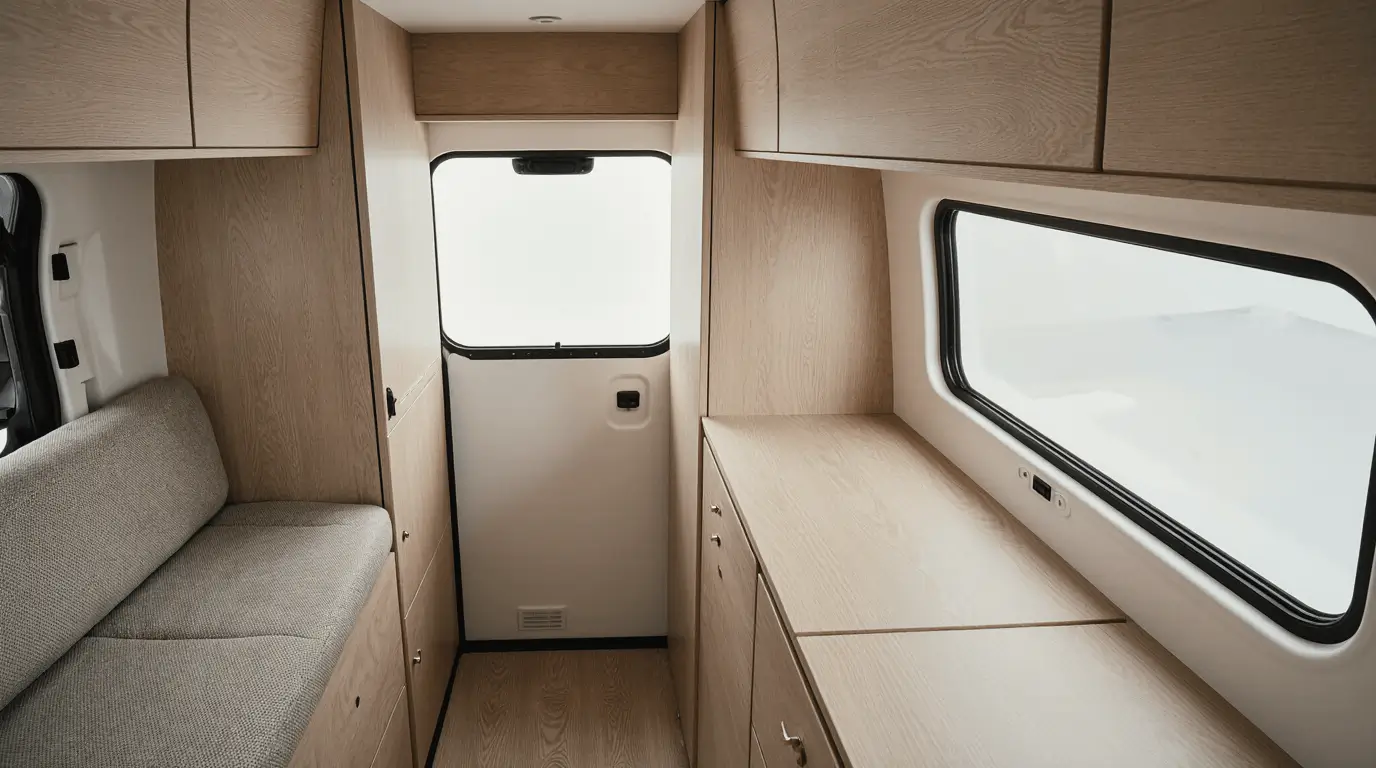
A well-planned layout determines whether daily life feels smooth or frustrating. Sleeping, cooking, and lounging zones must transition effortlessly.
Galley kitchens along one wall and convertible bed-dinette layouts remain the most practical for narrow vans.
Van Conversion Interior Zoning Strategies
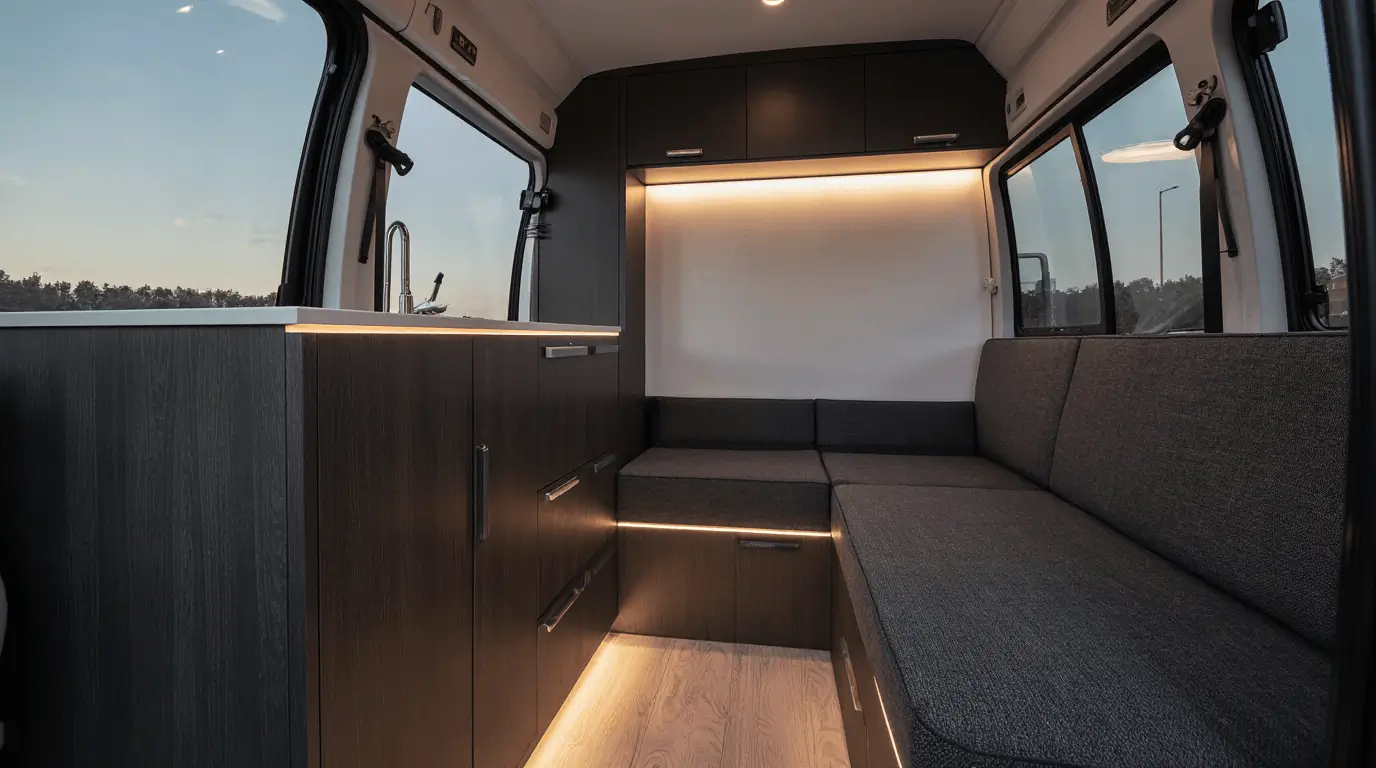
In van interior design, zoning replaces traditional room divisions. Use flooring shifts, ceiling treatments, or cabinetry depth changes to subtly define areas.
Visual separation enhances comfort without sacrificing openness.
Small Camper Van Interior Ideas for Maximum Function
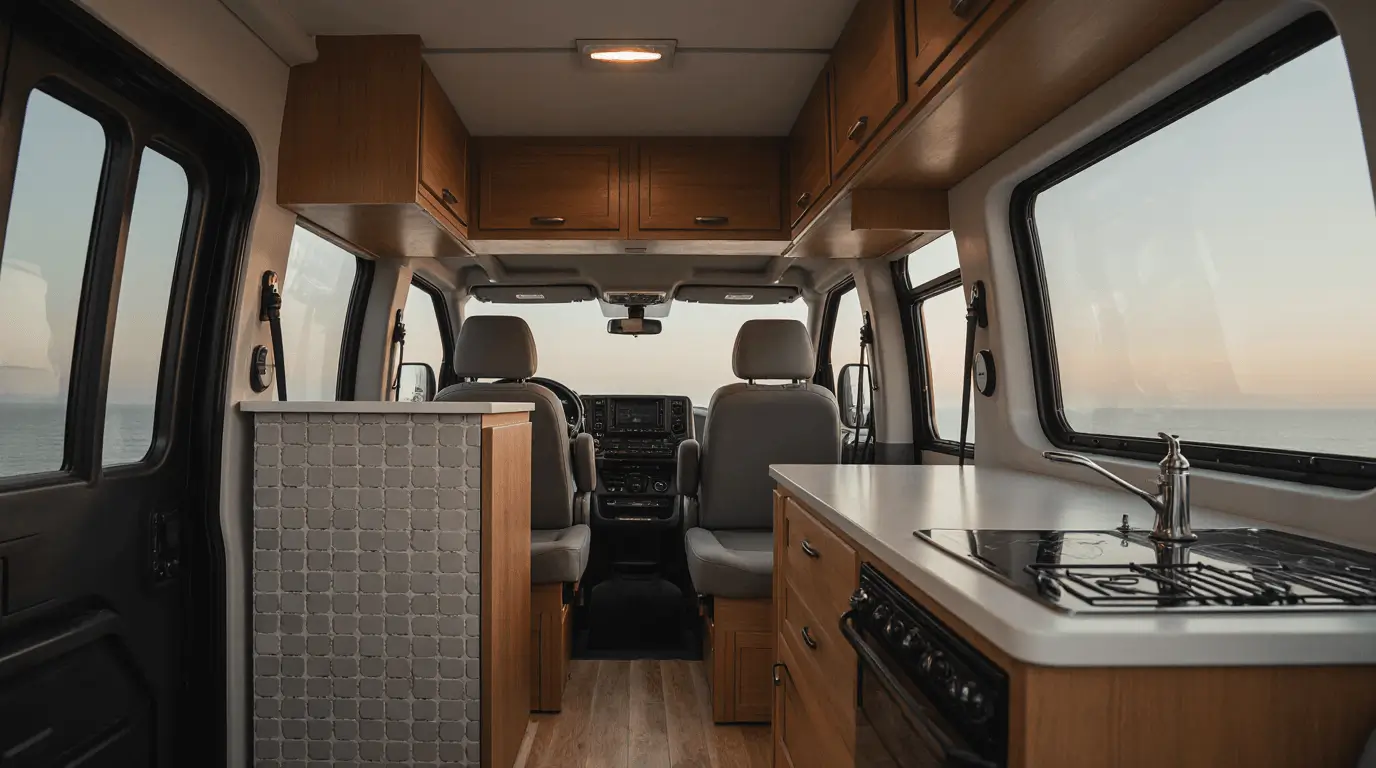
Compact vans demand multi-functional solutions: beds that fold, tables that swivel, and steps that double as drawers.
Efficiency in van interior design always prioritizes dual-purpose features.
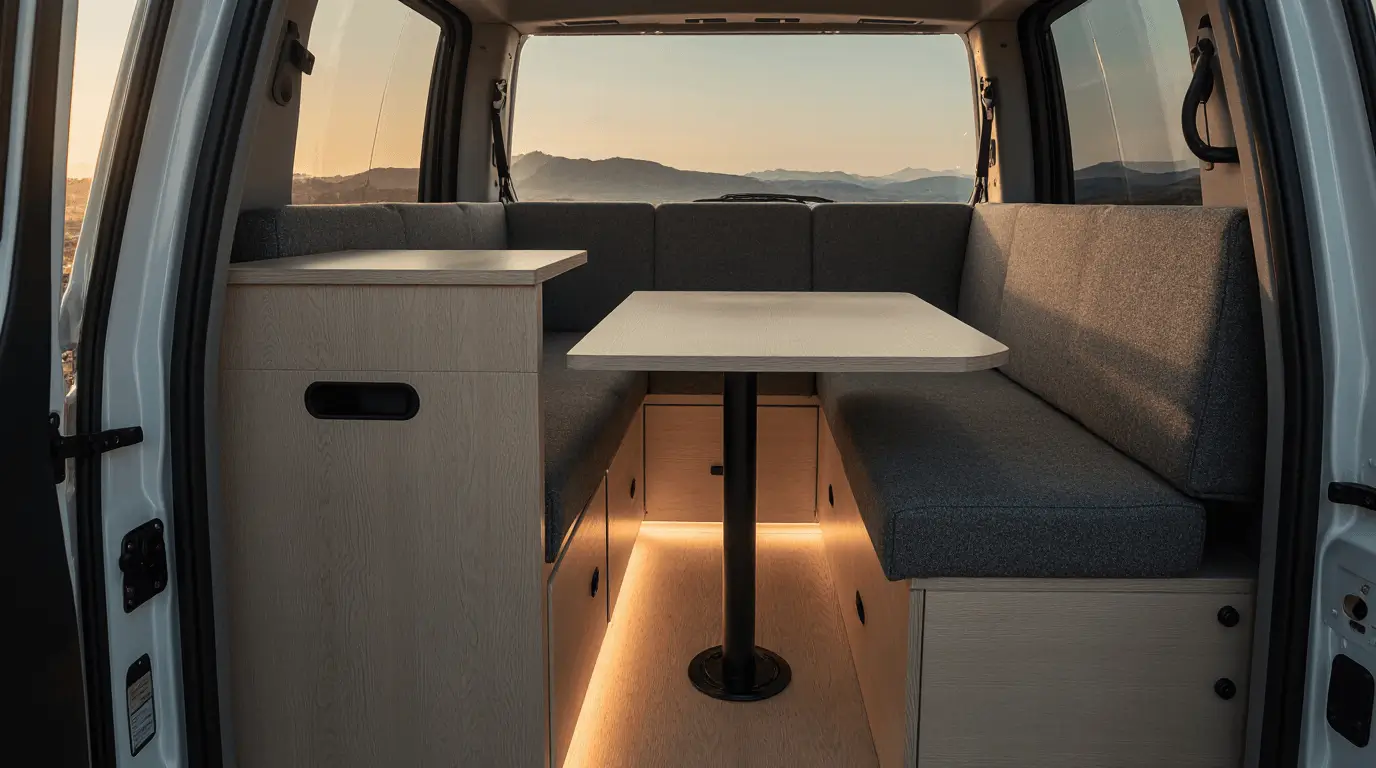
Van Life Interior Design Aesthetic Styles
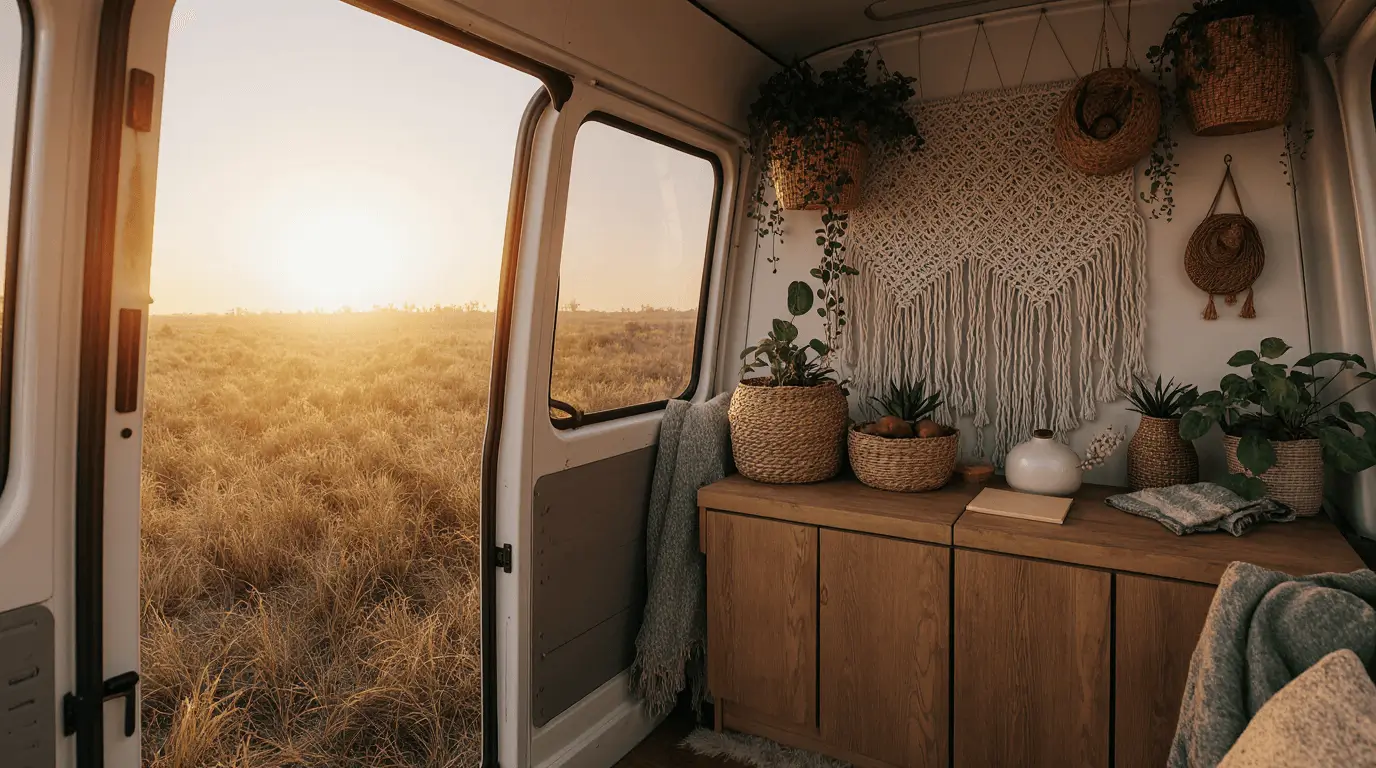
Van interior design reflects personal lifestyle. Popular aesthetics include Scandinavian minimalism, rustic cabin, boho eclectic, and modern industrial.
Consistency in material and color palette keeps small interiors visually calm.
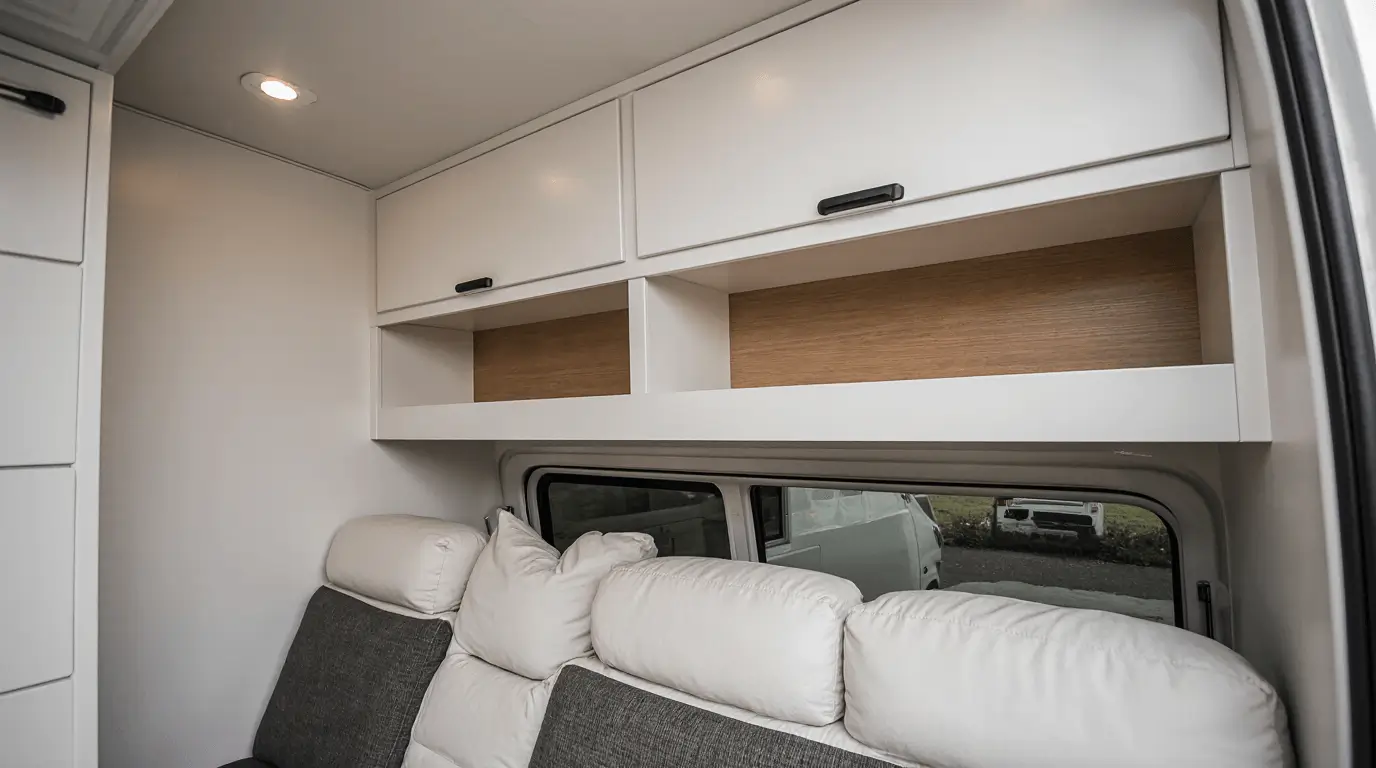
Campervan Interior Storage Optimization
Vertical cabinetry, overhead compartments, and under-bed storage create seamless organization.
The most successful van interior design hides clutter completely while maintaining accessibility.
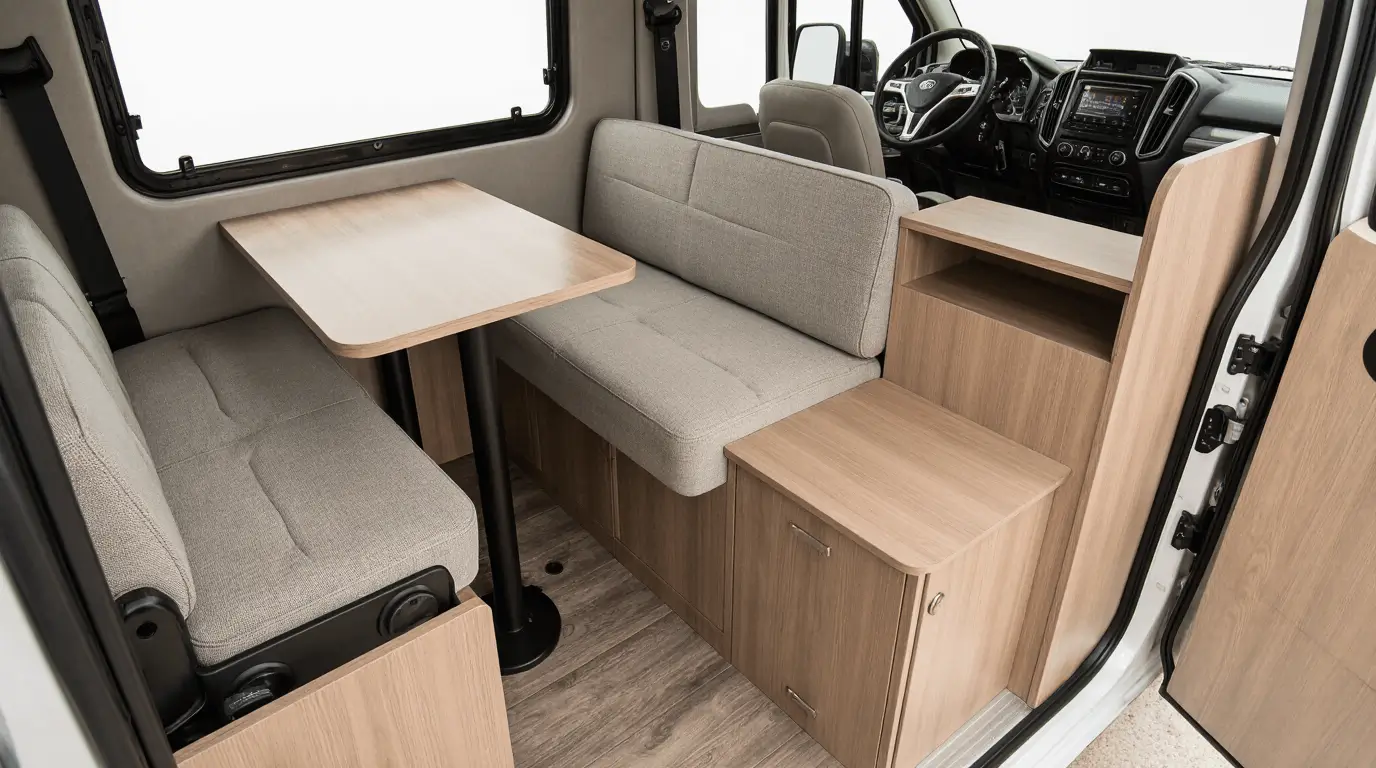
Conversion Van Interior Seating Solutions
Bench seating with concealed storage is a staple. Swivel front seats expand social space dramatically.
Good van interior design makes seating flexible without crowding the aisle.
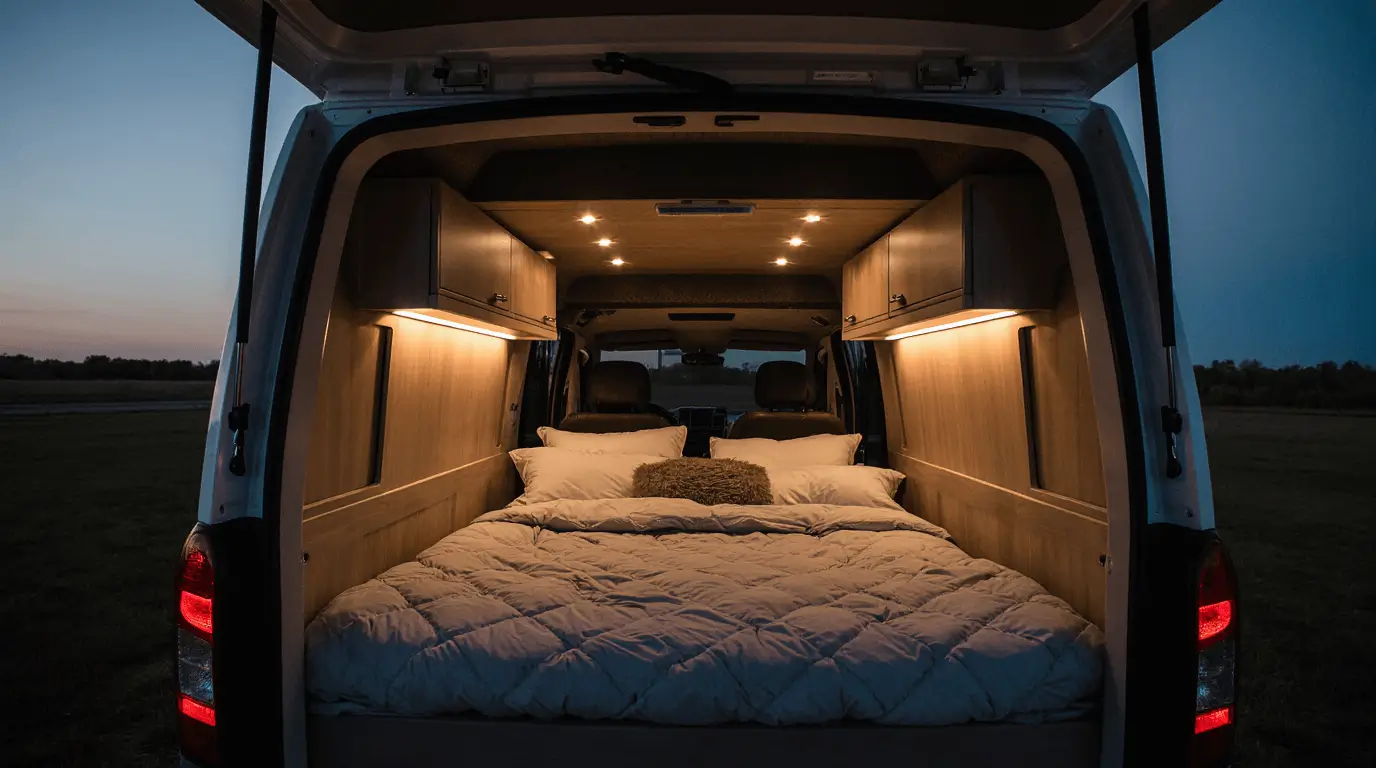
Camper Van Interior Lighting Design
Layered lighting transforms compact interiors. Combine task lighting for cooking, dimmable ambient strips for evenings, and natural daylight optimization.
Lighting in van interior design shapes mood more than square footage.
Travel Van Interior Material Selection
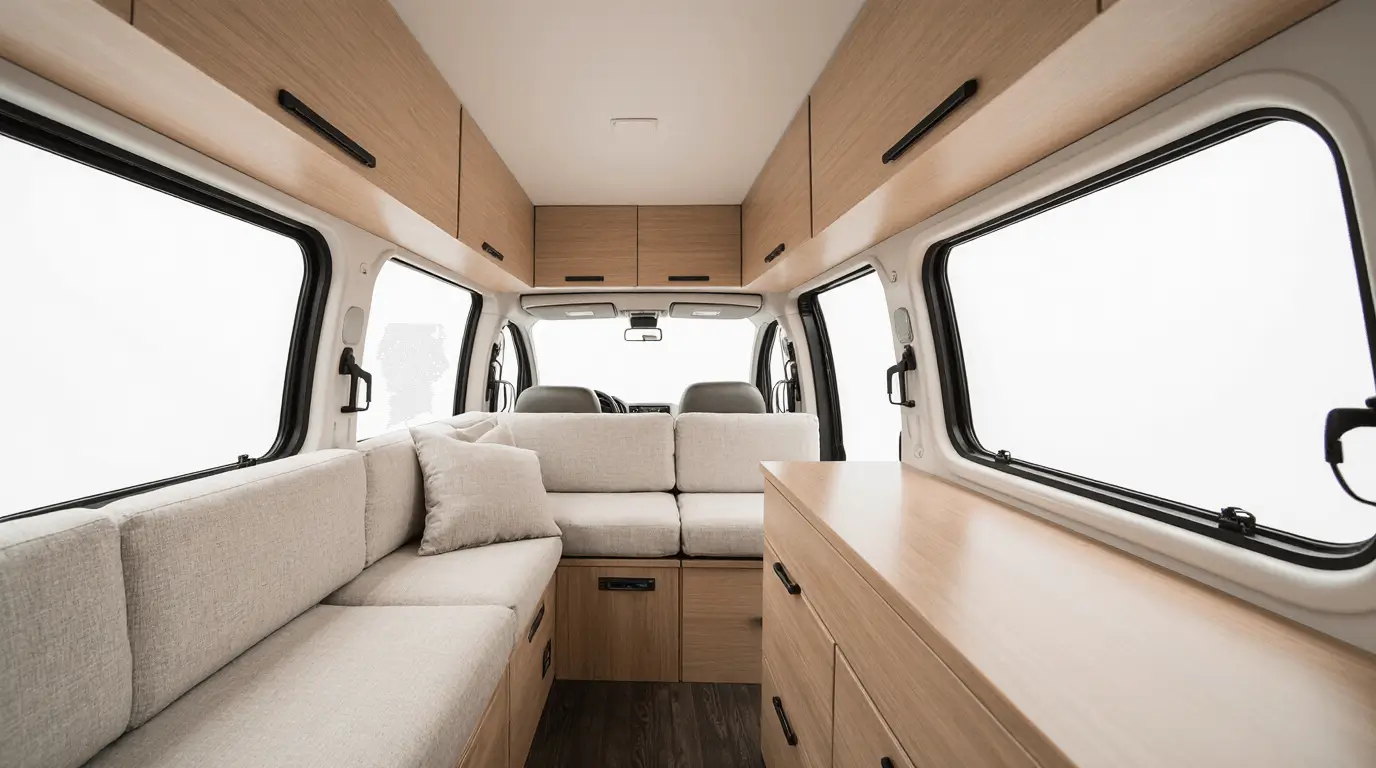
Materials must be lightweight, durable, and moisture-resistant. Plywood, laminate finishes, and marine-grade fabrics perform best.
Balanced textures elevate van interior design from DIY to refined craftsmanship.
Camper Van Interior Layout for Full-Time Living
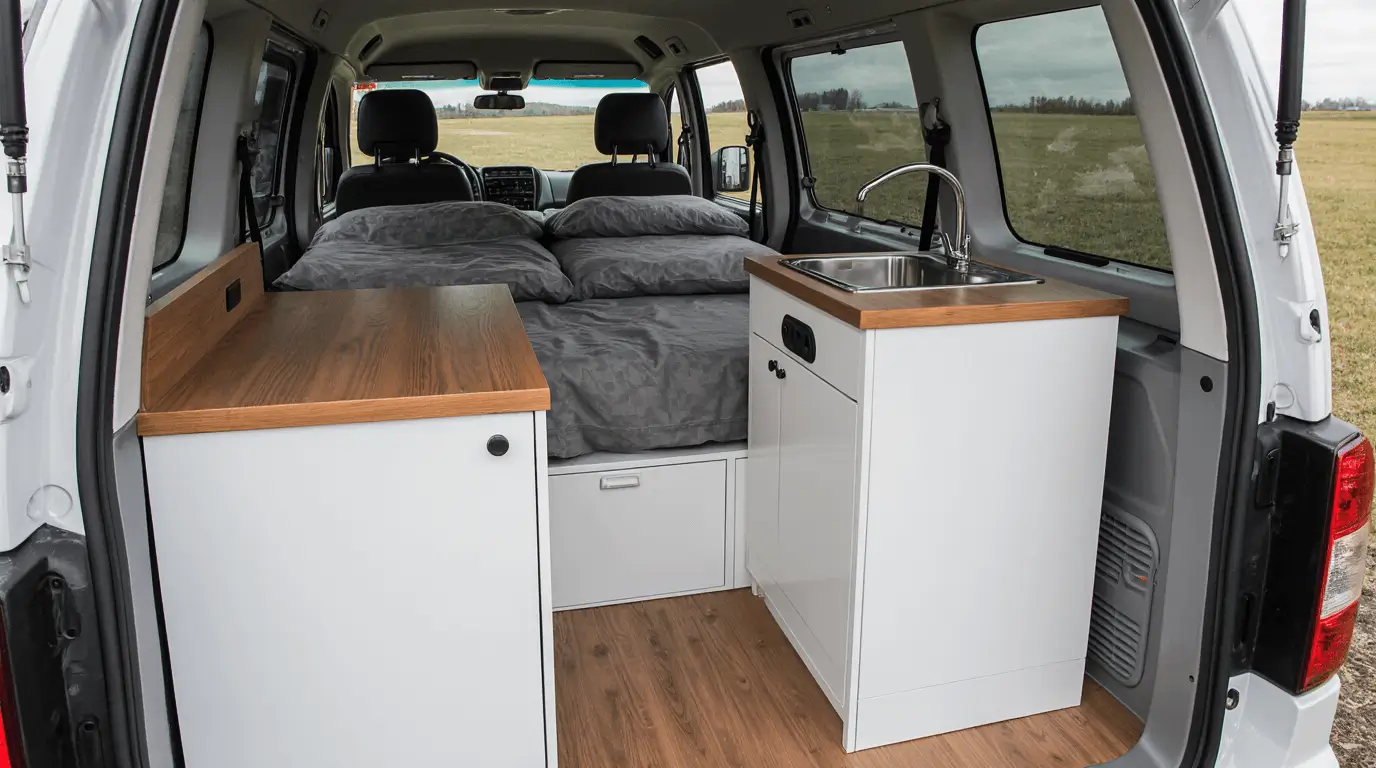
Full-time layouts require larger kitchens, proper refrigeration space, and generous bed dimensions.
A fixed rear bed with garage storage underneath is ideal for extended travel.
Custom Van Interior Ideas for Personalization
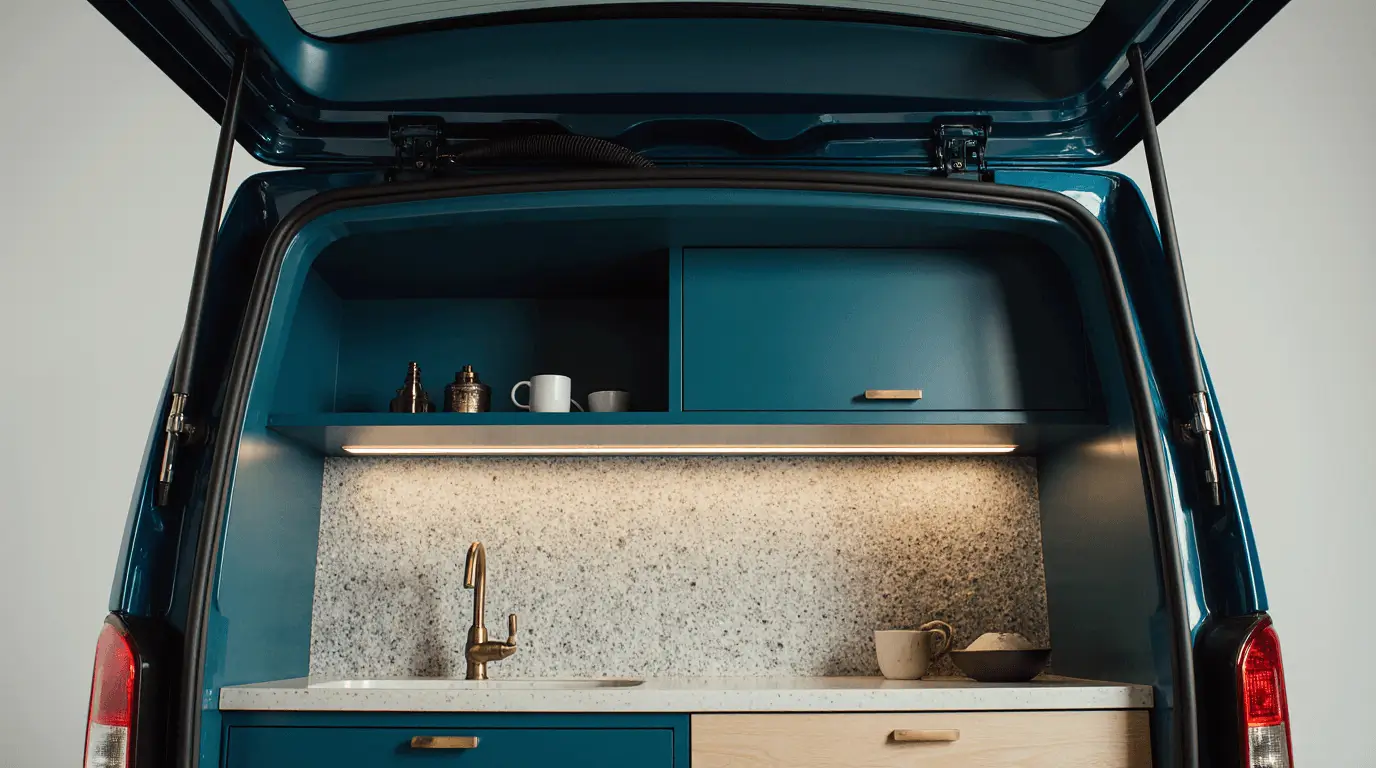
Custom cabinetry, color accents, and handcrafted details bring character to van interior design.
Personalization should enhance function — not compromise storage or movement.
Van Layout Ideas for Families
Family-oriented van interior design prioritizes safety, bunk beds, and flexible dining areas.
Stacked sleeping solutions maximize vertical capacity without crowding.
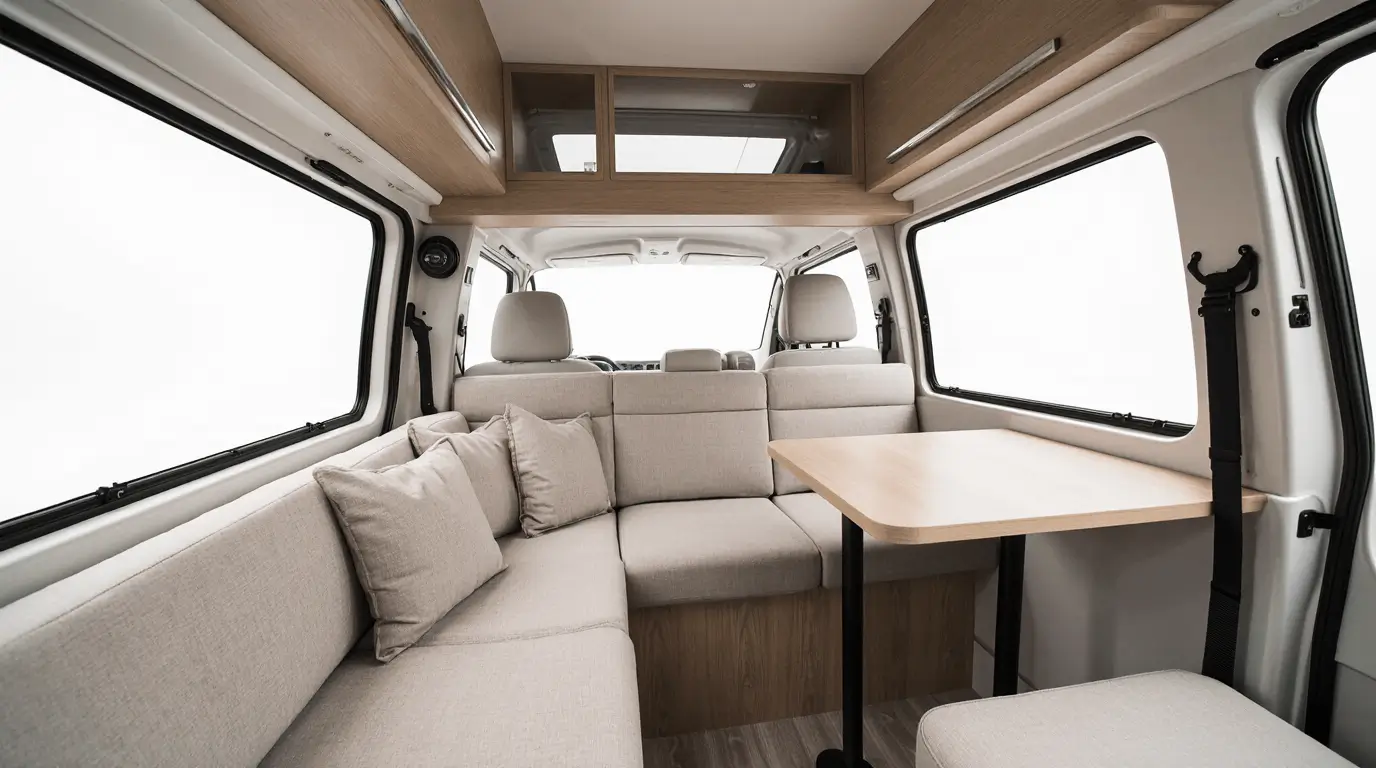
Big Van Interior Design for Spacious Conversions
Larger vans allow full wet baths, extended kitchens, and lounge seating areas.
In big van interior design, comfort and luxury can coexist with mobility.
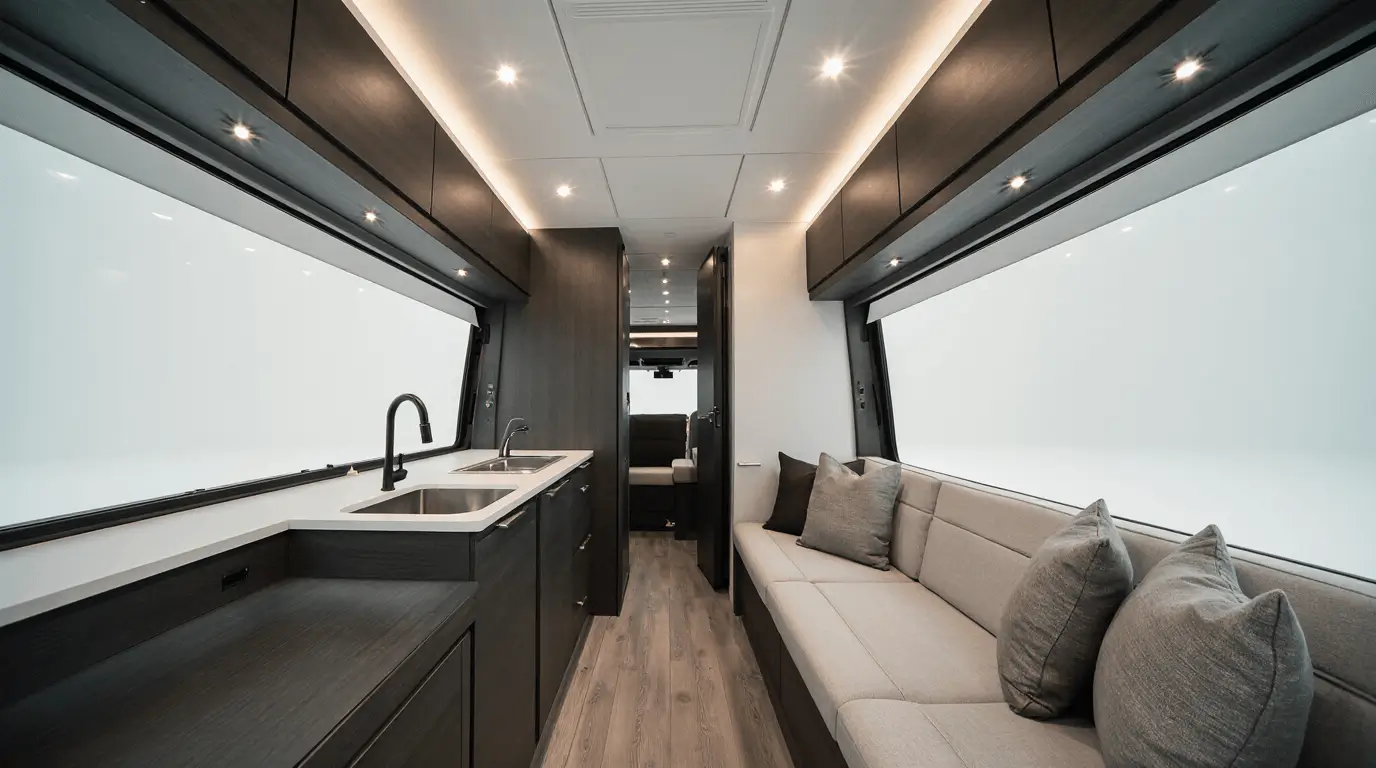
Van Interior Design for Off-Grid Living
Off-grid van interior design integrates solar storage compartments, hidden battery systems, and water tanks beneath seating.
Technical elements must blend seamlessly into aesthetic decisions.
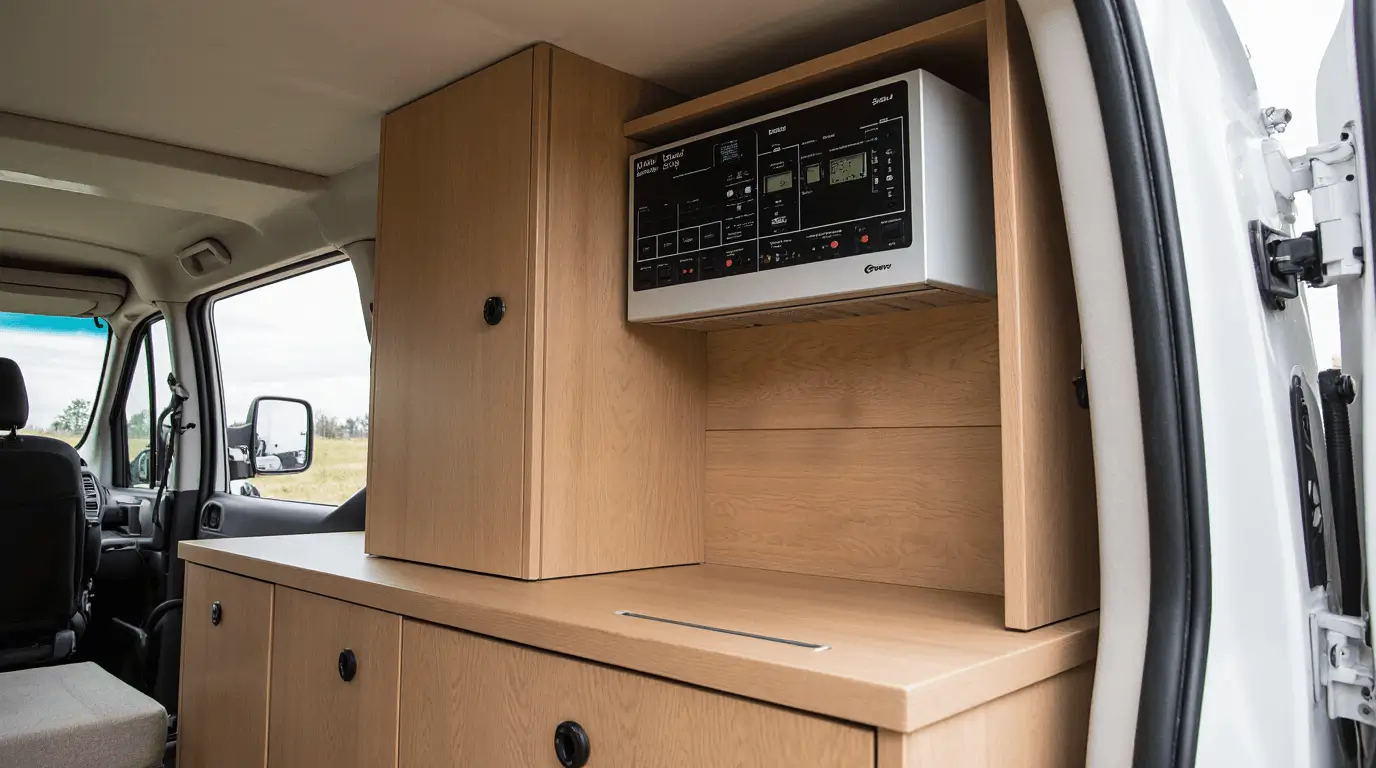
Minimalist Van Interior Design Approach
Minimalism works exceptionally well in mobile spaces. Fewer materials, neutral palettes, and clean lines prevent visual fatigue.
Intentional restraint defines successful van interior design in compact environments.
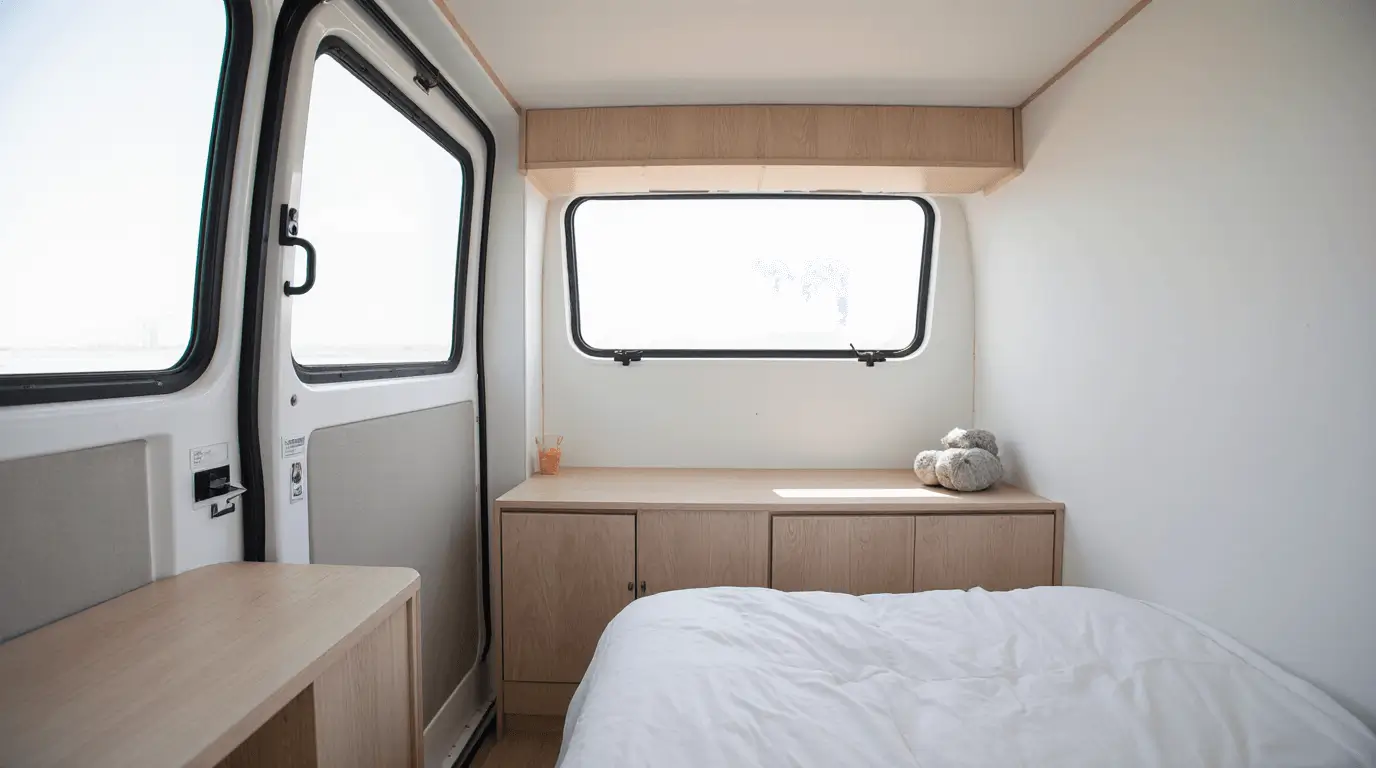
Luxury Camper Van Interior Design Concepts
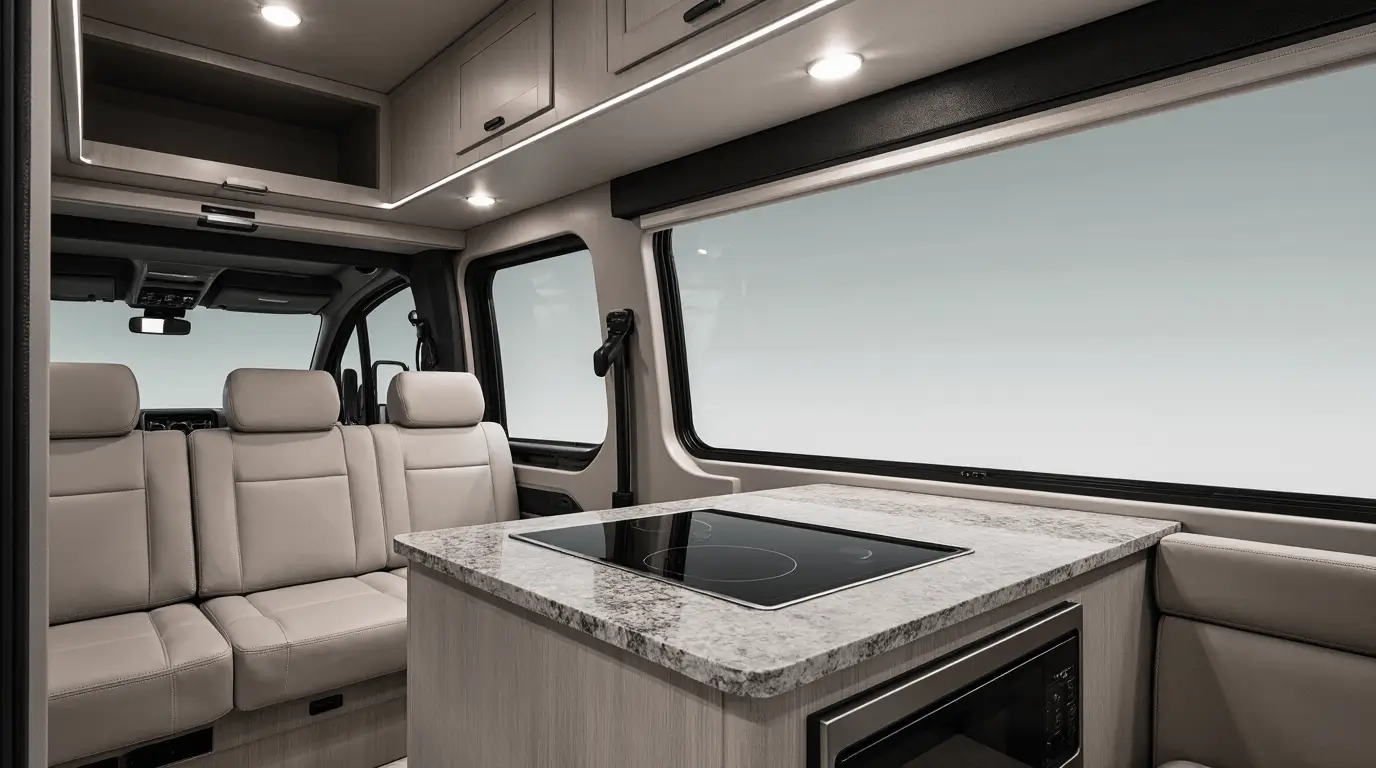
Luxury van interior design includes premium upholstery, integrated appliances, stone-inspired countertops, and concealed tech.
High-end finishes must remain lightweight and practical for mobility.
Conclusion: Designing a Van Interior That Truly Works
At its best, van interior design is not about trends or clever storage hacks alone — it’s about creating a space that supports the way you actually live. Every successful build shares the same foundation: a clear layout, intentional zoning, durable materials, layered lighting, and multi-functional furniture that earns its place.
From experience, the difference between a van that feels cramped and one that feels liberating comes down to planning. When circulation paths are respected, storage is integrated thoughtfully, and daily routines are considered from the beginning, even a compact van can feel calm and expansive. A well-designed interior reduces friction — cooking becomes easier, sleeping feels restorative, and transitions between activities feel natural rather than forced.
Van interior design benefits anyone seeking freedom with structure: weekend explorers, digital nomads, couples traveling long-term, or families building shared memories on the road. The key is aligning design decisions with real-life habits. If you cook often, prioritize a functional galley. If you work remotely, design a convertible workspace with proper lighting. If comfort matters most, invest in insulation, seating ergonomics, and quality materials.
Moving forward, start with clarity. Define how you’ll use the van, map your daily routines, and design around those realities — not inspiration photos alone. When form follows function, beauty follows naturally. And that’s when a van stops feeling like a vehicle and begins to feel like home.
Learn more : 12+ Transformative Holistic Interior Design Ideas You’ll Love
Frequently Asked Questions About Van Interior Design
- What is the most important step before starting a van interior design project?
The most important step is defining how you will actually use the van. Weekend trips require a different layout than full-time living. Map out daily routines — sleeping, cooking, working, relaxing — and design the layout around those needs before selecting materials or finishes.
- How do I make a small van interior feel larger?
Light color palettes, natural light optimization, and vertical storage make a significant difference. Keeping sightlines open and avoiding bulky cabinetry along both sides preserves visual width. Consistency in materials also prevents the space from feeling visually fragmented.
- Is a fixed bed better than a convertible bed system?
It depends on lifestyle. A fixed bed offers convenience and often allows for large “garage” storage underneath, which is ideal for full-time living. Convertible systems provide more daytime seating space and flexibility, making them suitable for smaller vans or part-time travel.
- What materials work best in van interior design?
Lightweight plywood, laminate surfaces, marine-grade fabrics, and moisture-resistant flooring perform well in mobile environments. Materials should be durable, easy to clean, and stable under temperature changes. Weight management is also essential to maintain vehicle safety and performance.
- How can lighting improve the comfort of a van interior?
Layered lighting transforms the atmosphere. Task lighting ensures functionality for cooking or reading, while dimmable ambient lighting creates warmth in the evenings. Natural light through windows or skylights also enhances mood and reduces the sense of confinement.
- How do I balance aesthetics with practicality?
Start with functionality and build aesthetics around it. Choose a cohesive color palette and materials that align with your lifestyle rather than purely decorative trends. When design decisions solve real problems — storage, movement, durability — the space will naturally look refined and intentional.
- Can van interior design support full-time living comfortably?
Yes — when planned carefully. Adequate insulation, efficient storage, a comfortable bed, reliable power systems, and thoughtful layout planning make long-term living not just possible, but enjoyable. Comfort in a van is less about square footage and more about smart, experience-driven design decisions.



One Response