
Introduction
Knowing where to buy model home decor starts with understanding how this furniture reaches the market in the first place. Builders furnish show homes with staging pieces to help buyers visualize a finished space, then sell that inventory once the home is no longer needed for tours. These pieces typically move through auctions, clearance centers, outlets, or direct builder sales, usually at a meaningful discount off retail pricing.
Quick Summary
- Model home decor is most commonly sold through auctions, clearance centers, furniture outlets, and direct builder sales
- Discounts exist because pieces are display samples with light use, not because of quality defects
- Auctions and clearance centers tend to offer the steepest prices; outlets offer more predictable condition and selection
- Always check item condition, age, and delivery terms before purchasing
- Matching scale and style to your actual room matters more with staging furniture than with retail furniture
What Is Model Home Decor?
For a deeper look at how builders approach these spaces, see our guide to model homes interior design.
Model home decor refers to the furniture, art, rugs, lighting, and accessories used to stage a builder’s show home. Builders use these pieces to demonstrate scale, flow, and lifestyle appeal to prospective buyers touring a property. Once a model home closes out or a community sells through, the staging inventory is retired and resold.
Model home decor refers to the furniture, art, rugs, lighting, and accessories used in home staging, the practice builders use to help prospective buyers visualize a finished, livable space.
- Common included items: sofas, dining sets, artwork, area rugs, lamps, and decorative accessories
- Items are typically used for months to a few years, depending on how long a model remains on display
- Wear is usually cosmetic (light fading, minor scuffs) rather than structural
How Model Home Decor Differs From Retail Furniture
Retail furniture is new and untouched, while model home decor has been staged and viewed by the public, sometimes touched or sat in during tours. This typically results in lower pricing but less predictable availability, since inventory depends on when a specific model home retires rather than a standing product catalog.
Main Ways to Buy Model Home Decor
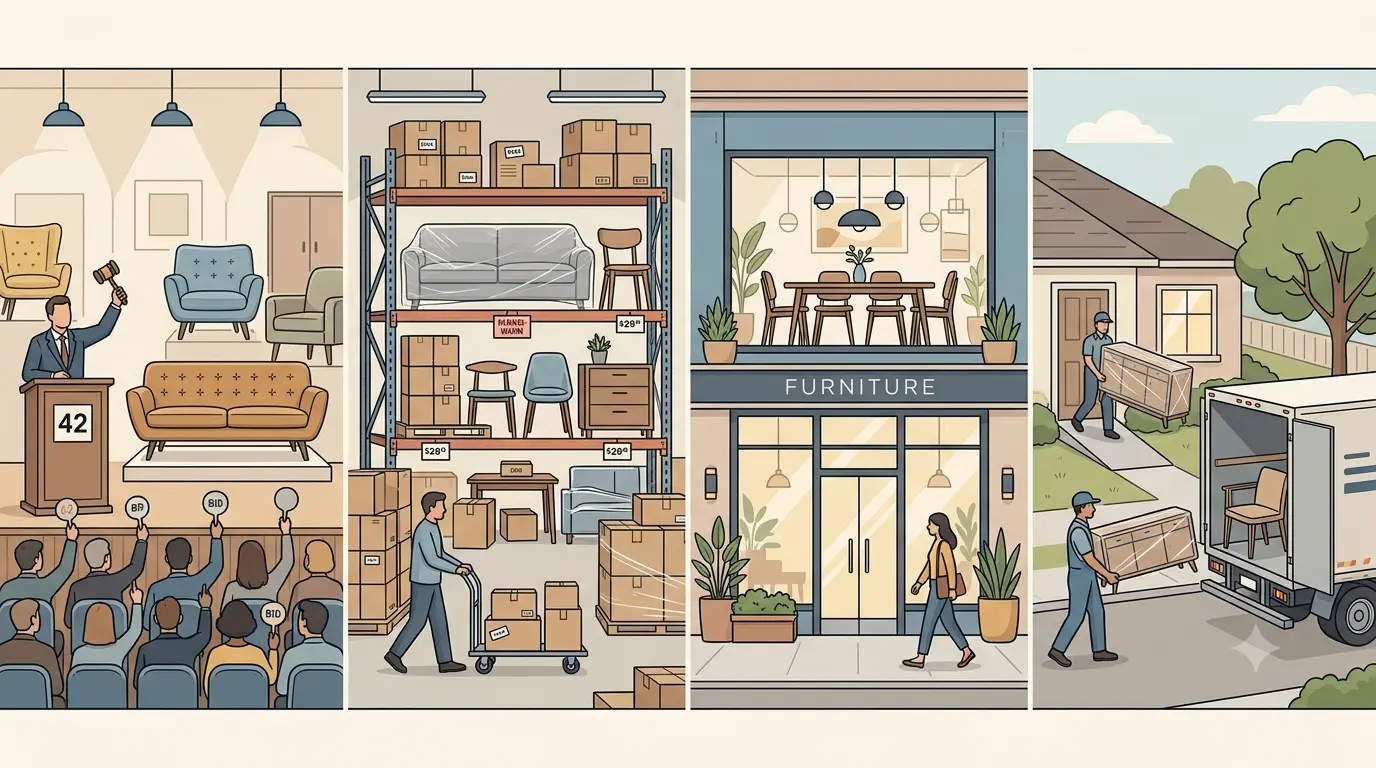
There are four primary channels through which model home decor becomes available to the public, each with a different pricing and availability structure.
If you’re weighing multiple pieces at once, our guide to furniture selection in interior design covers how to prioritize function, scale, and style together.
- Auctions — time-limited events tied to a specific model home closing
- Clearance centers — ongoing, rotating inventory from multiple retired models
- Outlets — dedicated retail spaces for staging inventory with more consistent stock
- Direct builder or developer sales — offered as a home transitions out of staging use
Model Home Furniture Auctions
Auctions are the most price-driven option. Bidding is typically open for a set window and tied to a single model home or community closing out its display units. Pricing can be lower than other channels, but availability is unpredictable and tied to auction schedules rather than continuous stock.
Model Home Clearance Centers
Clearance centers carry rotating inventory pulled from several retired model homes at once. This gives buyers more time to browse compared to an auction, though selection changes frequently as new inventory arrives and older stock sells.
Model Home Furniture Outlets
Outlets function as standing retail locations dedicated to staging inventory. They generally offer more consistent condition grading and a steadier selection than auctions or clearance centers, sometimes at a slightly higher price point in exchange for that predictability.
Direct Builder or Developer Sales
Some builders sell staging furniture directly once a model home is decommissioned, particularly at the end of a community’s development cycle. This route can offer well-documented item history but is less common than the other three.
Auctions vs. Clearance Centers vs. Outlets
| Factor | Auctions | Clearance Centers | Outlets |
| Pricing | Lowest, variable | Low to moderate | Moderate |
| Selection consistency | Unpredictable | Rotating | Most consistent |
| Condition guarantees | Limited | Limited to moderate | Highest |
| Timing | Event-based | Ongoing | Ongoing |
| Negotiation flexibility | Bidding-based | Some room | Least flexible |
What to Know Before Buying

Condition, timing, and documentation all affect whether a piece of model home decor is a good purchase. In our experience styling with staged furniture, the biggest variable isn’t price — it’s how well a buyer inspects the item before committing.
- Inspect upholstery, wood surfaces, and hardware in person when possible
- Ask how long the piece was on display and in what setting (high-traffic vs. low-traffic areas)
- Confirm delivery, haul-away, and return policies before purchase
- Verify materials (solid wood vs. veneer, natural vs. synthetic fabric) for expected durability
Decor Size and Scale
…Ceiling height, room layout, and existing furniture placement should guide sizing decisions — concepts explored further in our piece on space in interior design.
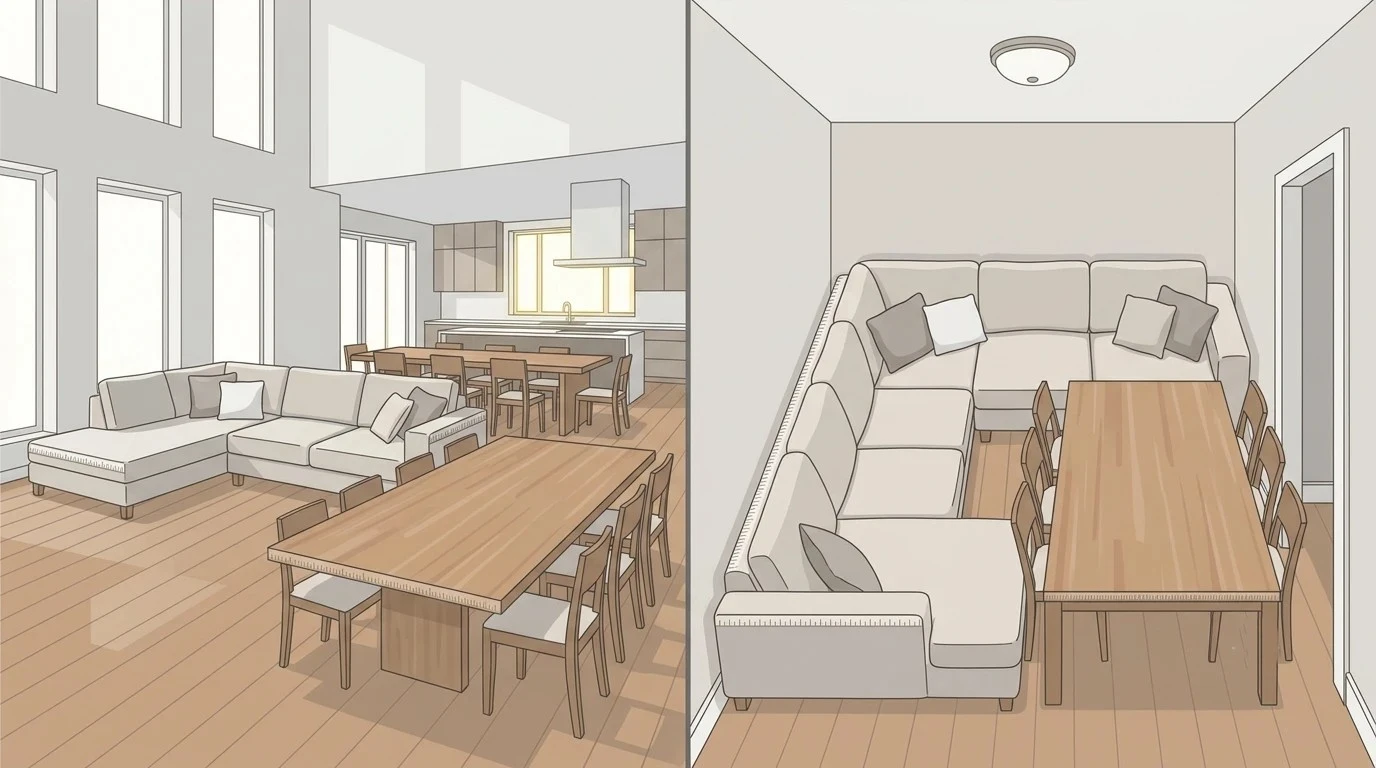
Model home furniture is frequently sized for open-concept show homes, which can make individual pieces larger than what a typical room requires. Builders often furnish for visual impact rather than everyday proportions, so a sofa or dining table that looked appropriately scaled in a model home may feel oversized elsewhere.
This is closely tied to the broader principle of scale in interior design, which explains how proportion affects how a room feels.
- Measure doorways, hallways, and target rooms before buying
- Indoor staging pieces are generally not built for outdoor exposure, so outdoor decor should be sourced separately
- Ceiling height, room layout, and existing furniture placement should guide sizing decisions more than the item’s original staged setting
Decor Style Longevity
Staging styles such as transitional, modern farmhouse, or coastal are chosen for broad market appeal and tend to shift with regional design trends every few years. As of 2026, designers commonly recommend evaluating whether a staged piece reflects a timeless silhouette (simple lines, neutral tone) versus a trend-specific finish that may feel dated sooner.
- Timeless pieces: simple frames, neutral upholstery, classic wood tones
- Trend-driven pieces: bold seasonal color palettes, statement hardware, novelty finishes
- Budget, room function, and how often you plan to redecorate should factor into which type is worth buying secondhand
Maintenance and Styling Guide
Since fabric, wood, and other surfaces respond differently to wear and light, our guide to texture in interior design can help you evaluate compatibility before buying.
Secondhand model home decor generally requires the same maintenance as new furniture, with slightly more attention up front to address existing wear.
- Cleaning: Address any surface wear or fabric staining before placing items in a home
- Lighting: Reassess how staged lighting fixtures perform in a different room’s natural and artificial light
- Material compatibility: Confirm materials suit your home’s humidity and sunlight exposure, particularly for wood and natural fiber pieces
- Styling updates: Mixed-origin staging pieces often need restyling — swapping accessories or accent colors — to feel cohesive together
- Rotation: Dudu Interiors recommends reassessing decor placement seasonally to keep mismatched staged pieces feeling intentional rather than incidental
Common Mistakes When Buying Model Home Decor
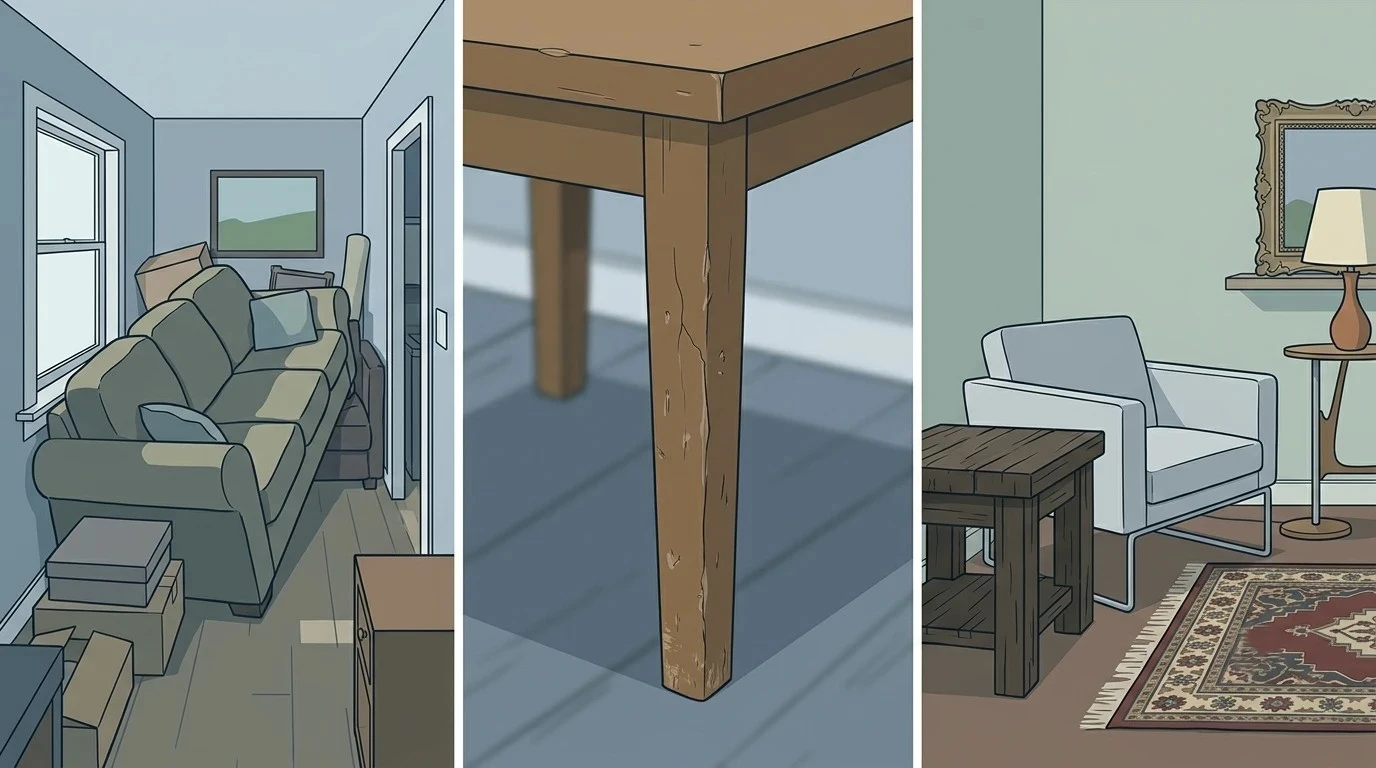
Buying oversized pieces without measuring first. This happens because model homes are staged with larger-than-typical furniture for visual effect. Prevent it by measuring your space and comparing it to listed item dimensions before purchasing.
Overlooking wear in as-is sales. Auctions and clearance sales are typically final-sale, so undetected wear becomes the buyer’s responsibility. Prevent it by inspecting items in person or requesting detailed photos and condition notes.
Assuming all pieces share one cohesive style. Staging inventory is pulled from multiple models with different design directions. Plan to restyle or mix accessories rather than expecting a plug-and-play matching set.
How Model Home Decor Fits Into Interior Decorating
Model home decor purchasing connects naturally to broader interior decorating decisions, including room styling, furniture selection, wall decor, seasonal decor updates, home organization, and troubleshooting mismatched or ill-fitting pieces. Treating a staged furniture purchase as one part of a larger room plan — rather than an isolated deal — leads to better long-term results.
Conclusion
Buying model home decor comes down to understanding the main sources — auctions, clearance centers, outlets, and direct builder sales — and knowing what trade-offs each involves in pricing, consistency, and condition. Measuring your space, checking item history, and planning for some restyling will help any staged furniture purchase fit a real home as well as it fit the show home it came from.
FAQ
- Is model home furniture good quality?
Model home furniture is generally the same quality as retail furniture, since it comes from standard furniture lines used for staging rather than lower-grade display-only products. - How much cheaper is model home furniture than retail?
Pricing varies by source, but auctions and clearance centers typically offer the deepest discounts, while outlets are priced closer to, but still below, retail. - Can you return model home furniture if it doesn’t fit?
Return policies depend on the seller; auctions and clearance sales are often final-sale, while outlets may offer more flexible return terms. - How often do builders sell off model home decor?
Builders typically sell staging inventory when a model home is decommissioned, which usually happens at the end of a community’s sales cycle or after a set staging period. - What’s the difference between a model home outlet and a clearance center?
Outlets are standing retail locations with more consistent inventory and condition grading, while clearance centers carry rotating inventory that changes as new staged furniture becomes available.