
Introduction
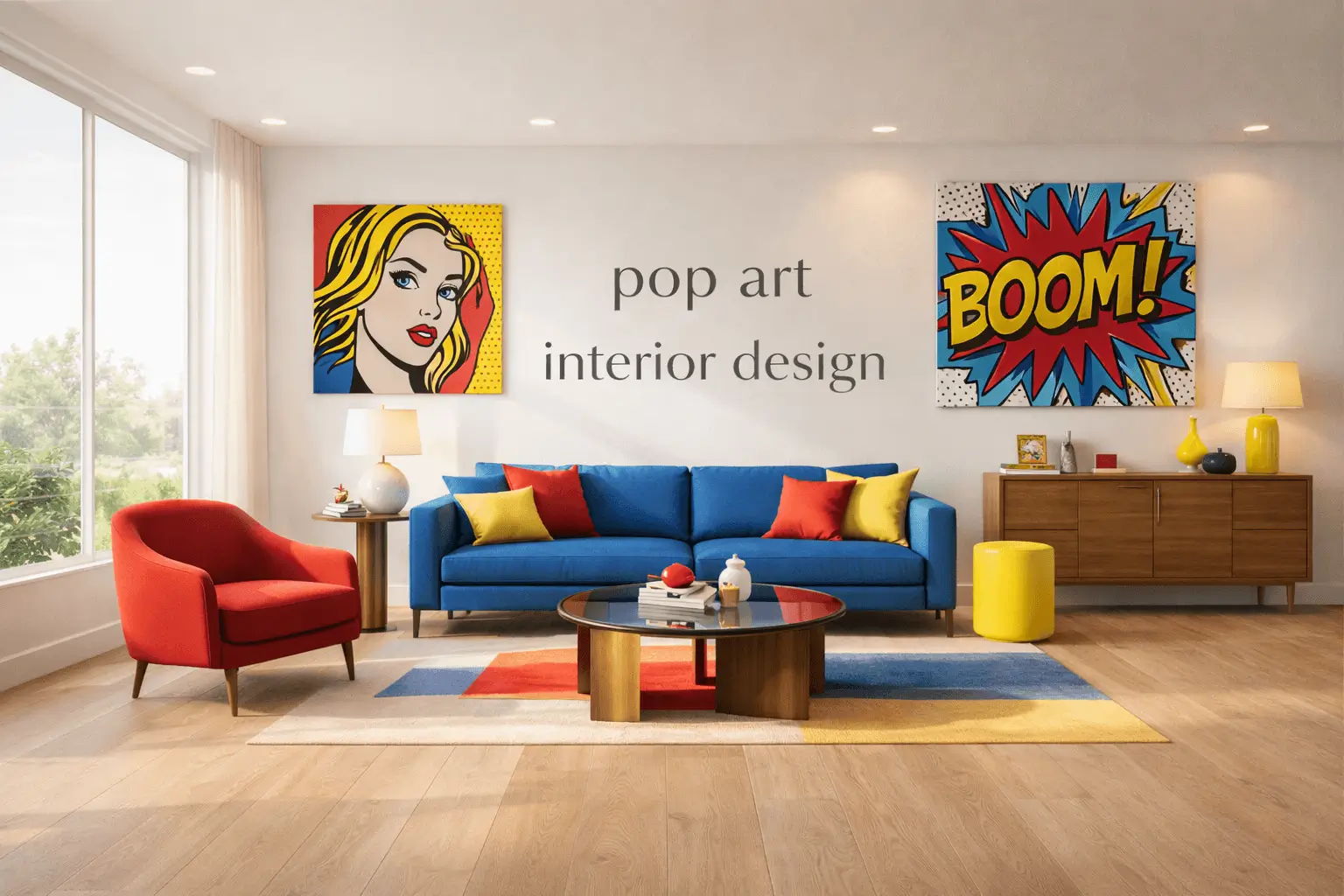
Pop art interior design is a vibrant, playful, and visually striking style that draws inspiration from the pop art movement of the 1950s and 1960s. Characterized by bold colors, graphic patterns, and iconic cultural motifs, this design approach transforms spaces into lively, expressive environments. Incorporating elements like statement furniture, pop culture artwork, and vibrant accessories, pop art interiors balance fun with sophistication, creating rooms that are both inviting and visually dynamic.
For both beginners and seasoned interior designers, pop art interior design offers a chance to experiment with contrast, color, and unexpected textures while maintaining functional and livable spaces. By integrating artistic elements into décor, designers can celebrate cultural references, personal expression, and creative storytelling through interiors.
A successful pop art interior blends daring visuals with thoughtful layout choices, ensuring that the energy of the design enhances, rather than overwhelms, the living space. From living rooms to bedrooms and even kitchens, this style is adaptable, allowing homeowners to inject personality and joy into their surroundings.
Pop Art Living Room Design
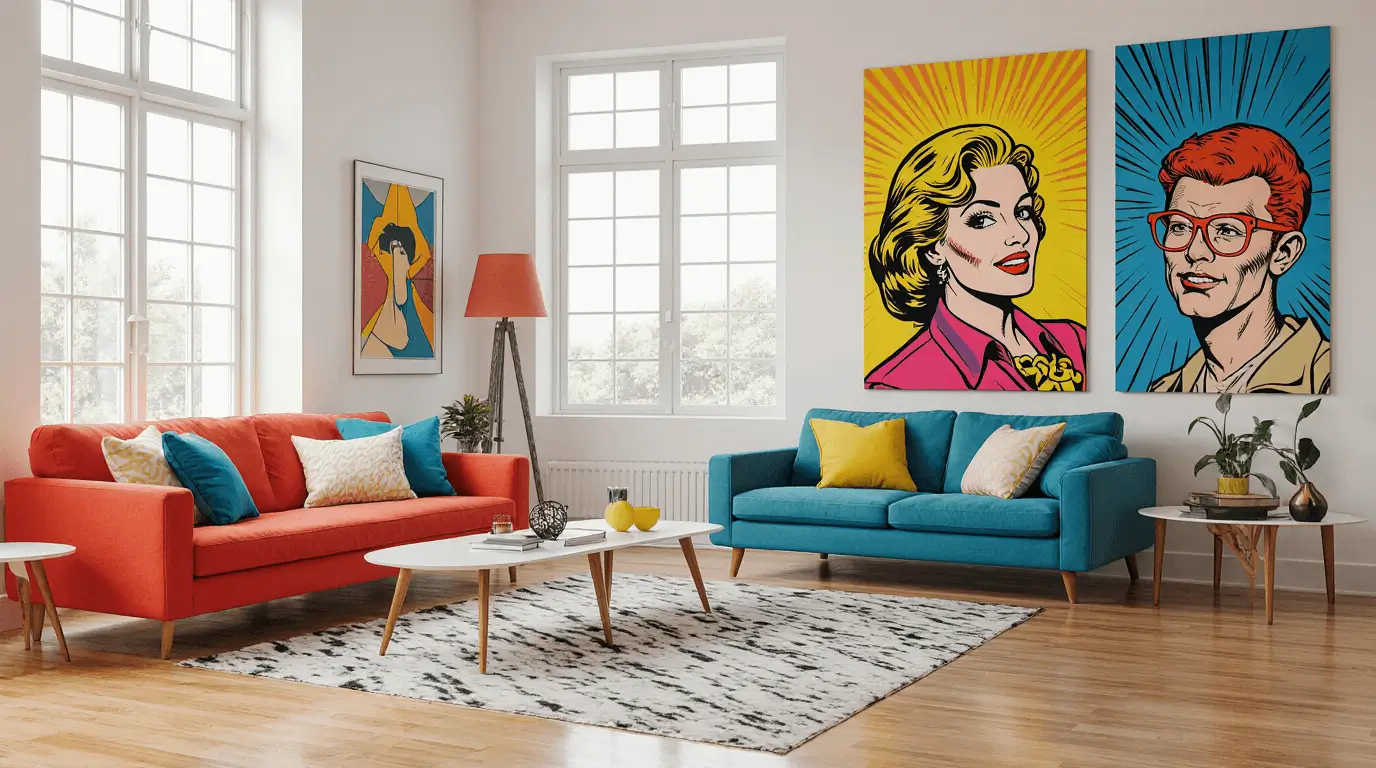
Pop art living room design emphasizes bold wall art, colorful furniture, and graphic patterns to create a dynamic social space. Using primary colors, statement sofas, and playful décor pieces, this approach turns the living room into an immersive visual experience.
Pop Art Bedroom Interiors
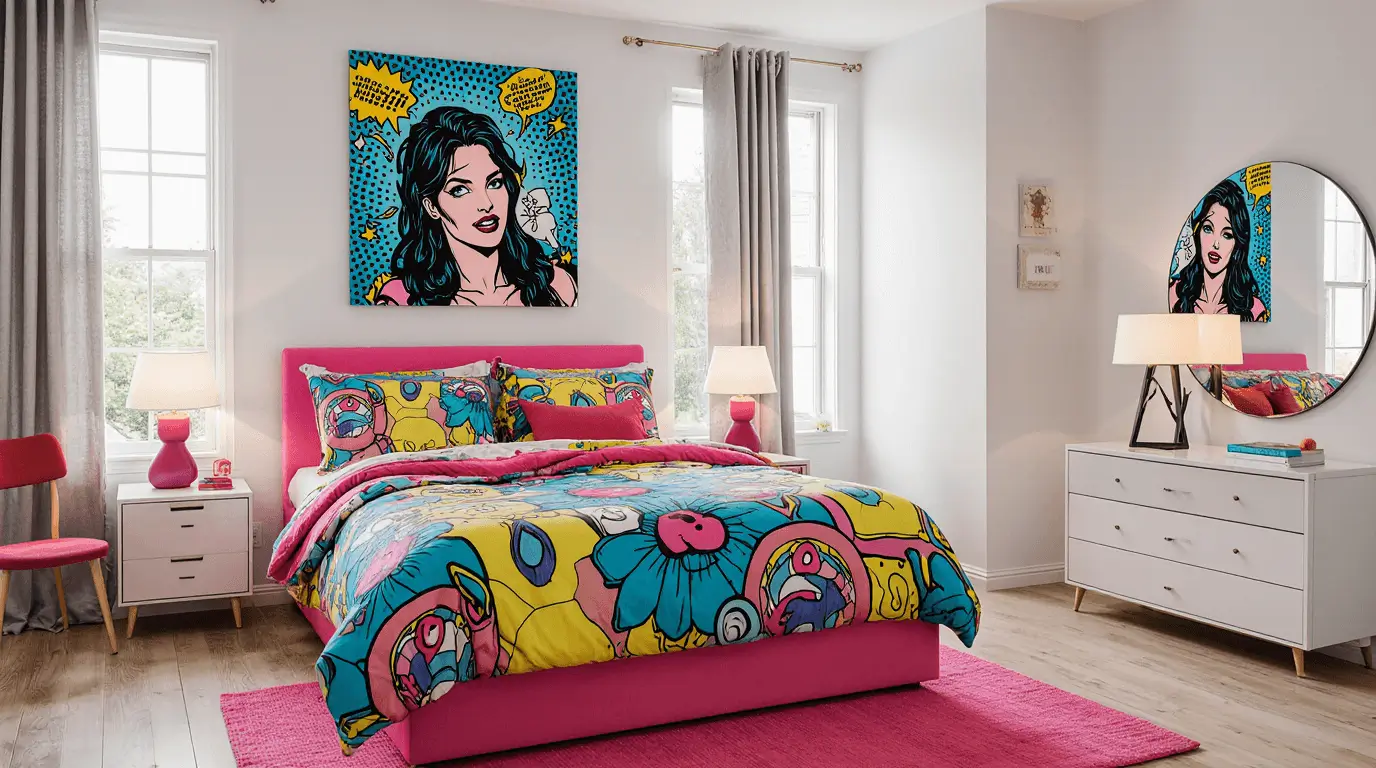
A pop art bedroom combines comfort with vibrant artistic elements. Think bold bedding, quirky artwork, and accent walls that reflect iconic pop art motifs. This creates a lively yet personal retreat.
Modern Pop Art Furniture Integration
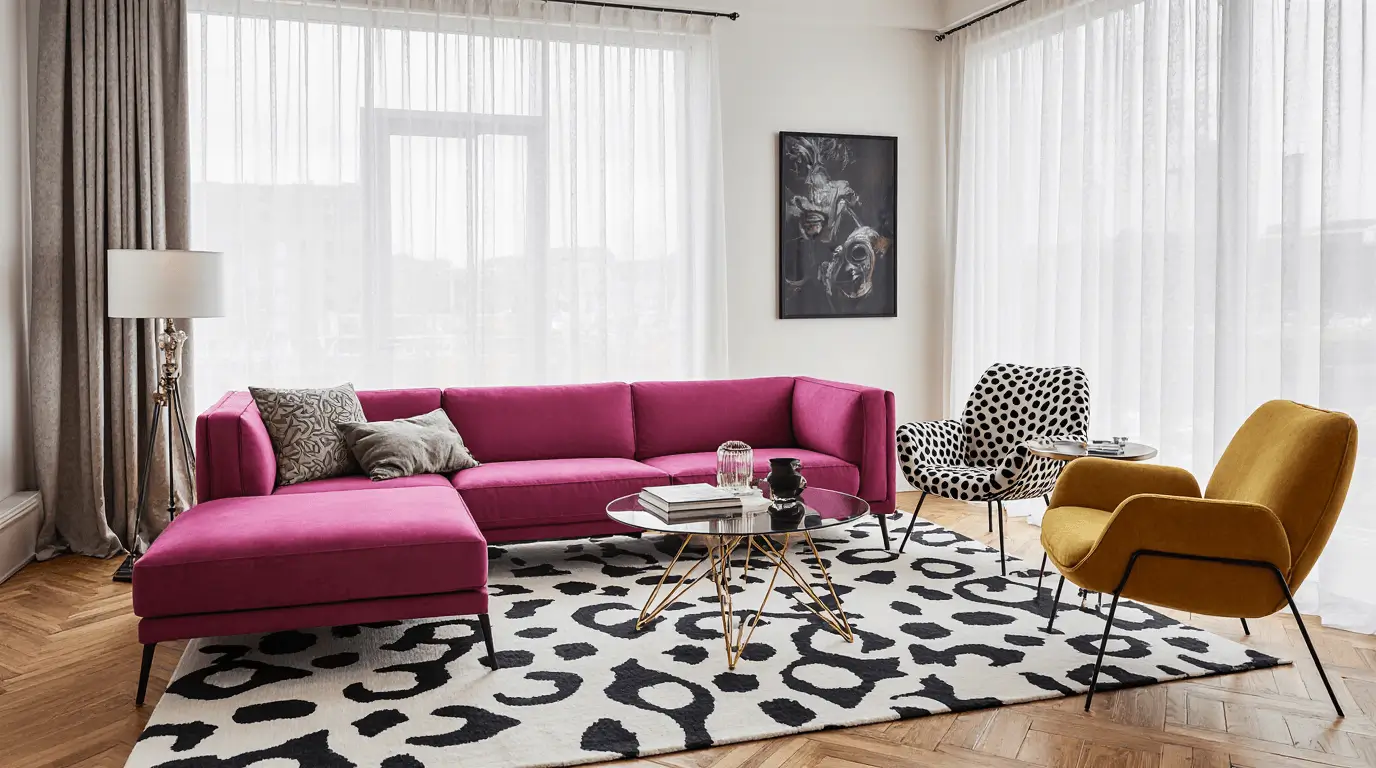
Integrating pop art furniture, such as graphic chairs, modular sofas, and colorful side tables, adds instant character to interiors. Furniture becomes a centerpiece, reflecting the bold aesthetics of the pop art movement.
Pop Art Wall Décor and Murals
Pop art interior design thrives on statement walls. Large-scale murals, comic-strip art, or iconic imagery create focal points that energize any room, turning walls into visual storytelling canvases.
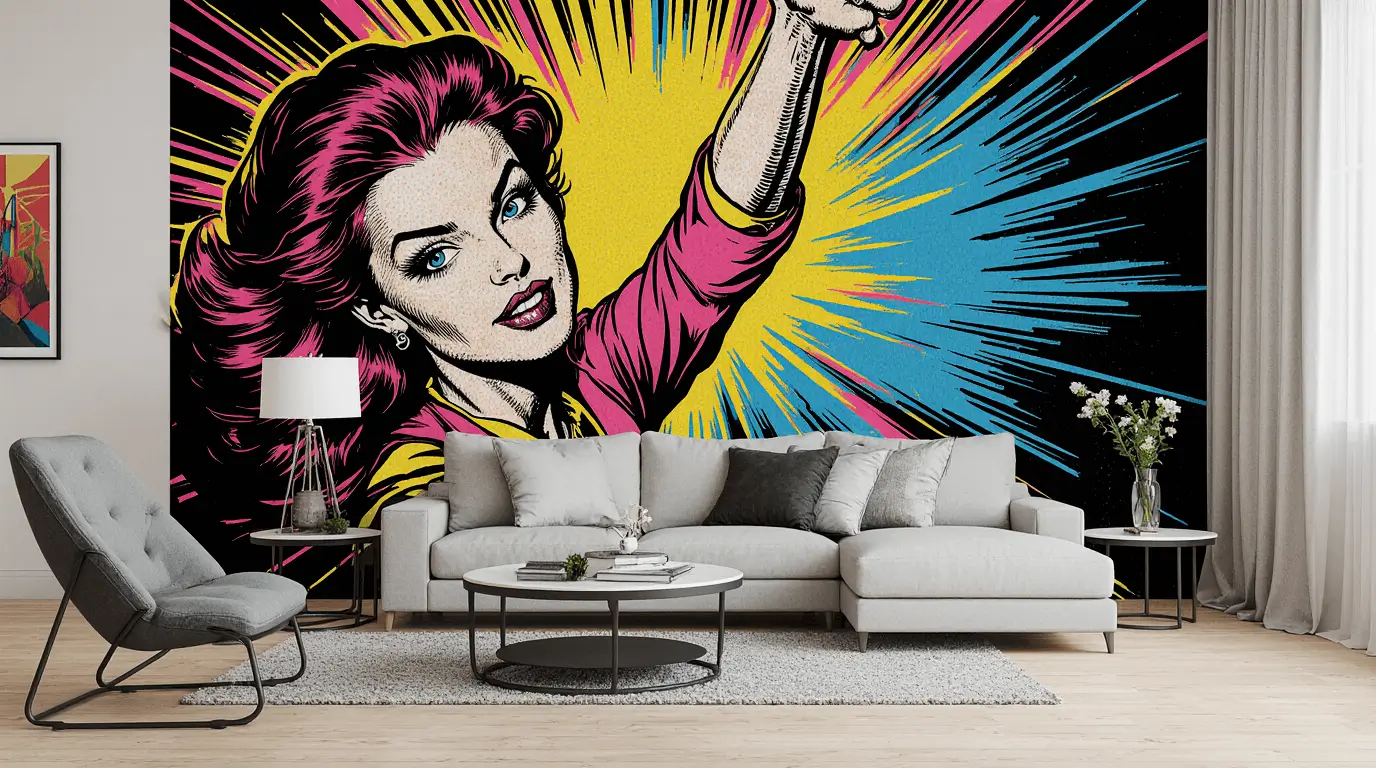
Pop Art in Dining Spaces
Dining rooms can embrace pop art with colorful chairs, patterned tableware, and bold pendant lights. The style transforms functional spaces into lively social hubs.
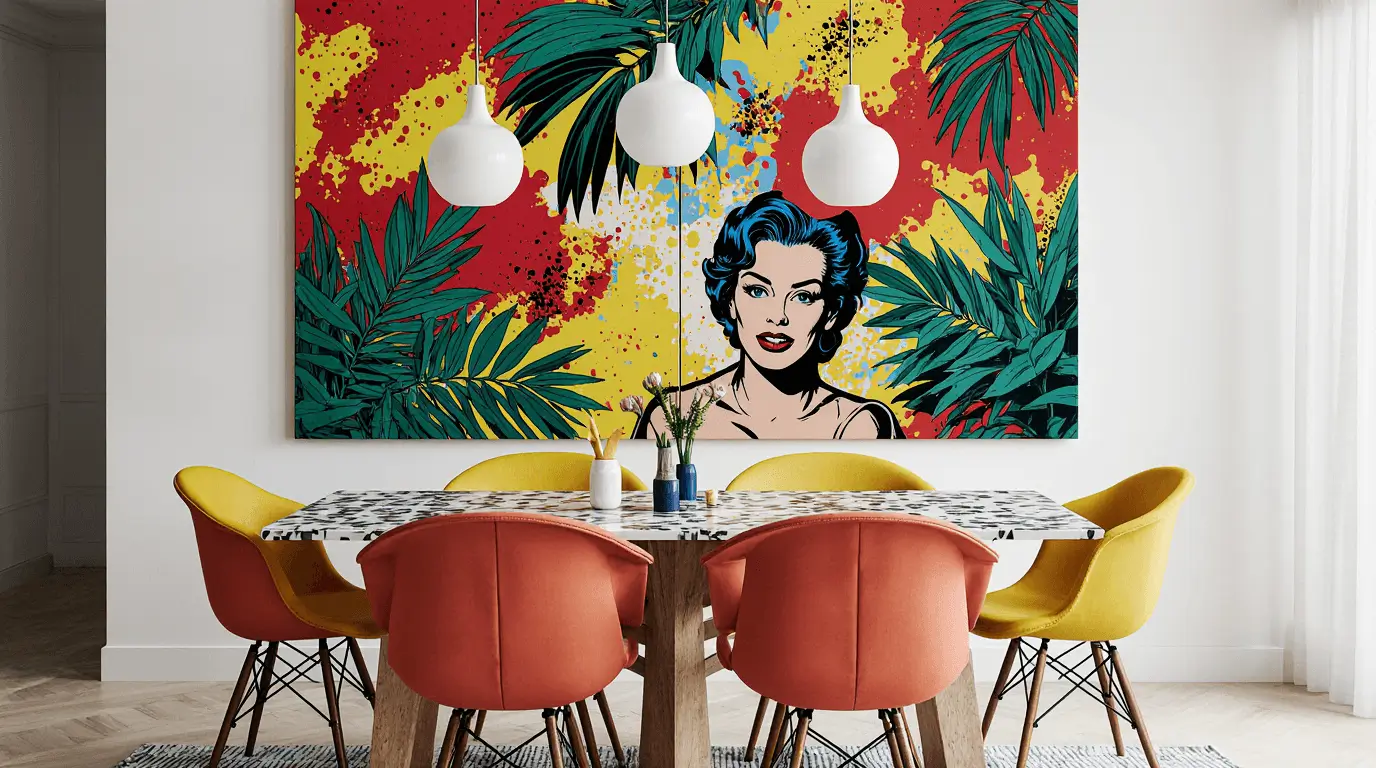
Pop Art Accent Pieces
Accessories like pop art cushions, vases, and lamps allow designers to experiment with color and pattern without committing the entire space to the style. These elements tie together rooms subtly and playfully.
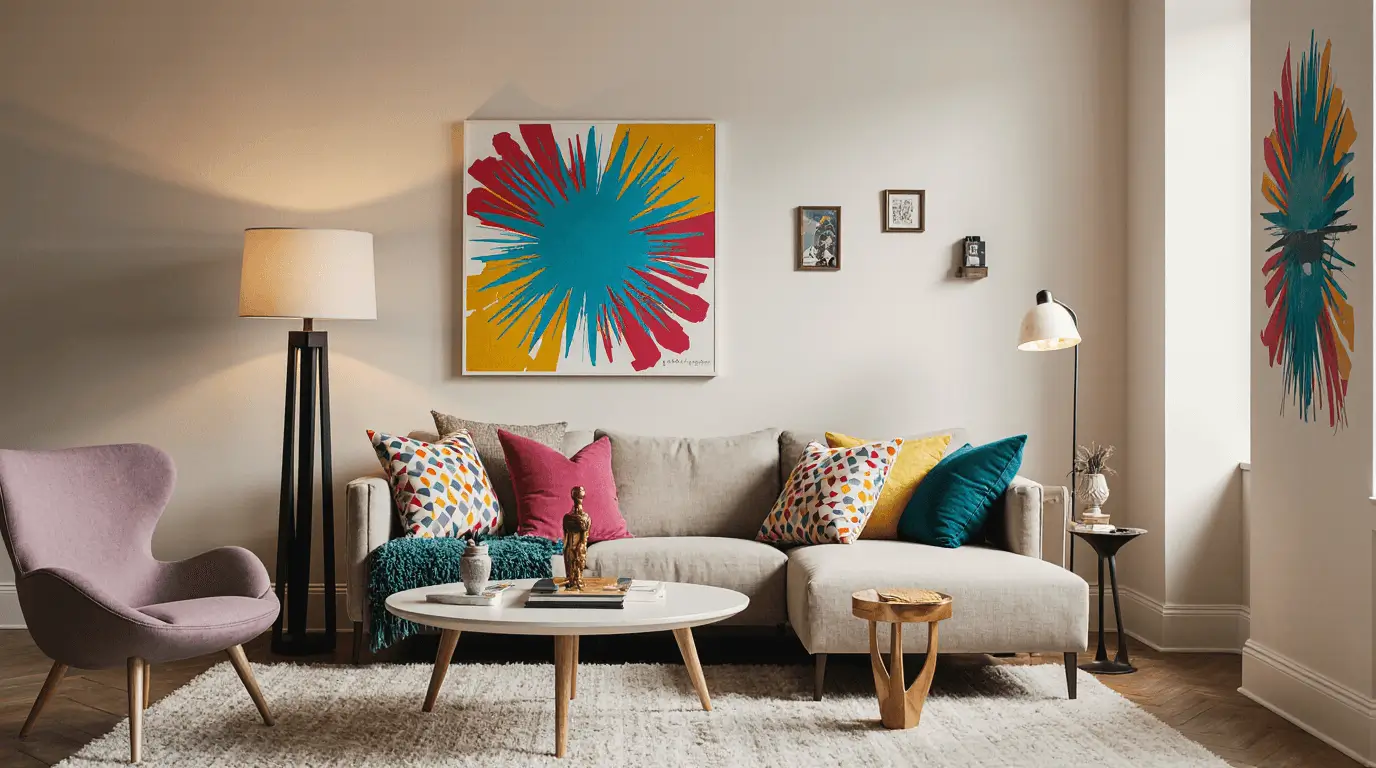
Pop Art Home Office Design
Home offices can benefit from pop art’s energetic aesthetic, which boosts creativity. Bold wallpapers, colorful chairs, and artistic décor make workspaces inspiring and fun.
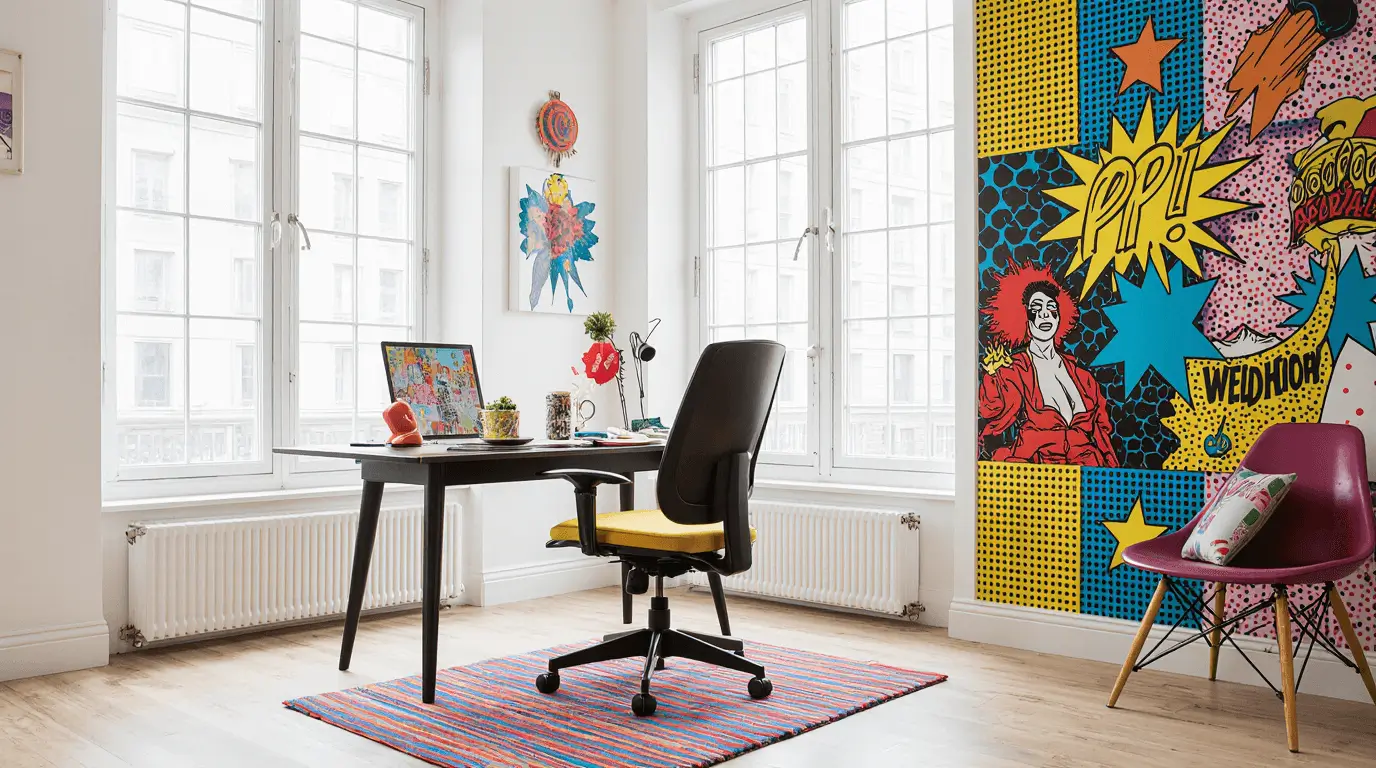
Pop Art Kitchen Interiors
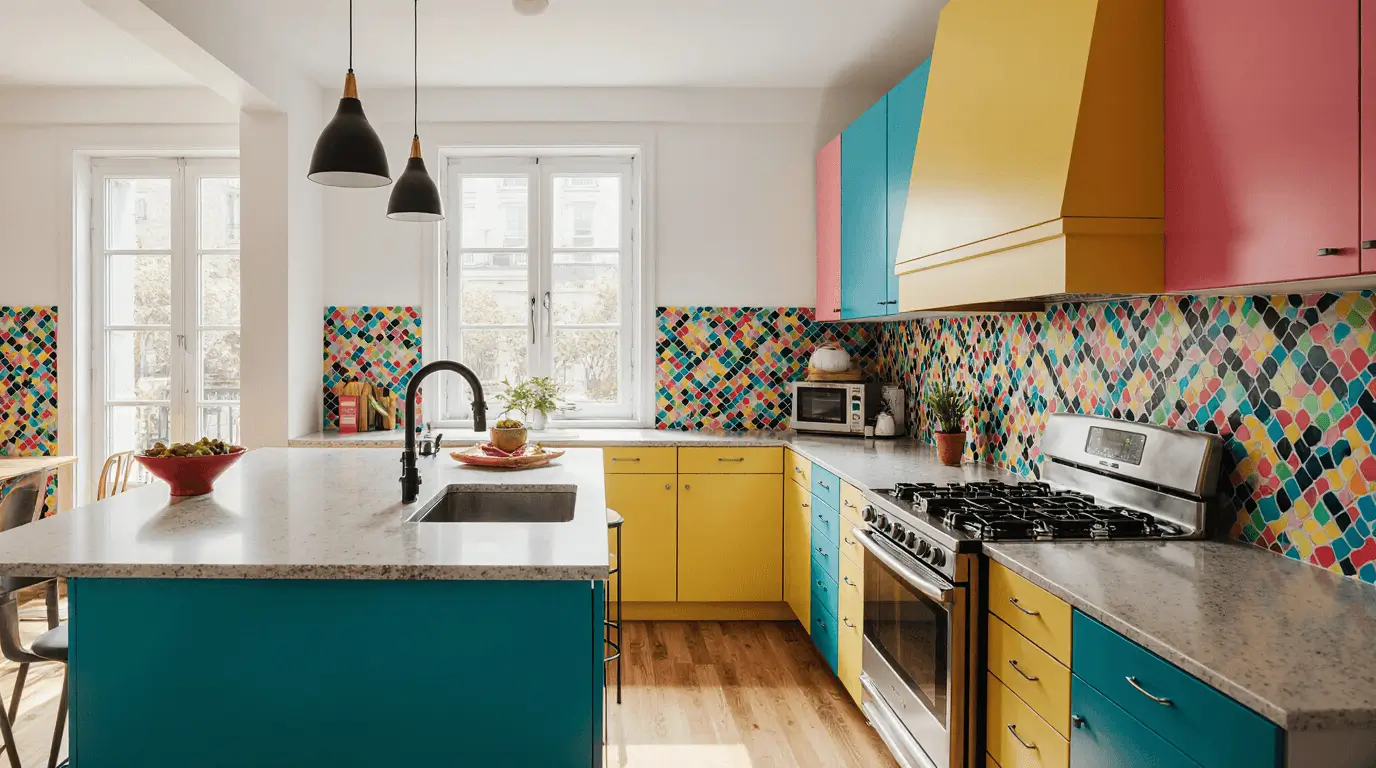
Pop art kitchens feature colorful cabinetry, patterned backsplashes, and playful appliances. The design injects life into a functional space without sacrificing practicality.
Pop Art Bathroom Ideas
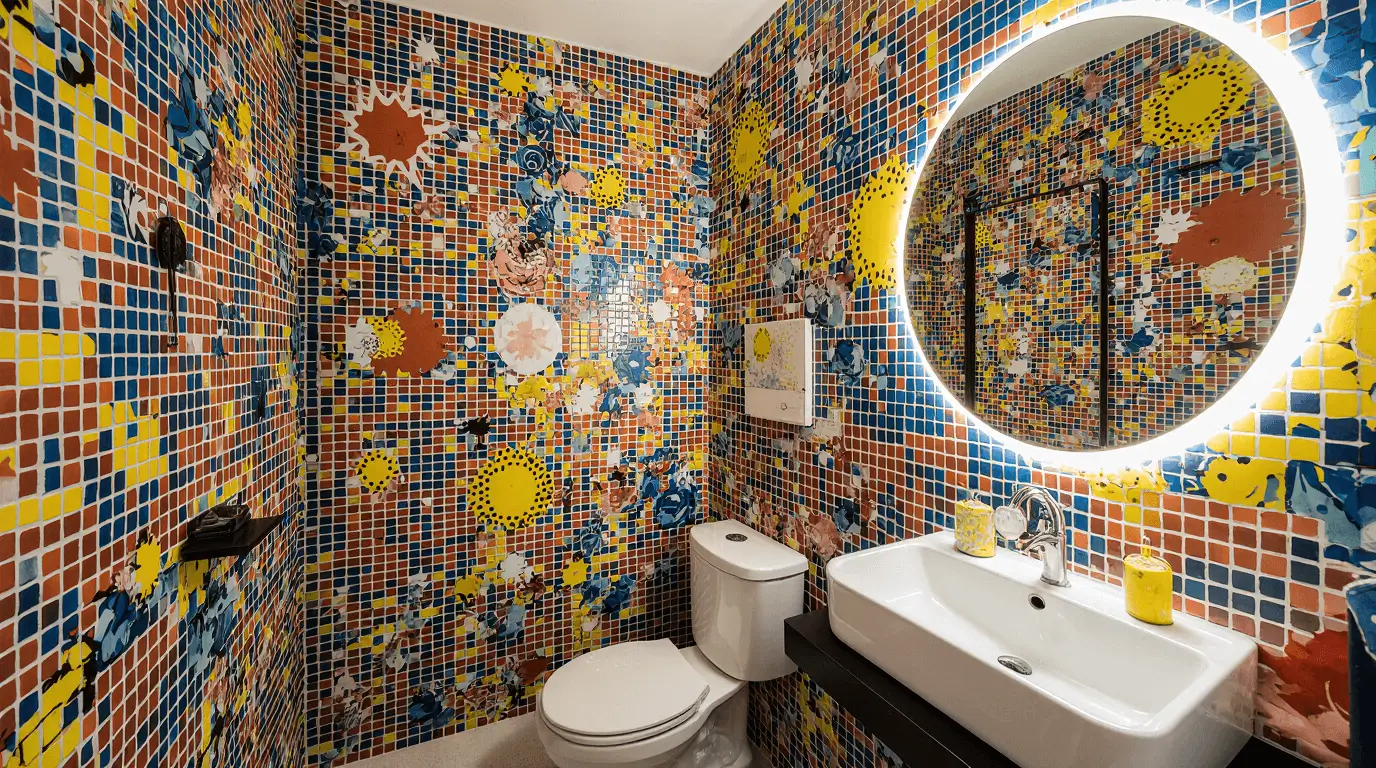
Bathrooms can adopt pop art with graphic tiles, bold mirrors, and colorful fixtures. These touches turn utilitarian areas into statement-making spaces.
Pop Art Home Gallery Walls
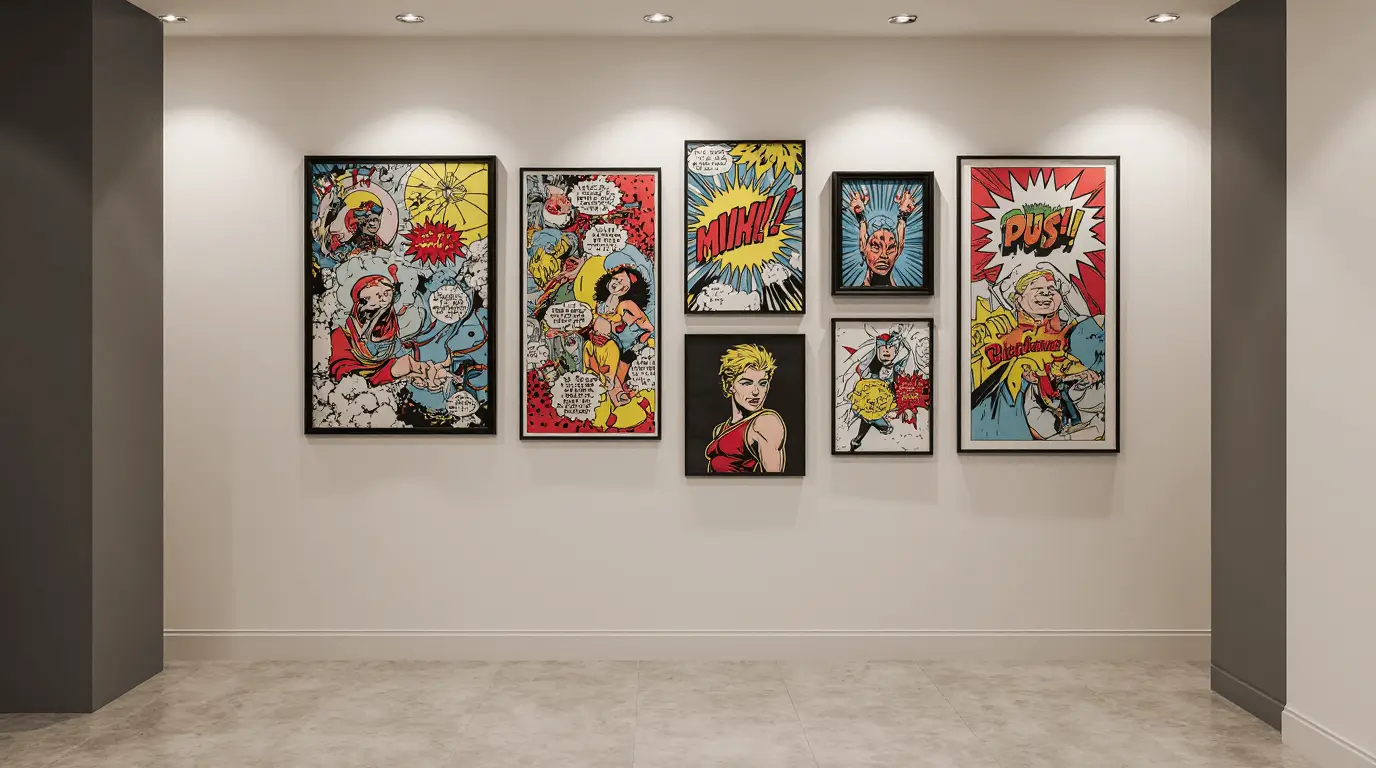
Creating a gallery wall with pop art prints or framed iconic imagery adds personality and cultural reference to any interior. It’s a signature feature in living spaces or hallways.
Pop Art Color Palettes
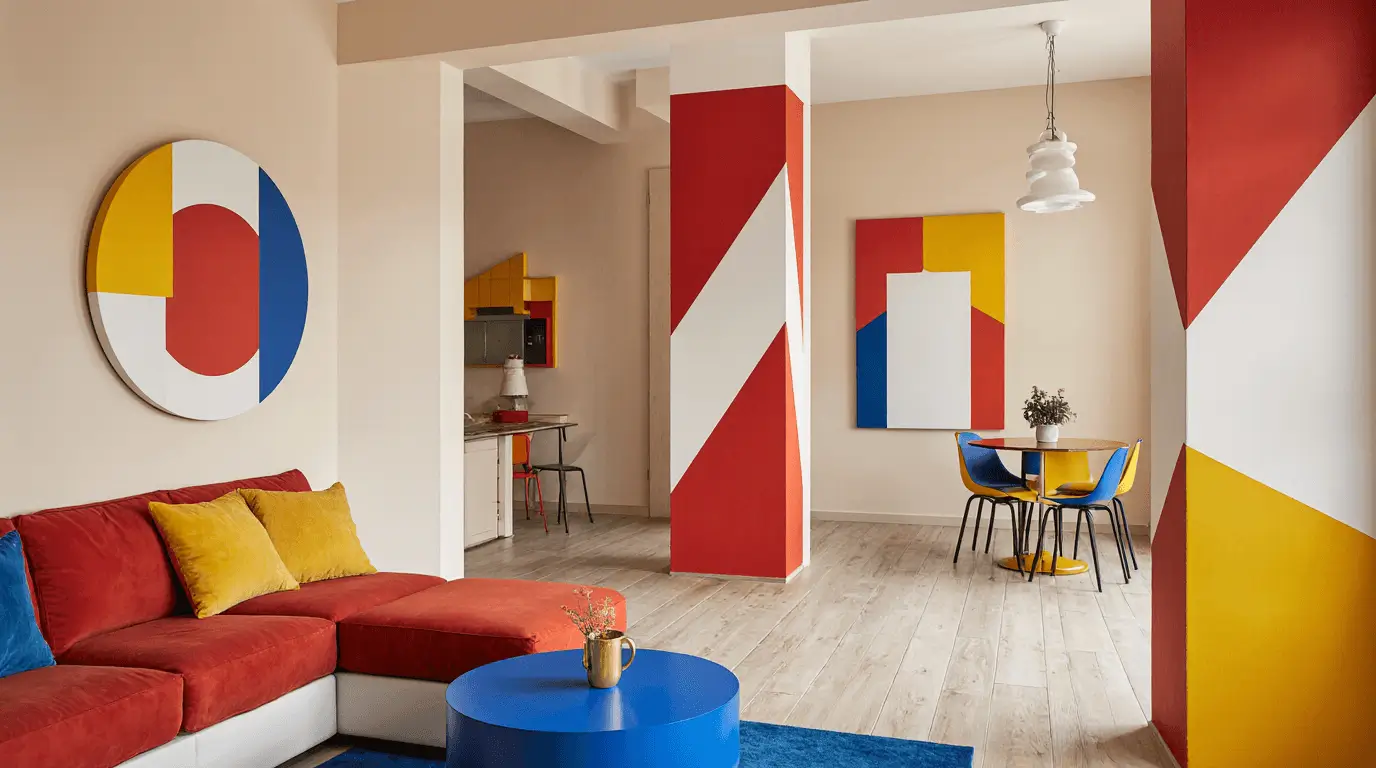
Pop art interiors rely on bold primary colors (red, yellow, blue) and high-contrast combinations. Pairing with neutrals balances intensity while keeping energy high.
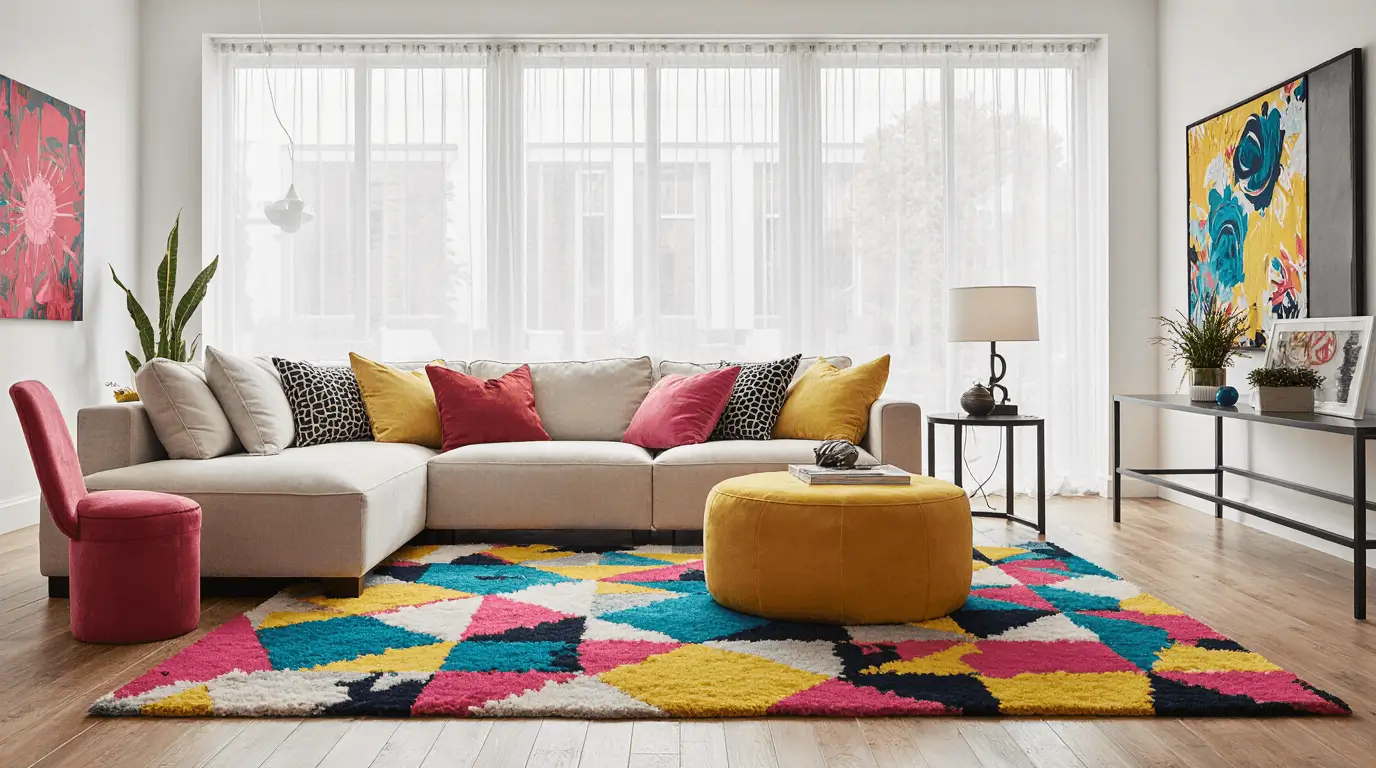
Pop Art Flooring and Rugs
Graphic patterned rugs or colored flooring can reinforce pop art’s visual energy. They define spaces while adding texture and movement to the room.
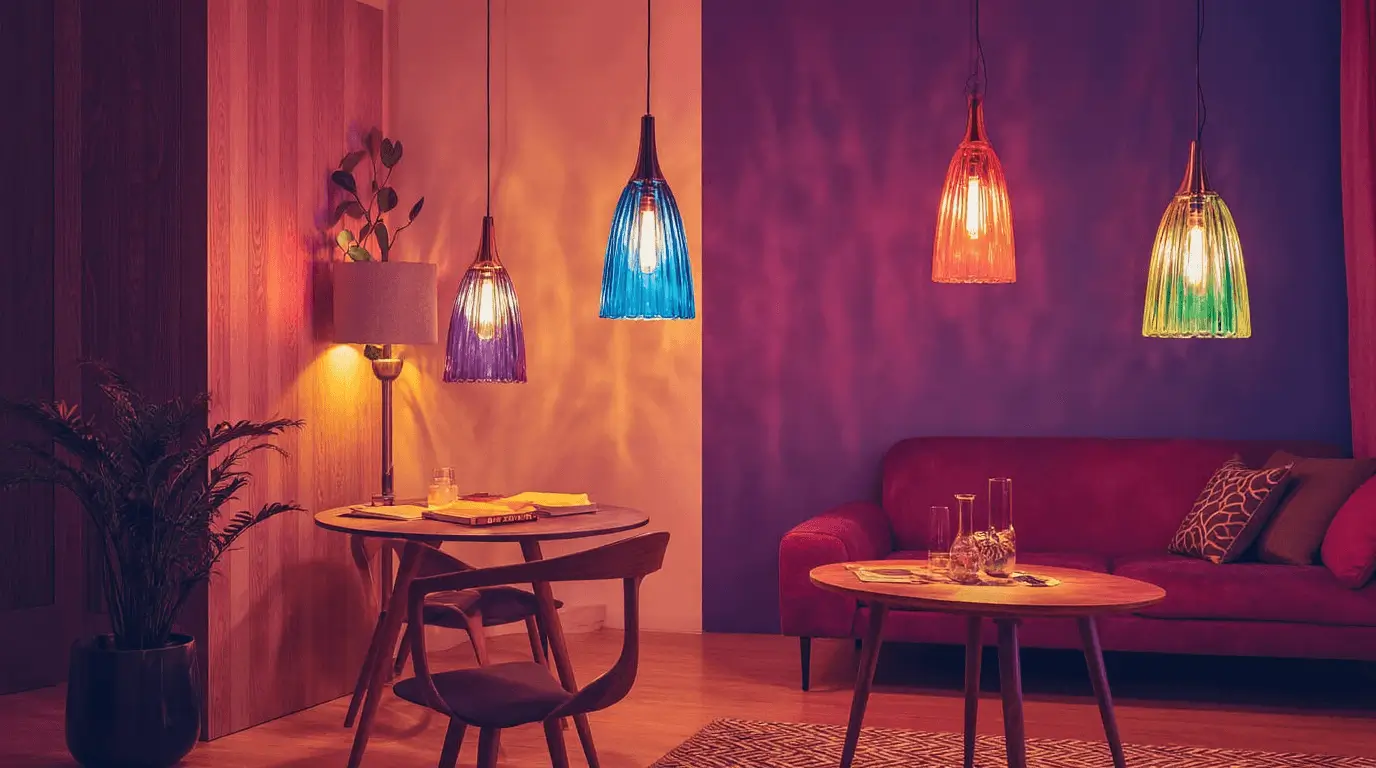
Pop Art Lighting Design
Lighting in pop art interiors often doubles as art. Bright neon, colorful pendant lamps, and sculptural fixtures emphasize the space’s graphic qualities.
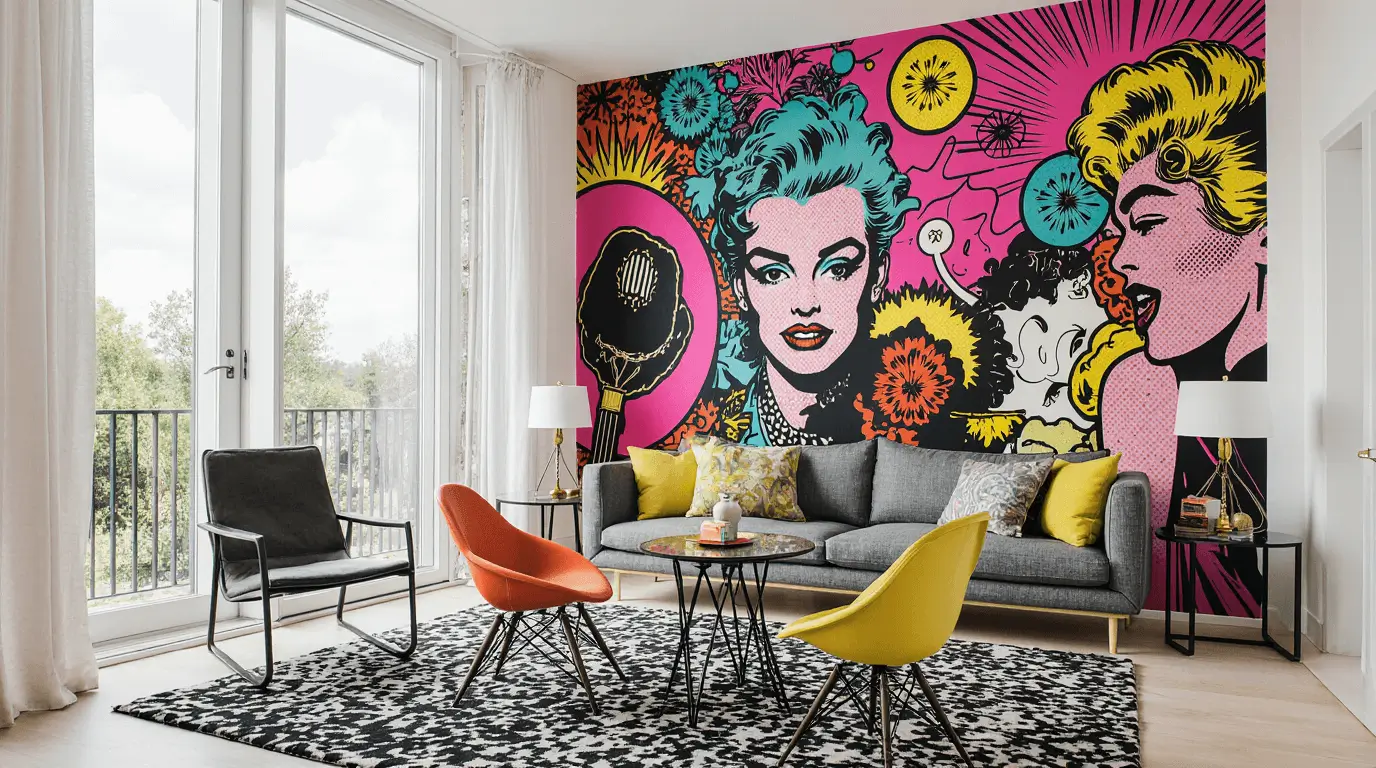
Pop Art Cultural Inspirations
Pop art interior design draws inspiration from icons like Andy Warhol and Roy Lichtenstein. Integrating signature motifs, prints, and sculptures adds authenticity and artistic depth.
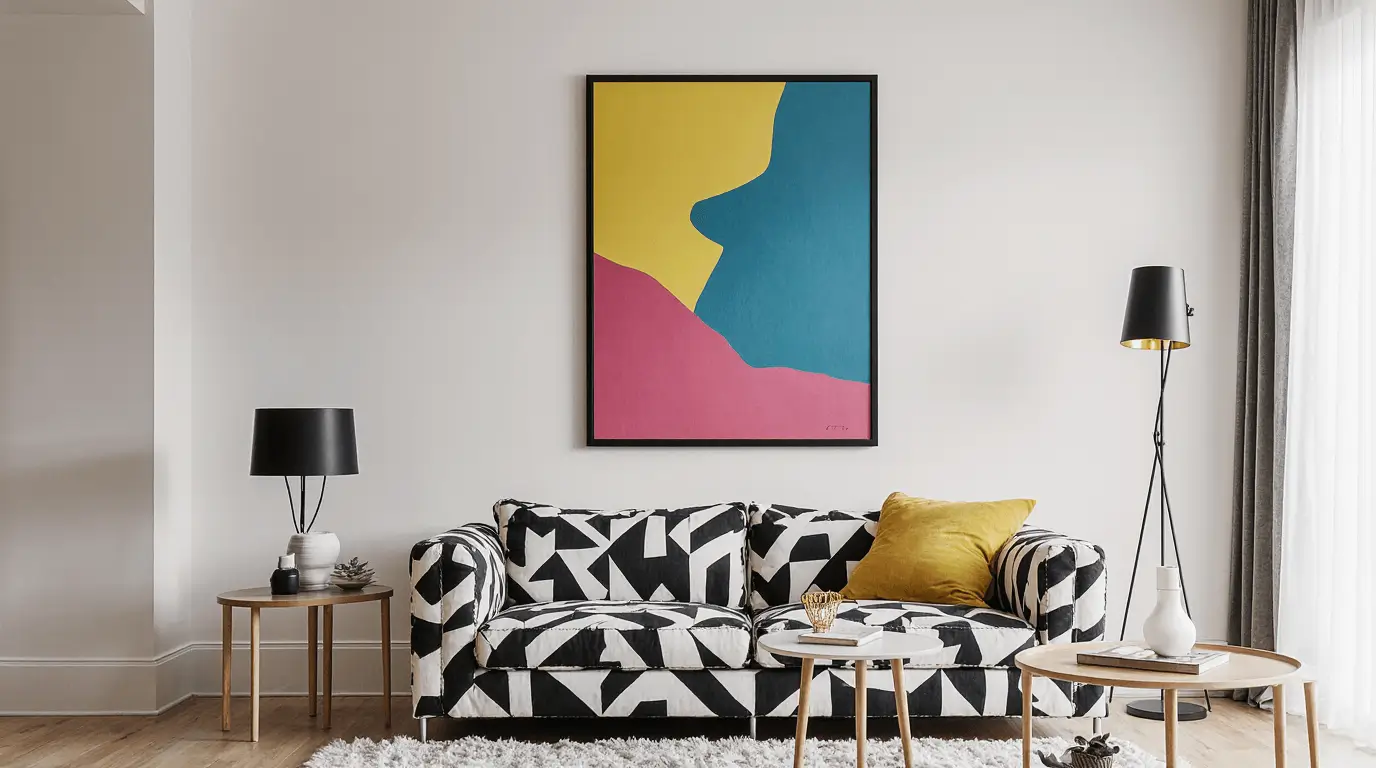
Pop Art Minimalist Fusion
For modern interiors, pop art can be blended with minimalism. Selective bold elements against neutral backgrounds create a sophisticated yet playful aesthetic.
Pop Art Outdoor Spaces
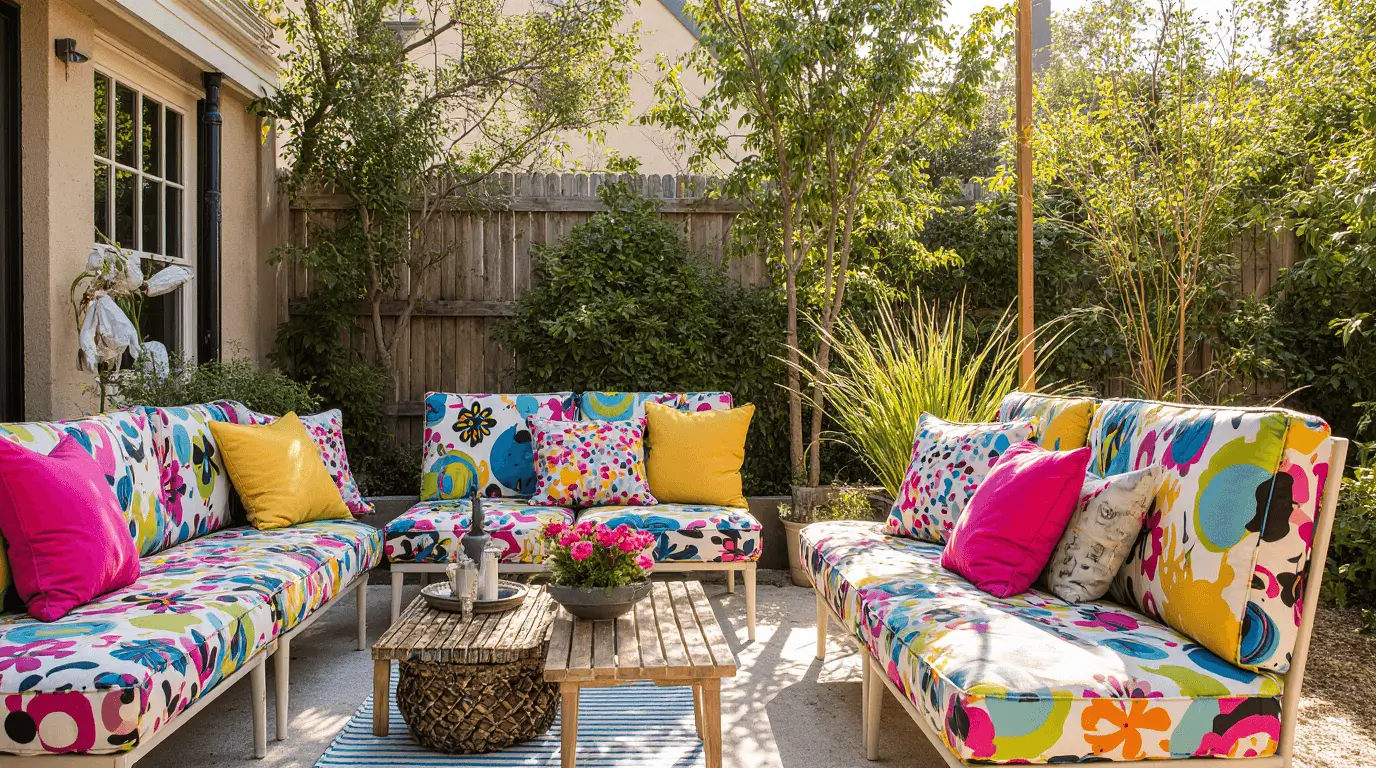
Even outdoor patios can embrace pop art with bold furniture, colorful cushions, and graphic planters, extending the artistic vision beyond interior walls.
Conclusion
Pop art interior design is more than just a colorful trend — it’s a deliberate celebration of creativity, culture, and personal expression within the home. By thoughtfully combining bold colors, graphic patterns, statement furniture, and artistic motifs, this style transforms ordinary spaces into lively, engaging environments that reflect personality and energy. Its strength lies in balance: while pop art invites playfulness, careful curation ensures spaces remain functional, harmonious, and visually appealing.
This approach benefits anyone who seeks to infuse their home with character — from art enthusiasts and collectors to families wanting dynamic, inspiring living spaces. It encourages experimentation, yet rewards mindful design choices, showing that creativity and practicality can coexist beautifully. Whether you’re designing a living room, bedroom, or even a kitchen, understanding how to layer color, pattern, and cultural references enables you to craft interiors that feel both bold and inviting.
By embracing pop art thoughtfully, homeowners gain confidence in making striking design decisions, creating spaces that not only catch the eye but also enhance daily living. The result is a home that tells a story, sparks joy, and invites interaction — all while remaining timeless and adaptable to evolving tastes.
Learn more : Dental Practice Interior Design: Layout & Strategy
Frequently Asked Questions
- Can pop art interior design work in small spaces?
Absolutely. In smaller rooms, focus on one or two statement pieces — like a bold sofa, graphic wall art, or a vibrant rug — while keeping surrounding elements neutral. This approach maintains the energy of pop art without overwhelming the space. - How do I balance bold colors with everyday living?
Balance is key. Pair vibrant primary colors with neutral tones, such as soft grays, whites, or wood textures. This creates a visually dynamic environment that remains comfortable and livable for daily routines. - Is pop art suitable for all types of homes?
Yes. Pop art can adapt to traditional, modern, or eclectic homes. The key is customizing elements — furniture, wall art, and décor — to complement the architectural style while introducing playful, artistic highlights. - How do I choose the right pop art elements for my personality?
Consider your favorite colors, cultural references, or artists that inspire you. Start with one expressive element — like a mural or pop-inspired sofa — then layer complementary pieces. This ensures your space feels authentic and personal. - Can pop art be combined with other interior styles?
Definitely. Pop art pairs well with minimalism, mid-century modern, or even industrial styles. By integrating select bold accents into a subdued palette, you achieve a stylish fusion that feels intentional and fresh. - What lighting works best with pop art interiors?
Lighting should enhance the vibrancy of colors and highlight key pieces. Natural daylight is ideal, supplemented by bold pendant lights, track lighting, or even subtle neon accents to amplify energy without overpowering the space. - How can I make pop art feel timeless rather than trendy?
Focus on quality pieces, thoughtful composition, and a balance of color and neutral grounding elements. By choosing enduring furniture and layering expressive artwork strategically, pop art interiors can remain striking and relevant for years.

One Response