
Introduction
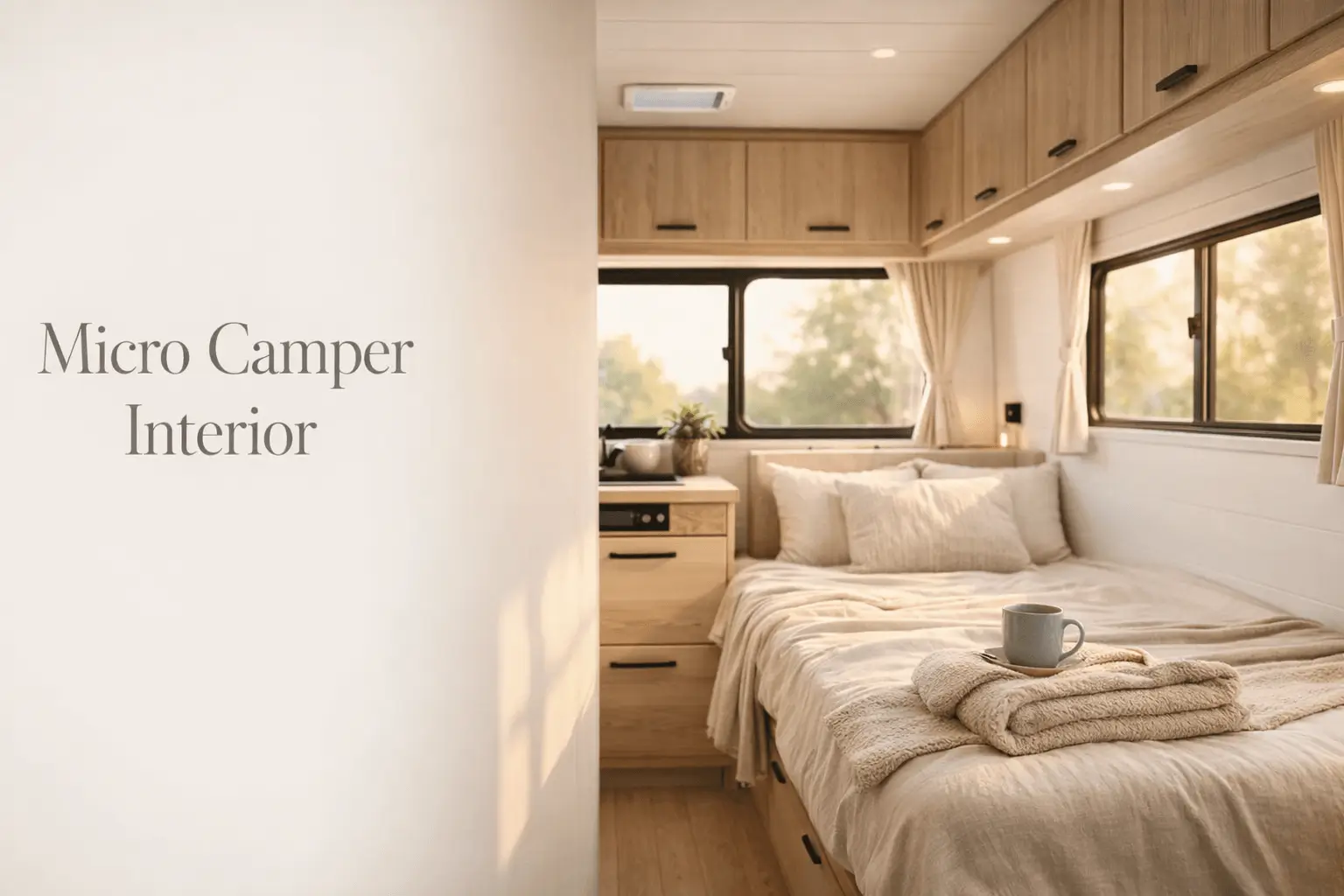
Designing a micro camper interior is about transforming the smallest possible footprint into a fully functional, comfortable living space. Whether you’re converting a compact van or optimizing a tiny camper, the challenge lies in balancing efficiency, comfort, and aesthetics without overcrowding the space.
From my experience working with compact layouts, the best micro camper interiors aren’t just about fitting everything in—they’re about intentional design. Every inch must serve a purpose, and every element should contribute to both usability and atmosphere. When done right, even the smallest camper can feel surprisingly spacious, practical, and inviting.
Micro Camper Interior Layout Optimization
A well-planned micro camper interior layout ensures smooth movement and efficient use of space. Prioritize essential zones—sleeping, storage, and cooking—without overlap or obstruction.
Flexible layouts with convertible elements allow one area to serve multiple purposes.
Minimalist Micro Camper Interior Design
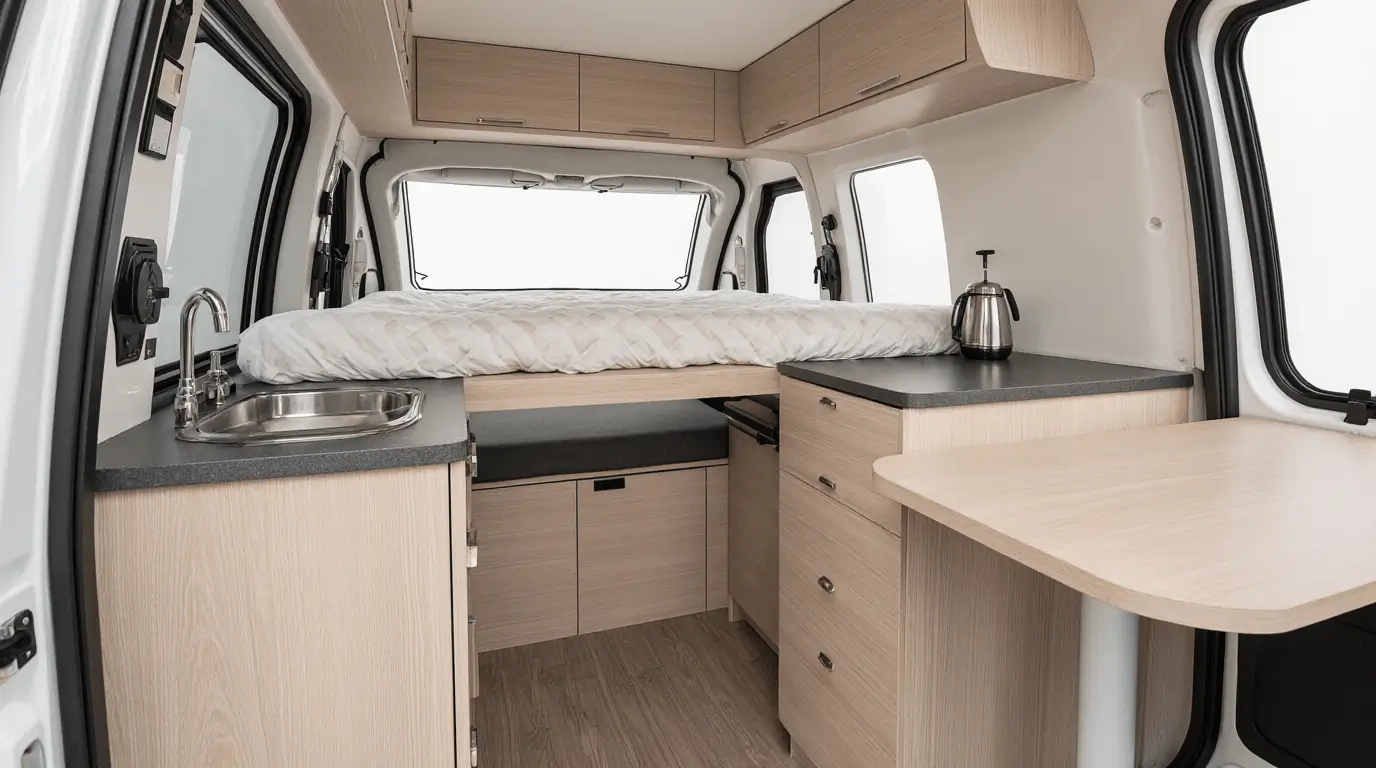
Minimalism is key to avoiding clutter in a micro camper interior. Stick to a limited color palette and essential items only.
Clean lines and hidden storage help maintain visual calm and maximize perceived space.
Micro Camper Interior Storage Solutions
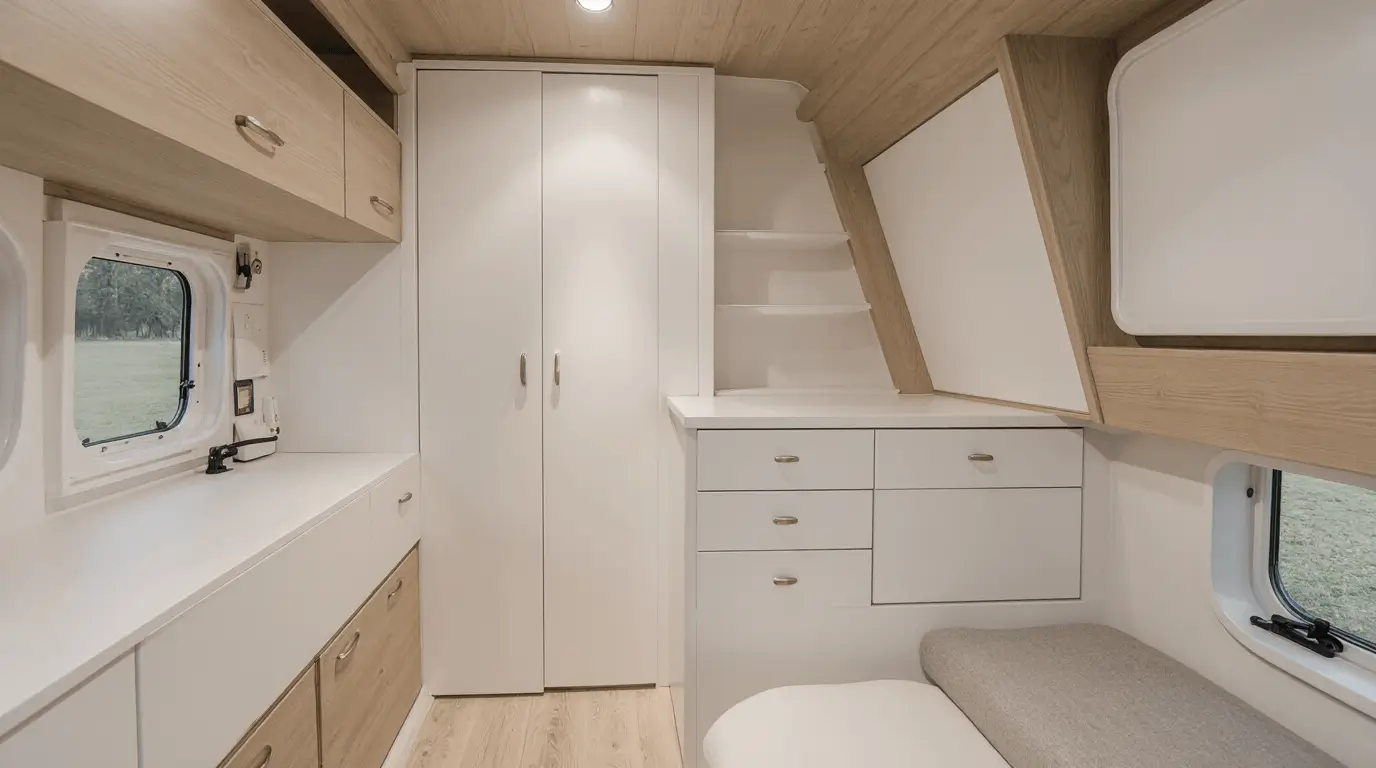
Smart storage defines the success of a micro camper interior. Utilize vertical space, under-seat compartments, and overhead cabinets.
Custom-built storage keeps everything organized while maintaining accessibility.
Convertible Furniture in Micro Camper Interior
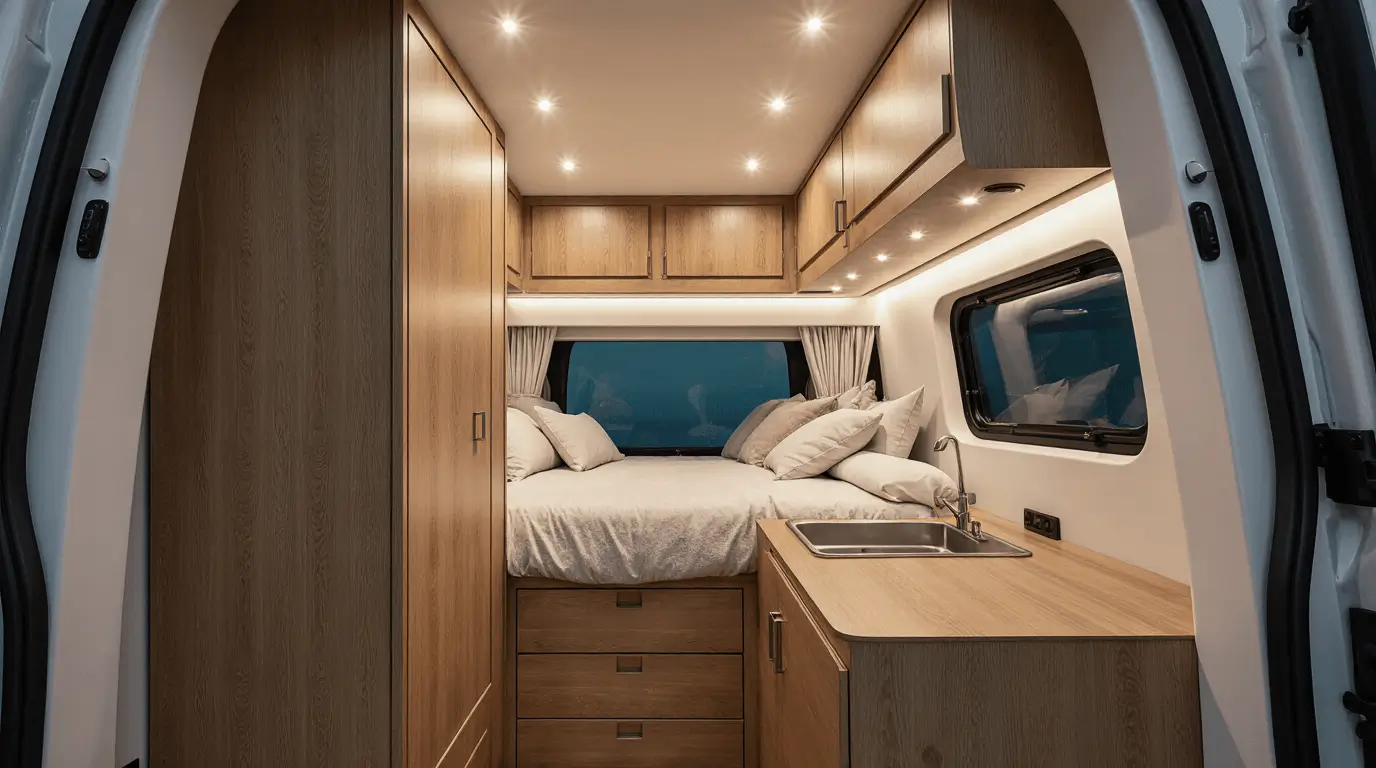
Multi-functional furniture transforms how space is used. Beds that convert into seating or tables that fold away are essential.
This adaptability keeps the interior open and versatile throughout the day.
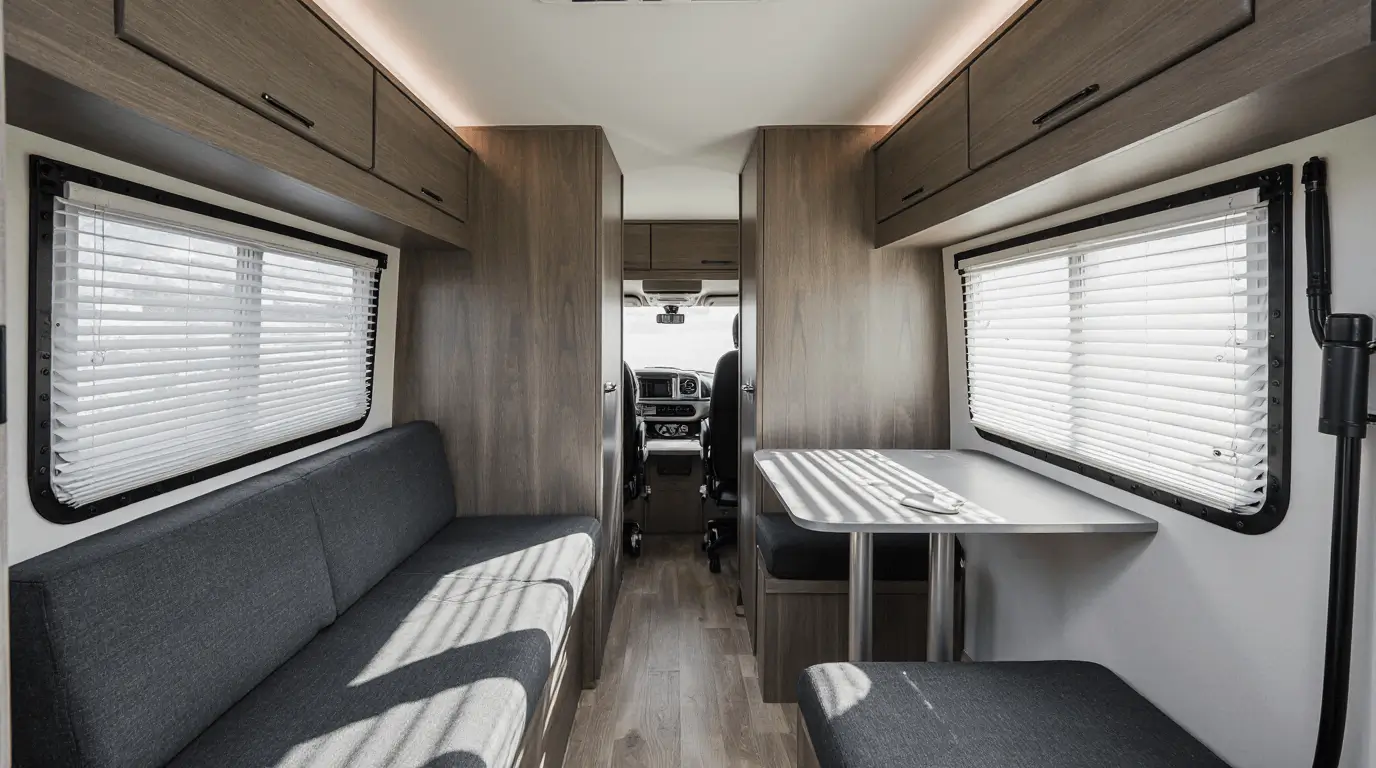
Micro Camper Interior Sleeping Arrangements
Comfortable sleeping setups are possible even in tight spaces. Platform beds with storage underneath are a popular choice.
Fold-out beds or hammock-style solutions work well for ultra-compact builds.
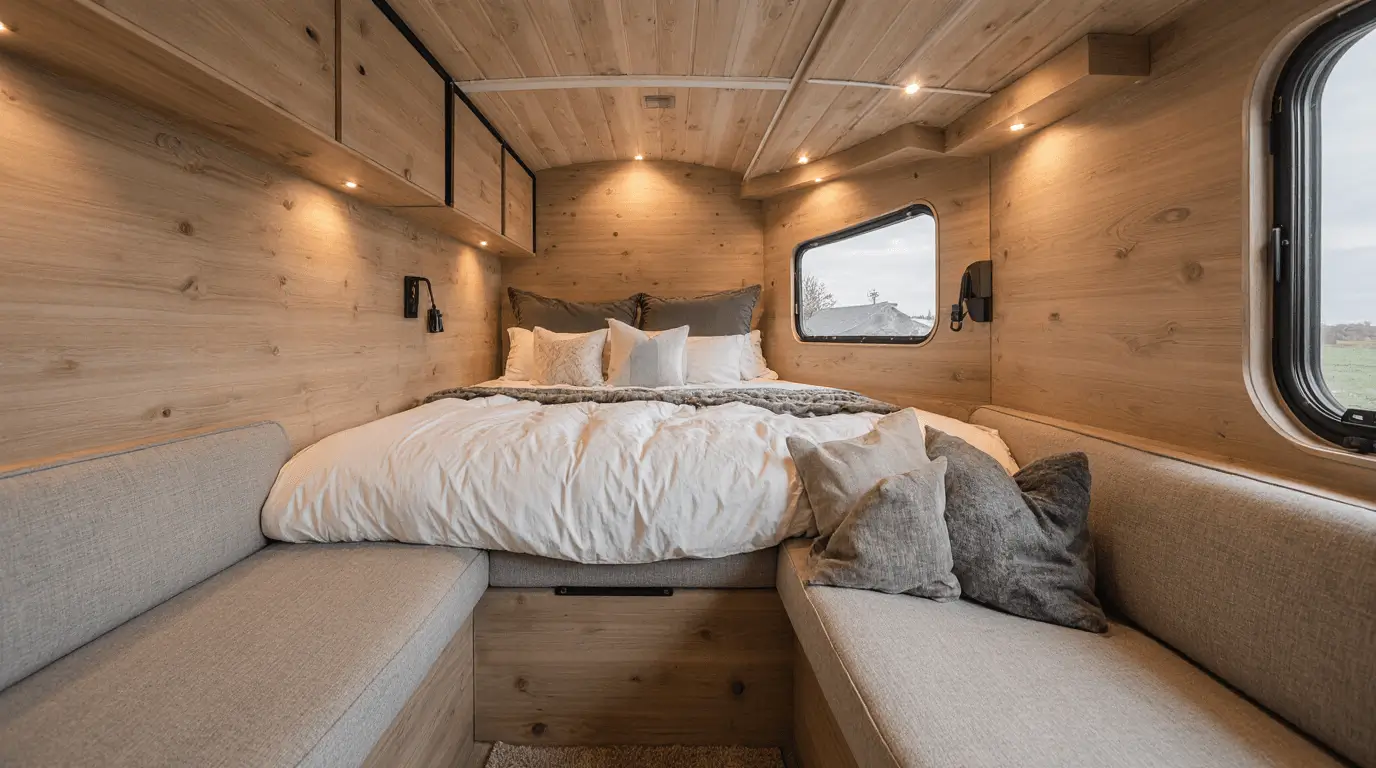
Micro Camper Interior Kitchenette Design
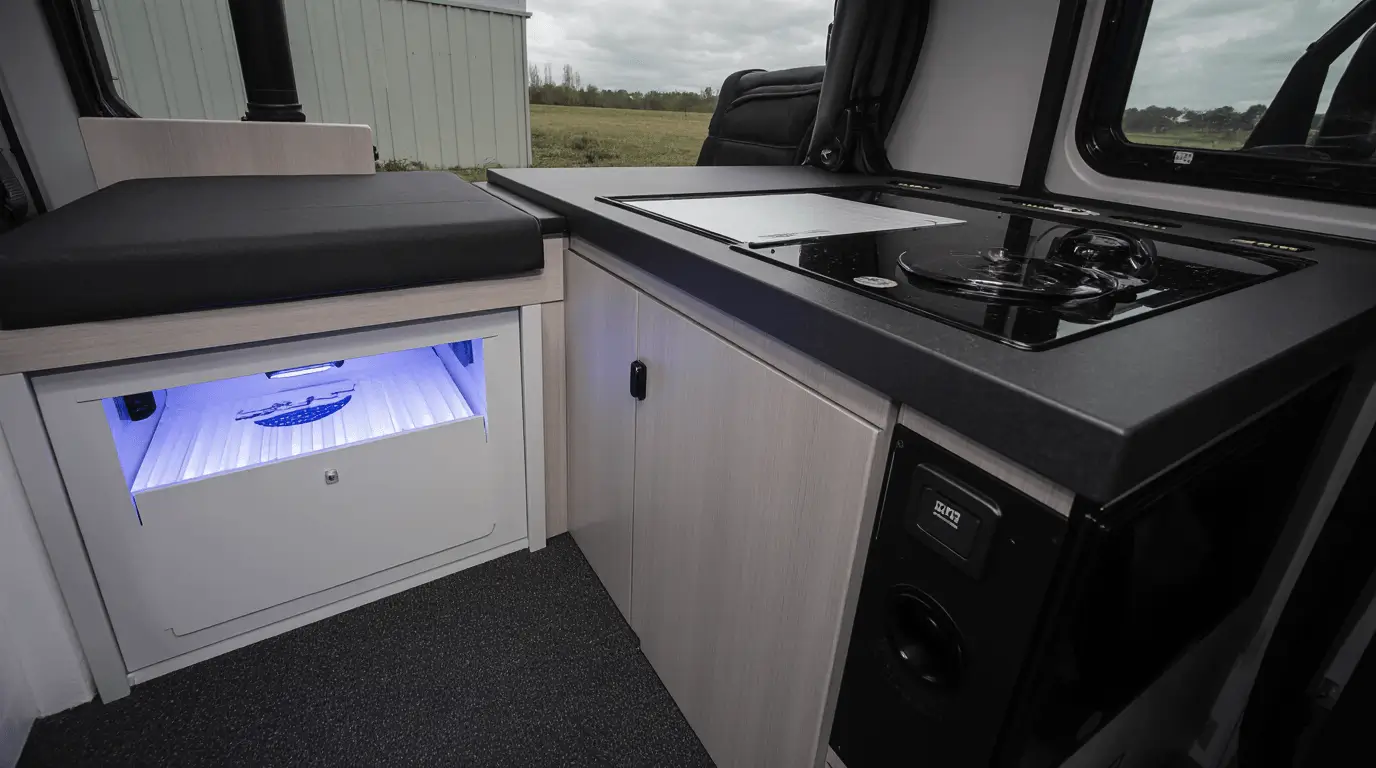
A compact kitchenette should include only essentials—portable stove, small sink, and compact storage.
Efficiency and accessibility are more important than size.
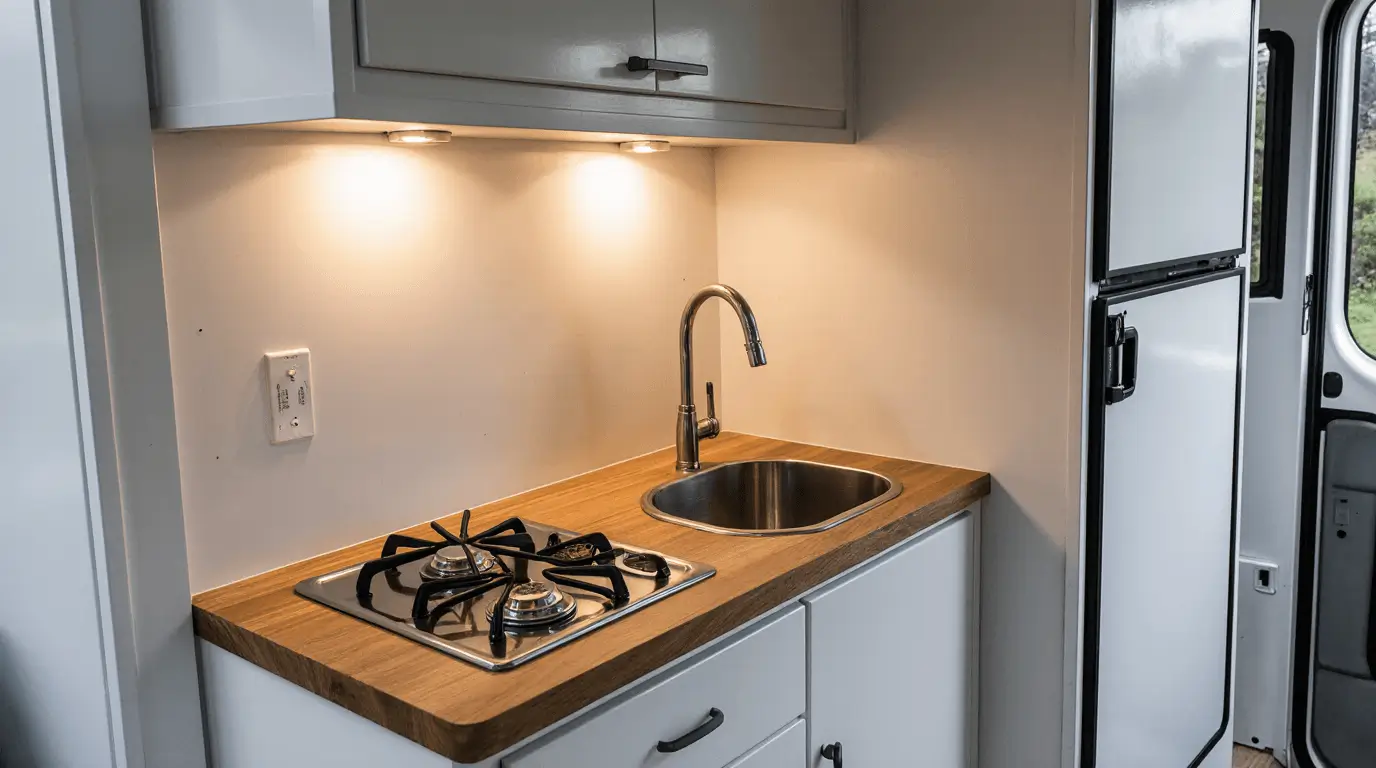
Micro Camper Interior Lighting Design
Lighting dramatically impacts how spacious a micro camper interior feels. Use layered lighting—ambient, task, and accent.
LED strips and warm tones create depth and comfort.
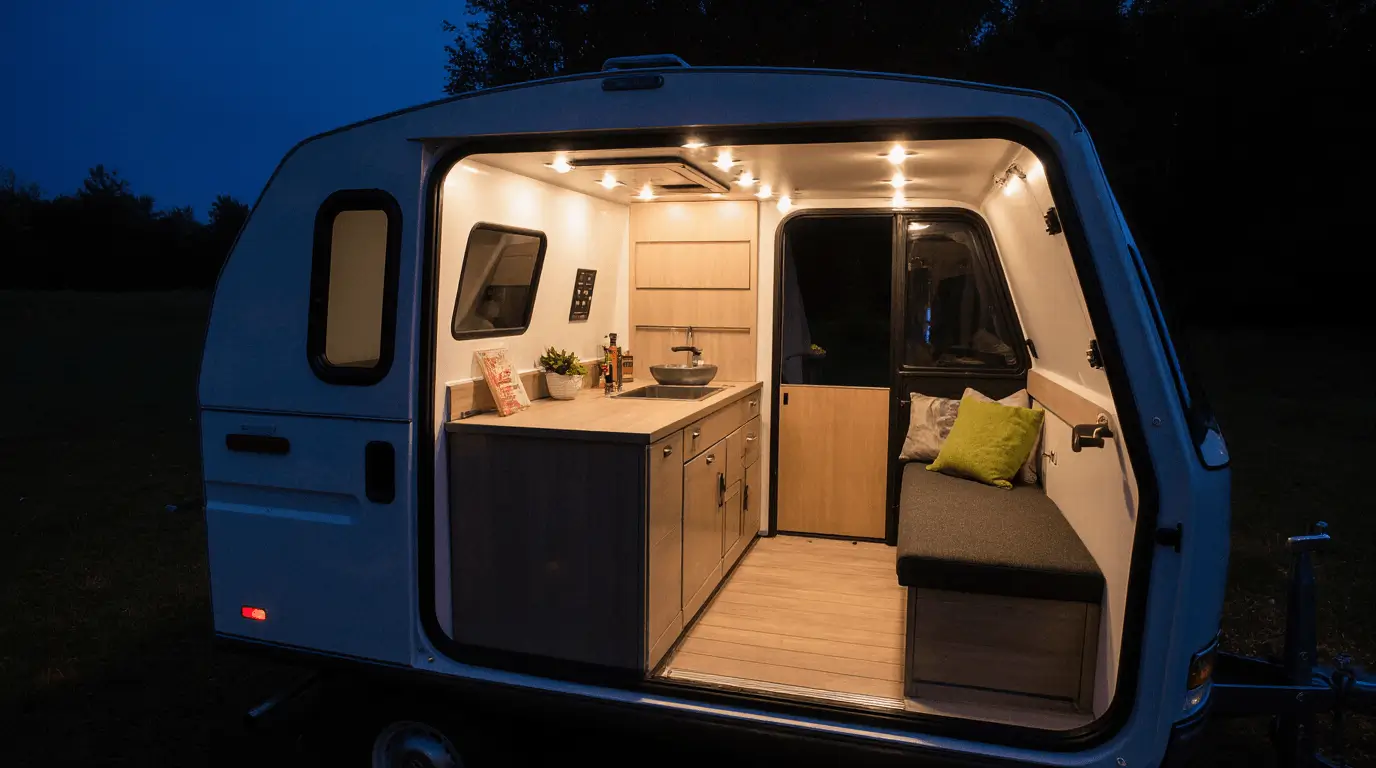
Natural Materials in Micro Camper Interior
Using wood, linen, and natural textures adds warmth and reduces the “cramped” feeling.
These materials create a connection to nature, enhancing the travel experience.
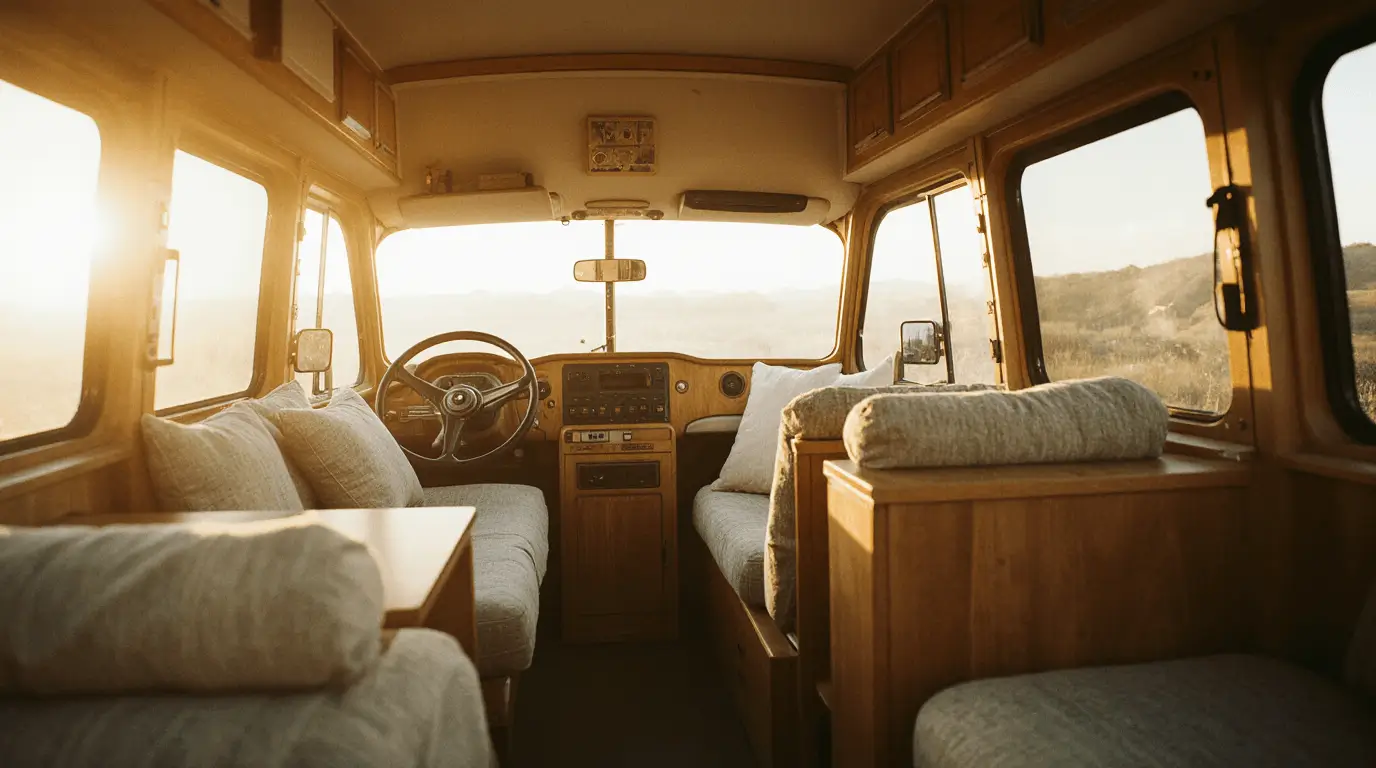
Micro Camper Interior Color Schemes
Light colors make small spaces feel larger. Whites, soft greys, and pastels reflect light and open up the interior.
Accent colors can be added through textiles or small décor items.
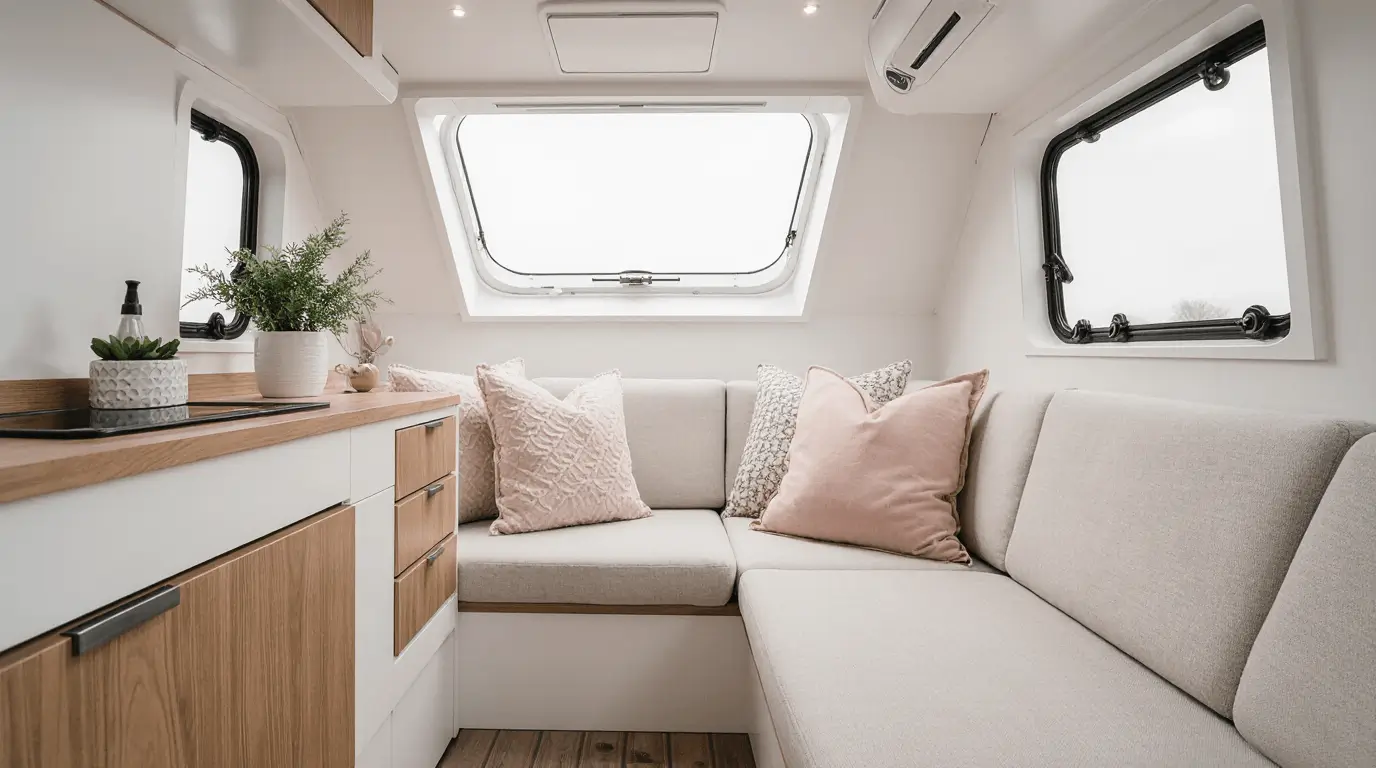
Micro Camper Interior Ventilation and Airflow
Good airflow is essential for comfort. Roof vents, windows, and fans help regulate temperature and humidity.
Proper ventilation also prevents condensation issues.
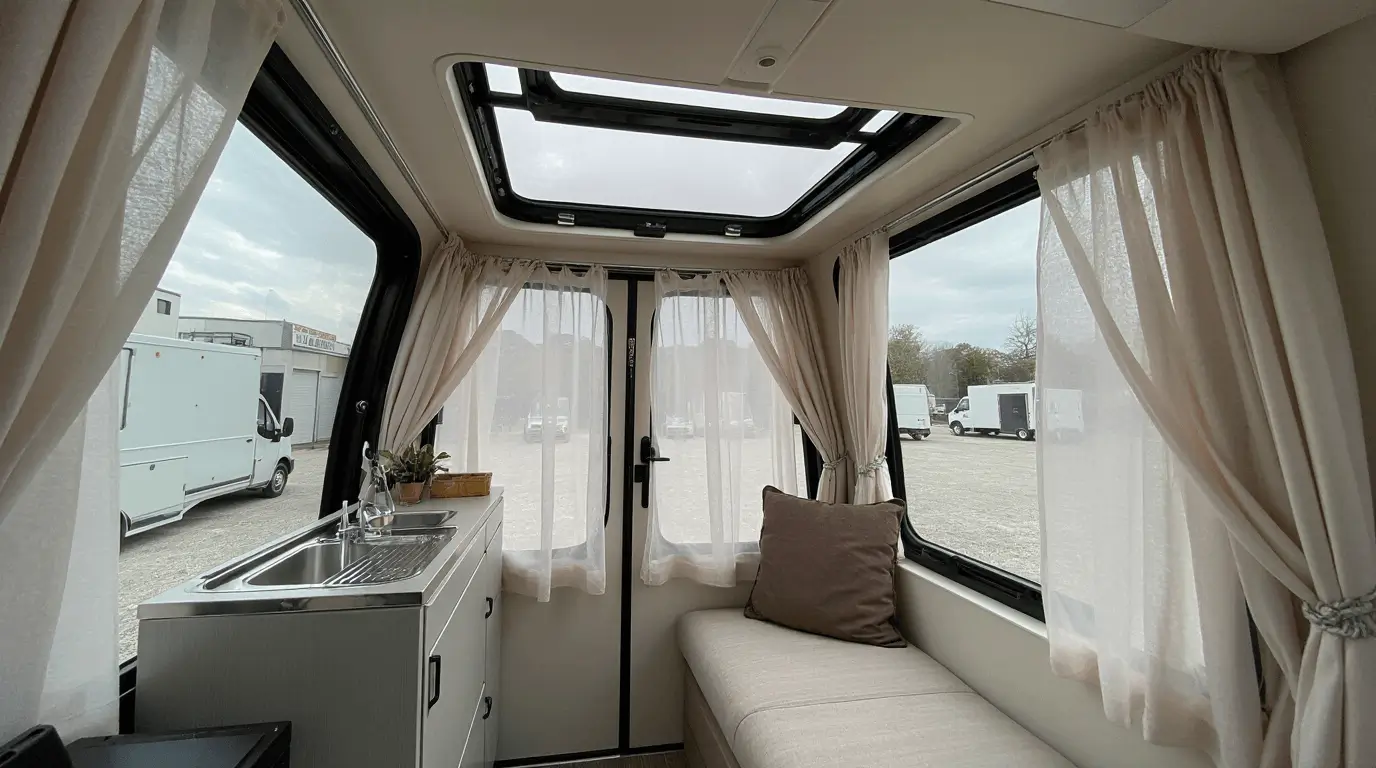
Micro Camper Interior Privacy Solutions
Privacy can be achieved with curtains, sliding panels, or window covers.
Even in small spaces, separating areas improves comfort and usability.
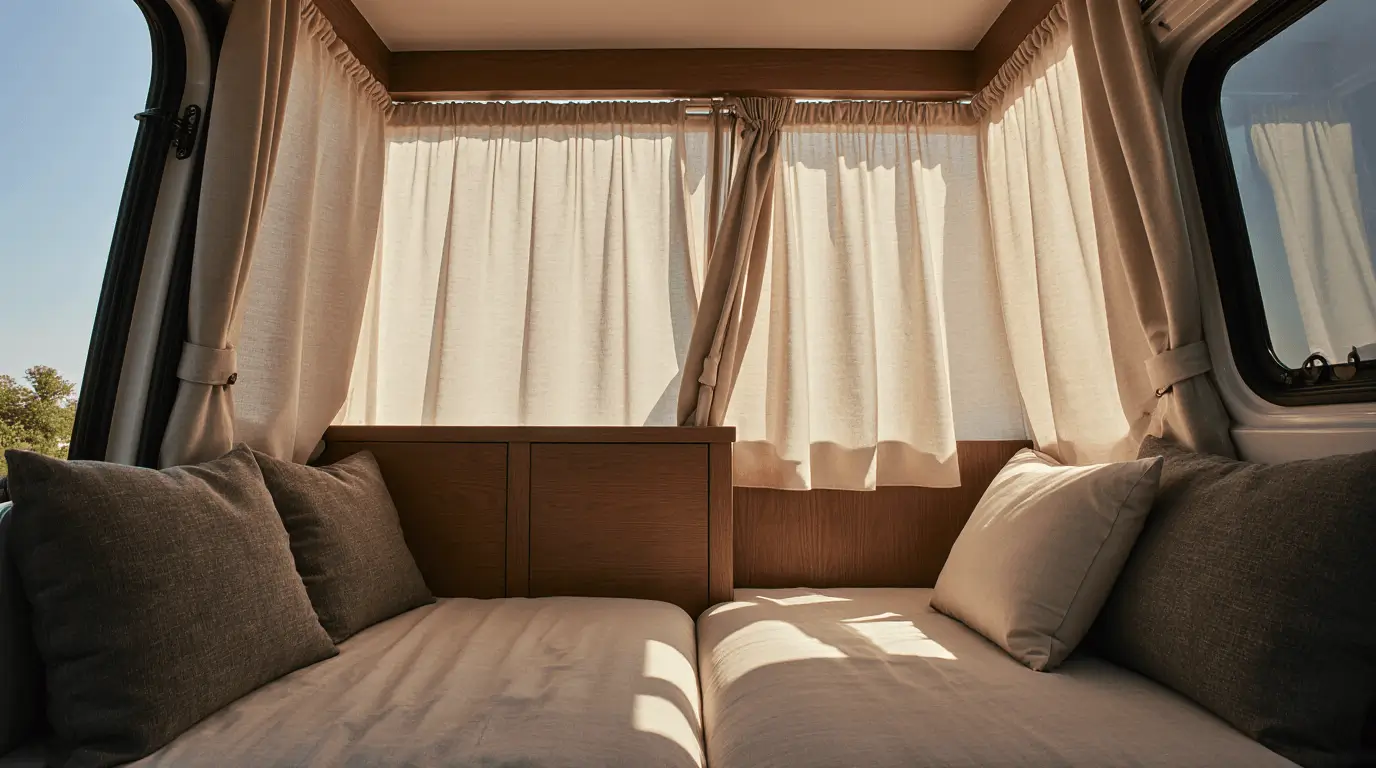
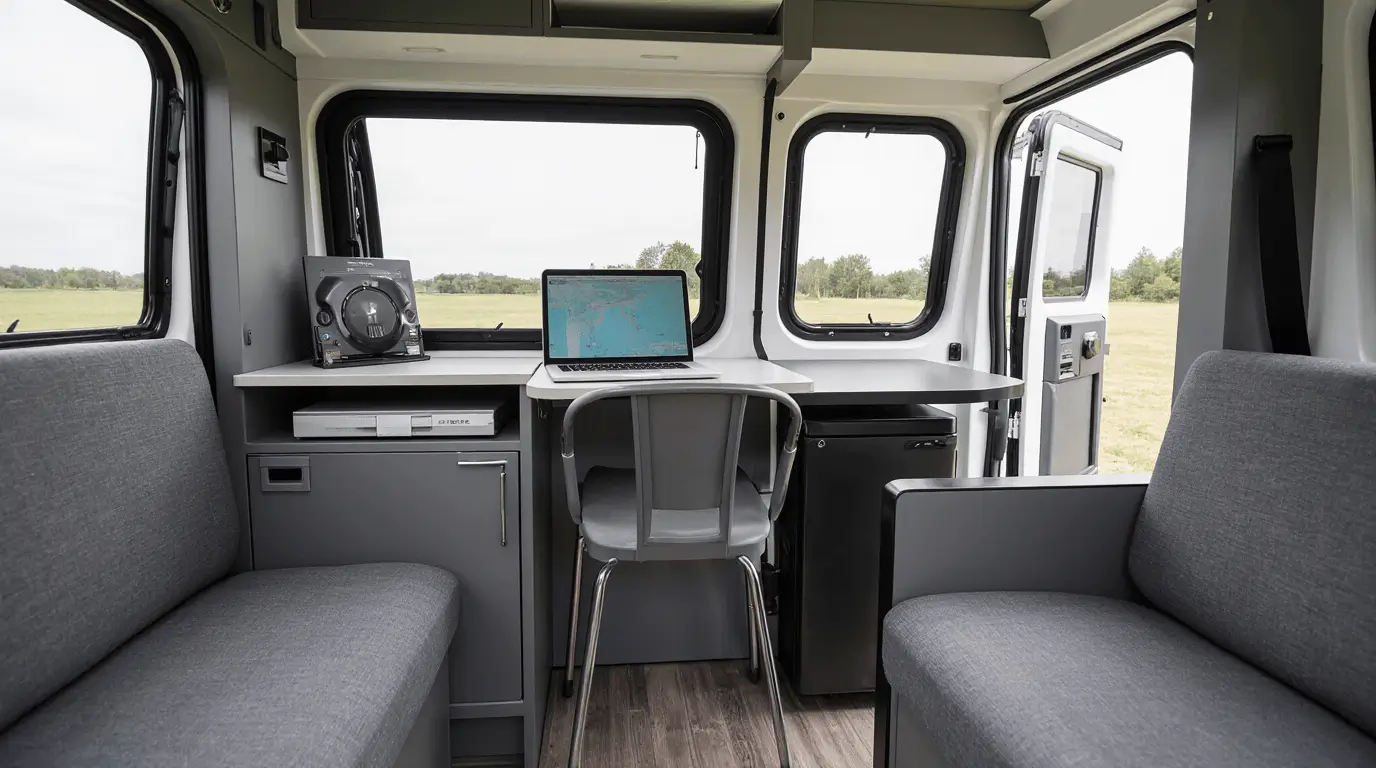
Micro Camper Interior Workspace Integration
For digital nomads, integrating a small workspace is crucial. Foldable desks or slide-out surfaces work well.
Keep the setup minimal to avoid clutter.
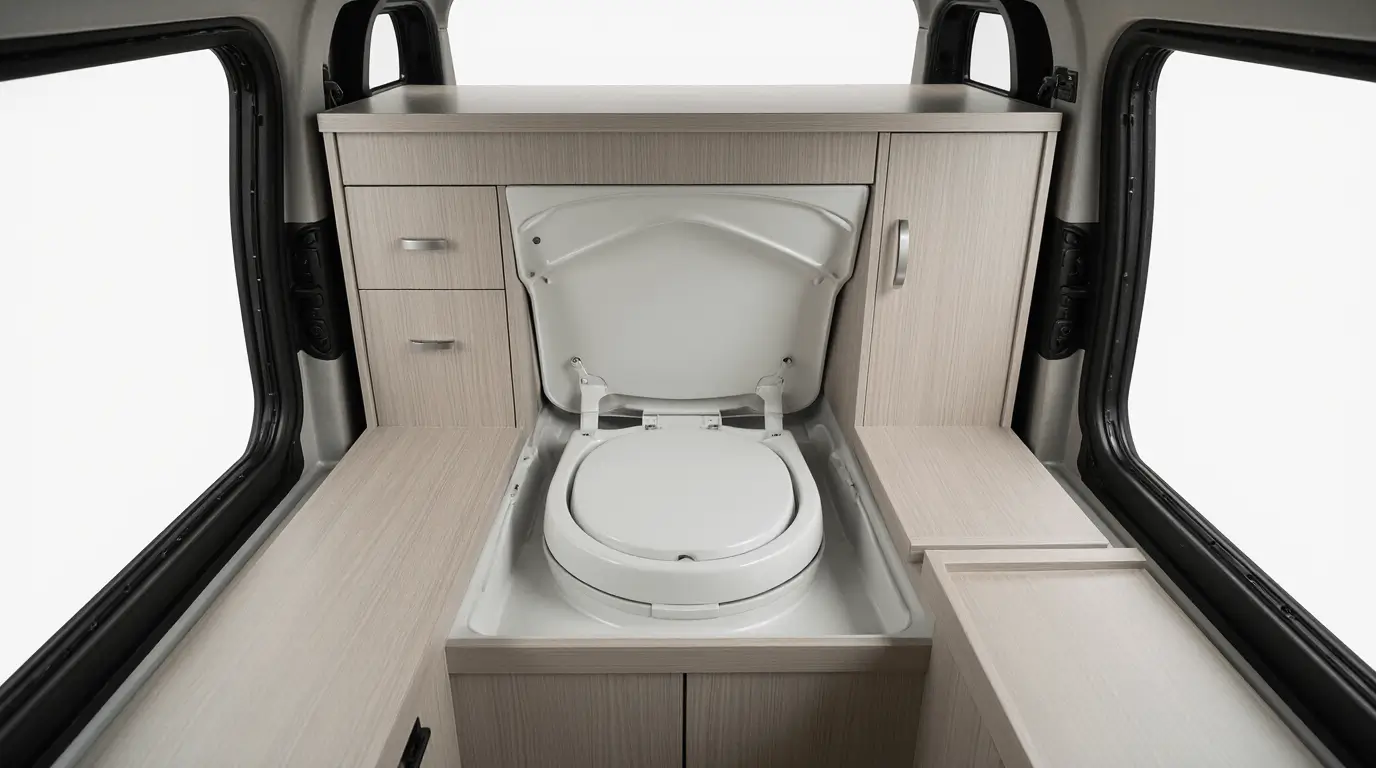
Micro Camper Interior Bathroom Alternatives
Full bathrooms are rare, but compact solutions like portable toilets or outdoor shower setups are practical.
Creative placement ensures hygiene without sacrificing space.
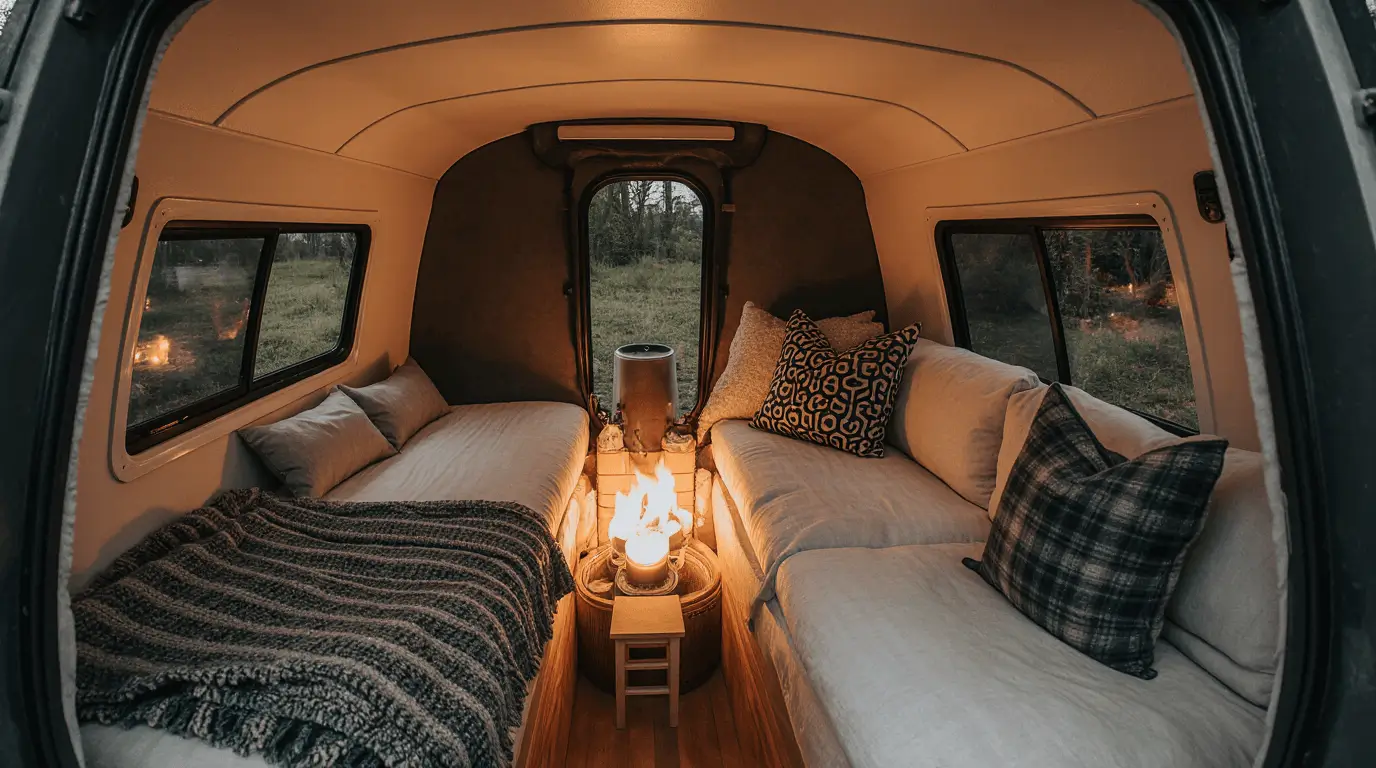
Cozy Micro Camper Interior Styling
Soft textiles, cushions, and layered fabrics make the space feel like home.
Comfort-focused styling enhances relaxation after long travel days.
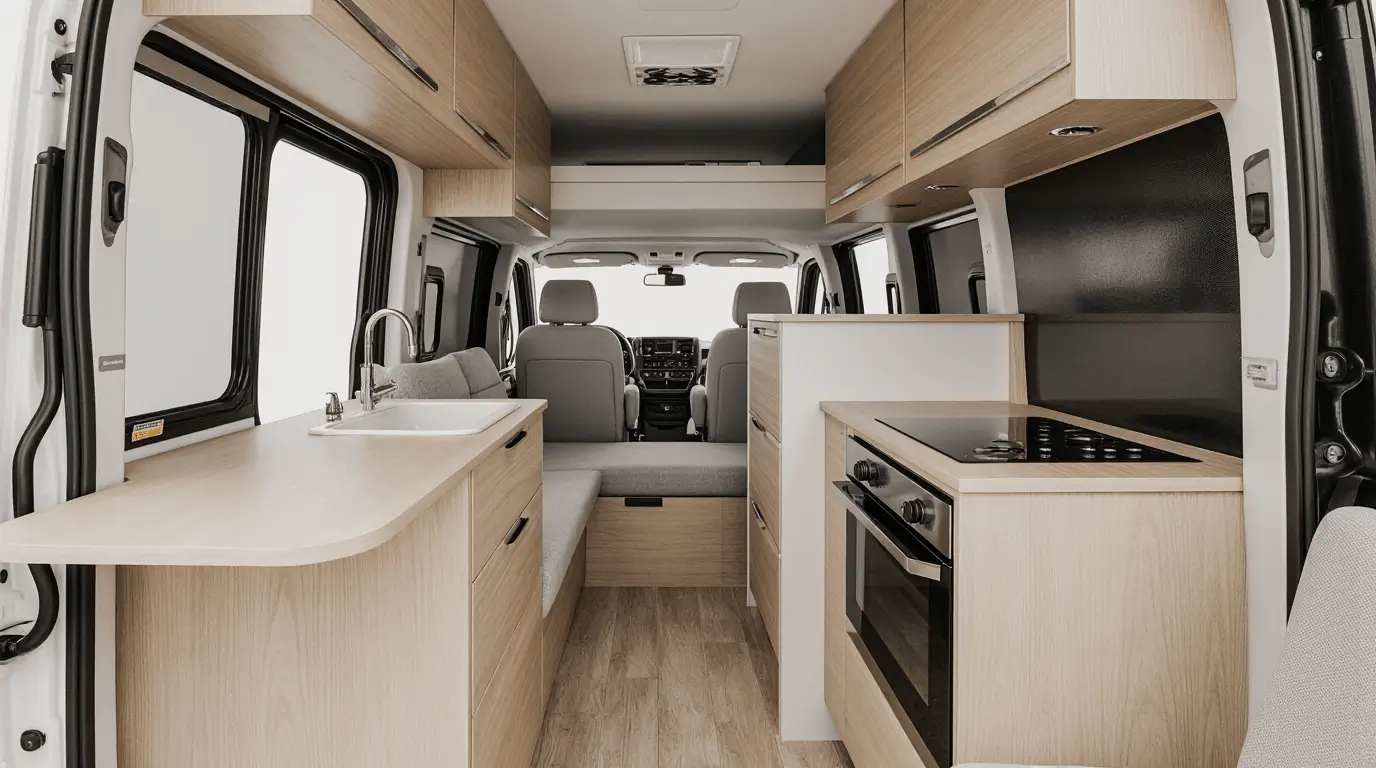
Micro Camper Interior for Small Van Conversions
Small vans require ultra-efficient design strategies. Every element must be compact and multifunctional.
Custom builds often outperform pre-made kits in tight spaces.
Smart Technology in Micro Camper Interior
Integrating smart systems like solar panels, battery management, and LED controls improves functionality.
Technology enhances independence and efficiency on the road.
Micro Camper Interior Personalization
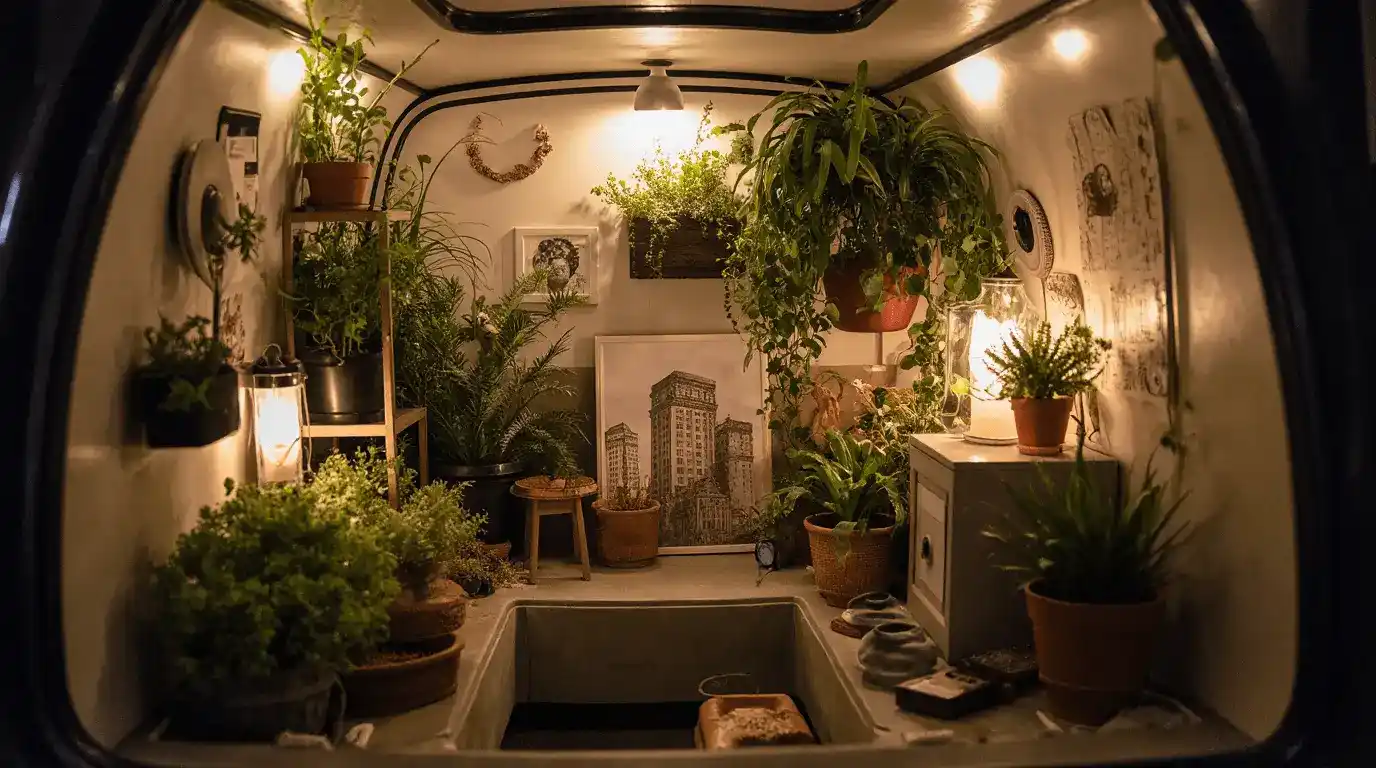
Personal touches—art, plants, or travel souvenirs—bring character to the space.
Even minimal décor can make the camper feel uniquely yours.
Conclusion
Designing a micro camper interior is ultimately an exercise in clarity—knowing what you truly need, how you want to live on the road, and how to make every inch count. The most successful interiors aren’t packed with features; they’re carefully edited spaces where each element serves a purpose while contributing to comfort and flow.
In practice, this means prioritizing adaptability over size, quality over quantity, and thoughtful layout over excess storage. When you combine multifunctional furniture, smart storage, balanced lighting, and a cohesive material palette, even the smallest camper can feel open, livable, and deeply personal. I’ve seen compact builds outperform larger conversions simply because they were designed with intention from the start.
This approach works especially well for solo travelers, couples, and minimalists who value mobility and simplicity. But even if you’re new to van life, the principles remain the same: start with your daily habits, design around them, and refine until nothing feels unnecessary. A well-executed micro camper interior doesn’t just support your journey—it enhances it.
Learn more : Park Home Interior Refurbishment for Modern Living
FAQs
- What is the most important feature in a micro camper interior?
The most important feature is a well-planned layout. If movement feels natural and each area serves multiple purposes, the entire space becomes more functional and comfortable. Poor layout, even with great materials, will always feel limiting.
- How do you make a micro camper interior feel bigger?
Use light colors, maximize natural light, and keep surfaces visually clean. Incorporating mirrors, vertical storage, and minimal décor also helps create a more open and breathable environment.
- Is it possible to include a bathroom in a micro camper interior?
A full bathroom is rare due to space constraints, but compact solutions like portable toilets or outdoor shower setups are very common. The key is integrating them discreetly so they don’t disrupt the living space.
- What type of furniture works best in a micro camper interior?
Convertible and multi-functional furniture is ideal. Think foldable beds, slide-out tables, and seating with hidden storage—pieces that adapt throughout the day without taking up extra space.
- How much storage is enough in a micro camper interior?
Enough storage means having a designated place for essentials without overcrowding the space. It’s less about quantity and more about smart organization—using vertical space, hidden compartments, and modular solutions.
- Can a micro camper interior be comfortable for long-term travel?
Yes, absolutely—if it’s designed around your lifestyle. Comfort comes from usability, airflow, lighting, and a good sleeping setup. A smaller, well-designed space can often feel more efficient and easier to maintain over time.
- Should I use a conversion kit or build a custom micro camper interior?
Conversion kits are convenient and faster to install, but custom builds offer better optimization for your specific needs. If your space is extremely limited, a tailored design usually delivers better results in both function and comfort.



One Response