
Introduction
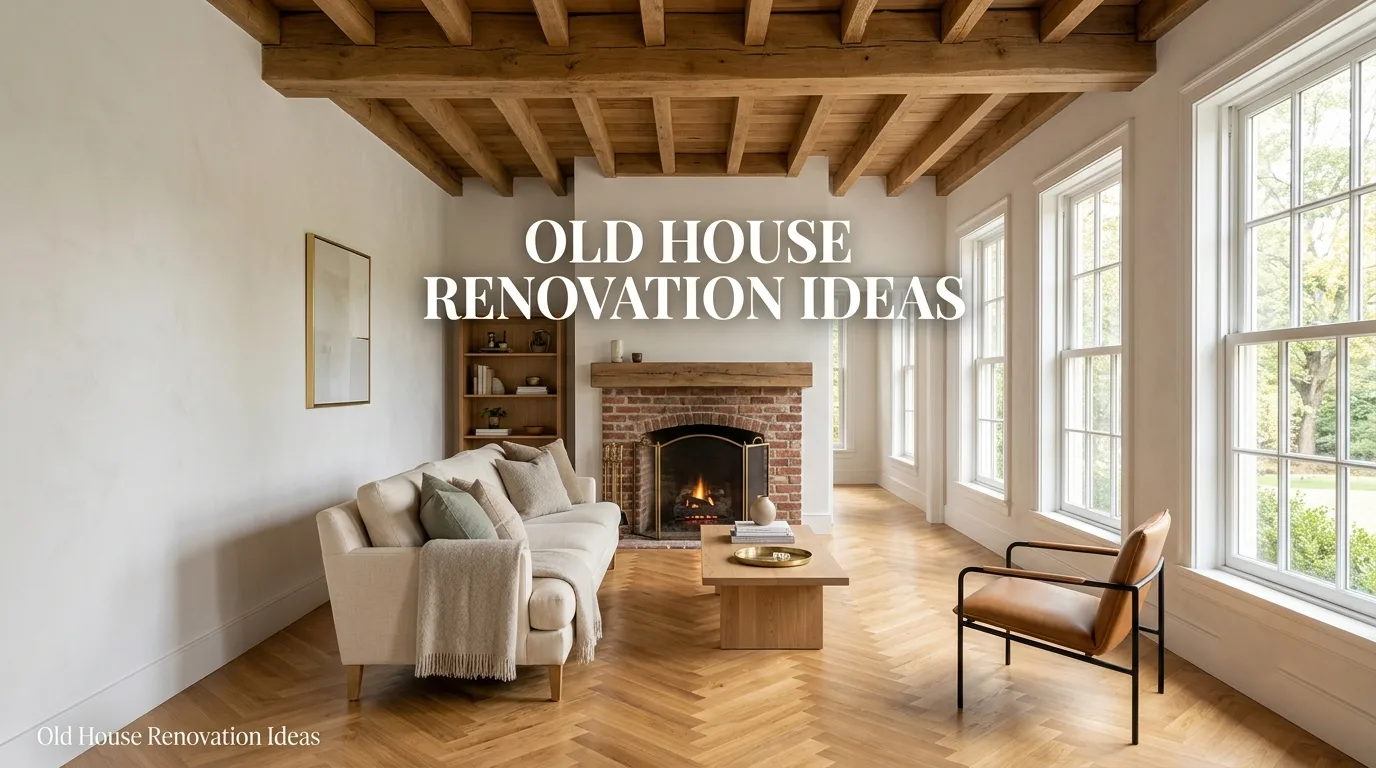
Old house renovation ideas tend to fall into two camps: people who want to erase every trace of age from a property, and people who want to honor the bones of the house while making it livable for modern life. The second approach almost always produces the better result. A house built decades ago carries proportions, materials, and craftsmanship that are expensive or impossible to replicate today — thick plaster walls, solid wood doors, original moldings. The goal of a thoughtful renovation is not to fight these features but to work with them, repairing what’s worn, replacing what’s failed, and updating what no longer serves the way people actually live.
Having walked through dozens of older homes in various stages of repair, one pattern shows up again and again: the projects that age well are the ones that respect the original architecture first and decorate second. A renovation that starts with structural honesty — fixing wiring, plumbing, insulation, and water damage — gives every later design decision something solid to stand on. Skipping straight to paint colors and light fixtures on a house with hidden moisture or foundation issues only delays a more expensive fix later.
This guide breaks the topic into clear, practical clusters covering rooms, budgets, finishes, and planning decisions, so whether the project is a full gut renovation or a weekend refresh, there’s a starting point that matches the scope, timeline, and budget at hand.
Old House Renovation Ideas for the Kitchen
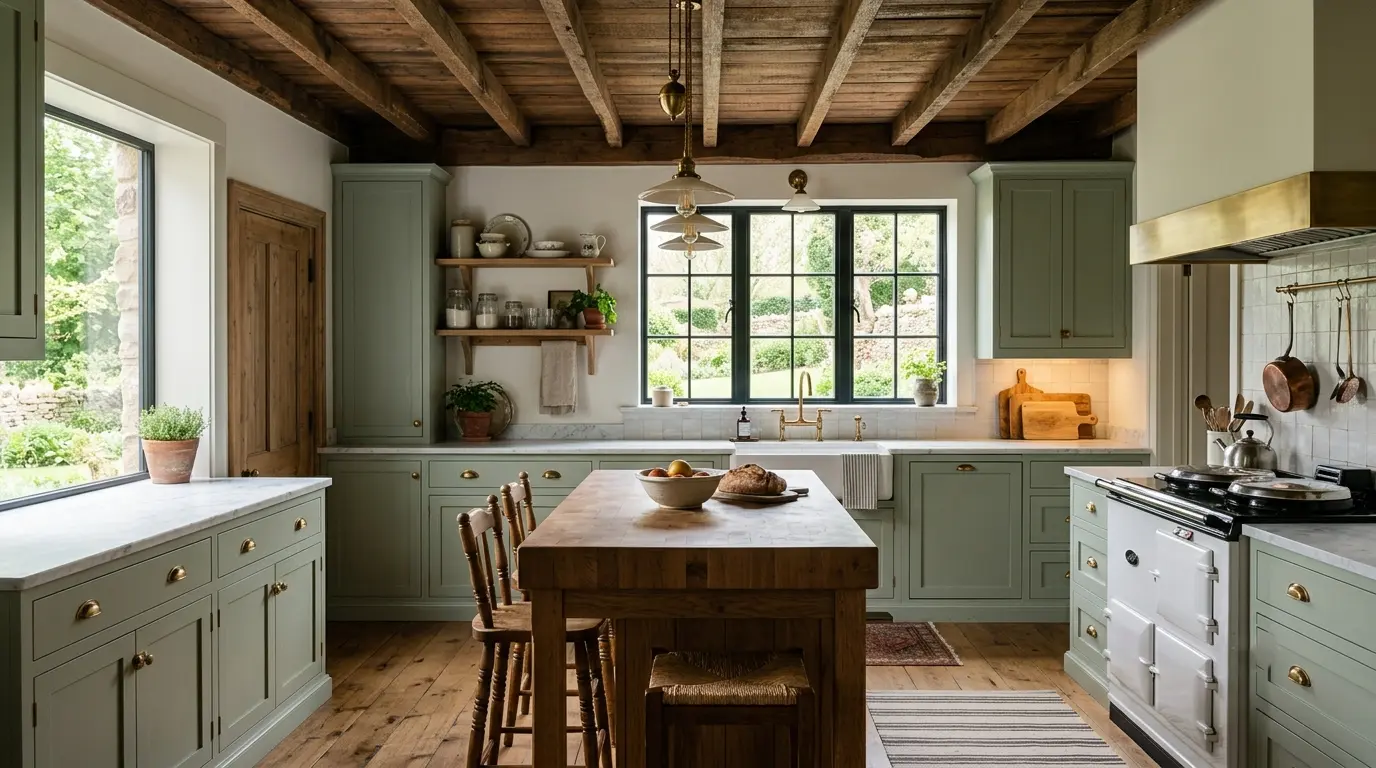
The kitchen is usually the least original room left in an old house, since decades of past owners have already replaced cabinets and appliances. This makes it the easiest place to introduce modern function — better lighting, more counter space, updated plumbing — without erasing historic character elsewhere in the home. Keeping the room’s original window placement and ceiling height usually does more for character than any single finish choice.
Old House Renovation Ideas for the Bathroom
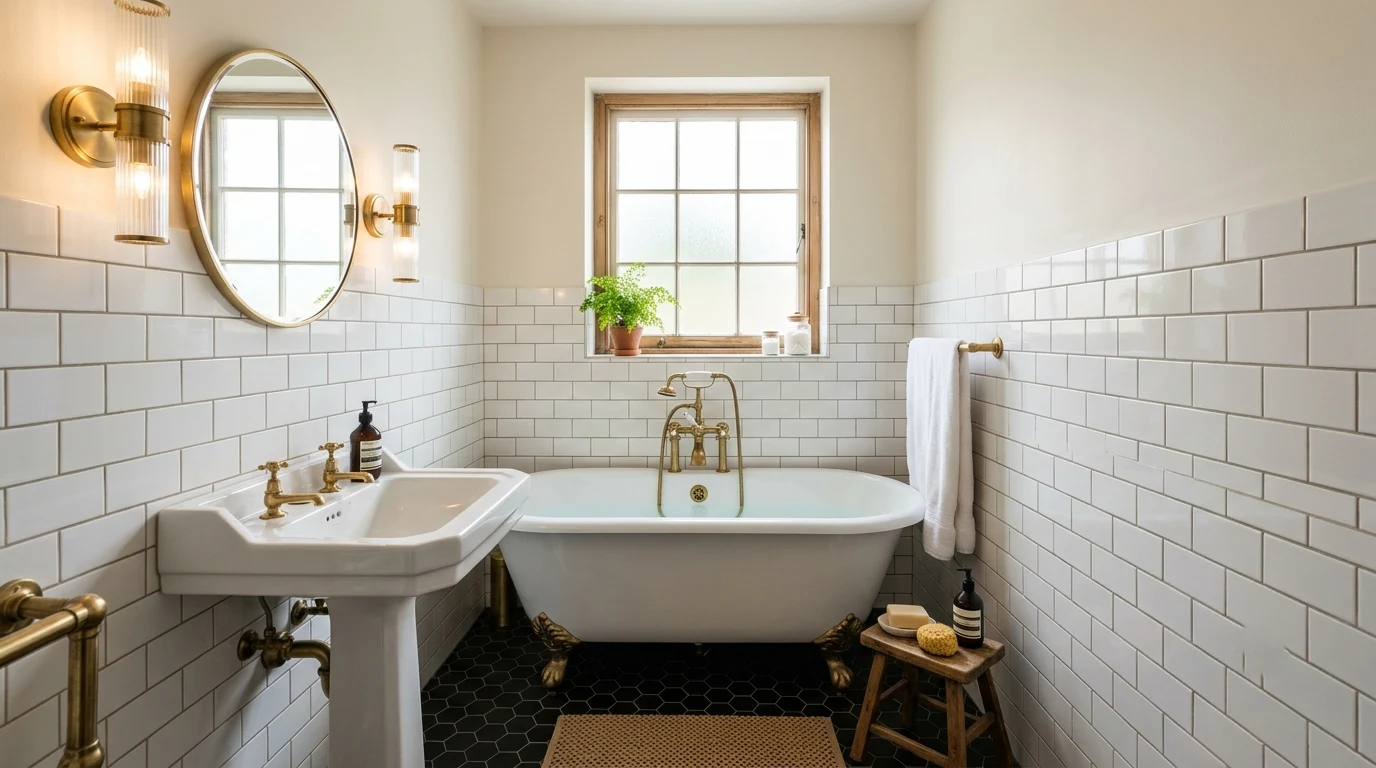
Original bathrooms in older homes are often the smallest, dampest, and most outdated rooms in the house, which is why they benefit the most from a full renovation. Updating waterproofing, ventilation, and plumbing lines prevents the rot and mold issues that plague older bathrooms long-term. Reusing the existing footprint where possible keeps costs down while still allowing for a completely modern look.
Simple Old House Renovation Ideas for the Living Room
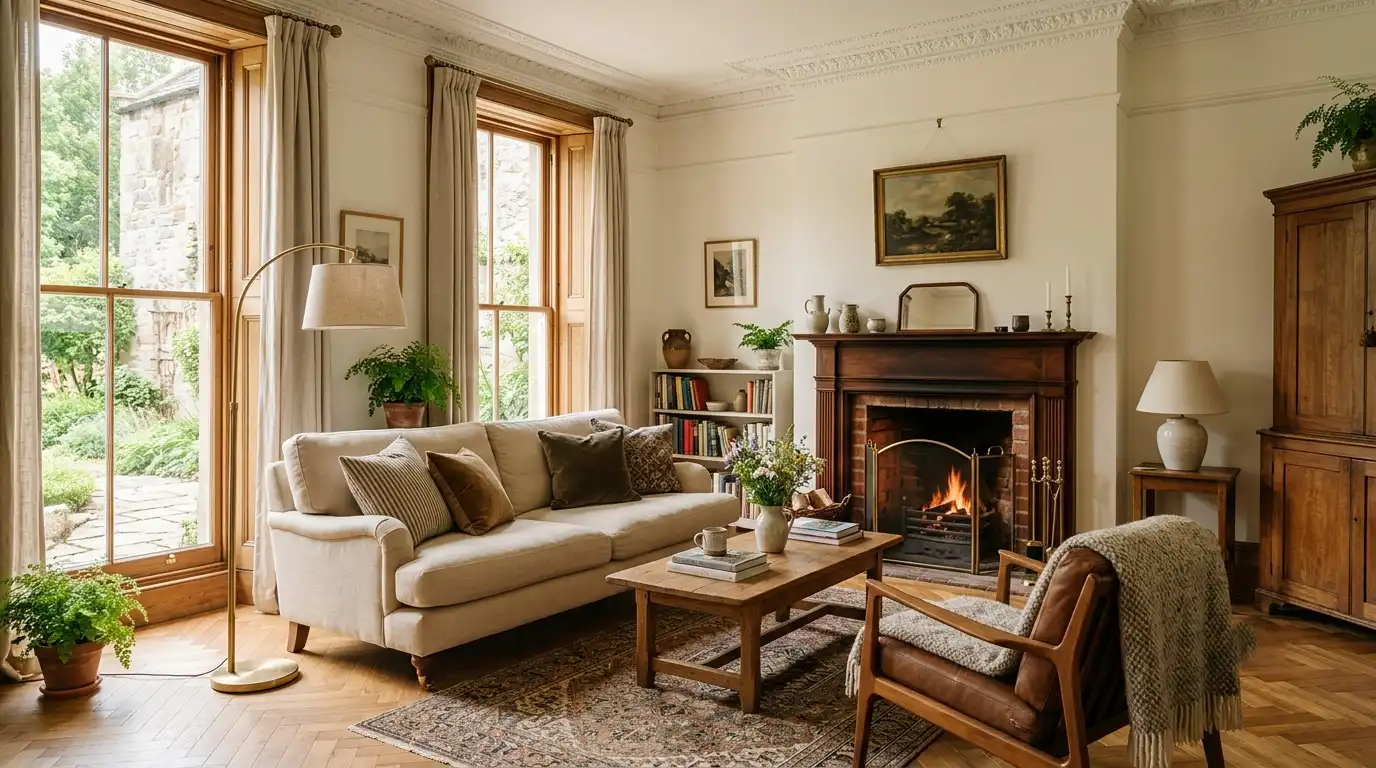
Living rooms in older houses often already have strong bones — crown molding, picture rails, or a fireplace mantel — that newer homes lack entirely. The simplest and most effective renovation move here is restoring these original details rather than covering them, then layering in updated lighting and a neutral palette that lets the architecture lead. This approach delivers a high-impact result without major structural work.
Small Renovation Ideas for Old Homes — Entryways and Hallways
Entryways in old homes are frequently narrow, dim, and overlooked, yet they set the tone for the entire house. Small renovation ideas here include widening doorways slightly where structurally possible, adding a built-in bench or hooks, and improving lighting with a statement fixture. These changes require minimal demolition but make a noticeable difference in daily use.
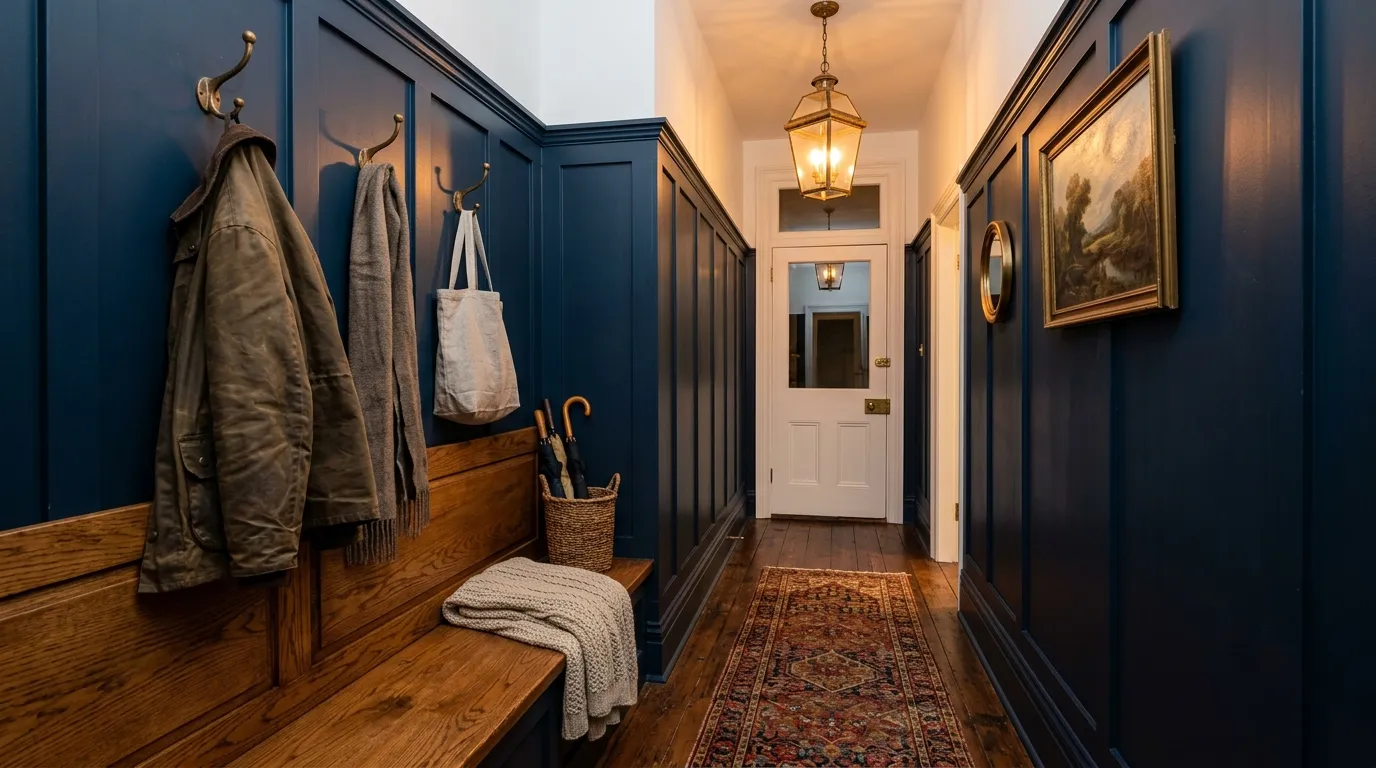
How to Renovate an Old House on a Low Budget — Paint and Finishes
When budget is the biggest constraint, paint and finish updates deliver the highest return per dollar spent. A fresh coat on trim, doors, and walls instantly modernizes a space without touching plumbing or structure. Choosing one or two consistent colors throughout connected rooms also makes an older, choppy floor plan feel more cohesive and intentional.
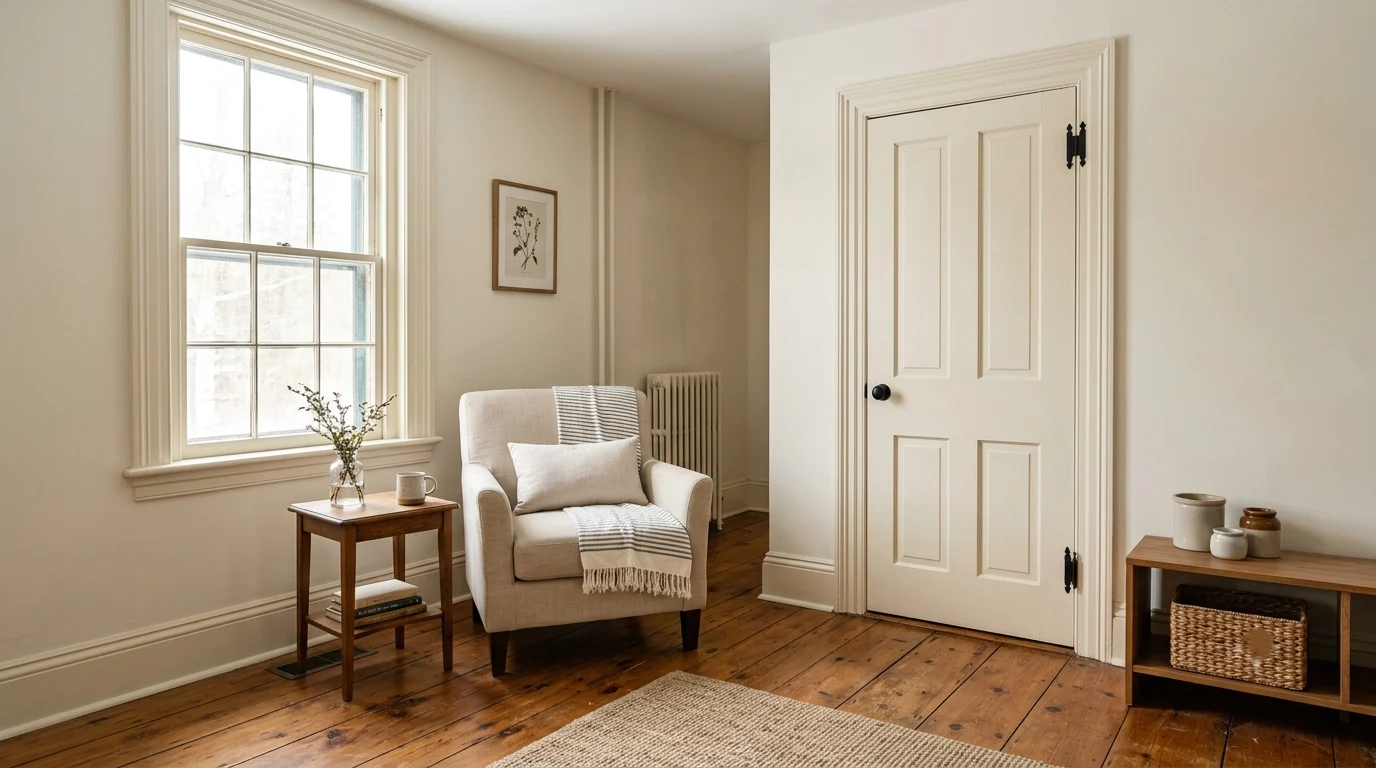
How to Renovate an Old House on a Low Budget — Smart Sequencing
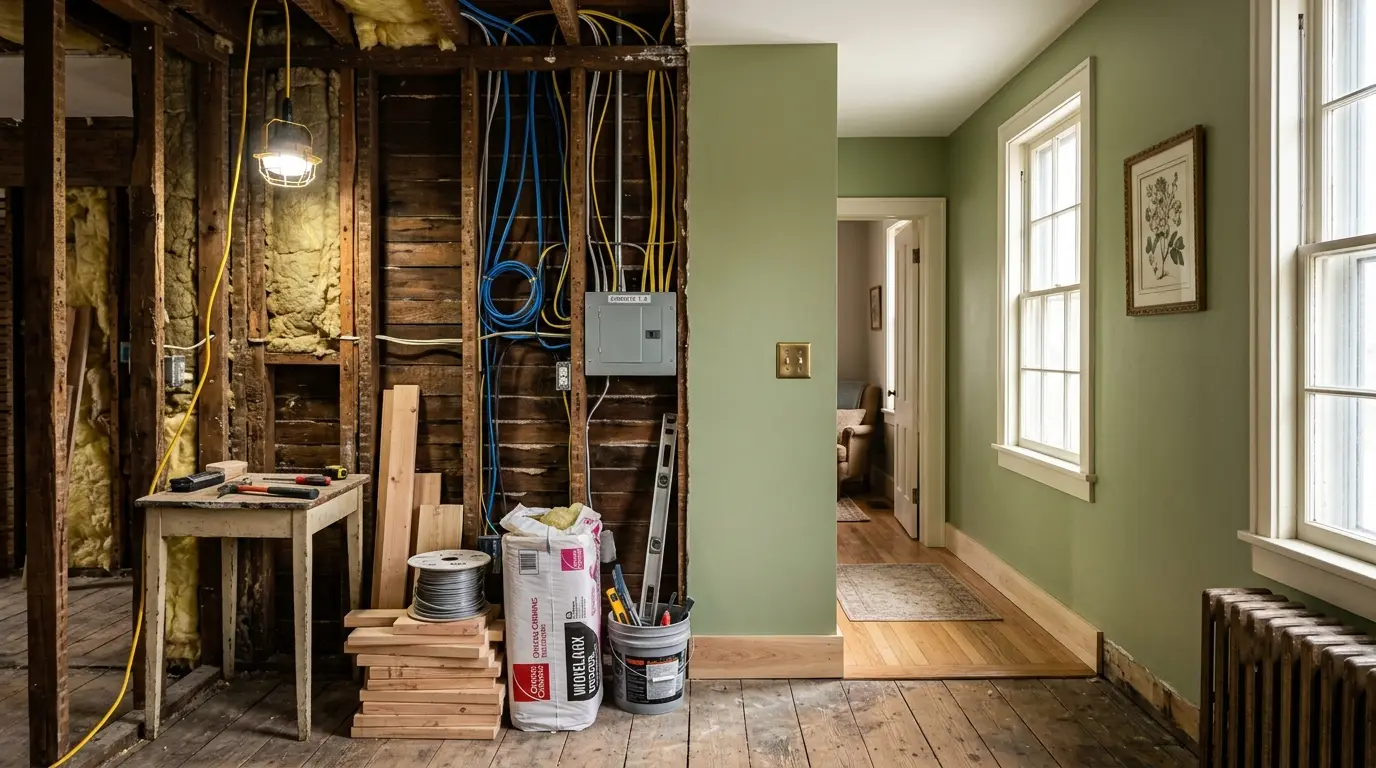
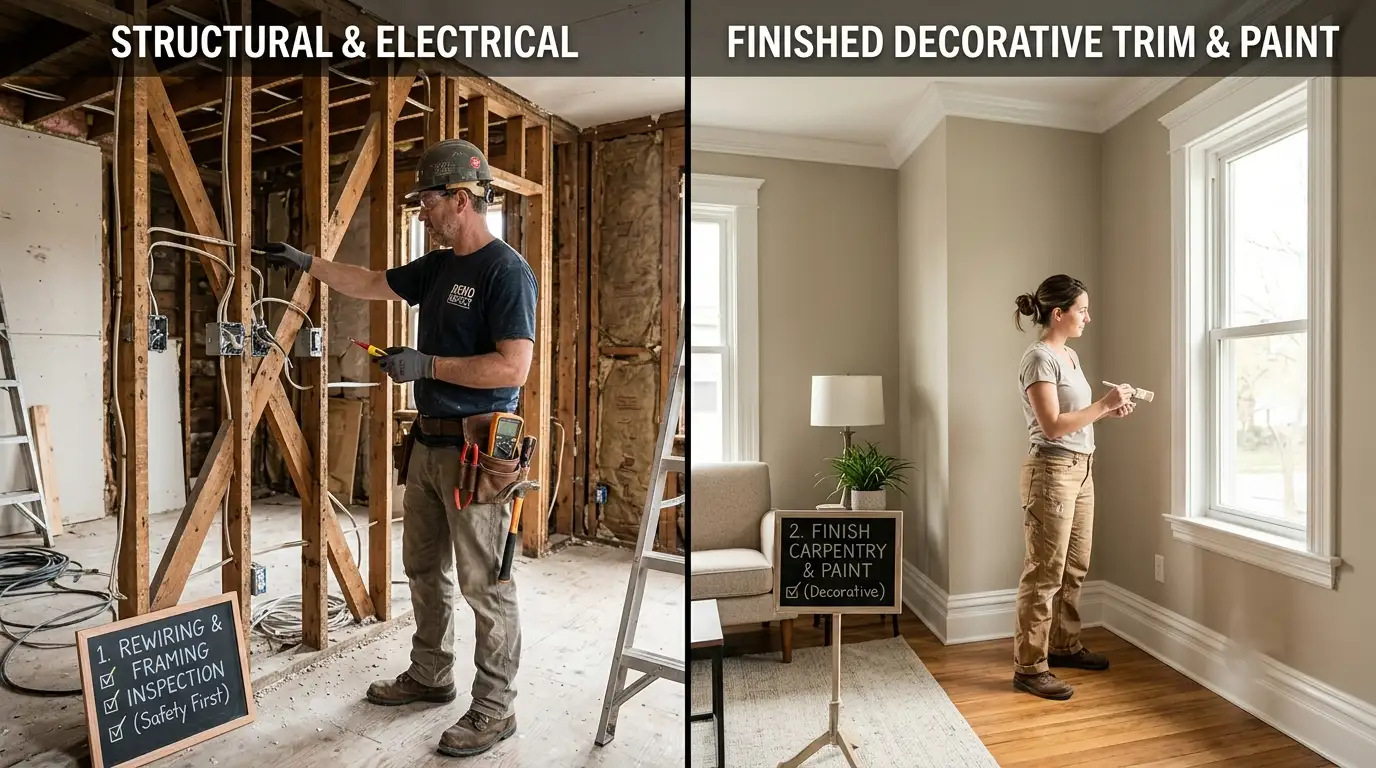
Low-budget renovations succeed when work is sequenced correctly: structural and systems repairs first, cosmetic updates last. Tackling drywall, electrical, or plumbing issues before flooring or paint prevents redoing finished work later. This order isn’t exciting, but it’s the difference between a renovation that holds up and one that needs constant patching.
Old House Renovation Ideas Before and After — Flooring
Flooring transformations are some of the most dramatic before-and-after moments in an old house renovation. Original hardwood hidden beneath old carpet or vinyl can often be sanded and refinished rather than replaced, preserving the home’s age and character while looking completely renewed. When original floors aren’t salvageable, matching plank width and finish tone to the home’s era keeps the result authentic.
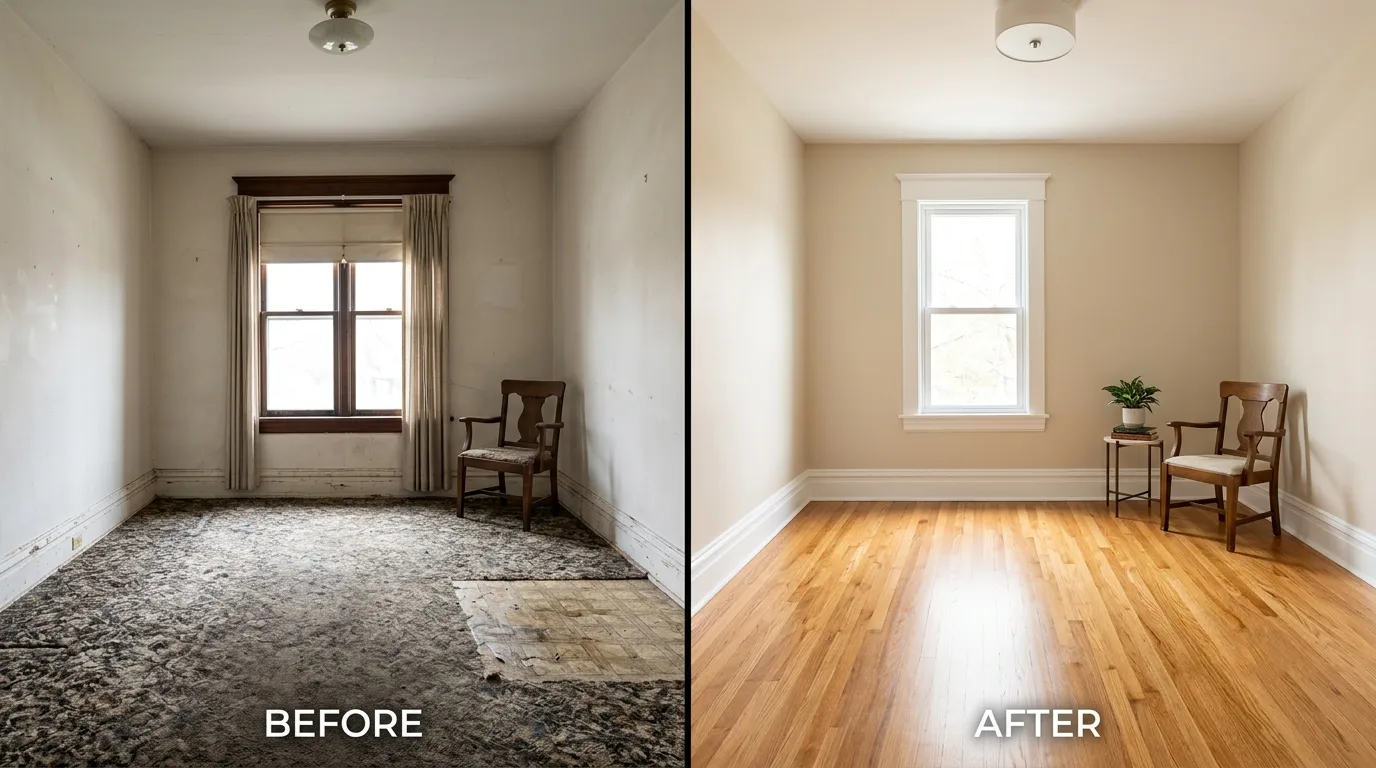
Old House Renovation Ideas Before and After — Walls and Ceilings
Beyond flooring, wall and ceiling transformations often reveal the most change for the least structural work. Removing old wallpaper, repairing plaster cracks, and reintroducing clean trim lines can take a tired, dated room and make it feel restored rather than remodeled. This is also where hidden architectural details, like original ceiling medallions, sometimes resurface.
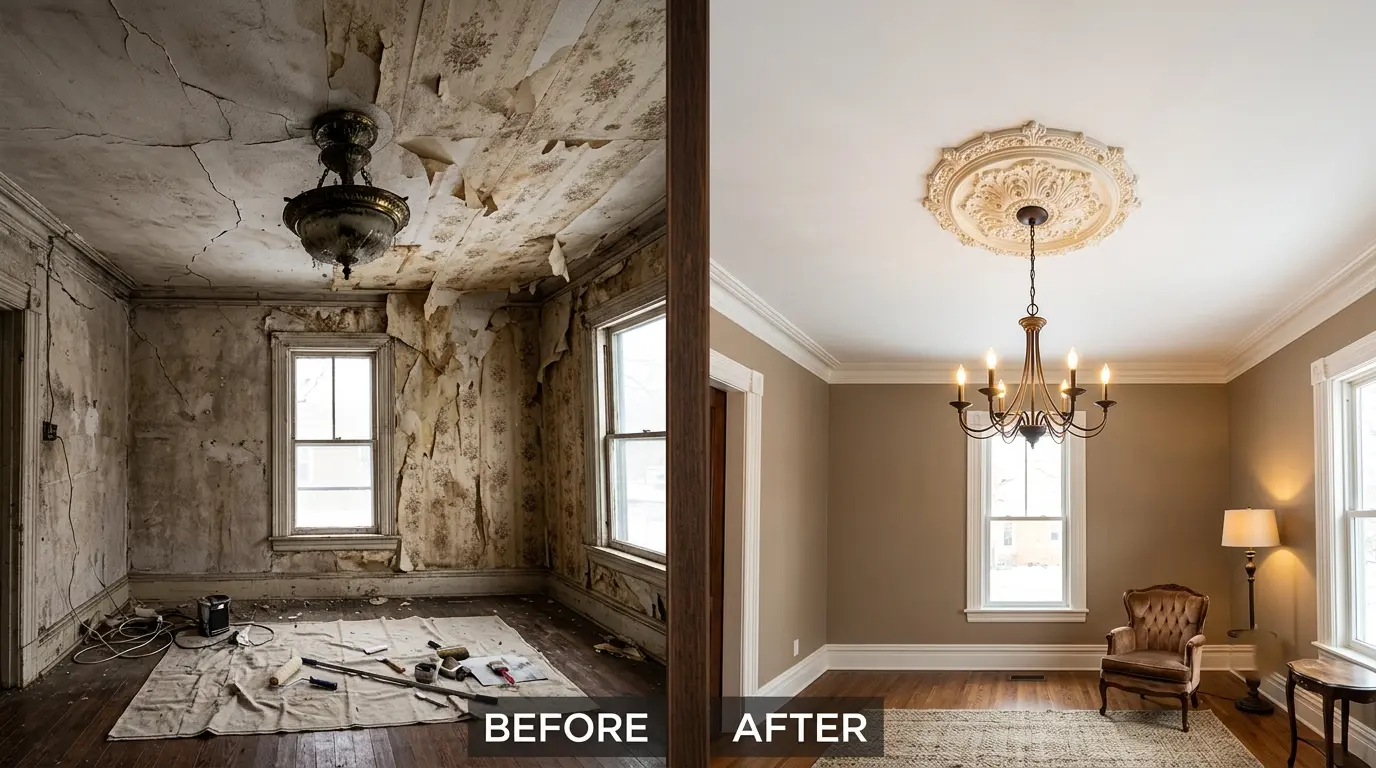
Modern Old House Renovation Ideas — Blending Old and New
Modern old house renovation ideas focus on contrast rather than imitation: pairing original architectural features with clean, contemporary furnishings and fixtures. A century-old fireplace surround next to a simple modern sofa, or original windows paired with minimalist black hardware, creates a layered look that feels current without erasing the home’s history.
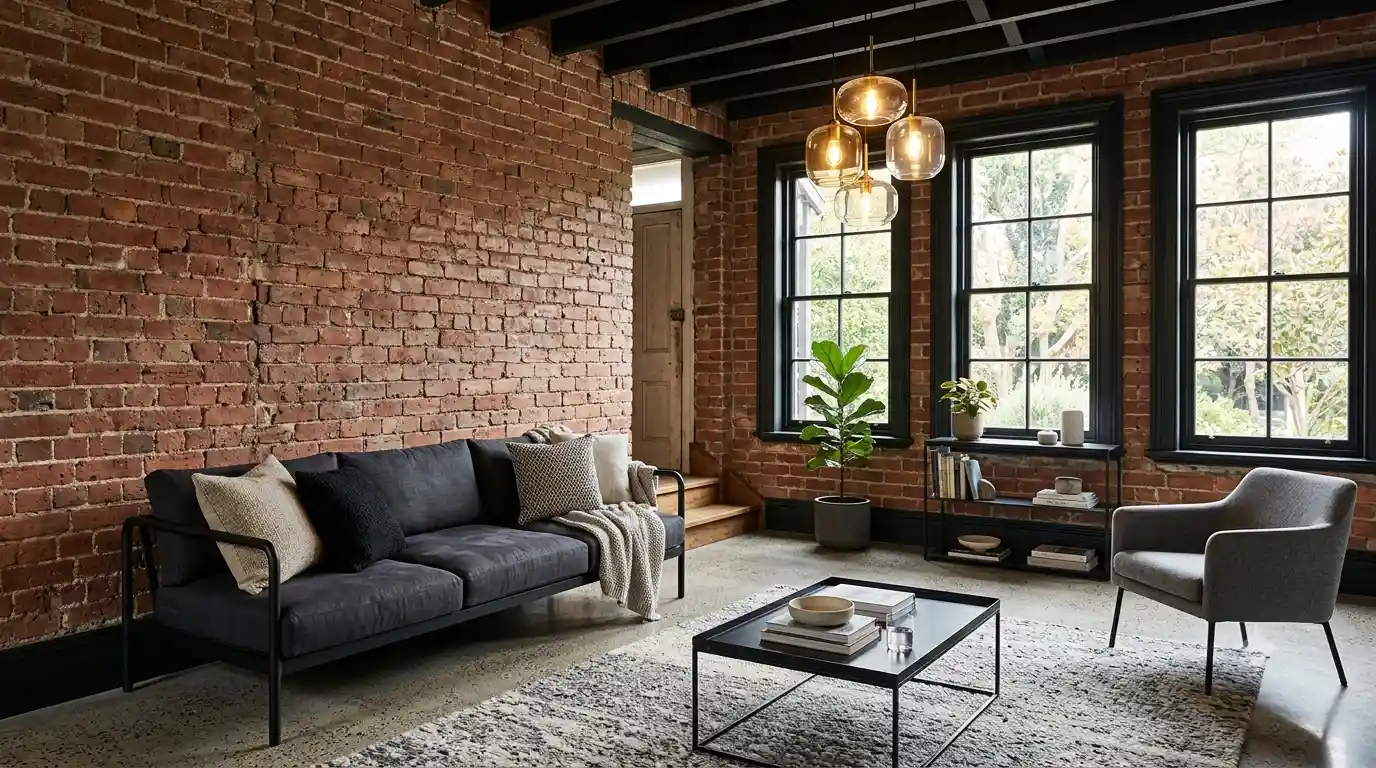
Modern Old House Renovation Ideas — Open Concept Adjustments
Many older homes were built with small, separated rooms, which can feel cramped by modern standards. A popular modern renovation move is selectively opening up non-load-bearing walls between the kitchen and dining area, improving flow while keeping structurally important walls intact. This requires careful planning with a contractor familiar with older framing methods.
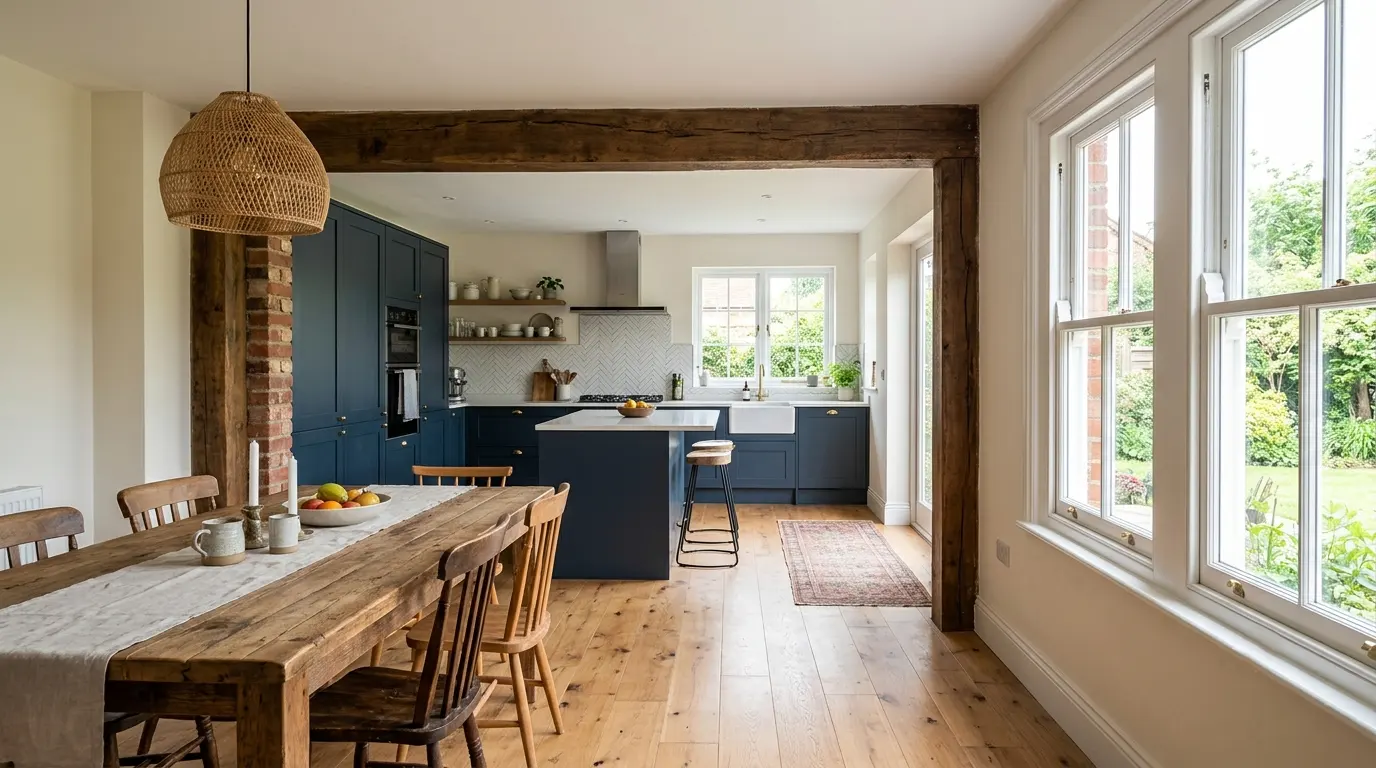
Old House Renovation Ideas — Preserving Architectural Details
The features that make an old house valuable — original moldings, transom windows, built-in cabinetry, hardwood floors — are also the easiest to accidentally destroy during a careless renovation. Prioritizing repair over replacement for these elements preserves the home’s identity and is often more cost-effective than custom-replicating them later.
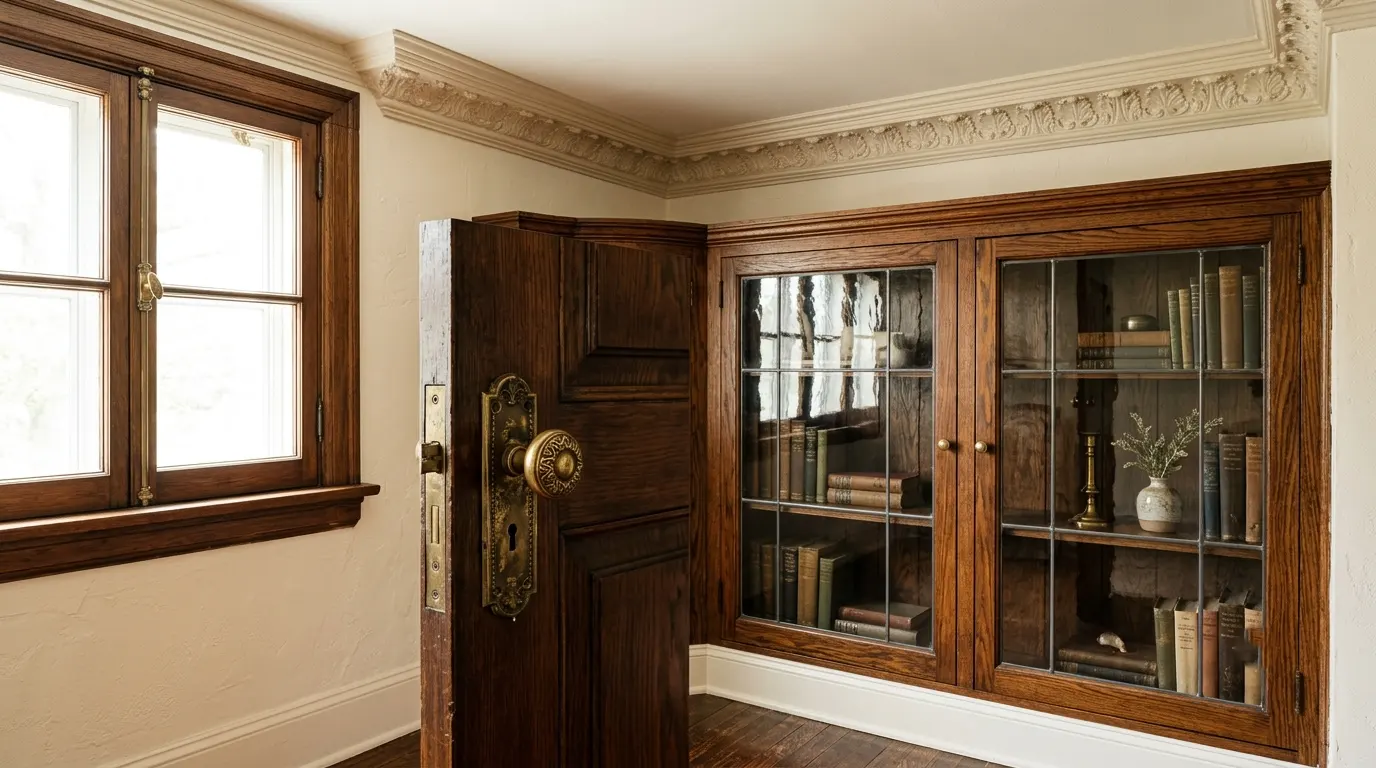
Old House Renovation Ideas — Windows and Natural Light
Original windows in old houses are often single-pane and drafty, but they’re also a defining architectural feature with proportions that newer replacement windows rarely match. Renovation approaches here range from restoring and weatherproofing the originals to installing historically accurate replacements that preserve the same divided-light pattern and trim profile.
Old House Renovation Ideas — Lighting Upgrades
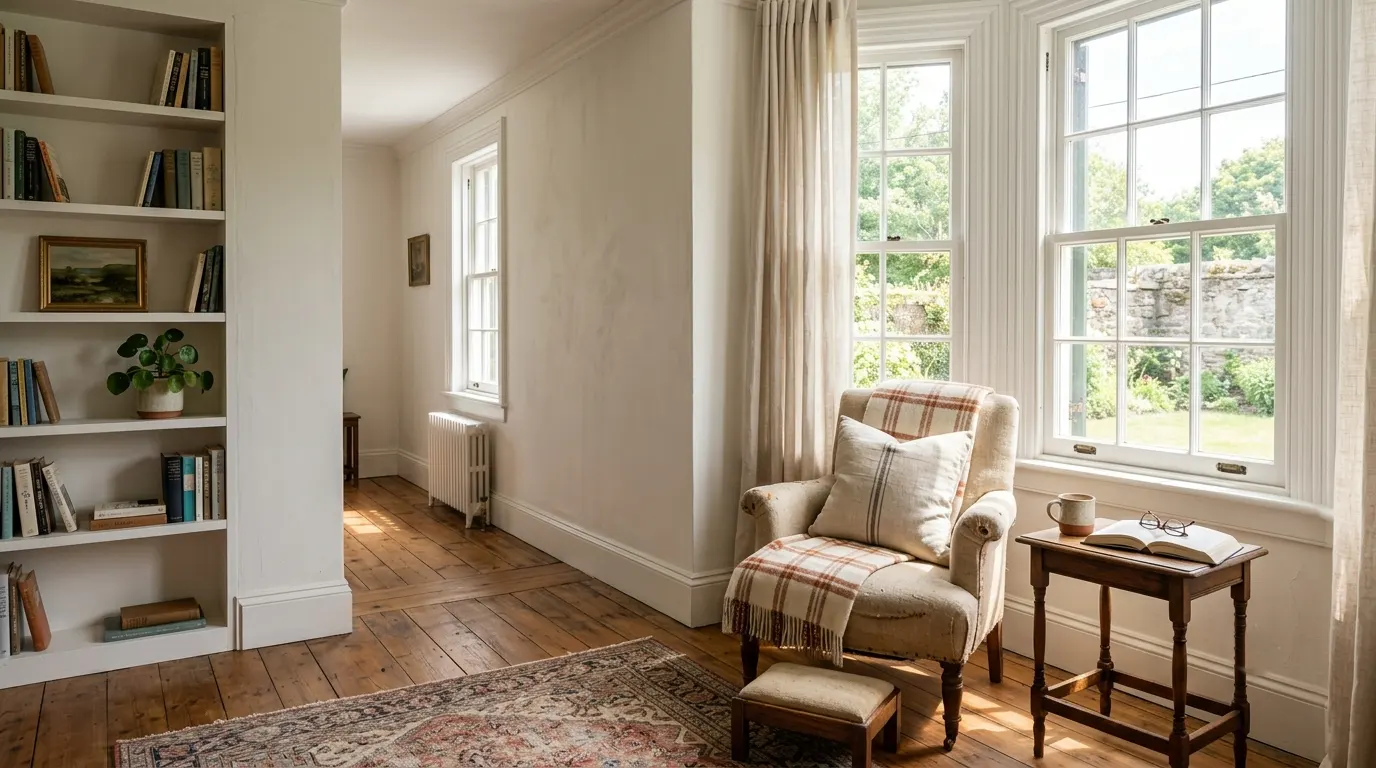
Old houses were typically built before modern lighting needs were anticipated, often resulting in single overhead fixtures and few outlets. A thoughtful renovation layers lighting — ambient, task, and accent — while choosing fixture styles that complement the home’s original era rather than clashing with it.
Old House Renovation Ideas — Storage Solutions
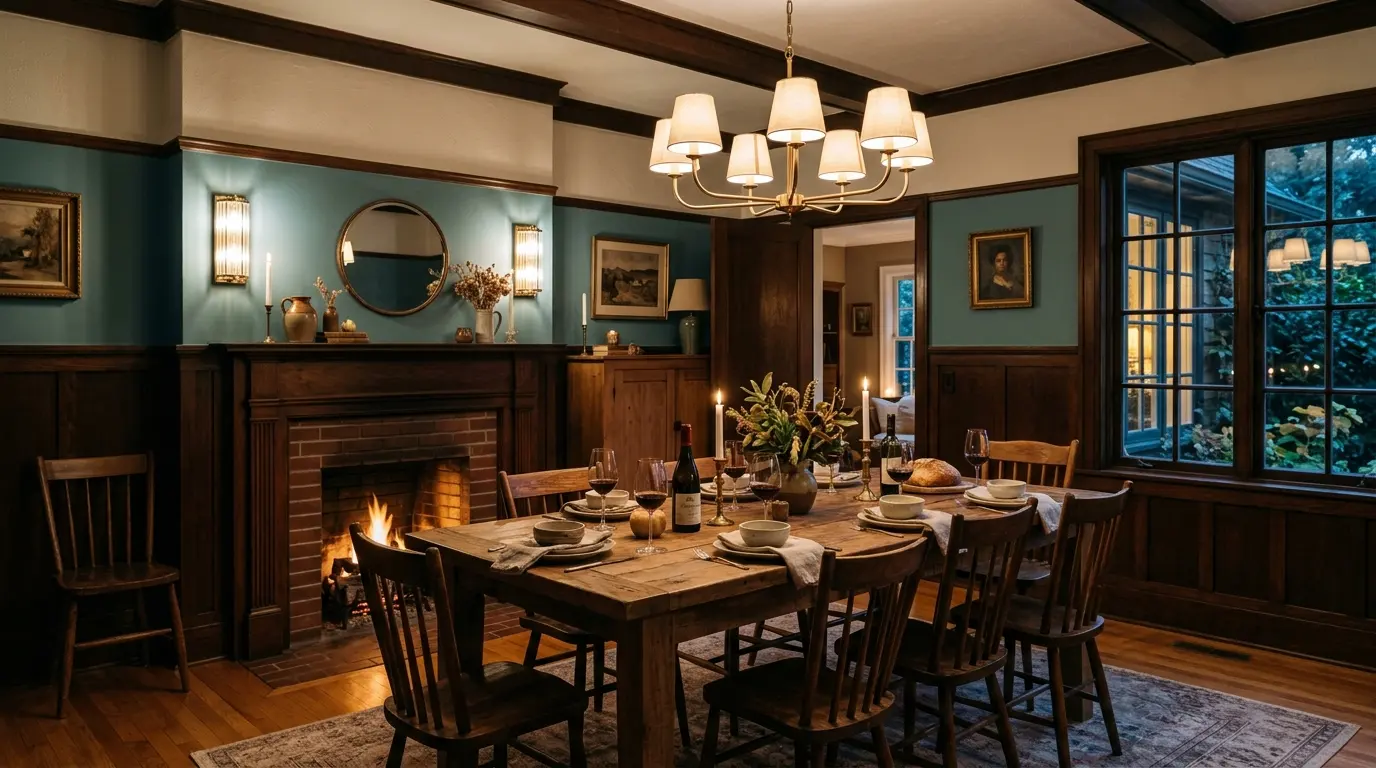
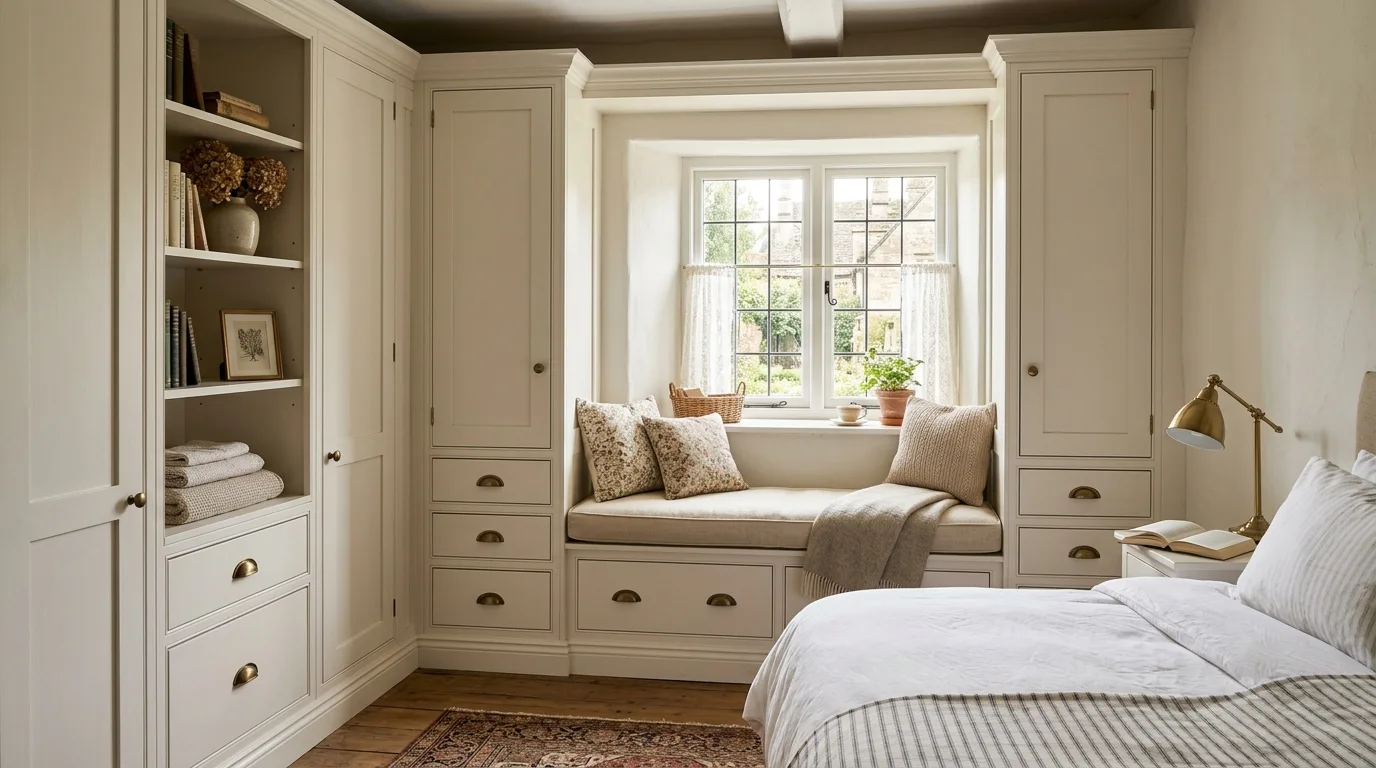
Storage is one of the most common complaints in older homes, which were built with smaller closets and fewer built-ins than modern houses. Renovation solutions include adding custom millwork around existing architectural features, converting underused nooks into closets, and using furniture-style storage that fits the home’s period rather than generic modern units.
Old House Renovation Ideas — Exterior Curb Appeal
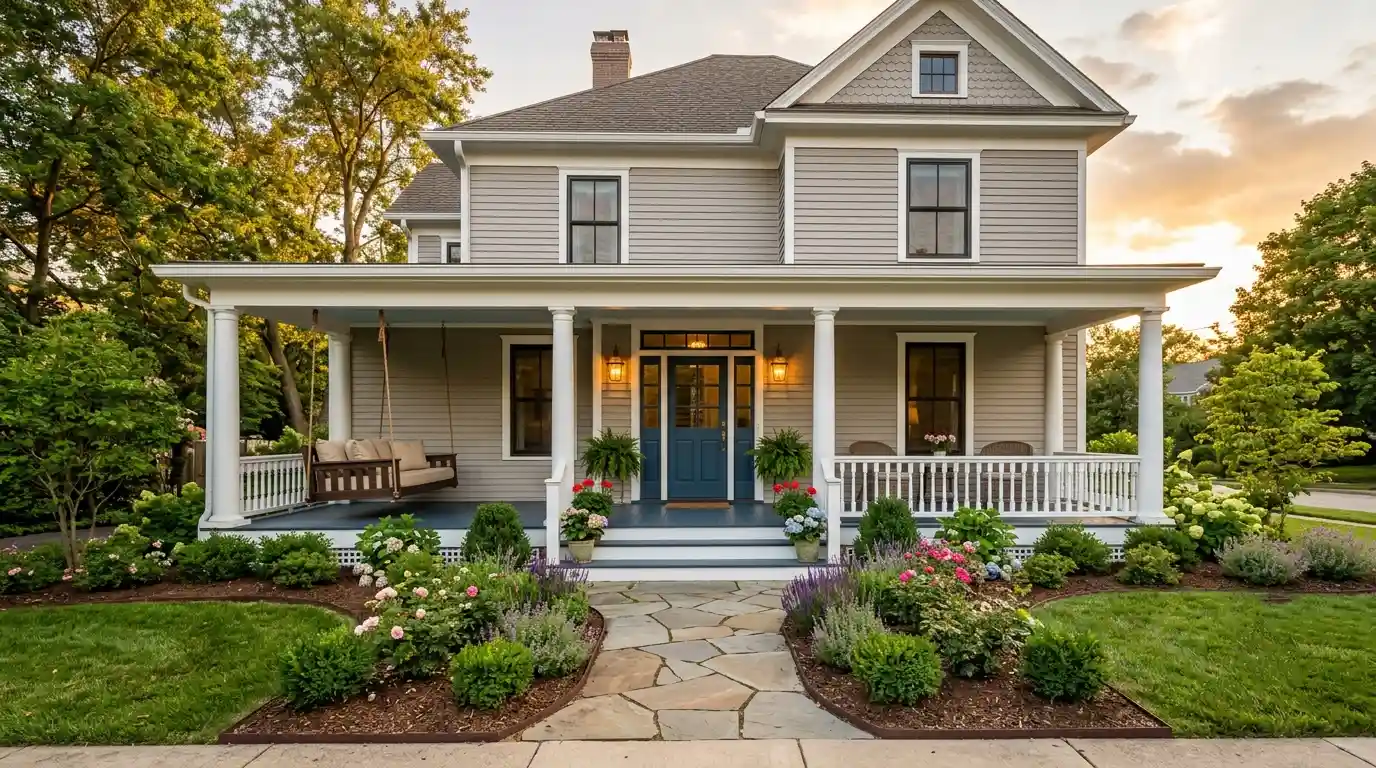
Renovation conversations often focus entirely on interiors, but exterior updates — repainting siding, restoring a front porch, replacing a worn roofline, or adding period-appropriate landscaping — have an outsized impact on how the entire house reads. A well-maintained exterior signals that the inside has been cared for just as carefully.
Old House Renovation Cost — Where the Budget Actually Goes
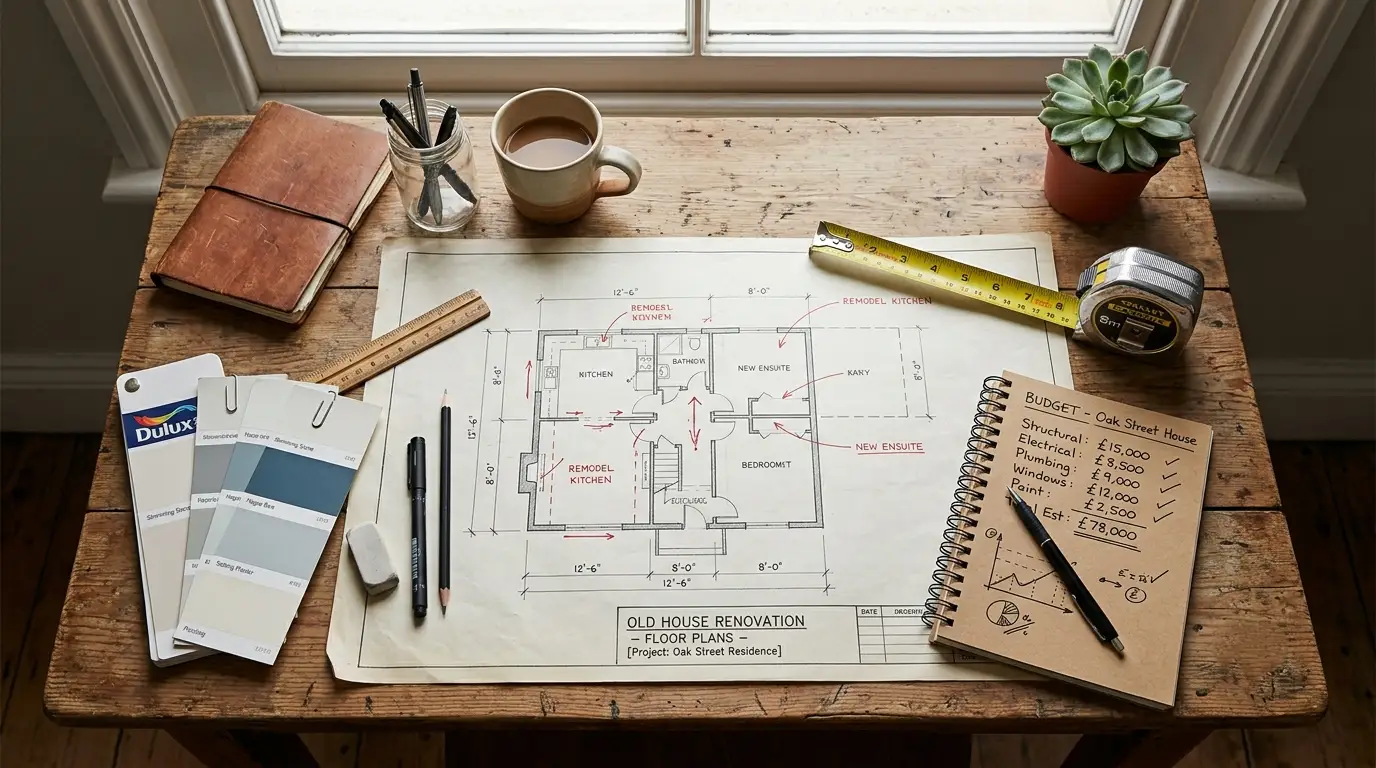
Renovation cost on an older home is rarely distributed the way people expect: the largest shares typically go to hidden systems work like electrical rewiring, plumbing replacement, and structural repair, not visible finishes. Planning a realistic budget means setting aside a meaningful contingency — often 15 to 20 percent of the total project cost — for issues uncovered once walls are opened.
Old House Renovation Cost — Prioritizing Where to Spend
When funds are limited, the highest-value spending order is typically: safety and structural systems first, weatherproofing second, and visible finishes last. Splurging on countertops while ignoring an aging roof or outdated wiring is a common and costly mistake that undermines the renovation’s long-term value.
Old House Renovation Ideas — Outdoor Living Spaces
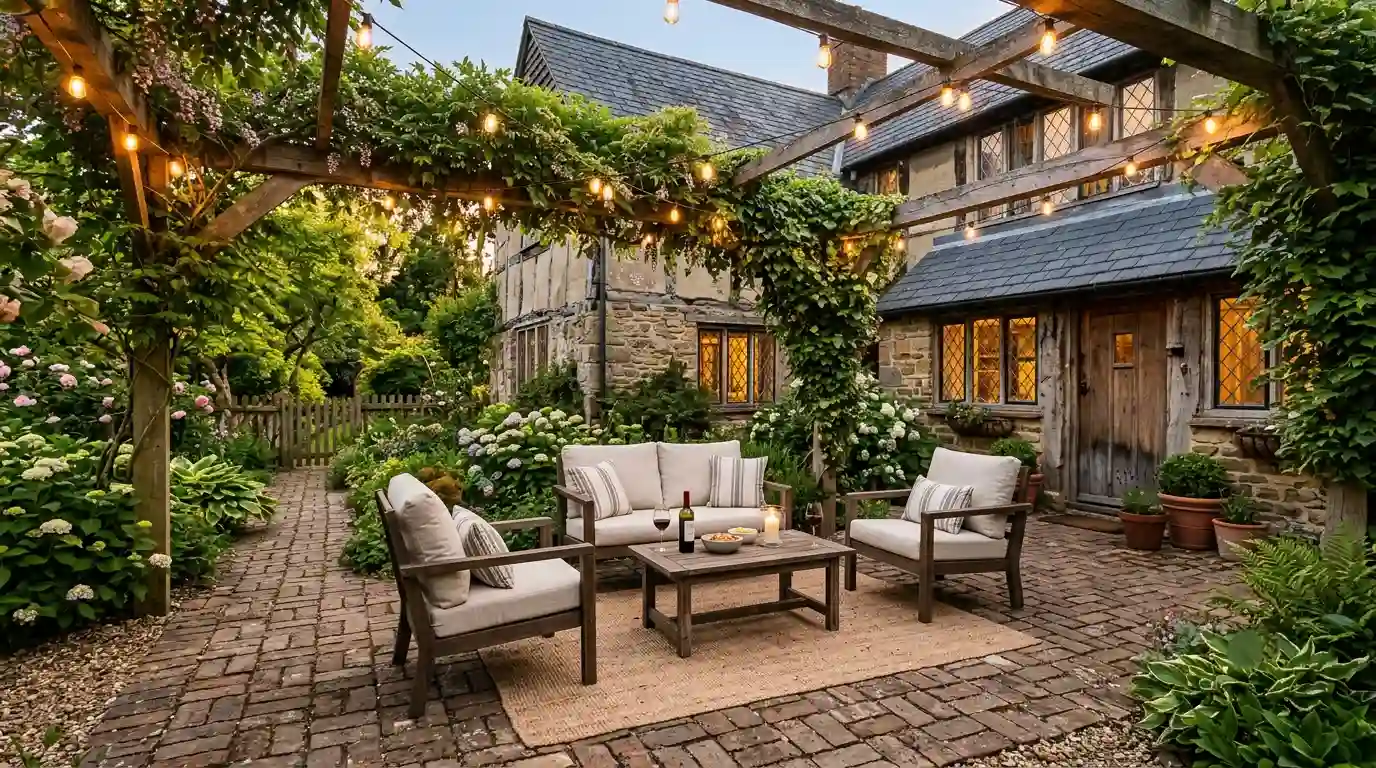
Many older homes were built before outdoor living was a design priority, leaving backyards as afterthoughts. Renovation ideas here include restoring or building a back porch, adding simple patio seating, and improving the connection between indoor and outdoor spaces with updated doors or windows, all of which extend the home’s livable footprint.
Bringing It All Together
A successful old house renovation rarely follows a single formula, since every property carries its own history, quirks, and structural realities. But across kitchens, bathrooms, living rooms, and exteriors, the same quiet logic keeps showing up: protect the structure first, preserve what’s original and worth keeping, and only then layer in the updates that make daily life easier. That order matters more than any single material or color choice, because it determines whether a renovation holds up for decades or unravels within a few years.
What this approach really offers is peace of mind. Homeowners who follow it tend to spend their money in the right places — wiring, plumbing, moisture control — before ever touching paint swatches or cabinet hardware, which means fewer surprises and far less regret once the dust settles. It also tends to suit a particular kind of renovator best: someone who values character over uniformity, and who would rather restore a home’s original voice than replace it with something generic. If that describes the project ahead, the path forward is straightforward. Start with an honest inspection, fix what’s hidden before what’s visible, and let the house’s original details guide the design decisions rather than fighting against them. Renovated this way, an old house doesn’t just get updated — it gets a second life that still feels true to where it started, and that’s the kind of result that holds its value, both financially and emotionally, for years to come.
Learn more : Dark Blue and Pink Living Room Ideas That Feel Timeless
Frequently Asked Questions
- How do I know if my old house needs structural repairs before I start decorating? Watch for warning signs like sloping floors, cracks that run diagonally across walls, doors and windows that stick or won’t latch properly, and damp or musty smells in basements or crawl spaces. Any of these are worth a professional inspection before spending money on finishes, since cosmetic work built on top of an unresolved structural issue almost always has to be redone.
- Is it better to restore original features or replace them with modern alternatives? In most cases, restoring original features like windows, trim, and hardwood floors costs less than people expect and adds more character than a like-for-like modern replacement ever could. Replacement makes more sense when the original material has failed beyond repair or when it’s actively unsafe, such as old electrical fixtures or lead-based paint that can’t be safely encapsulated.
- How much should I realistically budget for an old house renovation? Costs vary widely by region and scope, but a reliable rule of thumb is to get firm quotes for the visible work and then add a contingency of 15 to 20 percent on top for whatever turns up once walls, floors, or ceilings are opened. Older homes almost always reveal at least one unplanned issue, so that buffer is what keeps a budget from breaking mid-project.
- What’s the most common mistake people make when renovating an old house? The most frequent mistake is spending on visible upgrades, like new countertops or fresh paint, before confirming that the systems behind the walls — wiring, plumbing, insulation — are sound. It’s an understandable impulse, since finishes are the fun part, but it routinely leads to expensive rework once a hidden problem surfaces later.
- Can I renovate an old house in stages instead of all at once? Yes, and for most budgets it’s actually the smarter path. The key is sequencing stages correctly: structural and systems work first, then weatherproofing, then cosmetic finishes, so that each phase builds on solid ground rather than needing to be partially undone for the next one.
- How do I keep a renovated old house from looking too modern or too dated? The most reliable approach is contrast with intention: keep one or two strong original elements, like exposed beams, original windows, or a fireplace surround, as anchors, then build the rest of the room’s palette and furnishings around them rather than against them. This keeps the space feeling current without erasing the qualities that made the house worth renovating in the first place.
- Do small renovation ideas actually make a noticeable difference, or do I need a full remodel? Small, well-chosen updates can have an outsized impact, especially in transitional spaces like entryways, hallways, and lighting, because they change how a space feels every single day without the cost or disruption of a full remodel. A full renovation makes sense when structural or system issues are present, but plenty of homes simply need these smaller, targeted improvements to feel transformed.



One Response