
Introduction
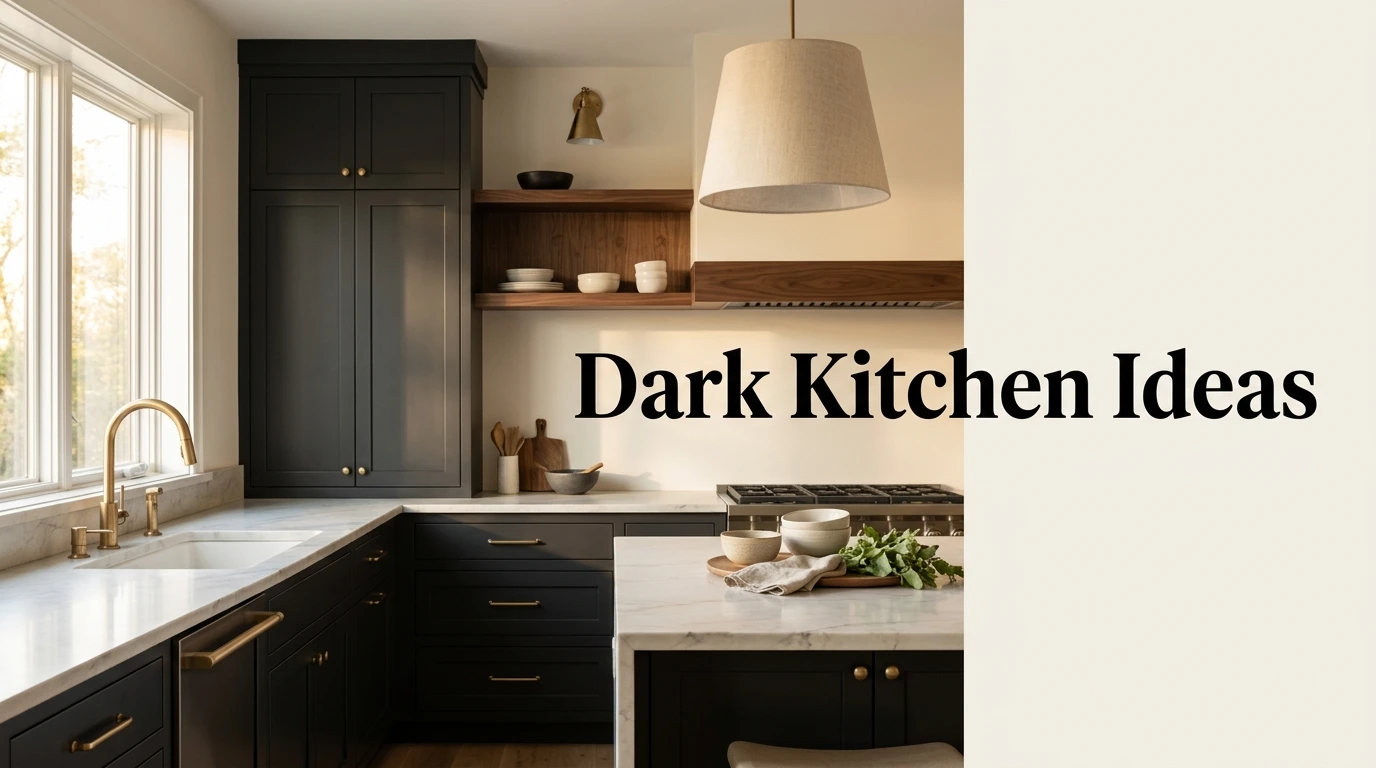
Dark kitchen ideas have moved far beyond a passing design trend. What once felt like a bold, even risky choice — deep cabinetry, charcoal walls, ink-black islands — has settled into one of the most enduring directions in residential kitchen design. A well-executed dark kitchen feels grounded, intentional, and quietly luxurious, whether the space is a sprawling open-plan layout or a modest galley kitchen in an apartment.
What makes dark kitchen design work isn’t simply the color itself, but how it’s balanced. The depth of dark cabinetry or dark walls needs to be offset with the right materials, lighting, and proportions, or the room can feel heavy and closed-in instead of rich and inviting. Designers who specialize in this look tend to think in layers: tone, texture, reflectivity, and light all working together rather than one dramatic color choice doing all the work.
This guide walks through the core building blocks of dark kitchen design — from cabinet finishes and wall colors to layout considerations and styling details — so you can adapt the look to your own space with confidence, regardless of size, budget, or architectural style.
Choosing the Right Dark Kitchen Cabinets
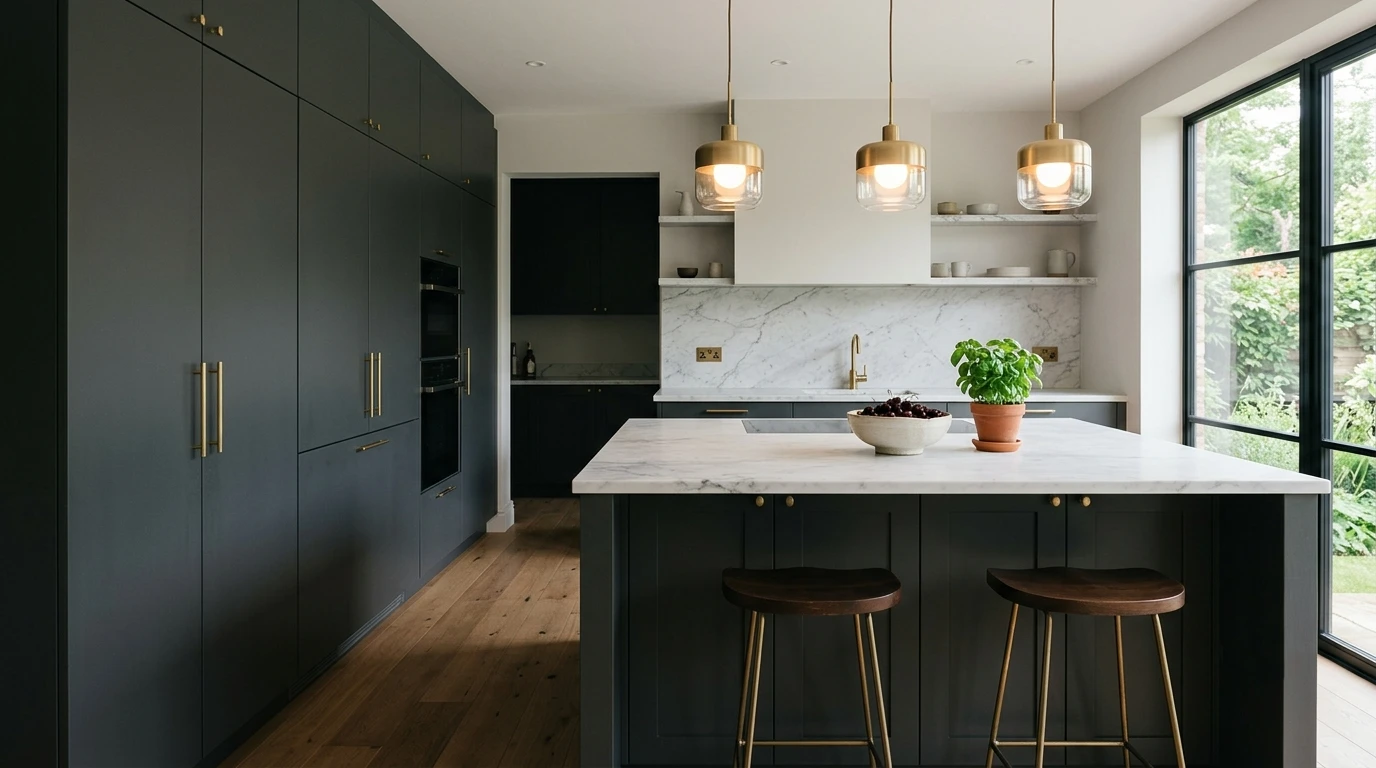
Dark kitchen cabinets are usually the anchor of the entire room, so the finish matters as much as the color. Matte lacquer reads modern and minimal, while a satin or semi-gloss finish on dark cabinets kitchen designs adds a subtle reflective quality that keeps the room from feeling flat. The undertone — whether the cabinet leans charcoal, navy, forest green, or true black — should be chosen against your existing flooring and countertop tones before committing.
Dark Wood Cabinets for a Warm, Grounded Look
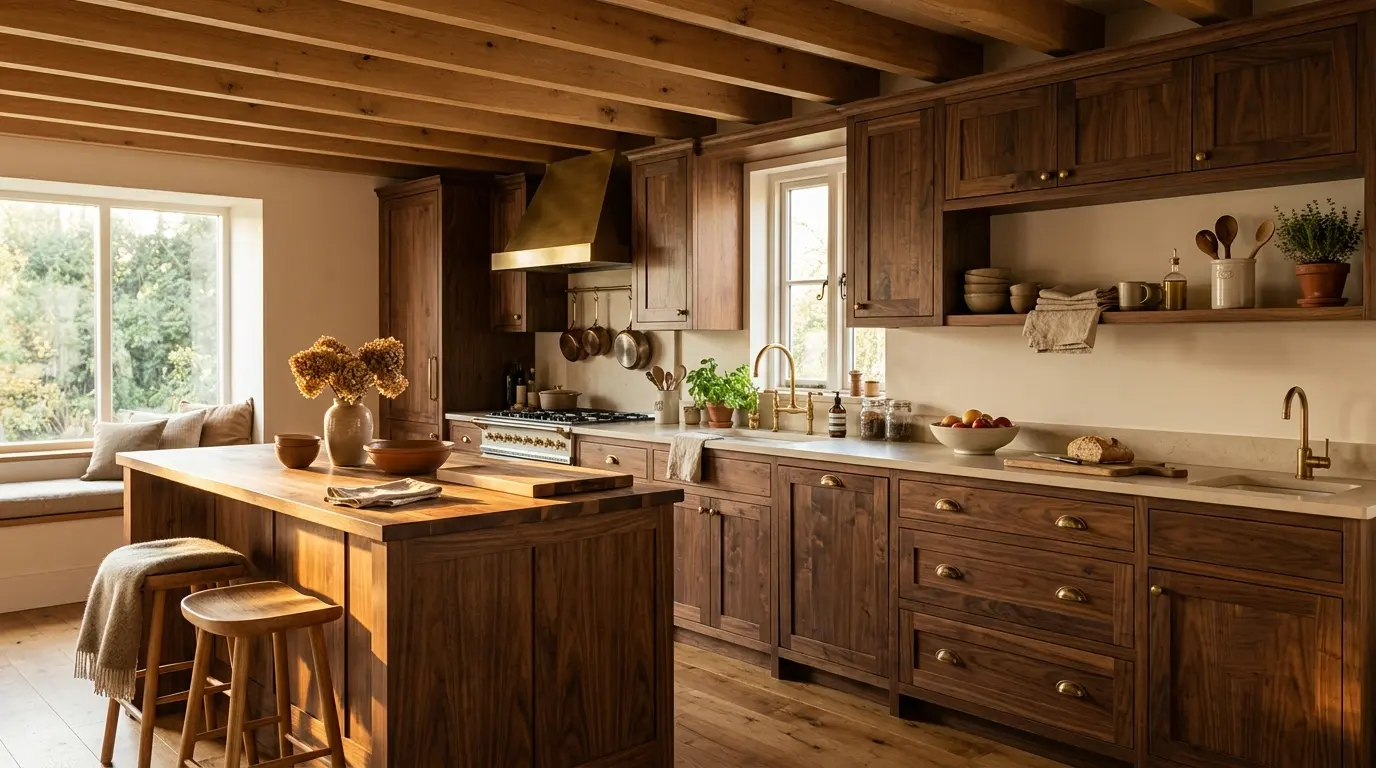
Dark wood cabinets kitchen schemes bring a different energy than painted black or charcoal surfaces — they introduce visible grain, natural variation, and warmth that softens the overall effect. Walnut, espresso oak, and dark-stained ash are popular choices because they pair easily with both traditional and contemporary hardware, and they age gracefully without showing wear the way some painted finishes can.
Kitchen Ideas with Dark Cabinets for Small Spaces
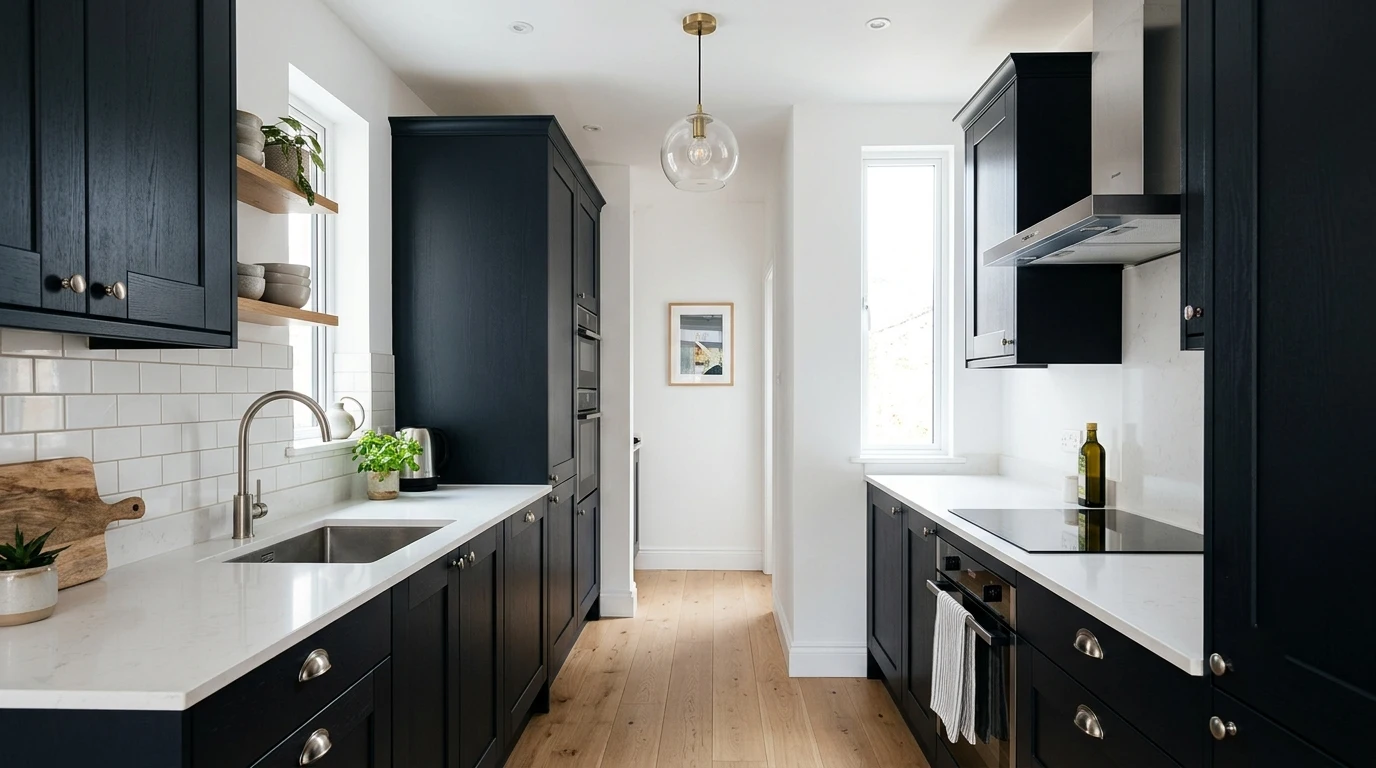
A common concern with kitchen ideas with dark cabinets is that darker tones will shrink a small room visually. In practice, the opposite often happens when the rest of the palette is handled well: pale countertops, light flooring, and strategic mirrored or glass elements keep the eye moving and prevent the space from feeling boxed in. Vertical lines, slim hardware, and uplighting along the top of cabinetry also help a compact dark kitchen feel taller.
Decorating Around Kitchens with Dark Cabinets
Once the cabinetry is set, kitchen decor for dark cabinets is about contrast and texture rather than competing colors. Woven baskets, brass or unlacquered fixtures, ceramic tile backsplashes, and open wood shelving all read beautifully against a dark base because they introduce tactile variety. The goal in any kitchen decorating approach built around dark cabinets is to keep accessories purposeful — a few well-chosen pieces will outperform a cluttered countertop every time.
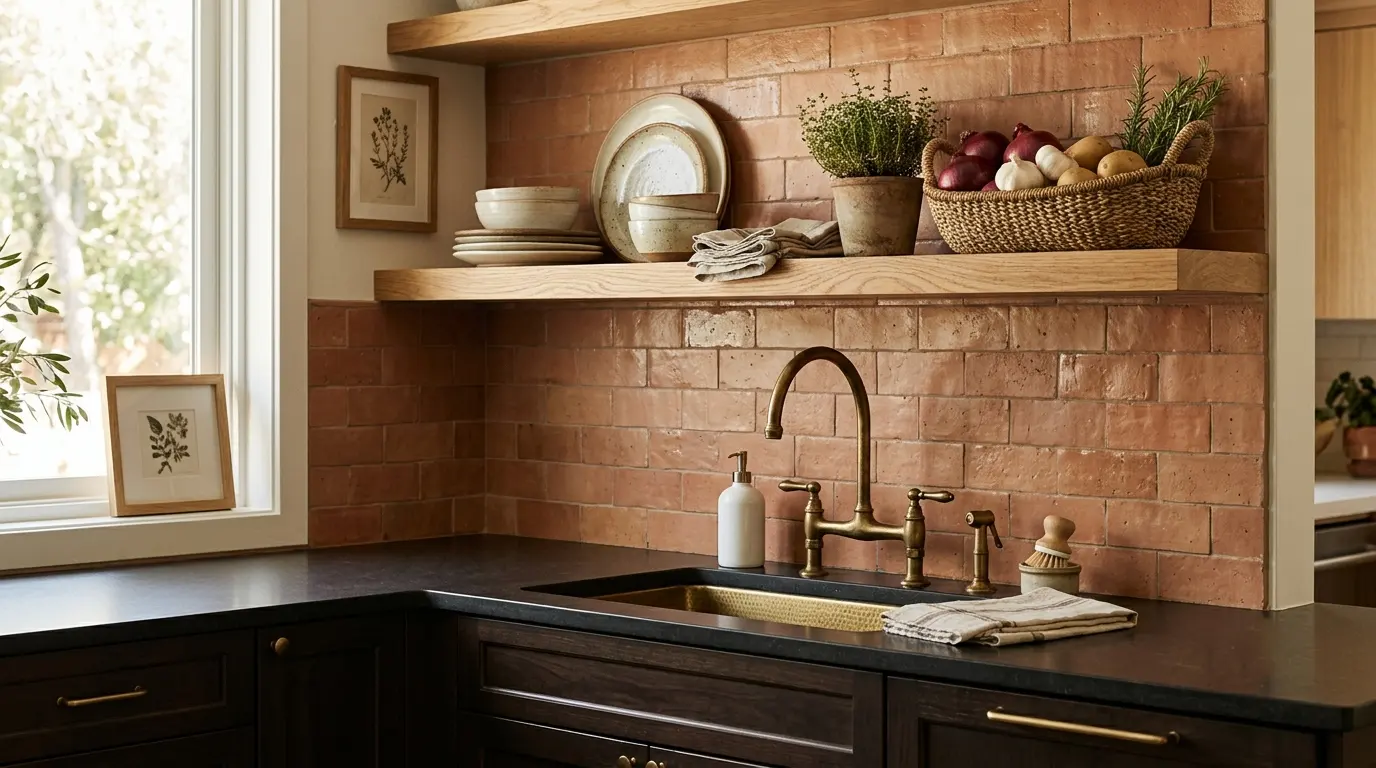
Best Dark Kitchen Paint Colors
Choosing dark kitchen paint colors comes down to undertone and finish more than the name on the swatch. True blacks can feel stark under cool LED lighting, while colors with a hint of brown, green, or blue tend to feel more livable and less clinical in everyday use. A matte or eggshell finish on walls softens the depth of color, while a slightly higher sheen on trim and cabinetry adds dimension without overwhelming the room.
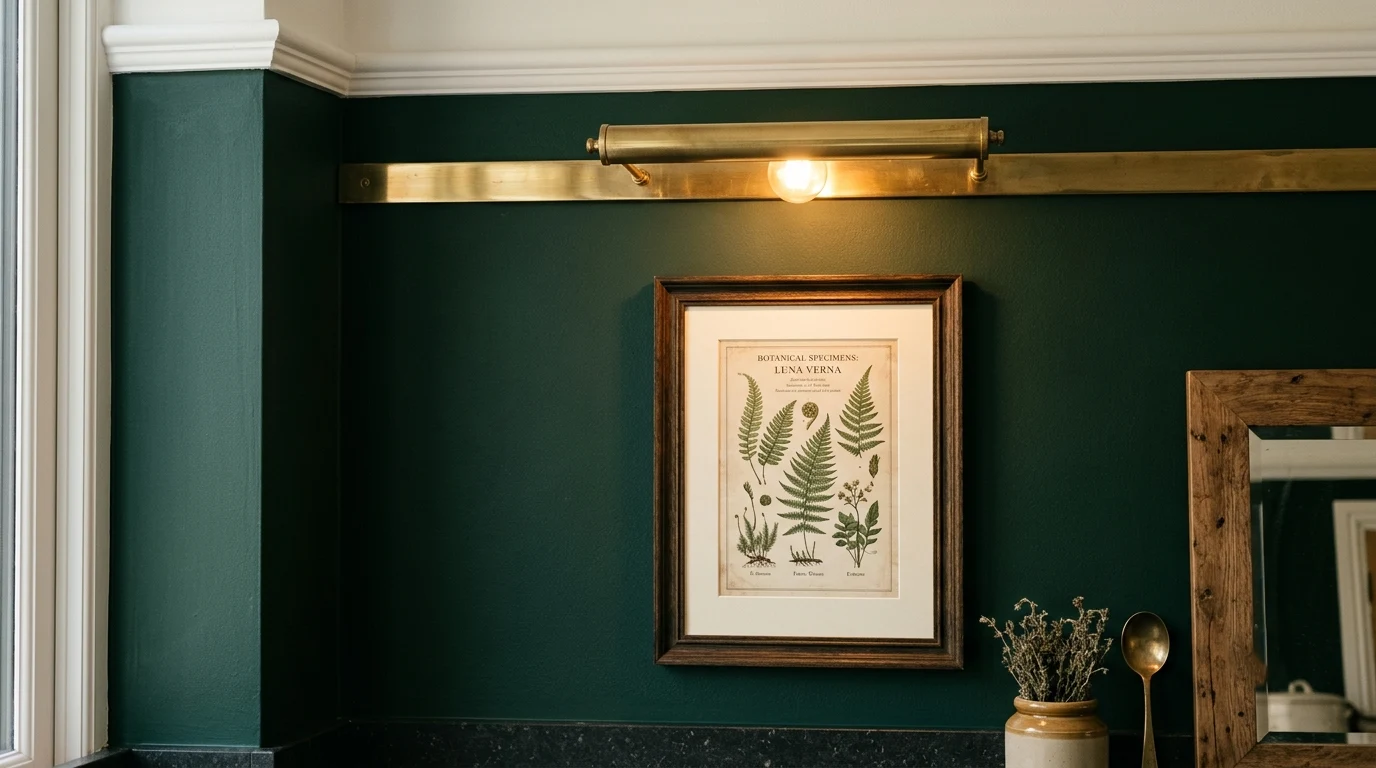
Dark Colors for Kitchen Walls That Add Depth
Dark colors for kitchen walls work especially well in rooms with strong natural light or generous ceiling height, where the color has room to feel enveloping rather than confining. In smaller or darker rooms, many designers reserve the deepest wall color for a single accent wall or the lower half of the room, pairing it with a lighter ceiling to keep the space from feeling sealed in.
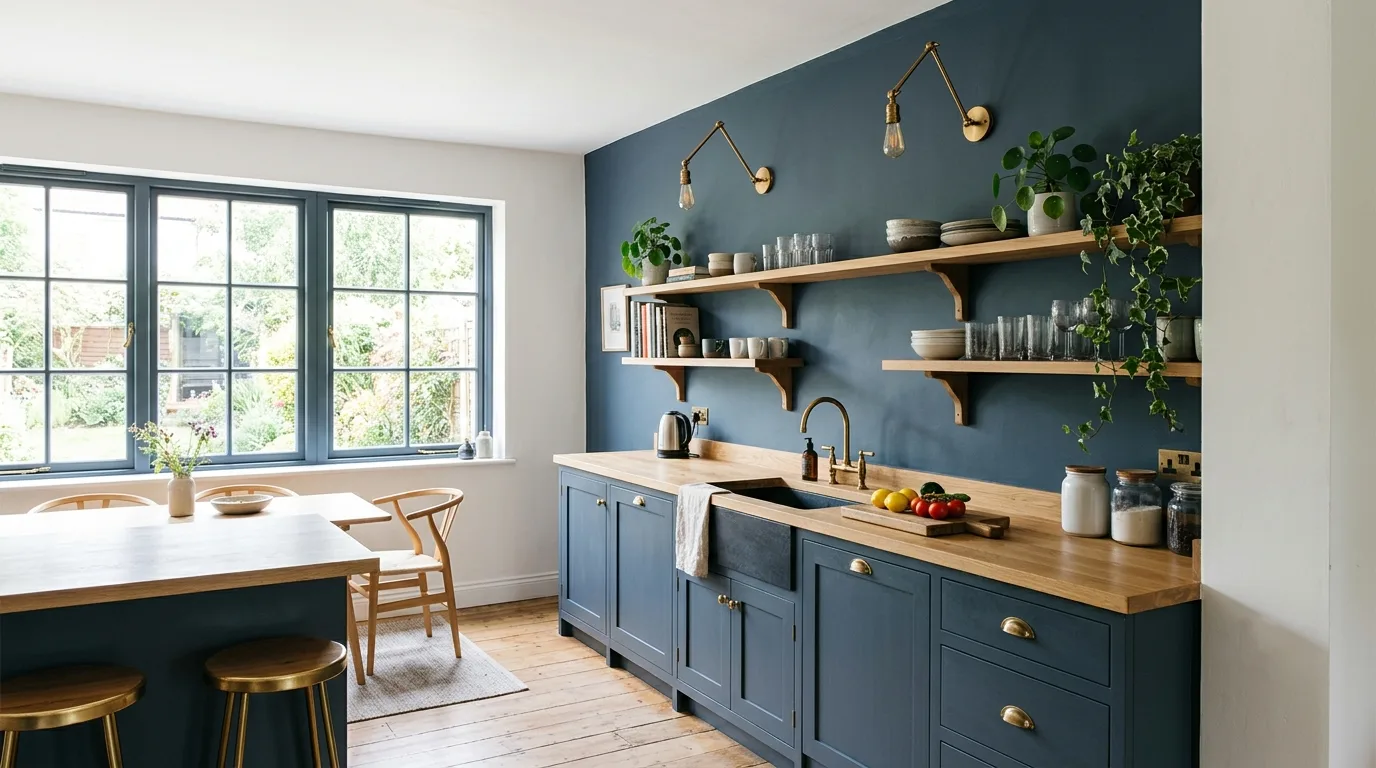
Choosing Kitchen Paint Color and Wall Color Combos
Beyond the dominant wall shade, kitchen paint color decisions usually involve coordinating trim, ceiling, and cabinetry so nothing competes for attention. A useful approach is picking one dark anchor color and one or two neutral kitchen colors for walls and trim, then testing large sample boards in the actual room across different times of day before finalizing anything.
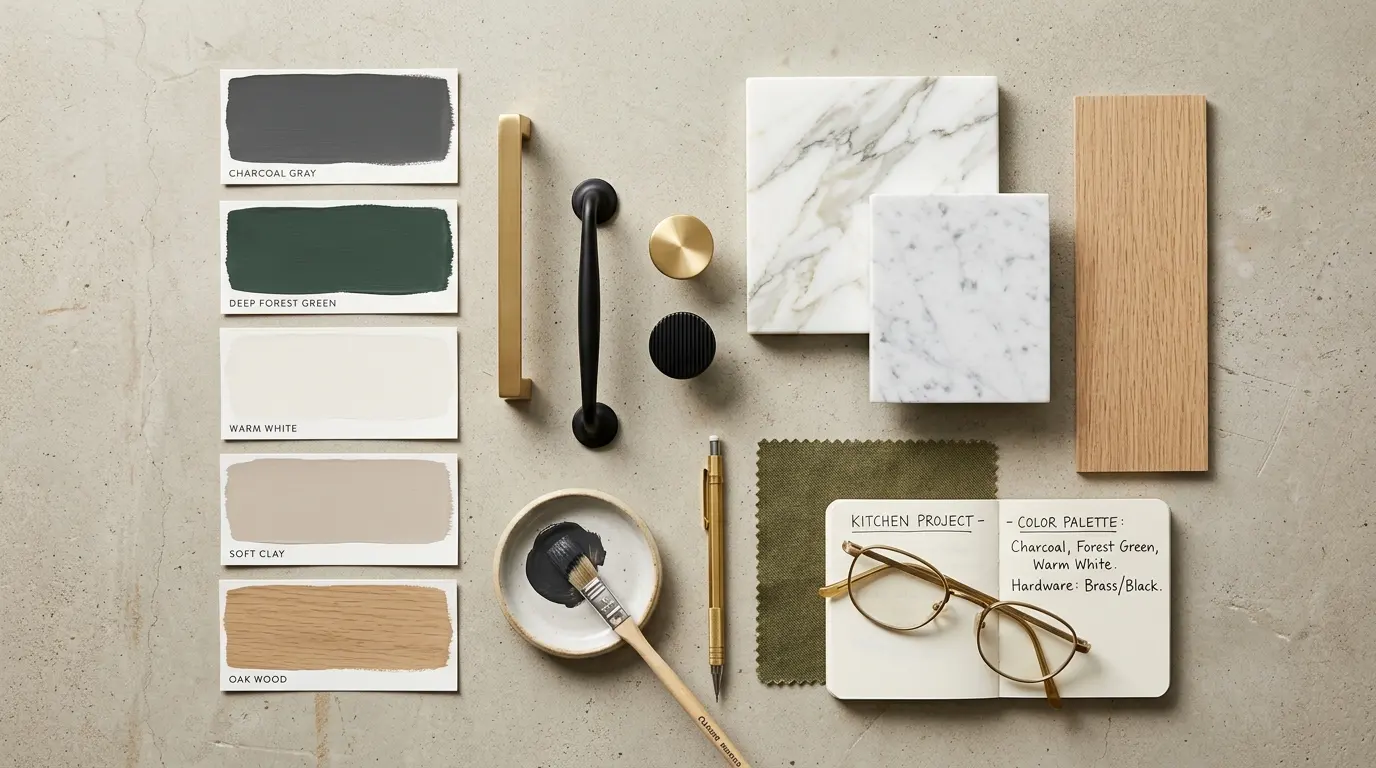
Contemporary Dark Kitchens
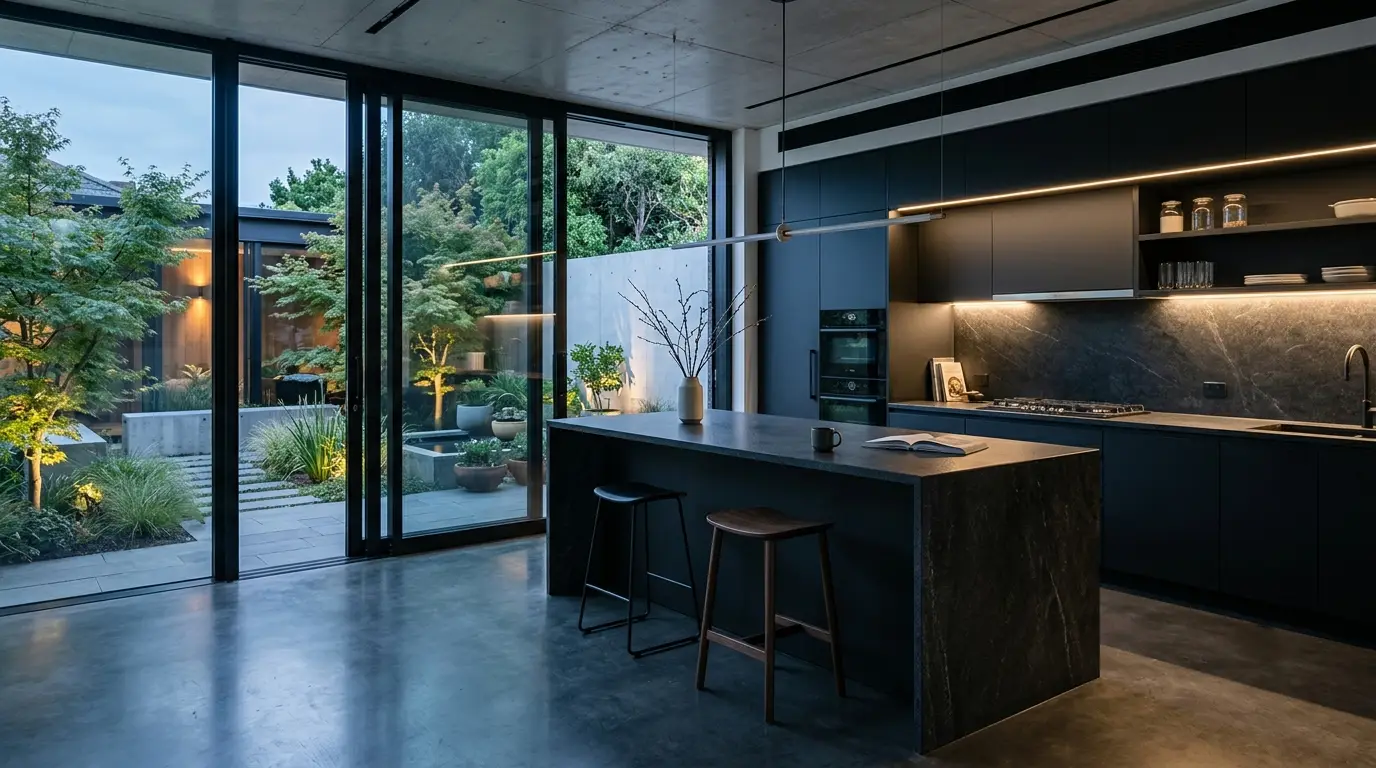
Contemporary dark kitchens tend to favor clean lines, handleless cabinetry, and a restrained material palette — often just two or three finishes total. Matte black or graphite surfaces are paired with one warm material, like oak or brass, to prevent the space from feeling cold. Lighting in contemporary dark kitchens is usually integrated and architectural rather than decorative, with concealed LED strips doing much of the work.
Modern Dark Kitchen Ideas
Modern dark kitchen ideas often blend industrial influences — exposed concrete, blackened steel, matte tile — with softer organic touches that keep the room from feeling sterile. This mix of hard and soft materials is what separates a modern dark kitchen from a purely minimalist one; there’s still warmth and personality, just expressed through texture rather than color.
Dark Themed Kitchen Concepts for Drama and Mood
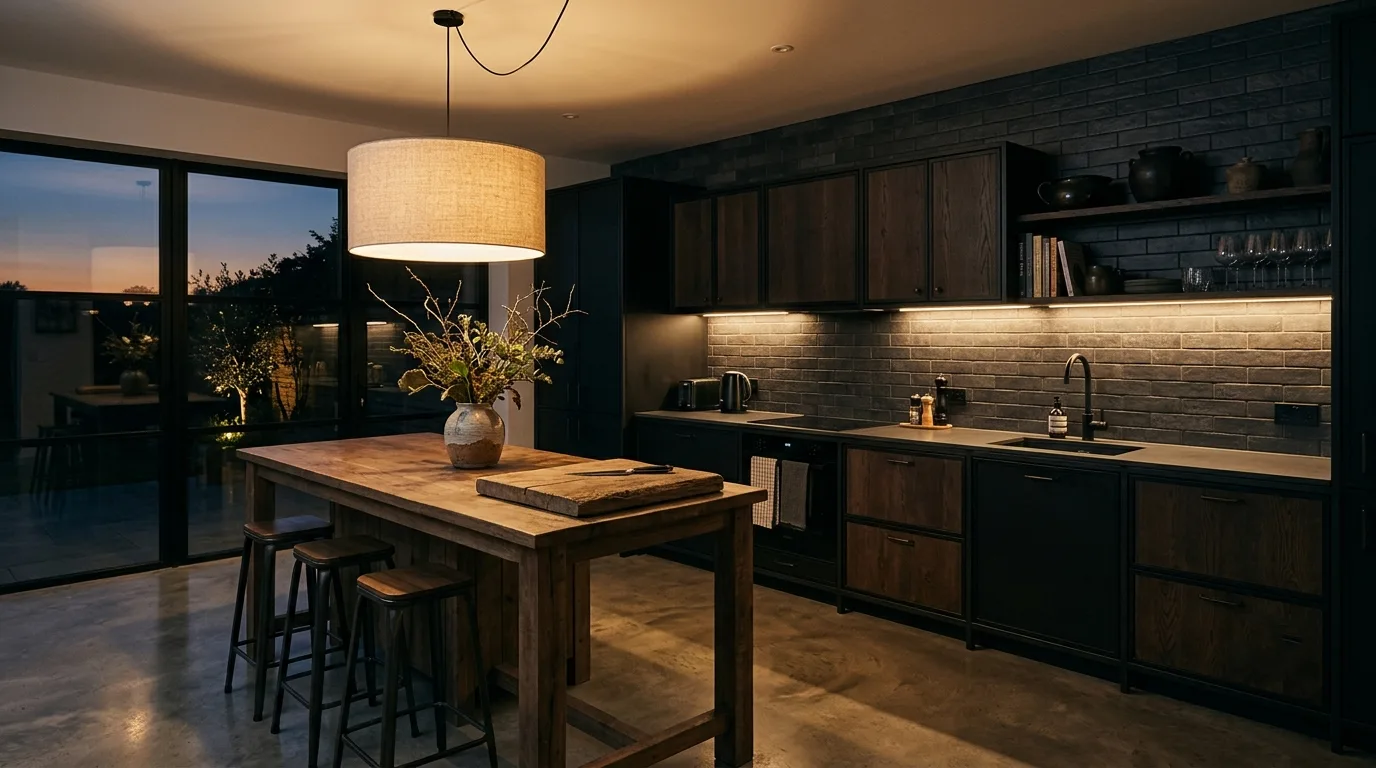
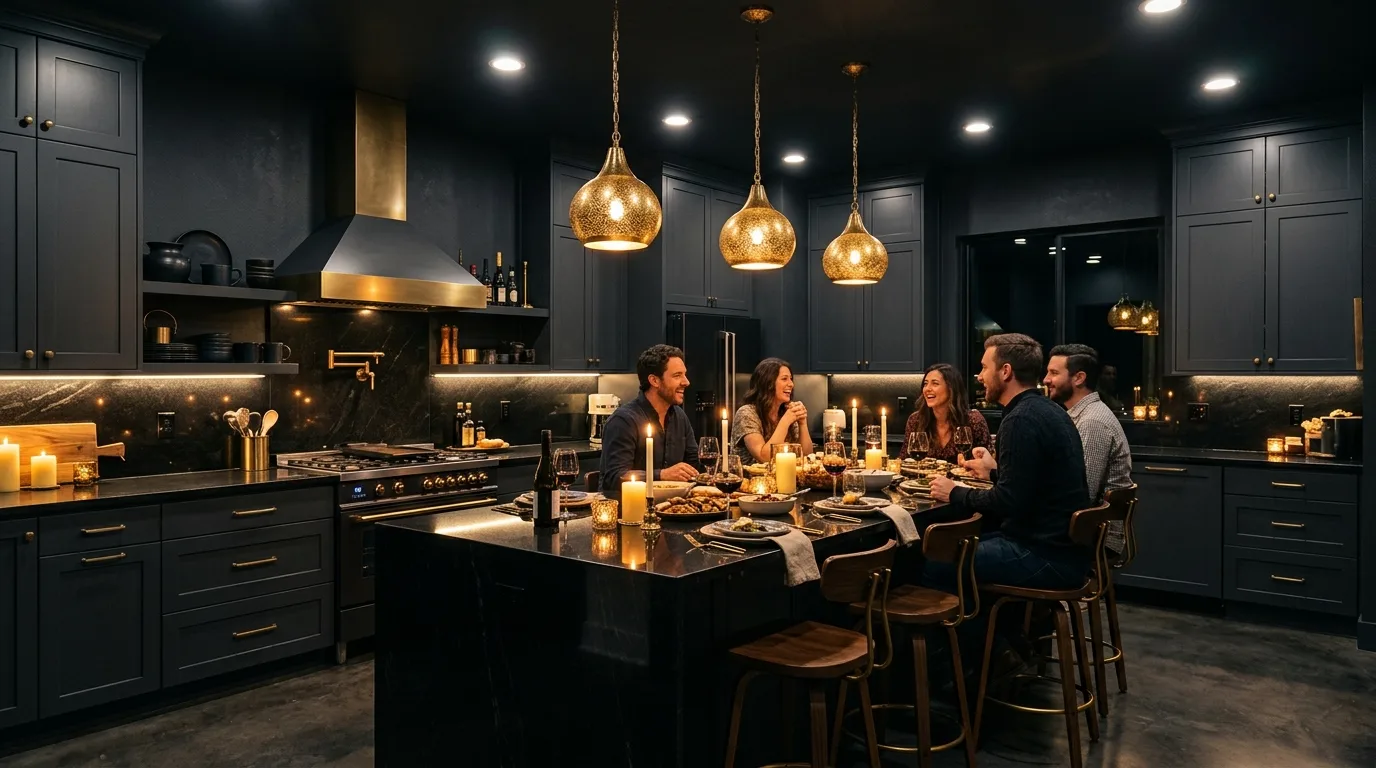
A fully dark themed kitchen — where cabinetry, walls, and even the ceiling share a similarly deep tone — creates an immersive, cocoon-like effect that reads as confident and luxurious when lighting is layered correctly. This approach relies heavily on multiple light sources at different heights: under-cabinet, pendant, and ambient lighting all working together so no single dark surface dominates the eye.
Darker Kitchen Cabinets vs Lighter Accents
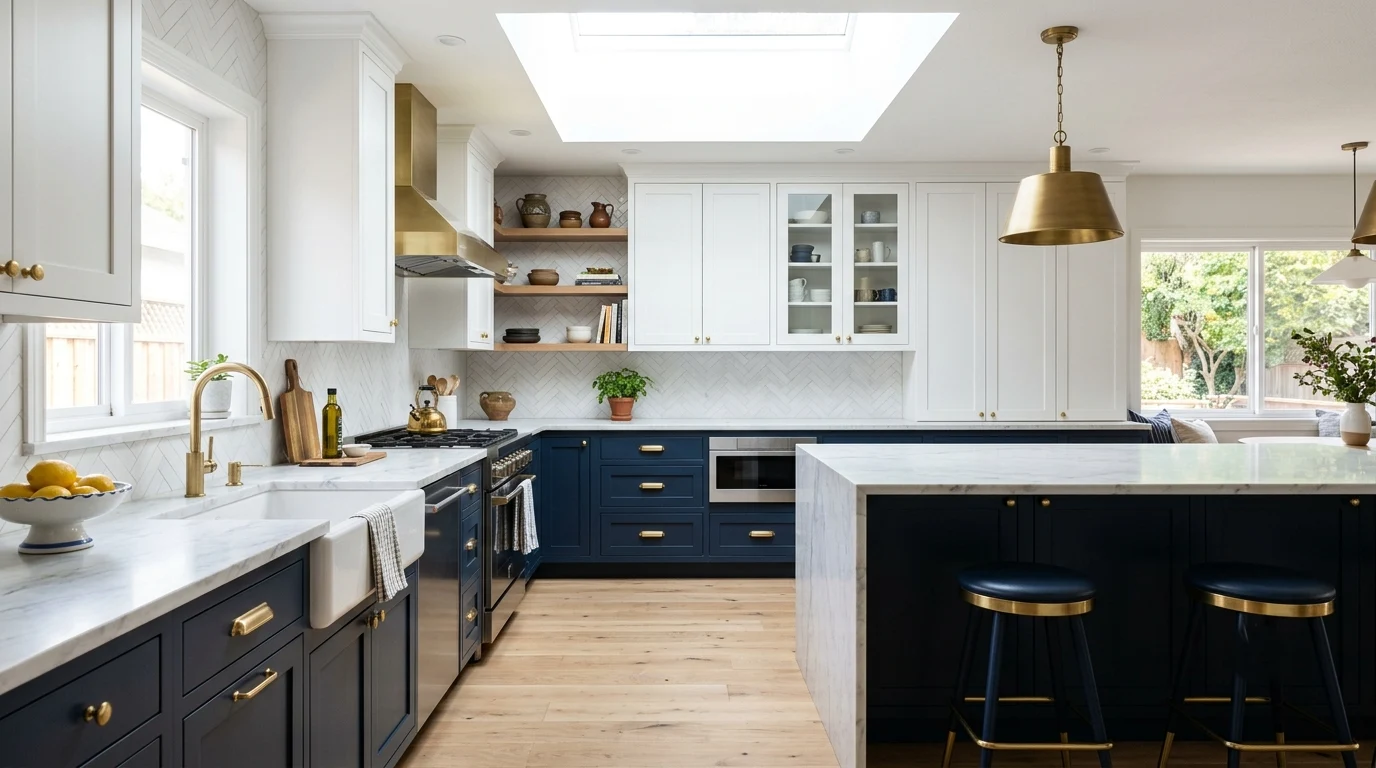
Going with darker kitchen cabinets doesn’t require committing the entire room to the same depth of tone. Many of the most successful dark kitchens pair the lower cabinetry in a deep shade with lighter upper cabinets, open shelving, or a pale stone countertop, creating visual balance and keeping sightlines open across the room.
Lighting Strategies for Dark Kitchen Interiors
Lighting is arguably the single most important factor in making any dark kitchen feel successful rather than gloomy. Warm-temperature bulbs (around 2700–3000K), layered fixtures, and reflective surfaces like glossy tile or polished stone all help bounce light around a dark room. Skipping ambient ceiling light in favor of only task lighting is one of the most common mistakes in dark kitchen design.
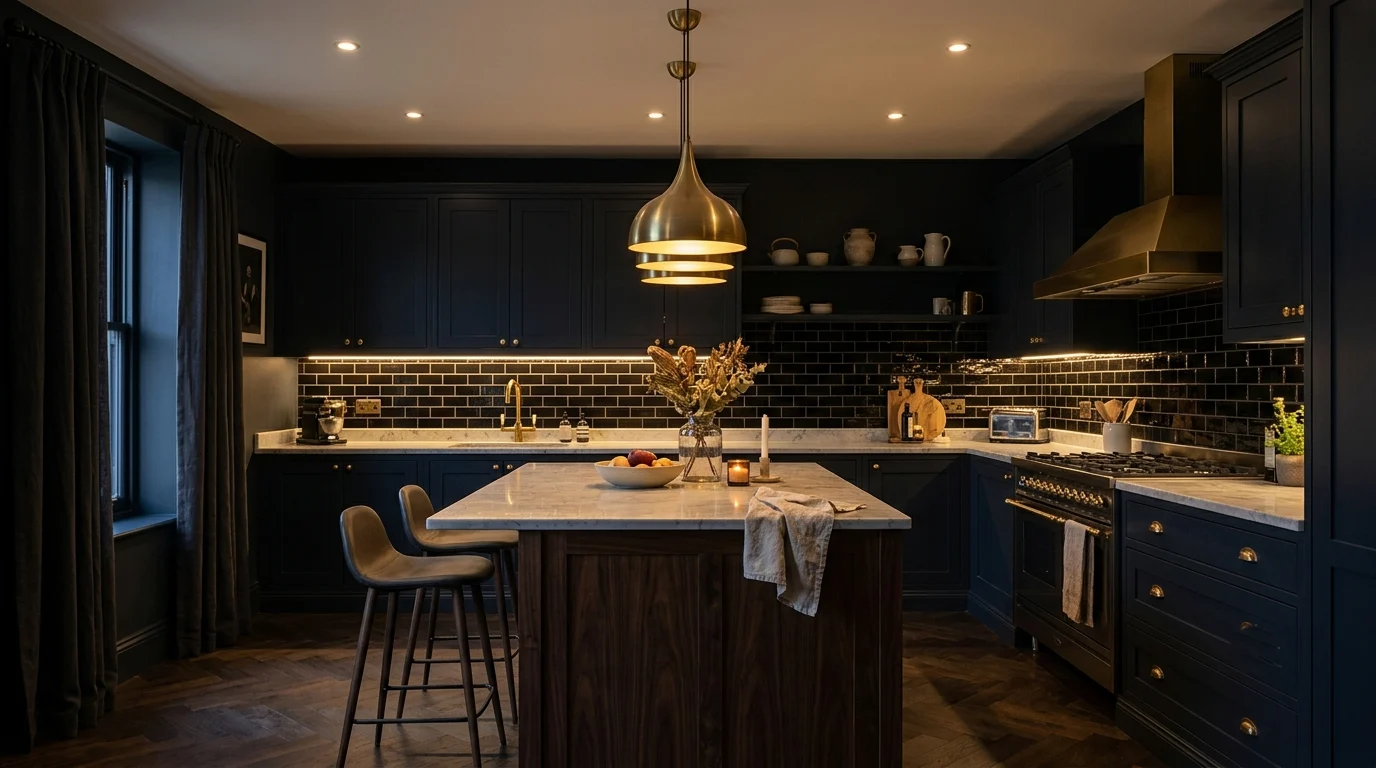
Dark Kitchen Inspiration from Real Homes
Looking through real dark kitchen inspiration — rather than only staged showroom photography — tends to reveal the small, practical details that make a space livable: where the trash pull-out sits, how open shelving is actually used day to day, and how families style countertops when they’re not preparing for a photo shoot. These lived-in details are often more useful for planning than a perfectly staged image.
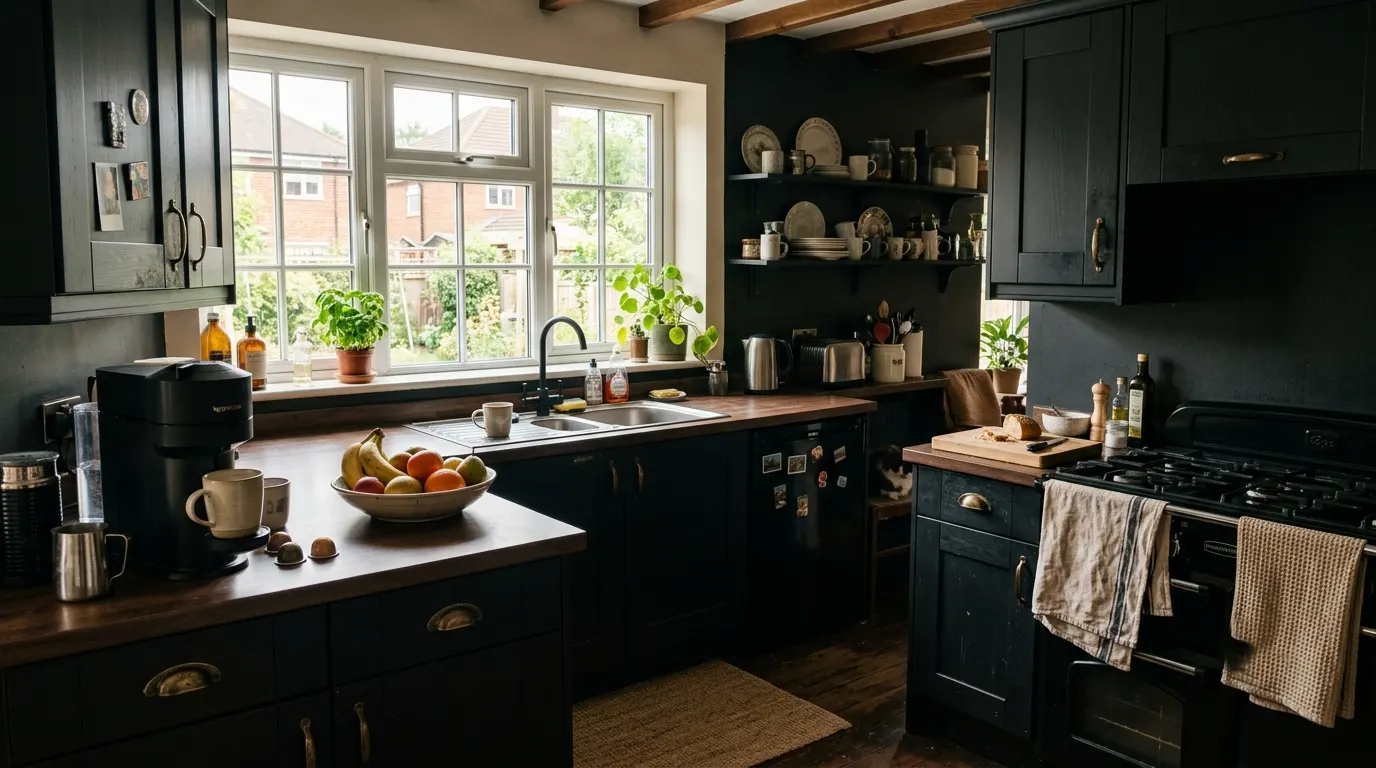
Small Kitchen, Big Drama: Dark Cabinet Ideas for Compact Spaces
In compact kitchens, dark cabinet ideas can still work beautifully if the rest of the design supports it: a single continuous color block, minimal visual breaks, and good vertical lighting all help a small dark kitchen feel cohesive rather than cramped. Reflective backsplashes and glass-front upper cabinets are particularly effective in tight footprints.
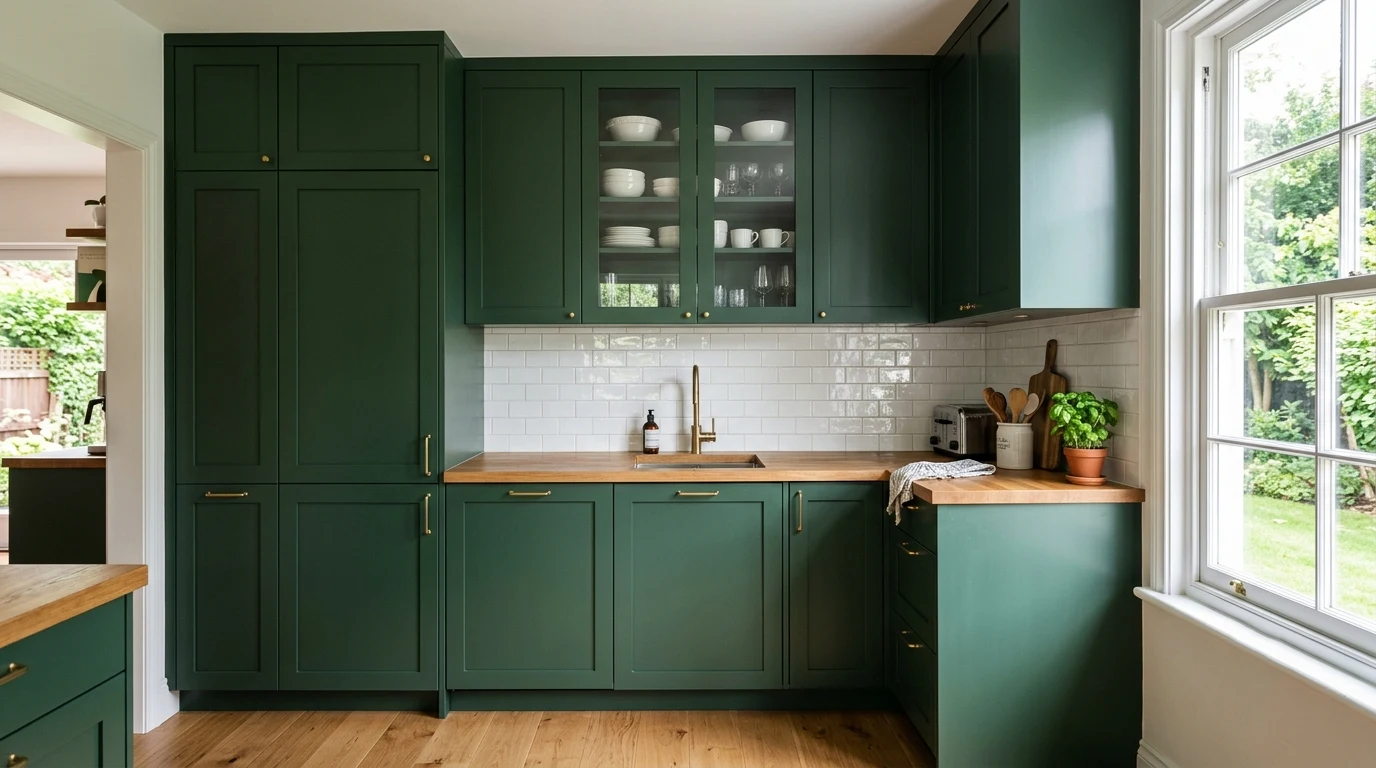
Mixing Textures and Materials in a Dark Kitchen
Texture does much of the heavy lifting in dark kitchen design, since color contrast alone can only go so far. Honed versus polished stone, matte versus glossy tile, brushed versus polished metal — each pairing changes how light moves across the room. A dark kitchen with too few textures can feel one-note, while a thoughtful mix feels rich and considered.
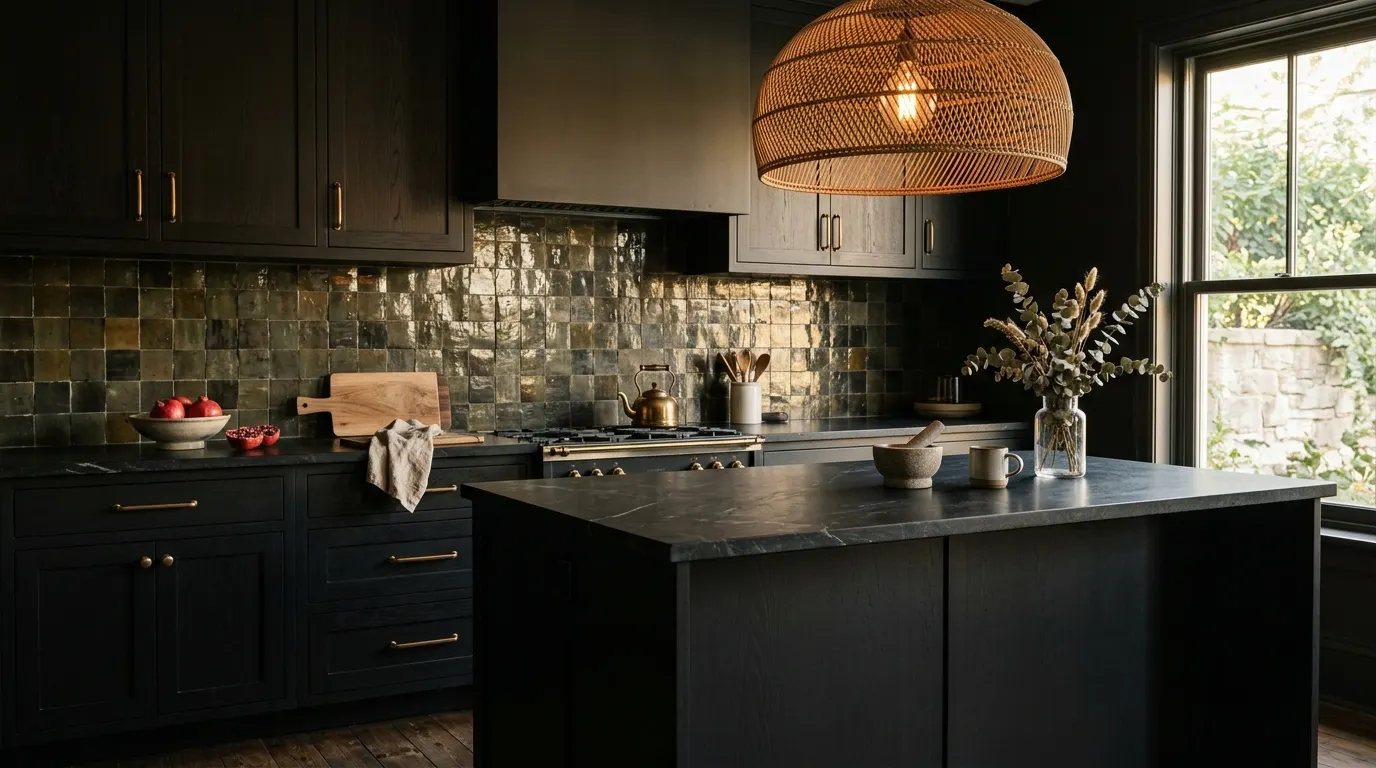
Dark Kitchens Across Different Design Styles
Dark kitchens aren’t tied to one aesthetic — the same deep color palette can be styled as Scandinavian-minimal, Japandi, farmhouse, or art-deco glam depending on the hardware, lighting, and accessories chosen. This adaptability is part of why dark kitchen designs have stayed popular across so many different home styles rather than fading as a single-decade trend.
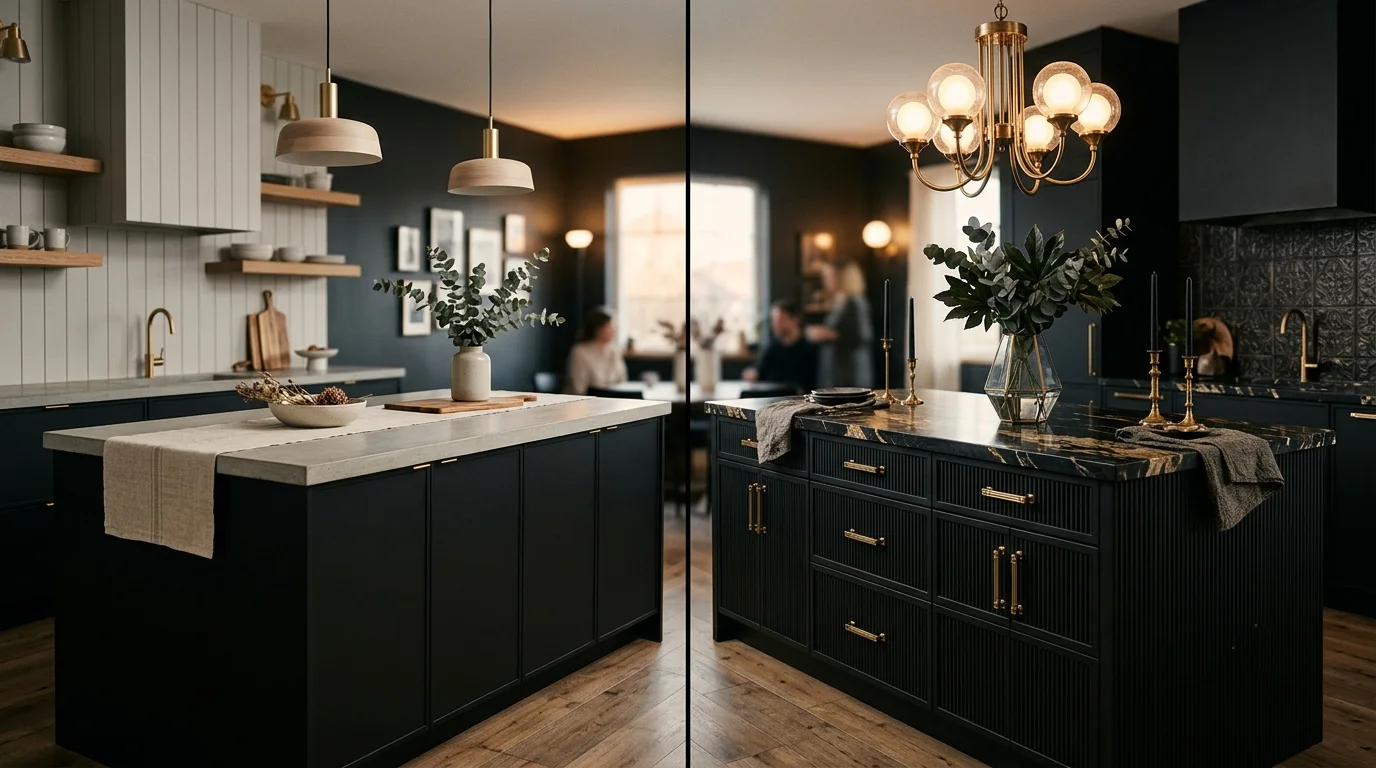
Conclusion: Making Dark Kitchen Ideas Work in Your Own Home
A dark kitchen, done well, isn’t about following a single formula — it’s about understanding how color, material, and light interact in your specific space, then making deliberate choices rather than copying a finish straight off a showroom floor. The cabinets, the wall color, the cabinet finish, the lighting plan — none of these decisions exist in isolation, and the kitchens that feel most successful are the ones where every element was considered against the others before a single can of paint was opened.
What this guide really comes down to is confidence paired with restraint. Dark kitchen ideas reward homeowners who are willing to commit to a strong base palette, but who also resist the urge to overdecorate around it. The room earns its richness from contrast — a honed stone counter against matte cabinetry, a brass fixture against a charcoal wall, a single warm light source cutting through a deep-toned space — not from piling on more color or more accessories.
This approach tends to suit people who want their kitchen to feel considered and personal rather than trend-driven, and who are comfortable living with a bolder backdrop in exchange for a room that photographs beautifully in any light and ages well over the years. If you’re starting from scratch, the simplest path forward is to choose one anchor — your cabinet color, your wall shade, or a single material — and build the rest of the room’s decisions around supporting that choice, rather than trying to finalize everything at once. Move slowly with samples, test under your own lighting, and trust that the depth you’re introducing is what will ultimately make the space feel warmer, not colder.
Learn more : Edwardian Drawing Room: Period Style, Modern Living
Frequently Asked Questions
- Will a dark kitchen make my space feel smaller? Not necessarily. Size perception has more to do with contrast, lighting, and sightlines than with the depth of the color itself. A dark kitchen with pale countertops, reflective surfaces, and layered lighting can feel just as open as a light one — sometimes more so, because the eye isn’t distracted by competing finishes. The rooms that do feel cramped are usually the ones where dark tones were used without enough light sources to balance them.
- Do dark cabinets show more dirt and fingerprints than light ones? It depends more on the finish than the color. Matte and satin finishes tend to hide smudges and water marks far better than high-gloss surfaces, regardless of whether the cabinet is dark or light. If daily wear is a concern, choosing a matte or low-sheen lacquer on dark cabinetry will keep maintenance closer to what you’d expect from a lighter kitchen.
- What’s the easiest way to try a dark kitchen look without a full renovation? Start with one element rather than the whole room — repainting an island, swapping hardware, or introducing a dark accent wall behind open shelving. These smaller commitments let you live with the depth of color before deciding whether to extend it to the full run of cabinetry, and they’re far easier to reverse if your taste shifts later.
- How do I keep a dark kitchen from feeling cold or uninviting? Warmth comes from material choice and light temperature, not from avoiding dark color altogether. Wood tones, brass or bronze fixtures, woven textures, and warm-temperature bulbs all soften the edges of a dark palette. A kitchen that pairs cool black cabinetry with cool white lighting and no organic texture is the combination most likely to feel uninviting — adjusting any one of those three usually solves it.
- Are dark kitchens a passing trend, or will mine still look good in ten years? Dark kitchens have shown up consistently across very different design eras — traditional, industrial, Scandinavian, art-deco — which suggests the underlying idea has more staying power than a single seasonal trend. Choosing a classic undertone, a durable matte or satin finish, and timeless hardware rather than an overly stylized accent will help the room age well regardless of what’s trending next.
- Should the whole kitchen be dark, or just the cabinets? There’s no single right answer — it depends on your room’s natural light, ceiling height, and how enveloping you want the space to feel. Kitchens with strong daylight and generous proportions can usually handle a fully dark scheme, while smaller or dimmer rooms often look better with dark cabinetry balanced against lighter walls, ceilings, or countertops.
- What should I check before committing to a dark paint or cabinet color? Test a large sample — ideally a full board, not just a swatch — in the actual room across morning, afternoon, and evening light, since dark tones shift noticeably under different lighting conditions. It’s also worth checking the color against your existing flooring and countertop rather than in isolation, since undertones that look neutral on a paint chip can read warmer or cooler once they’re surrounded by your real materials.




One Response