Introduction
Using books as decor means arranging them intentionally — by color, size, subject, or orientation — to enhance a room’s visual character rather than simply storing them for reading. It’s one of the most affordable and flexible styling methods available, working on shelves, coffee tables, mantels, and side tables. Books add texture, color, and personality without requiring new furniture or a large budget, making them a practical entry point for anyone refreshing their space.
This makes books one of the easiest ways to introduce texture in interior design without a major renovation or furniture investment.
Quick Summary
- Style books by stacking horizontally, grouping vertically with bookends, or fanning pages for visual interest.
- Coffee table books work best as centerpieces due to their large format and strong visual subjects.
- Real books offer authenticity, while faux or decorative books suit staging, humid rooms, or low-maintenance needs.
- Scale, color balance, and negative space determine whether a display feels curated or cluttered.
- Book decor is generally timeless, though color palettes can be refreshed seasonally.
What Does It Mean to Use Books as Decor?
Using books as decor means treating them as functional design objects — not just reading material — chosen and arranged for color, size, and visual weight. This practice has grown because it’s affordable, sustainable (reusing owned books), and easily personalized to reflect individual taste.
Real Books vs. Decorative/Faux Books
Real books bring authenticity and personal history to a space, but they can fade or warp in humid or sunlit rooms. Decorative or faux books — designed purely for display — solve this by offering consistent color and durability without maintenance concerns. Faux books are particularly useful for staged homes, rental properties, or rooms like bathrooms where moisture is a factor.
Popular Ways to Decorate with Books
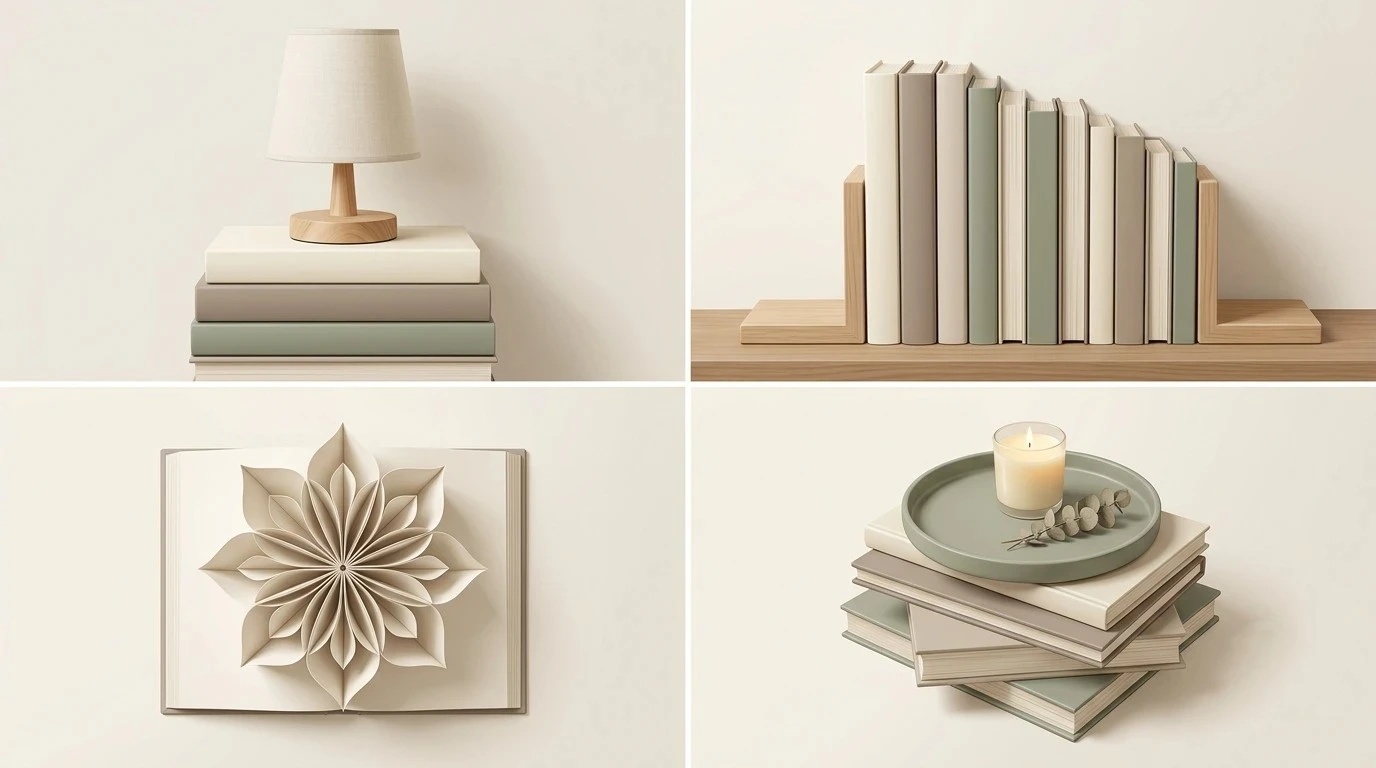
There are several established methods for incorporating books into a room’s design:
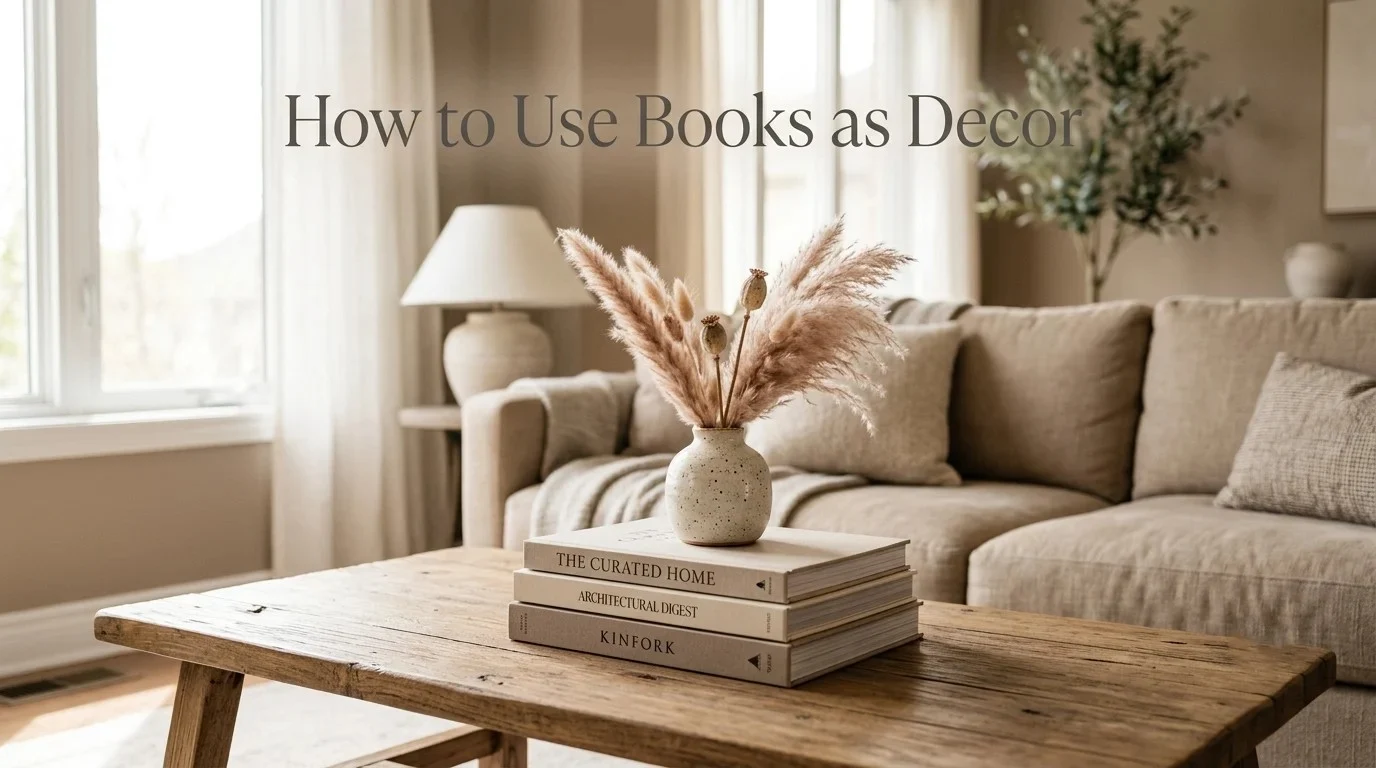
- Horizontal stacking — using books as a base for lamps, vases, or small plants.
- Vertical grouping — arranging books by height or color between bookends.
- Page-fanning — spreading pages outward to create a sculptural, textured accent.
- Layered stacks — placing trays or decorative objects on top of stacked books for depth.
Each method suits different surfaces and room styles, from minimalist to maximalist interiors.
Using Coffee Table Books as a Centerpiece
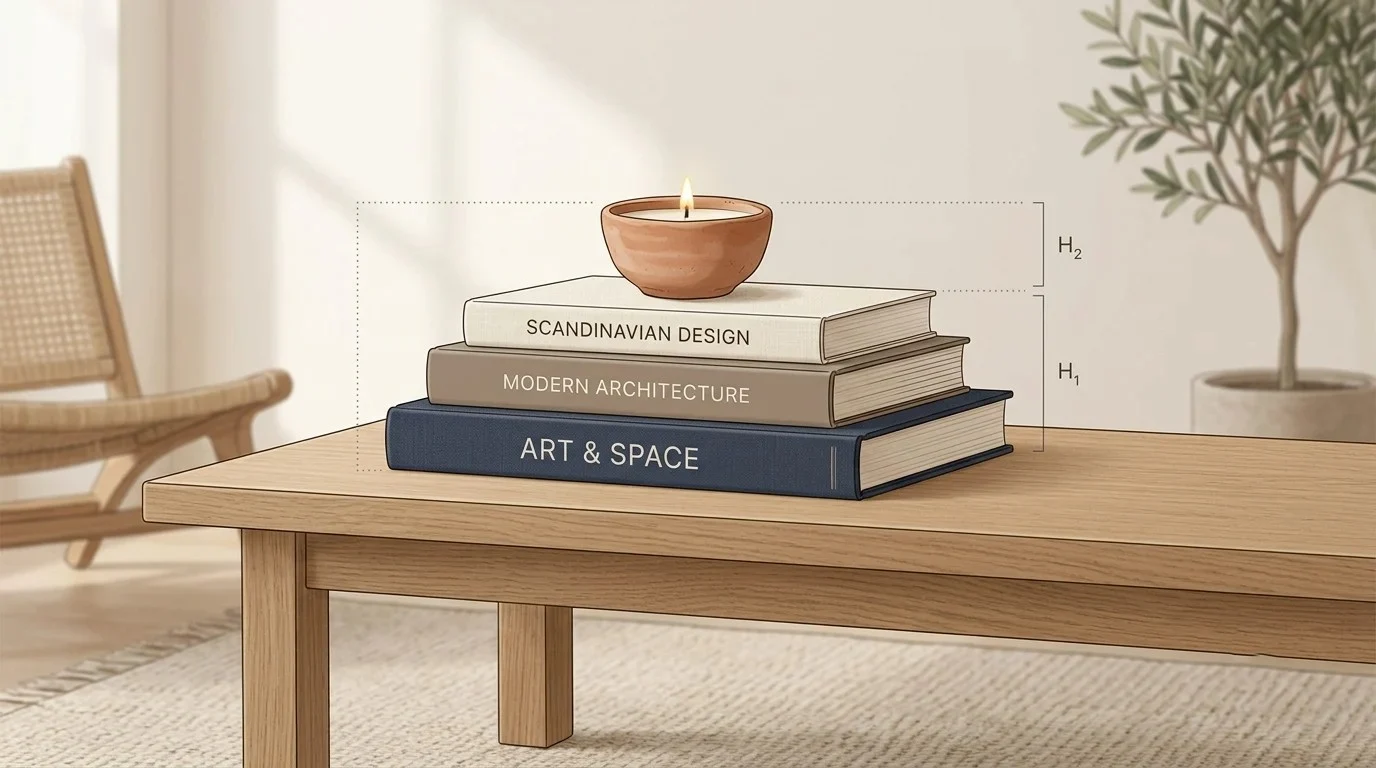
The coffee table book format was originally designed as an oversized, visually driven publication meant for display rather than cover-to-cover reading — which is exactly why it doubles so effectively as decor.
Coffee table books make effective centerpieces because their oversized format, sturdy covers, and visually rich subject matter (art, travel, architecture, photography) command attention without extra styling. In our experience styling living rooms, a stack of two to four coffee table books, topped with a small object like a candle or bowl, creates balance without overwhelming the table.
This is precisely why they work so well as a focal point in interior design, anchoring the room without requiring additional furniture or accessories.
Coffee Table Books vs. Regular Books as Decor
| Feature | Coffee Table Books | Regular/Everyday Books |
| Size | Large, oversized format | Standard size |
| Purpose | Primarily visual/display | Functional and decorative |
| Cost | Often higher | Generally lower |
| Placement | Tables, ottomans | Shelves, nightstands |
Styling Books on Shelves and Surfaces
Thoughtful use of space in interior design is what separates a curated shelf from one that feels overstuffed.
Shelf styling differs from table styling because it relies on orientation and negative space rather than stack height alone. Mixing spine-out and page-out placement, alternating with decorative objects, and leaving intentional gaps prevents shelves from feeling overcrowded while still highlighting individual books as design elements.
Choosing the Right Type of Decorative Books
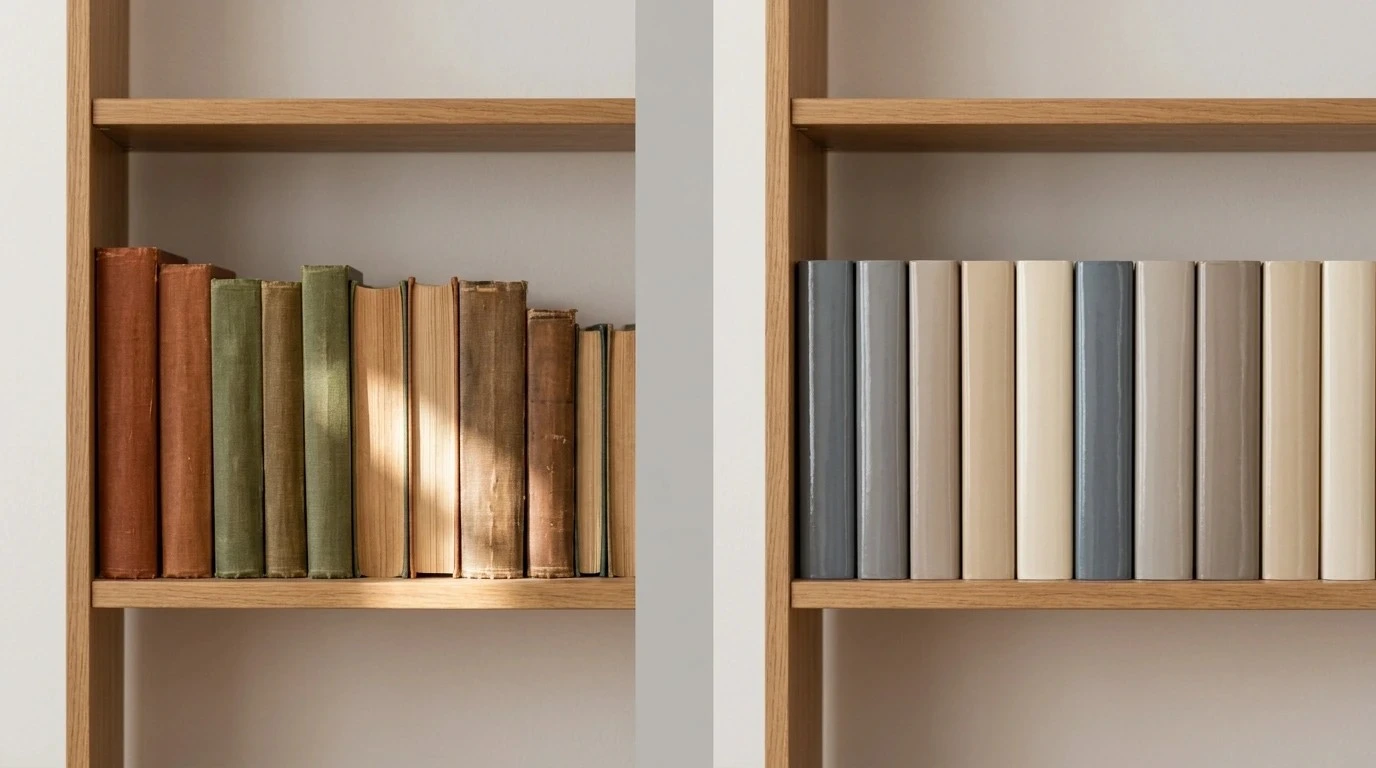
The material and finish of a book significantly affect the overall look of a display.
Repeating a book’s spine color or finish across a shelf also draws on core principles of pattern in interior design, helping displays feel intentional rather than random.
- Decorative hardcover books create a polished, uniform appearance suited to modern or minimalist interiors.
- Vintage or worn books add a rustic, collected feel appropriate for eclectic or traditional spaces.
- Faux books are ideal for living rooms where real books might fade from sunlight exposure or where low maintenance is a priority.
Dudu Interiors recommends matching book finish to the room’s overall material palette — for example, pairing linen-bound books with soft textiles, or glossy hardcovers with modern, high-shine finishes.
Decor Size and Scale
Getting these proportions right ties directly into the broader principle of scale in interior design, which governs how objects relate to one another and to the room as a whole.
Book stacks should generally stay proportional to nearby objects: a stack topped with a lamp typically works best at 6–12 inches, keeping the lamp base at a comfortable eye level. Indoor book decor allows for a wider range of materials, while outdoor use is rarely recommended due to moisture exposure. Room size, shelf depth, and available natural light all influence how many books a display can hold without appearing crowded.
Decor Style Longevity
Book styling is largely a timeless design approach — spine color-blocking and simple stacking have remained popular across multiple design eras. That said, color palettes are often refreshed seasonally, such as incorporating warmer tones in autumn displays. As of 2026, designers continue to favor neutral and tonal color-blocked arrangements for their adaptability across changing seasonal decor trends. Budget, room function, and household lifestyle (for example, homes with children or pets) also influence whether real or faux books are the better long-term choice.
Maintenance and Styling Guide
Maintaining a book display requires minimal but consistent care:
- Cleaning: Dust hardcover books weekly; wipe faux books with a dry cloth as needed.
- Lighting: Keep real books out of direct, prolonged sunlight to prevent cover fading.
- Material compatibility: Faux books tolerate humidity better than real hardcovers.
- Refresh and rotation: Rearranging or rotating stacks every few months keeps displays visually current.
- Decluttering: Periodically edit down collections to avoid overcrowding shelves or tables.
Common Book Decor Mistakes
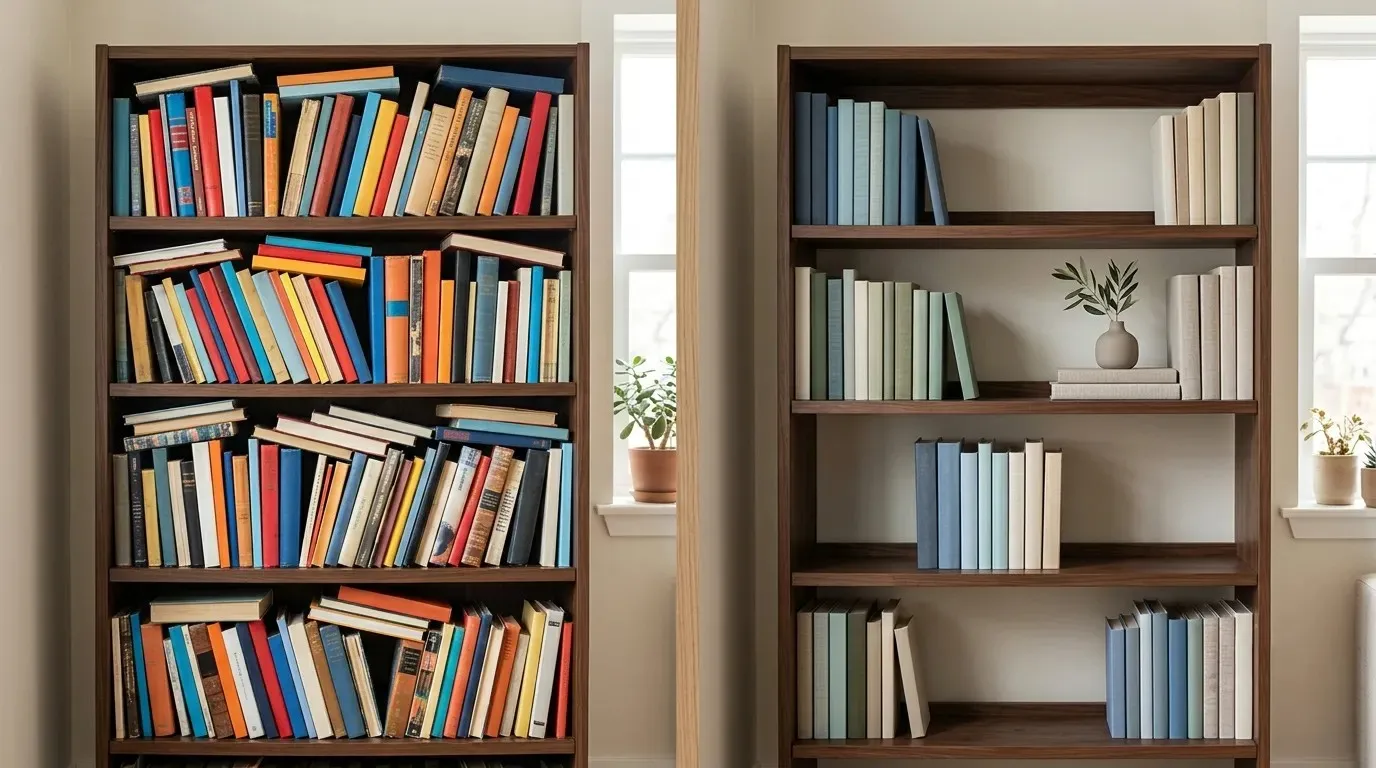
Several recurring mistakes reduce the visual impact of book decor:
- Overcrowded shelves occur when books are added without editing. Fix this by removing 20–30% of items, and prevent it by planning negative space before styling.
- Mismatched scale happens when tall and short books are placed randomly. Group books by height, and sort by size before arranging.
- Color clutter results from too many competing cover colors. Group by color family and pre-sort books by tone.
- Books in high-humidity areas, such as bathrooms, can warp over time. Relocate real books or substitute faux books, and avoid placing untreated books in moisture-prone rooms.
Beginner Tips and Practical Styling Advice
A common beginner mistake is selecting books purely for cover color without considering personal relevance or content. Starting with a single shelf or table — rather than styling an entire room at once — allows for more thoughtful, cohesive results. Budget-conscious sourcing options include thrift stores and library sales, which offer more affordable alternatives to purchasing curated decorative book sets.
How Book Decor Differs from Typical Home Decor
Unlike fixed decorative objects, books add narrative and personal history to a space while remaining easy and affordable to swap or rearrange. This makes book decor a more adaptable, story-driven styling approach compared to static decor pieces such as trinkets or sculptures, which typically require greater investment to update.
Conclusion
Using books as decor is a flexible, budget-conscious way to add color, texture, and personality to shelves, coffee tables, and living spaces. Success comes down to balancing scale, color, and material choice — whether selecting real books for authenticity or faux books for durability and low maintenance. By starting small, avoiding common mistakes like overcrowding, and refreshing displays seasonally, anyone can create a polished, well-styled room using books as a central design element.
FAQs
- How do you arrange books for decor without a bookshelf?
Books can be stacked on coffee tables, side tables, or mantels, often paired with objects like lamps or vases to add height and visual interest. - Are faux or fake books good for decorating a living room?
Yes, faux books offer consistent color, avoid fading or warping, and require minimal maintenance, making them a practical choice for high-traffic living rooms. - How many coffee table books should you display at once?
Two to four coffee table books, stacked and topped with a small object, typically creates a balanced, uncluttered centerpiece. - What’s the best way to organize decorative books by color?
Group books into color families and arrange them from darkest to lightest, or blend tones gradually across a shelf for a cohesive look. - Can you use books as decor in a bathroom or humid room?
Real books are not recommended in humid rooms due to warping risk; faux or laminated decorative books are a better-suited alternative.