Introduction
Cleaning reptile decor means removing waste, bacteria, and organic buildup from branches, hides, and wood using safe methods like baking, vinegar dilution, or reptile-grade disinfectants such as chlorhexidine or F10. Regular cleaning protects reptiles from parasites, bacterial infections, and mold exposure. Decor items collect shed skin, feces, and moisture over time, creating conditions for pathogen growth. In our experience styling naturalistic enclosures, the biggest overlooked step is sterilizing porous materials like wood before every reuse, not just after visible dirt appears.
Quick Summary
- Reptile decor needs both routine spot cleaning and periodic deep disinfection to stay safe.
- Wood, branches, and driftwood should be baked or boiled before first use and re-sterilized periodically.
- Diluted vinegar can clean some surfaces but does not fully disinfect against bacteria or parasites.
- Chlorhexidine and F10 are two commonly used veterinary-grade disinfectants safe for reptile enclosures when diluted correctly.
- All decor must be fully rinsed and dried before returning it to the enclosure.
Why Cleaning Reptile Decor Matters
Reptile decor often mirrors the same natural materials found in home styling — learn more about incorporating natural elements in interior design.
Reptile decor accumulates waste, shed skin, uneaten food residue, and moisture, all of which support bacterial and fungal growth. Left uncleaned, decor can become a source of infection, respiratory issues, or parasitic reinfestation for the animal.
Common signs decor needs cleaning include:
- Persistent odor coming from the enclosure
- Visible waste or residue on branches or hides
- Mold spots or a slimy film on wood surfaces
- Discoloration or a change in surface texture
Dudu Interiors recommends inspecting decor visually every few days, since early buildup is far easier to remove than dried, embedded residue.
Everyday Cleaning vs. Deep Disinfecting
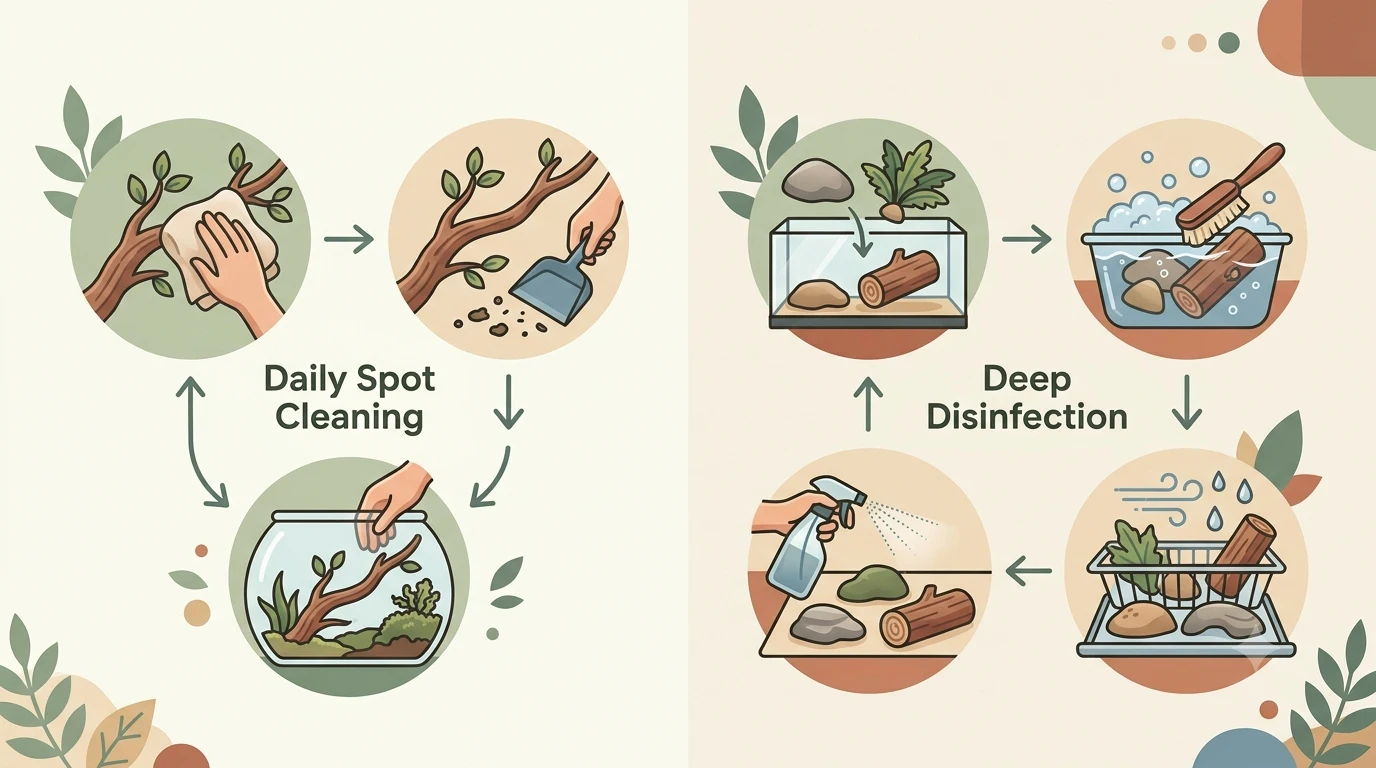
Routine cleaning and deep disinfecting serve different purposes. Routine cleaning removes visible waste and debris, while deep disinfecting eliminates bacteria, parasites, and fungal spores that aren’t visible to the eye.
Routine Cleaning vs. Full Disinfection
| Task | Frequency | Method | Purpose |
| Spot cleaning | Daily or as needed | Wipe waste, remove debris | Basic hygiene upkeep |
| Deep clean | Weekly to monthly | Remove all decor, wash, disinfect | Kill bacteria and parasites |
| Sterilizing wood/porous items | Before first use, then periodically | Baking or boiling, followed by disinfectant | Eliminate hidden pathogens |
Porous materials like wood require more frequent deep disinfection than sealed or non-porous decor, since bacteria can penetrate below the surface.
Cleaning Wood, Branches, and Driftwood
Wood-based decor requires a different cleaning process than plastic or resin items because it absorbs moisture and can harbor pests, mold, or bacteria within its grain.
“Wood is prized across both home and enclosure design for its natural texture — for more on working with wood as a design material, see our guide to wooden interior styling.”
How to Bake Wood for Reptiles
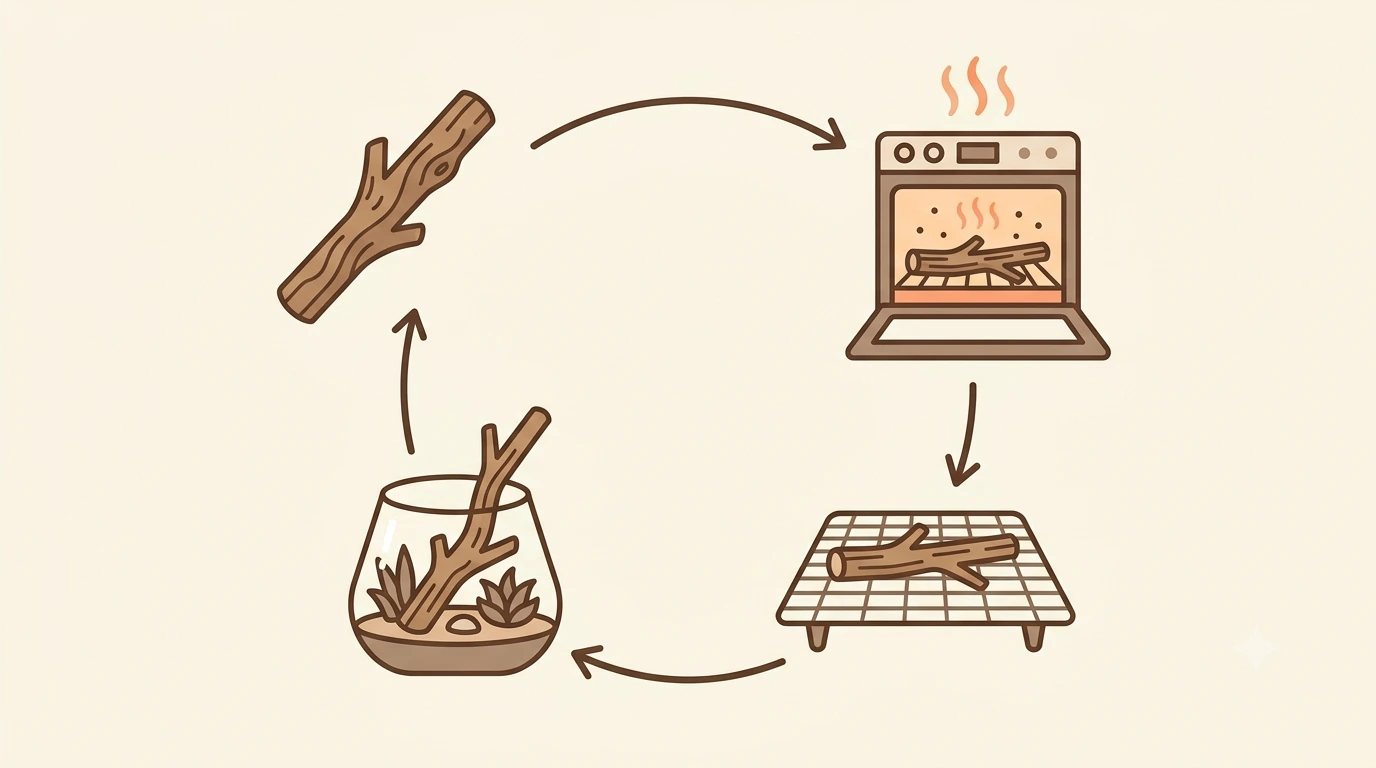
Baking wood kills insects, larvae, and surface bacteria before it enters an enclosure. Wood should be placed in an oven at a low, controlled temperature until fully dried and heated through, then cooled completely before use.
How Long to Bake Wood for Reptiles
Baking time depends on the wood’s thickness and density. Thinner branches typically need less time than thick logs, and the piece should be checked periodically to prevent scorching while ensuring it heats through evenly.
How to Sterilize Wood for Terrariums
For terrarium setups, wood can be sterilized through baking or boiling. Boiling is often preferred for smaller pieces since it penetrates moisture-retentive wood more evenly, while baking suits larger, drier branches.
How to Disinfect Wood for Reptiles
Baking alone may not remove all residue if the wood has previously been used in an enclosure. After baking or boiling, applying a reptile-safe disinfectant spray, followed by thorough rinsing and drying, ensures the wood is fully sanitized before reuse.
Using Vinegar to Clean Reptile Decor
Diluted white vinegar can help break down mineral deposits and light grime on non-porous reptile decor, but it is not a substitute for a true disinfectant.
Is Vinegar Safe for Reptiles?
Vinegar is generally safe when properly diluted with water and thoroughly rinsed off before decor is returned to the enclosure. It should not be used on porous wood without follow-up rinsing, and it does not reliably kill bacteria or parasites, so it works best as a pre-cleaning step rather than a final disinfection method.
Chlorhexidine for Cleaning Reptile Decor
Chlorhexidine is a widely used antiseptic solution applied in diluted form to clean reptile enclosures and decor.
Chlorhexidine is a widely used antiseptic solution applied in diluted form to clean reptile enclosures and decor. It is effective against a range of bacteria when mixed at appropriate concentrations and rinsed thoroughly afterward.
Chlorhexidine Use for Bearded Dragons
When used for bearded dragon enclosures, chlorhexidine should be diluted according to product guidance, applied to decor surfaces, allowed appropriate contact time, then rinsed completely and air-dried before the item is returned to the tank.
F10 Disinfectant for Reptile Enclosures
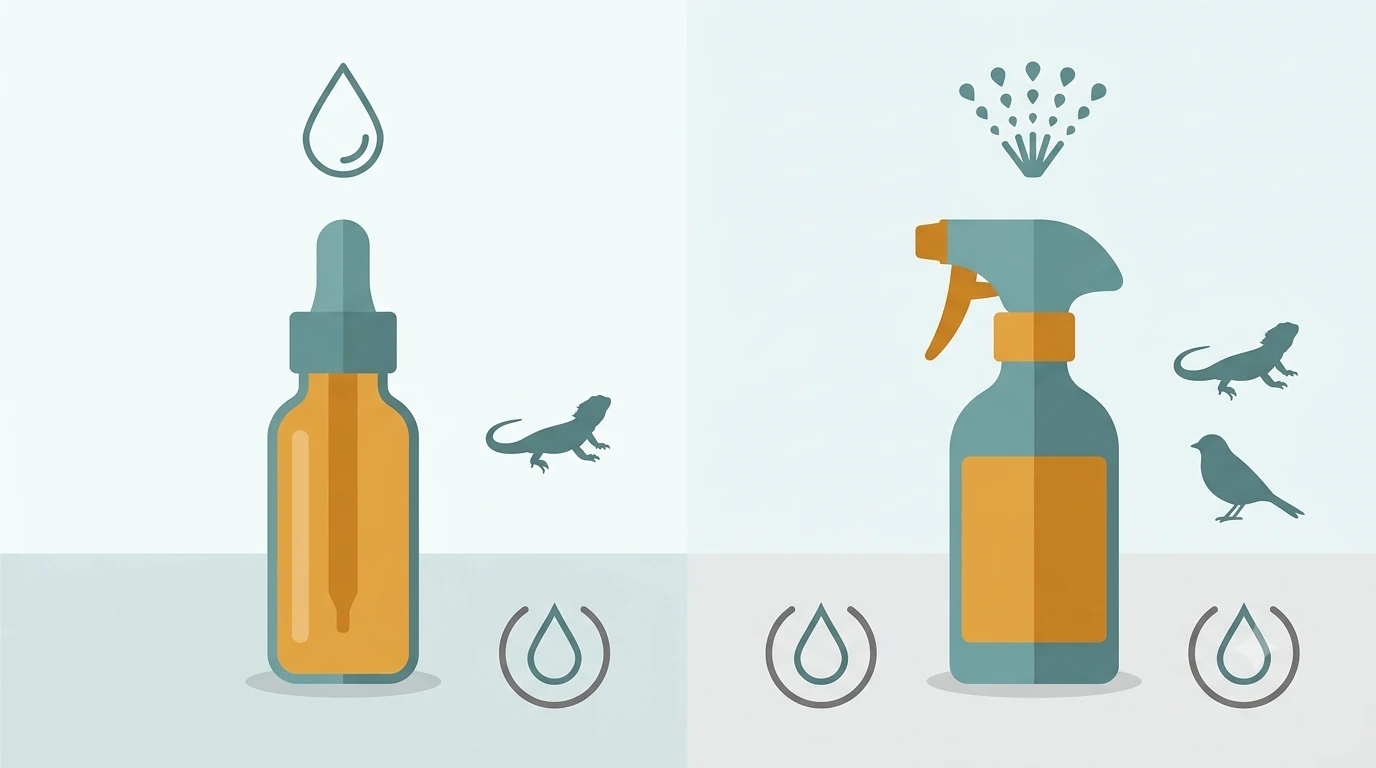
F10 is a veterinary-grade disinfectant used across reptile and avian care settings for its broad-spectrum antibacterial and antifungal properties. It is typically diluted according to manufacturer instructions and applied to hard, non-porous decor surfaces.
Chlorhexidine vs. F10
| Factor | Chlorhexidine | F10 |
| Common use | General reptile surfaces | Veterinary-grade, broader spectrum use |
| Dilution | Species-dependent guidance | Manufacturer-specified ratios |
| Rinse required | Yes | Yes |
Both products require full rinsing and drying to prevent residue exposure to the animal.
Common Mistakes When Cleaning Reptile Decor
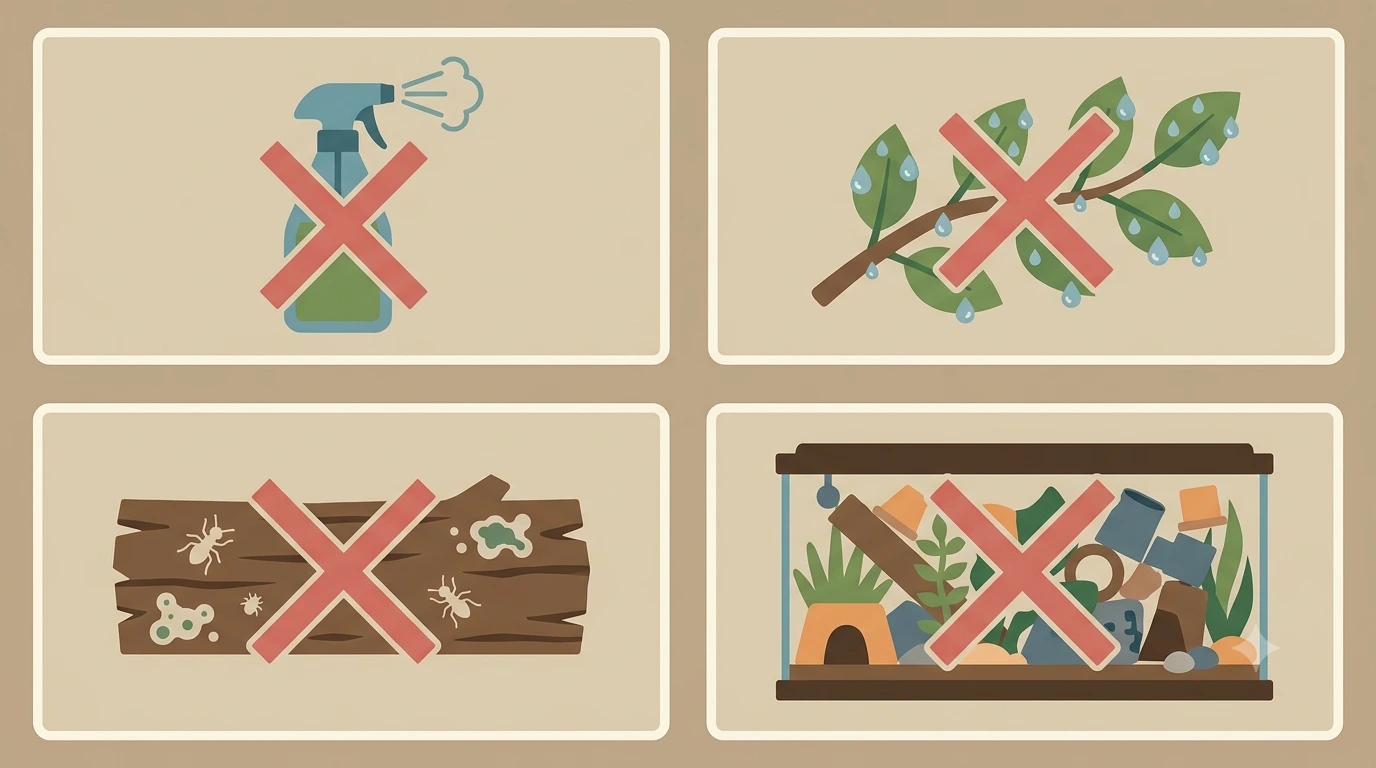
- Using household cleaners: Standard soaps and sprays often contain chemicals toxic to reptiles. Use only reptile-safe or veterinary-grade disinfectants instead.
- Not fully rinsing or drying decor: Leftover residue from any cleaning product can harm reptiles. Rinse thoroughly and air-dry completely before reuse.
- Skipping wood sterilization: Reused wood that isn’t re-sterilized can reintroduce parasites or mold. Bake or boil wood periodically, not just once.
- Overcrowding decor without airflow: Poor ventilation around decor promotes humidity buildup and mold. Space items to allow air circulation.
Porous, textured surfaces — much like those discussed in texture in interior design — require extra care since they trap moisture and residue more easily than smooth ones.
Beginner Mistakes and Practical Styling Tips
Just as animal-inspired decor pieces, like those seen in taxidermy interior design, require specialized upkeep, live reptile enclosures demand equally deliberate maintenance routines.
Many first-time reptile keepers clean decor too infrequently or only after odor becomes noticeable, allowing bacteria to establish before action is taken. As of 2026, keepers are increasingly adopting fixed cleaning schedules rather than reactive cleaning. Practical tips include rotating decor pieces so one set can dry fully while another is in use, and adjusting cleaning frequency seasonally, since higher humidity periods accelerate mold growth and require more frequent inspection.
How Often to Clean Reptile Enclosure Decor
Cleaning frequency for pet-related decor varies by animal and habitat — a principle also explored in our cat interior design guide for feline-friendly spaces.
Cleaning frequency depends on decor material and the species housed. Porous wood items generally need deep cleaning more often than sealed resin or rock decor, and species that produce more waste, such as larger lizards, may require more frequent spot cleaning between full disinfection cycles.
Conclusion
Cleaning reptile decor properly requires more than a quick wipe-down. Wood and porous items need periodic baking or boiling combined with a reptile-safe disinfectant, while non-porous decor can be cleaned with diluted vinegar or products like chlorhexidine and F10. Every method should end with complete rinsing and drying before decor returns to the enclosure. Maintaining a consistent cleaning schedule for reptile decor reduces the risk of bacterial, fungal, and parasitic issues, keeping the enclosure safe and stable for the animal long-term.
FAQs
- How often should I clean reptile decor?
Non-porous decor should be spot-checked regularly and deep cleaned every few weeks, while porous wood items should be re-sterilized periodically depending on use and humidity levels. - Can I use regular soap to clean reptile decor?
Regular soap is not recommended, since residues can be toxic to reptiles; reptile-safe or veterinary-grade disinfectants are a safer choice. - Is it safe to reuse driftwood without sterilizing it first?
No, driftwood should be baked or boiled and, if previously used, disinfected before being reintroduced to prevent bacterial or parasitic contamination. - How do I know if wood decor is fully dry before using it?
Wood should feel completely dry to the touch with no residual dampness or odor, and it should be cooled fully after baking before placement in the enclosure. - Can chlorhexidine and F10 be used interchangeably?
Both are effective disinfectants for reptile decor, but each has its own dilution guidelines, so manufacturer instructions should be followed rather than substituting one for the other without adjustment. - What’s the safest way to remove mold from reptile wood decor?
Mold-affected wood should be scrubbed with a diluted disinfectant solution, rinsed thoroughly, and fully dried, or replaced if mold has penetrated deeply into the wood.