Introduction
Cottagecore decor is a home styling aesthetic that draws on rural, pastoral, and vintage-farmhouse influences to create a soft, nostalgic living space. It centers on natural materials, muted floral patterns, handmade textures, and warm, unpolished charm. The style emerged as a reaction against sleek, minimalist interiors, favoring imperfection, history, and a connection to nature instead. Dudu Interiors works with this aesthetic regularly, and in our experience styling cottagecore spaces, the strongest results come from restraint — a few well-chosen vintage pieces communicate the look far better than an overcrowded room.
Quick Summary
- Cottagecore decor is a nature-inspired, vintage-leaning home style built around natural materials, muted florals, and handmade textures.
- It differs from farmhouse and rustic styles mainly in its softer color palette and stronger nostalgic, pastoral references.
- The look can be achieved affordably through thrifting, DIY, and careful material choices rather than expensive new furniture.
- It works in full homes, single rooms like kitchens and living rooms, and even small dorm spaces.
- The style is considered enduring rather than a short-lived trend, though seasonal styling updates keep it feeling current.
What Is Cottagecore Decor? (Core Definition)
“Readers interested in the historical roots of this style may also enjoy our piece on Georgian cottage interiors.”
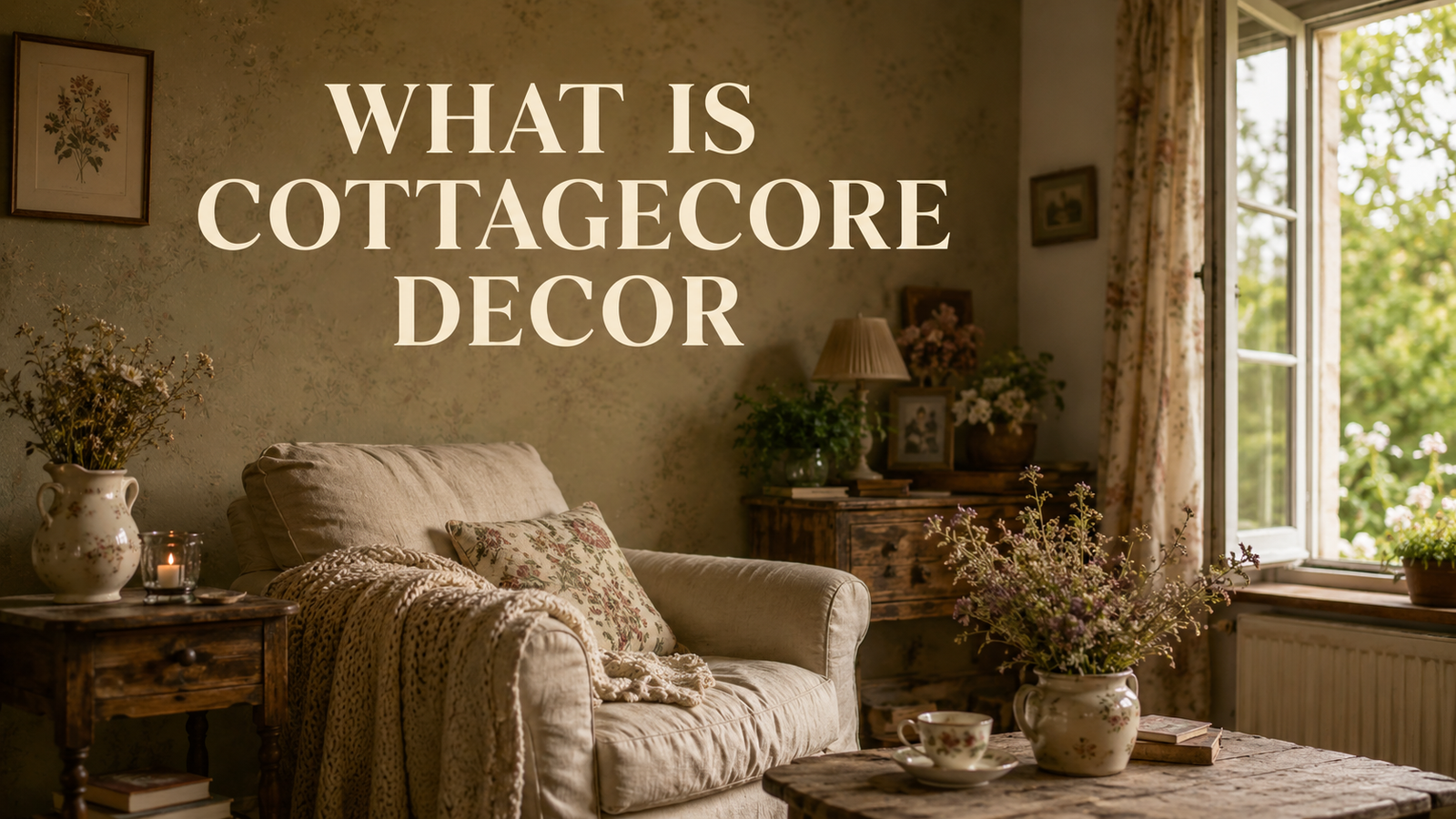
Cottagecore decor is an interior design approach rooted in an idealized vision of countryside life, translated into the home through natural textures, vintage furnishings, and soft, muted color schemes. The aesthetic draws heavily on early-to-mid-20th-century farmhouse and cottage interiors, reinterpreted with a contemporary sense of comfort and simplicity.
Rather than following strict design rules, cottagecore prioritizes warmth and authenticity. Natural wood, linen, cotton, and ceramic materials dominate over synthetic or highly polished finishes. According to widely accepted interior design classifications, this places cottagecore within the broader “romantic rustic” or “pastoral revival” family of styles, alongside cousins like French country and English cottage design.
“This connects to the broader cottagecore internet aesthetic, which originated as a cultural movement before expanding into interior design.”
Key Characteristics of the Cottagecore Style
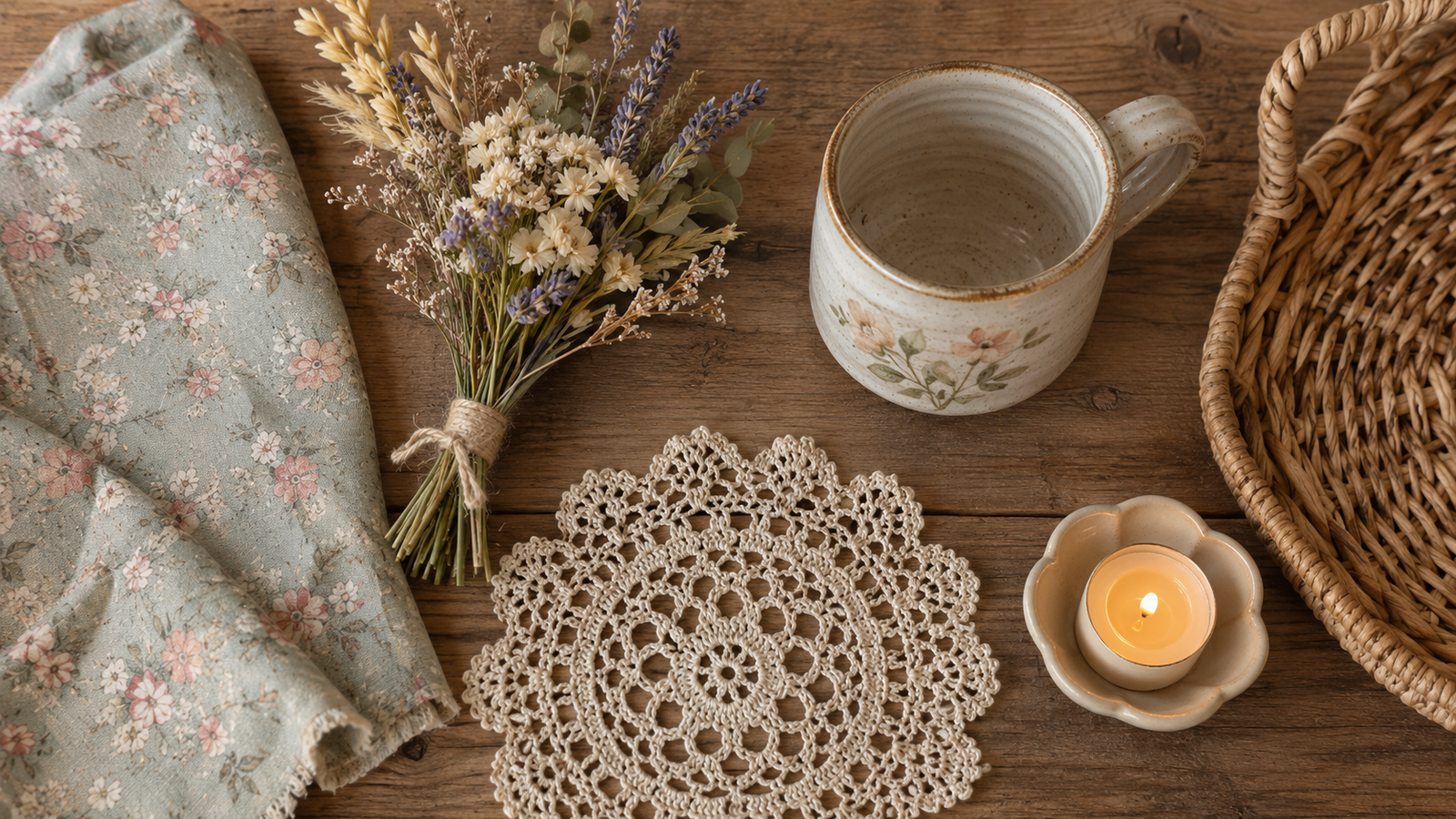
Cottagecore decor is recognizable through a consistent set of visual and material traits:
- Muted florals — small-scale, faded-looking floral prints on textiles rather than bold, saturated patterns
- Natural wood furniture — often reclaimed, distressed, or vintage rather than new and glossy
- Handmade or artisanal items — hand-thrown ceramics, woven baskets, embroidered linens
- Soft, warm lighting — table lamps and candles favored over harsh overhead lighting
- Vintage textiles — gingham, chintz, and lace used in curtains, tablecloths, and upholstery
- Botanical touches — dried herbs, pressed flowers, and potted plants throughout the home
These elements work together to create a space that feels lived-in, gathered over time rather than purchased as a set.
Cottagecore vs. Related Aesthetics
“For a closer look at the rustic side of this family of styles, see our guide to rustic cottage decor.“
Cottagecore is frequently confused with farmhouse, rustic, and coastal grandmother styles, but each has distinct defining features.
| Style | Color Palette | Materials | Overall Feel |
| Cottagecore | Muted pastels, faded florals | Linen, reclaimed wood, ceramic | Nostalgic, pastoral, romantic |
| Farmhouse | White, black, warm neutrals | Shiplap, galvanized metal | Clean, functional, sturdy |
| Rustic | Deep browns, forest tones | Raw wood, stone, leather | Rugged, cabin-like |
| Coastal Grandmother | Cream, sage, dusty blue | Linen, rattan, sun-worn wood | Relaxed, breezy, understated |
The clearest distinction is that cottagecore leans more decorative and floral, while farmhouse favors structural simplicity and rustic emphasizes raw, unfinished materials.
Cottagecore Home Decor by Room
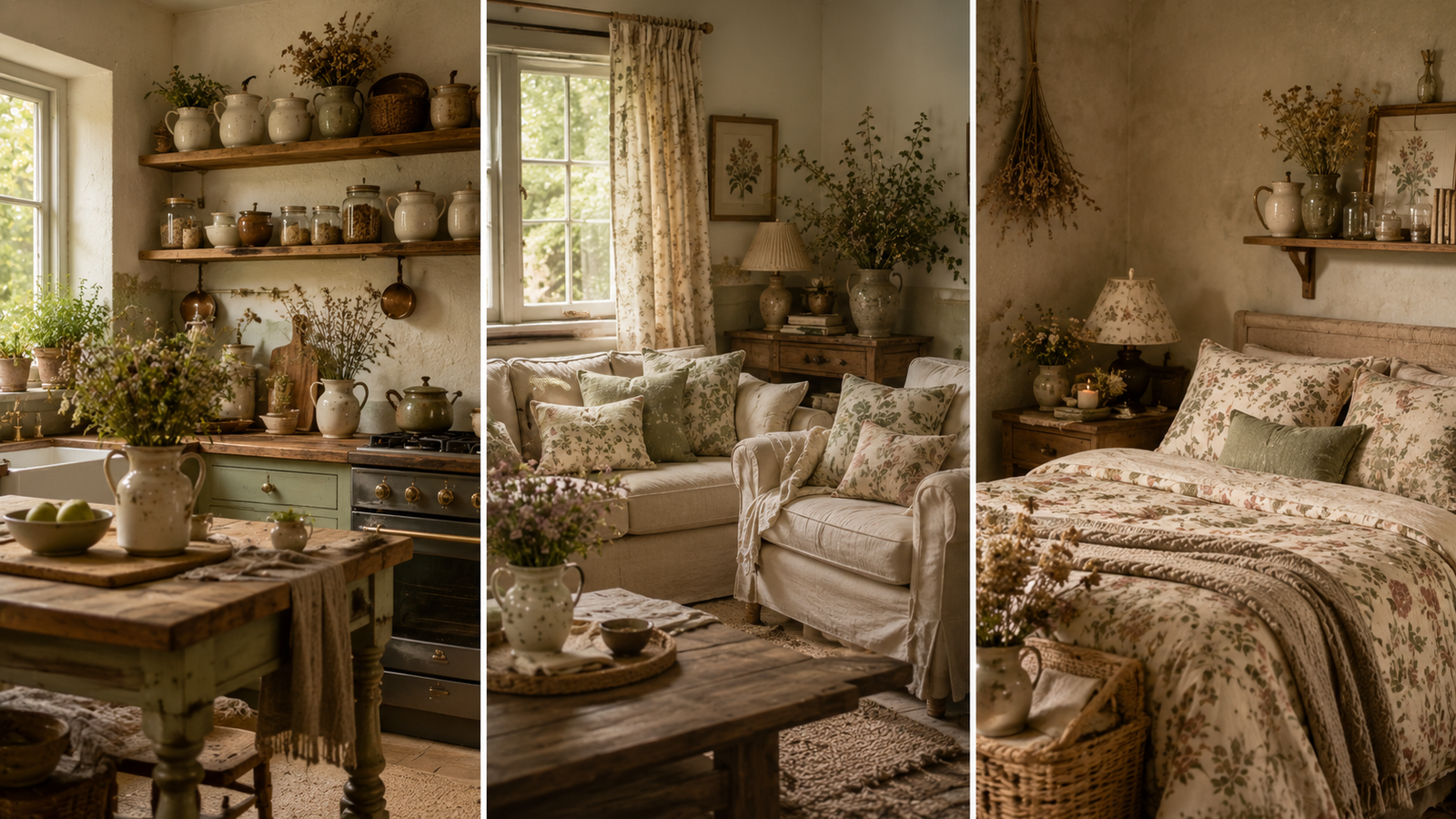
Cottagecore home decor translates differently depending on the room’s function, but the underlying material and color principles stay consistent throughout the house.
Cottagecore Kitchen Decor
Cottagecore kitchen decor typically favors open shelving over closed cabinetry, allowing ceramic dinnerware and glass jars to double as display pieces. Common elements include gingham curtains, dried herb bundles hanging near the stove, and enamelware in soft, muted colors. Dudu Interiors recommends prioritizing function first — open shelving only works well in kitchens where items are used and rotated regularly, otherwise it becomes a dust-collecting display rather than a practical feature.
Cottagecore Living Room Decor
“For more room-specific inspiration, see our full guide to cottage living room ideas.“
In the living room, cottagecore decor relies on layered textiles — linen slipcovers, knitted throws, and botanical-print cushions — combined with warm, low lighting from table lamps rather than overhead fixtures. Vintage wood furniture, particularly pieces with visible grain or gentle wear, reinforces the room’s lived-in character.
Cottagecore House Interior (Whole-Home Approach)
“To explore how this translates across an entire home, see our broader guide to cottage style interior design.“
Applied across a full house interior, cottagecore decor maintains continuity through a consistent, muted color palette and repeated natural materials — wood, linen, and ceramic — moving from room to room. This consistency is what separates a genuinely cohesive cottagecore house from individual rooms styled in isolation.
Cottagecore Dorm Decor
In smaller spaces like dorm rooms, cottagecore decor scales down to accent pieces: a floral throw, a small ceramic lamp, dried flower arrangements, and a woven basket for storage. Because dorm spaces are rented and temporary, removable or non-permanent styling choices are typically recommended.
Cottagecore Decor Size and Scale
Scale plays a significant role in how cottagecore decor reads within a space. In smaller rooms, oversized vintage furniture can overwhelm the layout, so smaller-scale accent pieces — dried flower arrangements, small ceramic vases, folded linens — tend to work better. In larger rooms, a single substantial piece, such as a reclaimed wood dining table, can anchor the space without requiring excessive additional decor.
Lighting also affects perceived scale. Rooms with strong natural light can support lighter, more delicate textiles and pale color palettes, while low-light rooms often benefit from slightly deeper, warmer tones to avoid feeling washed out. Indoor cottagecore decor generally uses more delicate materials — dried florals, lace, thin ceramics — while outdoor cottagecore touches, such as porch decor or garden elements, require more durable, weather-resistant materials.
Is Cottagecore a Trend or a Timeless Style?
Cottagecore decor is best understood as a durable style rather than a short-lived trend, since it draws on design traditions — pastoral revival and cottage interiors — that predate modern social media aesthetics by decades. However, styling details within cottagecore do shift seasonally. As of 2026, designers commonly recommend leaning into deeper, warmer florals and heavier textiles in autumn and winter, while spring and summer styling favors lighter fabrics and fresh botanical touches.
Budget, room function, and lifestyle also influence how long a cottagecore setup remains practical. A busy household with children may need more durable, washable textiles, while a quieter space can accommodate more delicate vintage pieces.
How to Get Cottagecore Decor on a Budget
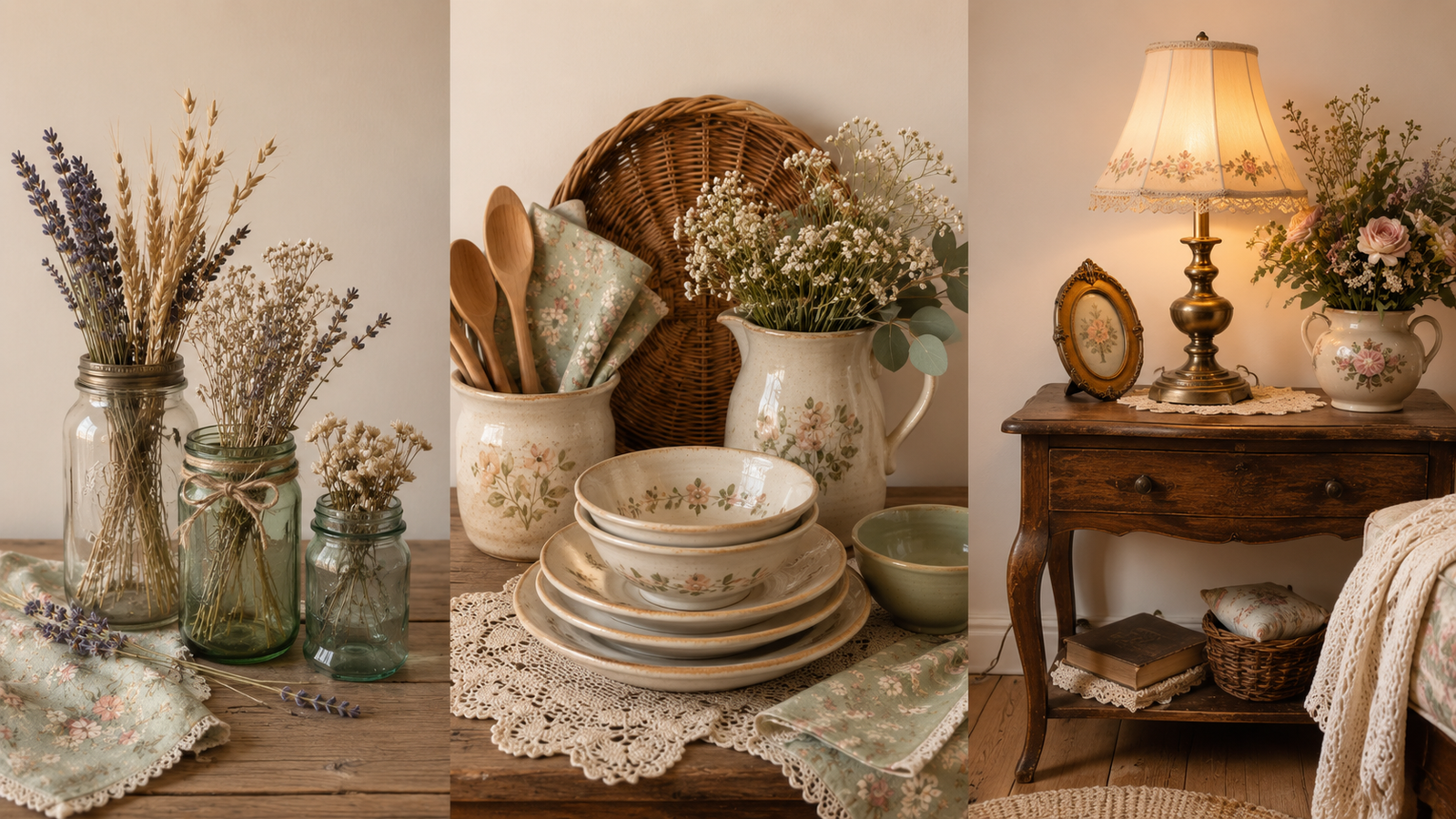
Cottagecore decor does not require expensive furniture, since much of its character comes from imperfection and age rather than newness. Thrifted furniture, secondhand ceramics, and DIY dried flower arrangements are consistent with the aesthetic’s core values rather than working against them.
Cottagecore Decor Items by Budget Tier
| Budget Tier | Example Items | Where to Source |
| Low-cost | Dried flowers, mason jars, secondhand linens | Thrift stores, DIY |
| Mid-range | Ceramic dinnerware, woven baskets, throw pillows | Home goods stores |
| Investment | Vintage wood furniture, antique lighting | Specialty or vintage shops |
Starting with low-cost, high-impact items — textiles and small decorative accents — allows a room to shift toward cottagecore before committing to larger furniture purchases.
Where to Shop for Cottagecore Decor
Cottagecore decor items are commonly sourced from thrift and secondhand stores, estate sales, and specialty vintage or homeware shops. Farmers markets and craft fairs are also useful sources for handmade ceramics, woven goods, and dried botanical arrangements, all of which align closely with the style’s emphasis on natural, artisanal materials.
Common Cottagecore Decorating Mistakes
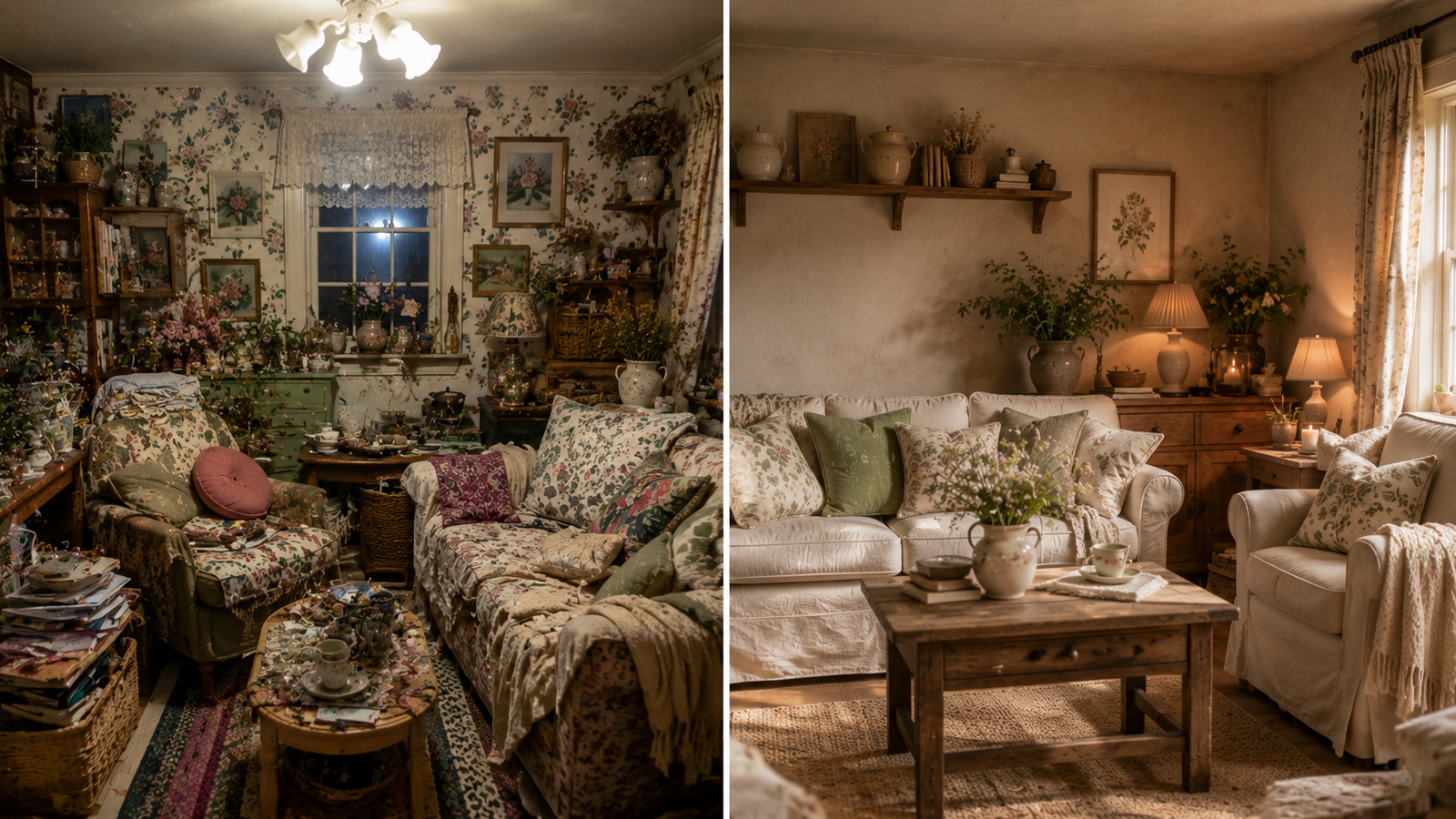
Several recurring mistakes can undermine an otherwise well-intentioned cottagecore space.
“If you’re refining a related look, our guide to country style living rooms covers similar styling pitfalls to avoid.”
- Overcrowding the room. This happens when every surface is filled with decorative objects. Fix it by editing down to a few meaningful pieces per surface, and prevent it going forward by rotating seasonal decor rather than adding continuously.
- Mismatched color palettes. Mixing overly bright or saturated colors with cottagecore’s muted tones breaks the aesthetic’s cohesion. Stick to a limited palette of muted greens, dusty pinks, and warm neutrals.
- Poor lighting choices. Harsh overhead lighting undercuts the soft, warm atmosphere central to the style. Layer in table lamps, string lights, or candles instead.
- Using synthetic materials. Plastic or high-gloss finishes clash with cottagecore’s natural-material foundation. Prioritize wood, linen, cotton, and ceramic wherever possible.
Each of these issues is preventable with planning, and each is easily fixed by adjusting existing pieces rather than starting over.
Maintenance and Styling Guide for Cottagecore Decor
Cottagecore decor’s reliance on natural materials means upkeep differs somewhat from more synthetic or industrial styles.
- Cleaning and upkeep: Linen and cotton textiles typically require gentler wash cycles; ceramics should be hand-washed if hand-painted or antique.
- Lighting considerations: Warm-toned bulbs (soft white, around 2700K) support the aesthetic’s cozy atmosphere better than cool or daylight bulbs.
- Material compatibility: Natural wood furniture should be kept away from excess humidity to prevent warping; dried florals should avoid direct sunlight, which accelerates fading.
- Refresh and rotation: Swapping textiles and small accents seasonally keeps the space feeling current without requiring major purchases.
- Decluttering: Because cottagecore relies on curated simplicity rather than maximalism, periodically removing excess items preserves the intended effect.
- Durability and suitability: Delicate materials suit indoor use; outdoor cottagecore elements should use weather-resistant alternatives such as sealed wood or all-weather fabrics.
Cottagecore Beyond the Home
While this article focuses on decor, cottagecore also extends into fashion, including clothing and outfit choices that mirror the same soft florals, natural fabrics, and vintage-inspired silhouettes found throughout the home aesthetic. This crossover reflects cottagecore’s identity as a broader lifestyle aesthetic rather than a decor-only trend, though home styling remains its most enduring application.
Conclusion
Cottagecore decor is a nature-inspired, vintage-leaning home style defined by muted florals, natural materials, and a warm, unpolished sense of comfort. It can be applied to a single room or an entire house, adapted to almost any budget, and maintained through simple, natural-material care practices. Understanding what cottagecore decor is — and how it differs from related styles like farmhouse and rustic — makes it easier to build a cohesive, lasting version of the aesthetic in any home.
FAQ
- What defines cottagecore decor?
Cottagecore decor is defined by muted floral patterns, natural materials like wood and linen, and vintage or handmade furnishings that evoke a pastoral, countryside feel. - Is cottagecore decor expensive to achieve?
No. Cottagecore decor can be achieved affordably through thrifted furniture, secondhand textiles, and DIY elements like dried flower arrangements. - How is cottagecore different from farmhouse style?
Cottagecore favors softer, more floral, and decorative elements, while farmhouse style emphasizes clean lines, structural simplicity, and a more neutral color palette. - What colors are used in cottagecore decor?
Cottagecore decor typically uses muted pastels, dusty pinks, sage greens, and warm neutral tones rather than bright or saturated colors. - Can cottagecore decor work in a small apartment or dorm?
Yes. Cottagecore decor scales down easily to small spaces through accent pieces like throws, dried florals, and small ceramic items. - Is cottagecore decor a passing trend?
Cottagecore decor is generally considered a lasting style rooted in established pastoral and cottage design traditions, though specific styling details shift seasonally.